
Plot Summary
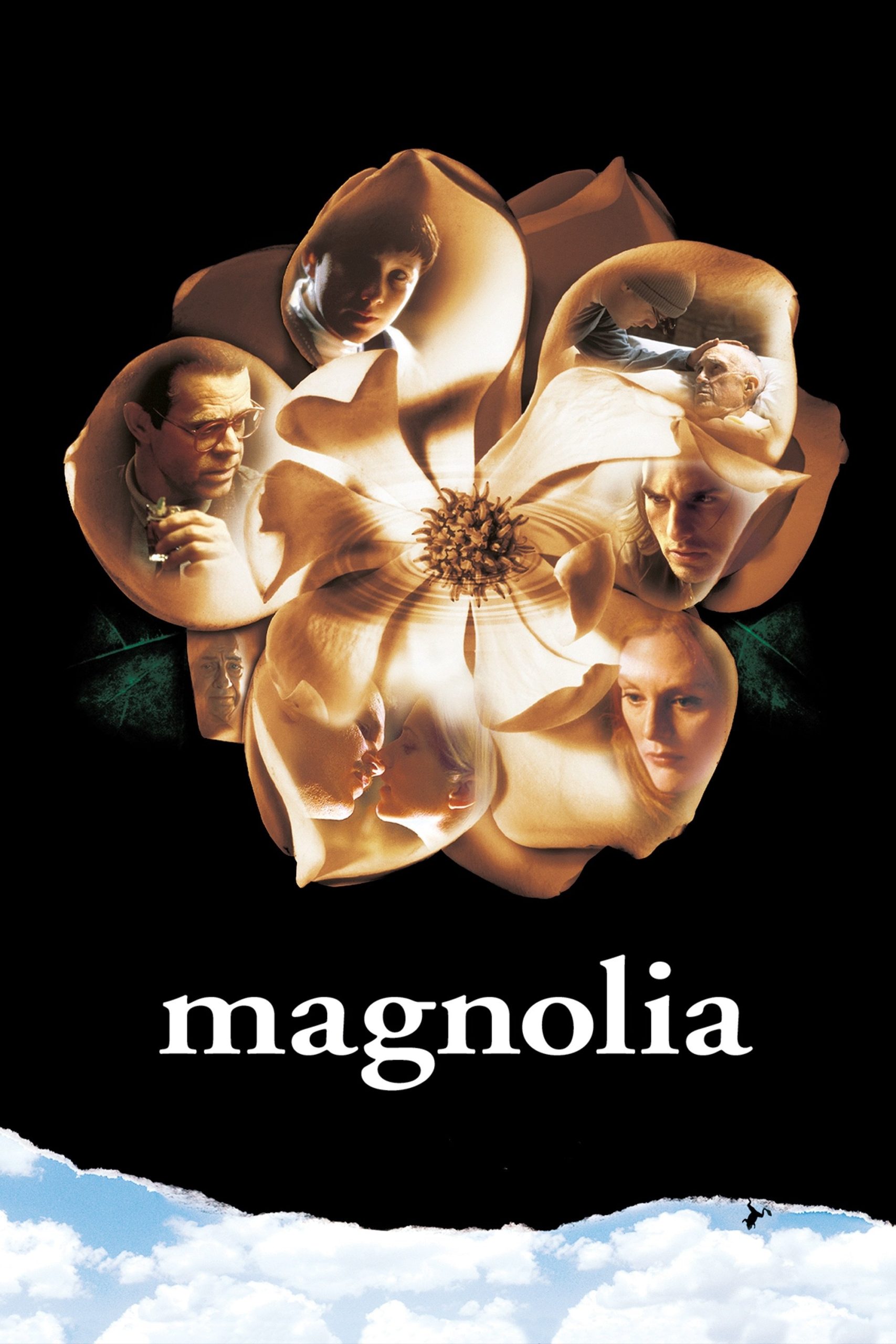
The first time I watched Magnolia, I was overwhelmed—in the best and worst way. Paul Thomas Anderson’s sprawling, intricately crafted mosaic of Los Angeles lives felt unlike anything I’d experienced. While it’s framed as an ensemble drama, I found myself drawn to the tightrope tension between the mundane and the miraculous. The film interweaves several stories—an aging game show host, a dying patriarch, his wayward son, a lonely nurse, an anxious quiz kid, and others—each wrestling with regret and the complicated threads of fate. These characters blaze across the screen, often set on collision courses they don’t see coming, and what unites them isn’t just coincidence. Instead, I saw a meditation on forgiveness, trauma, and the messy hope of redemption.
I want to reassure new viewers: the film is best approached as an emotional experience rather than a puzzle to solve. Without giving away too much, several key plot convergences and a famously surreal sequence in the film’s final act stand as reminders not just of Anderson’s stylistic bravado but of his trust in the audience’s willingness to surrender to improbable possibility. For those aiming to remain unspoiled: beware that Magnolia’s later moments contain truly unexpected twists—both narratively and emotionally. My own shock and awe during those sequences still echo years later.
Key Themes & Analysis
What struck me most about Magnolia isn’t just its interconnected plotlines but the atmospheric sense of restless searching—every character longing for grace, closure, or simple human understanding. I find the heart of the film in its relentless examination of how trauma ricochets through generations, leaving characters desperate for healing in whatever flawed ways they can muster. Rather than drawing clear lines between “good” and “bad,” Anderson forces me to sit with ambiguity: every character is both perpetrator and victim within their sphere.
From my perspective, the cinematography by Robert Elswit deserves special emphasis. The unbroken tracking shots, especially the film’s opening and the game show sequences, drew me directly into the characters’ anxiety and isolation. The way the camera glides through space—closing gaps, then opening gulfs—mirrors the way people move in and out of each other’s lives. I often find myself marveling at how the visual design amplifies Anderson’s themes of chance and connection, not just through shot composition, but even in the film’s persistent rain—a literal and symbolic deluge.
The ensemble cast is nothing short of astonishing. For me, Tom Cruise’s performance as Frank T.J. Mackey is a true revelation; I rarely find myself so simultaneously repulsed and sympathetic toward a character. Julianne Moore’s portrayal of Linda Partridge, unraveling in guilt and confusion, lingers long after the credits. Lesser-sung heroes like Melora Walters and John C. Reilly bring a textured vulnerability that, to me, elevates their storylines beyond mere subplots. The depth of characterization gives every storyline a raw immediacy that rewards close attention.
I keep returning to the ways Magnolia tackles forgiveness—toward others, but most powerfully, toward oneself. In a world of fractured relationships and unmet expectations, Anderson insists on a kind of bruised optimism: even the most broken people are capable of grace. Over time, I’ve come to see this film as a hymn to the possibility of change in the ninth inning, no matter how unlikely or unfinished that redemption may look.
All of this is anchored by Anderson’s directing style—a bravura mix of maximalism and tender intimacy. There’s nothing subtle about the film’s showpiece moments, including the now-iconic “Wise Up” singalong sequence. I remain awed by how boldly Anderson pushes emotional boundaries, never shying away from melodrama but always reining it in just before it tips into parody. This balance between operatic spectacle and quiet pain is, for me, Magnolia’s most enduring achievement.
My Thoughts on the Cultural Impact & Legacy
Whenever I revisit Magnolia, I find myself reflecting on how it signaled a sea change in American cinema at the end of the 1990s. For me, Anderson’s willingness to embrace both the bigness and messiness of life—rather than boiling the world down to tidy morals—marked a profound shift. Magnolia sprawls and risks overreaching, but I adore its refusal to play it safe. As a film curator, I see Magnolia as a touchstone: it demonstrated that audiences could handle intricacy, discomfort, and ambiguity. In many ways, its DNA is evident in subsequent works like Babel, Crash, and even modern anthology television, where narrative complexity and emotional rawness test the limits of mainstream patience.
From a personal standpoint, I’ve always been moved by the film’s empathetic gaze. It’s a movie that challenges me—again and again—to look at people (and myself) not as a sum of their worst actions but as products of pain, longing, and unfathomable hope. The way Anderson allows his characters (and, by extension, viewers) to trip, fall, and sometimes rise has influenced how I view not just film but the people around me. Magnolia’s legacy, for me, is its compassionate demand that we forgive the unforgivable whenever we can—because, as the film suggests, “we might be through with the past, but the past isn’t through with us.”
I find that Magnolia’s unique blend of magical realism, emotional maximalism, and character-driven storytelling continues to ripple outward. It’s a film that gave permission to a new generation of filmmakers to embrace the unwieldy—both narratively and emotionally. Every time I program a film season or write about contemporary cinema, I feel the echoes of Anderson’s influence, pushing me to prize authenticity and ambition over neatness or predictability.
Fascinating Behind-the-Scenes Facts
What really elevates my appreciation of Magnolia are the little-known stories behind its creation. The most astonishing to me is how Paul Thomas Anderson wrote the role of Frank T.J. Mackey specifically for Tom Cruise after watching his work on Stanley Kubrick’s “Eyes Wide Shut.” The risk paid off—Cruise’s explosive, layered work netted him an Academy Award nomination and gave me a new respect for his dramatic abilities.
Another point that fascinates me: the film’s now-famous “rain of frogs” sequence drew skepticism not just from cast but even from Anderson himself, who has admitted in interviews that he only gained the confidence to include such a surreal device after re-immersing himself in the Old Testament passage (Exodus 8:2). The commitment to such an audacious moment, and the practical effects involved, still impresses me for the sheer boldness and technical ingenuity.
Something I did not know until doing deeper research: The film’s running time ballooned during editing. Originally, Magnolia’s cut was closer to three and a half hours, but Anderson found it difficult to let go of so many storylines. As a result, he chose to “let the movie breathe,” bucking studio expectations for a tighter runtime. This editorial bravery, in my view, is what allows the film’s ensemble tapestry to retain its richness, even at the risk of testing some viewers’ patience.
Why You Should Watch It
- For the sheer ambition and emotional intensity: Magnolia is a rare film that swings for the fences, demanding that you engage with its messiness and beauty alike.
- The performances are unforgettable: Tom Cruise, Julianne Moore, and the entire ensemble create characters as heartbreaking as they are unforgettable.
- The soundtrack by Aimee Mann is woven into the film’s DNA, giving every major moment a melodic resonance I still find haunting.
Review Conclusion
Each time I return to Magnolia, I find myself confronted by the same wave of sensation I felt when I first saw it—an exhausting, cleansing, and finally hopeful feeling. It’s not a film I can recommend lightly; I know some viewers will be alienated by its emotional excess or narrative sprawl. But for those willing to surrender to Anderson’s vision, there’s nothing else quite like it. It stands as a monument to what film can achieve when it refuses to compromise. I rate Magnolia 5/5 stars—because it dares to be messy, excessive, and, ultimately, utterly human.
Related Reviews
- Crash (2004): I can’t help but think of Paul Haggis’s ensemble drama, which explores race, coincidence, and redemption in Los Angeles—thematically and structurally kin to Magnolia but with its own provocative edge.
- Babel (2006): Alejandro González Iñárritu’s international tapestry of grief and communication breakdown shares Magnolia’s emotional urgency and narrative complexity.
- Short Cuts (1993): Robert Altman’s multi-strand drama feels like a clear precursor to Magnolia’s structure, weaving together disparate lives with wit, insight, and moral ambiguity.
- Pulp Fiction (1994): Tarantino’s non-linear masterpiece contains a different kind of energy but similarly upends conventional storytelling and revels in character-driven chaos.
- Happiness (1998): For those drawn to painful honesty and multi-character studies, Todd Solondz’s darkly comic meditation offers equally unflinching examinations of longing and dysfunction.
For readers looking to go deeper, these perspectives may help place the film in a broader context.
🎬 Check out today's best-selling movies on Amazon!
View Deals on Amazon