
Plot Summary
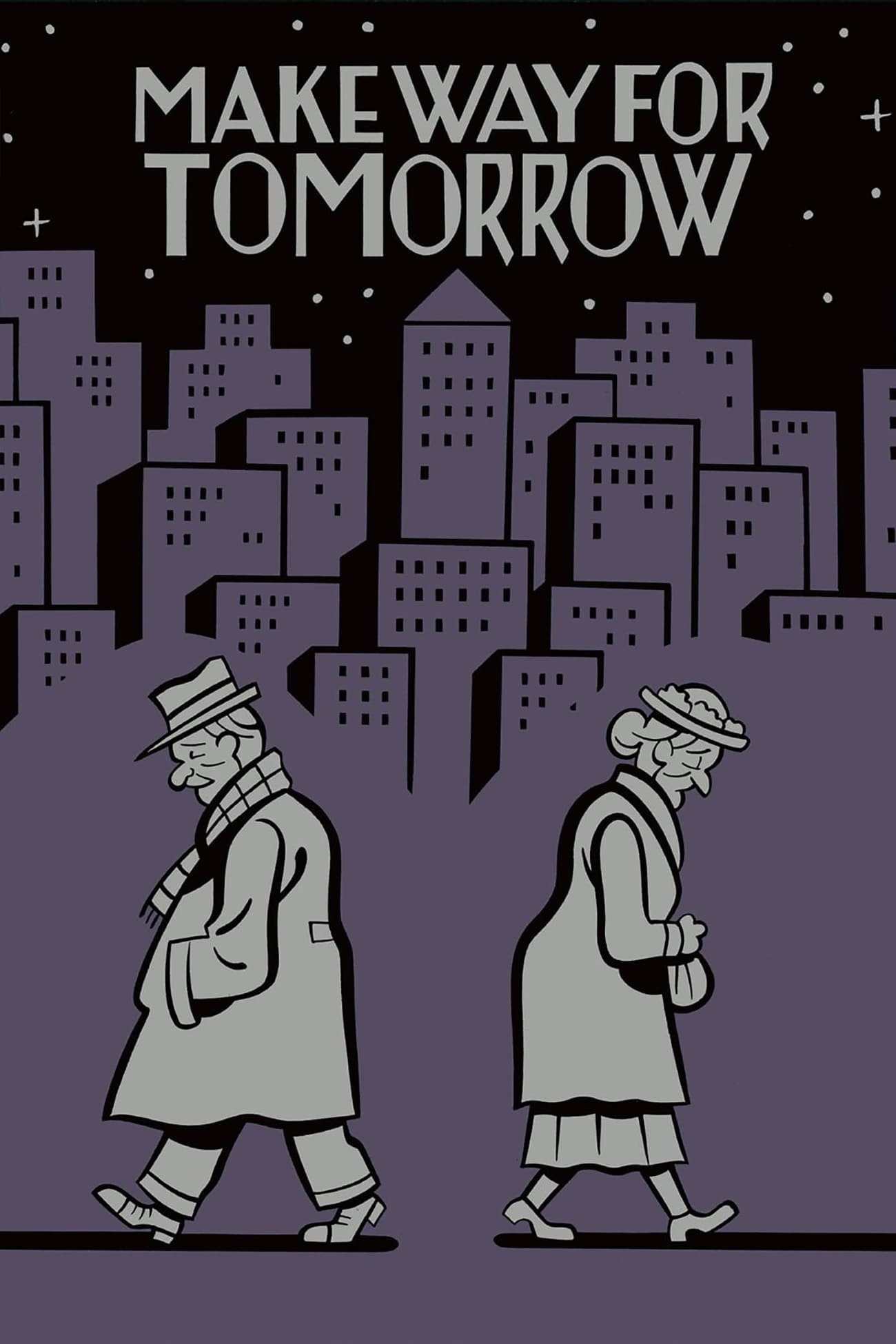
My first viewing of “Make Way for Tomorrow” felt like an intimate journey through the subtle devastations and quiet dignity of aging. Leo McCarey, whose directorial signature often leans towards warmth and comedy, stunned me with this drama that refuses to turn away from life’s uncomfortable truths. The core of the film revolves around an elderly couple, Barkley and Lucy Cooper, who have lost their home during hard times and must now depend upon their grown children. As each adult child juggles practical responsibilities and emotional discomfort, the couple is separated—forced to live apart for the first time in fifty years.
Every scene resonates with the reality of familial roles reversing, and I couldn’t help but reflect on my own family dynamics while watching Lucy navigate her daughter-in-law’s icy hospitality or Barkley endure the embarrassment of being displaced. The narrative never feels contrived; instead, it slowly peels back layers of resentment, love, and resignation in the children. Though I’ll steer clear of major spoilers here, McCarey crafts a final act that radiates both hope and heartbreak—one that lingered in my mind for days.
Key Themes & Analysis
I was most struck by how the underlying theme of generational disconnect pulses through every interaction. The film draws its dramatic strength not from melodrama, but from the authenticity of its situations; as I watched Lucy struggle to maintain her dignity in a world quietly conspiring to sideline her, I felt a deep empathy for anyone marginalized by circumstances they cannot control. The brilliant cinematography by William C. Mellor shies away from overt symbolism, instead letting ordinary domestic spaces become subtly oppressive, closing in on Lucy and Barkley as their options dwindle.
McCarey’s direction is a study in compassionate realism. Unlike many films of its time, “Make Way for Tomorrow” never offers sentimental solutions or easy villains. Even the selfish children are portrayed with shades of regret and guilt, making it impossible for me to fully despise them. The dialogue rarely feels dated, and the screenplay’s restraint is what gives its lines such emotional power. The camera lingers on the micro-expressions of its leads, and I found myself haunted by Beulah Bondi’s performance as Lucy—her gentle voice and small gestures reveal volumes about the loneliness of late-life vulnerability. Victor Moore as Barkley strikes a perfect balance between stubbornness and frailty, making his every word feel weighted with history.
The film tackles the notion of “duty” versus “devotion” in familial relationships. To me, it’s one of the few pre-war American movies that critically examines the myth of the nuclear family’s unconditional support. The children, torn between societal norms and personal ambitions, come across as painfully real—lacking malice, but blinded by convenience or fear. I found the slow-burning tension between gratitude and inconvenience especially powerful. Scenes where Lucy tries not to disturb her grandchildren, or Barkley hesitates to ask for help, achieve a universality that goes beyond generational or cultural specifics.
I also noticed how silence is used as a distinct storytelling tool. Extended moments without dialogue emphasize the palpable discomfort, making the awkwardness almost physical; I felt myself squirming as much as the on-screen characters. The restraint in McCarey’s direction—eschewing overt musical cues or explanatory exposition—heightens the realism and grounded the entire experience for me.
“Make Way for Tomorrow” is ultimately an indictment of both economic precarity and social amnesia. I was moved by how the film reveals the fragility of familial bonds under the pressure of financial insecurity. The house becomes a character itself: lost to the bank, a symbol of shared memories, now a site of displacement. The film’s aesthetic is simple, even stark; the lack of flourish ensures its emotional message hits even harder. Not only does it offer insight into the challenges faced by the elderly, but it also exposes the quiet failures of those trying—and sometimes failing—to honor their promises to their parents.
My Thoughts on the Historical & Social Context
When I reflect on the era that birthed “Make Way for Tomorrow,” the 1930s, I see a nation grappling with the Great Depression’s fallout. For me, the film’s focus on economic hardship isn’t just a narrative device; it’s an urgent social commentary. Families like the Coopers were common—people who survived earlier decades of abundance only to have their sense of security shattered by unemployment, bank failures, and shifting social contracts. I am often struck by how the film’s emotional honesty must have landed with contemporary audiences; it forced them to consider their obligations in a world where survival was uncertain, not guaranteed by hard work or moral virtue alone.
Watching this as a modern viewer, I can’t ignore how much these anxieties endure. Now, in an age when lifespans have lengthened but social safety nets remain fragile, the questions posed by Lucy and Barkley’s story still feel uncomfortably timely. I found myself wondering how we treat our elderly today—do we, as a society, offer more compassion or simply more bureaucracy? I also appreciate that McCarey opted to center the couple’s humanity rather than patronize them; this approach makes me reevaluate both the progress and the persistent failures of our own time. When government New Deal programs were being debated, the fate of the elderly was a daily headline—a reality that seeps into every frame of this film.
For me, “Make Way for Tomorrow” acts as a mirror—reflecting both a historical moment and our current moral choices. I feel the film’s challenge still applies: How do we balance self-preservation against the bonds of love and memory? That’s a question I continue to struggle with long after the credits roll.
Fact Check: Behind the Scenes & Real History
Digging into the backstory of this film deepened my appreciation. One trivia point that surprised me is that Beulah Bondi, who played Lucy, was only 48 years old during filming. Her transformation into a dignified, aging woman relied on careful makeup, voice modulation, and body language—a remarkable feat, considering the subtlety needed to avoid caricature. Watching her on screen, I never once questioned her authenticity; she radiates a lived-in realism that feels years beyond her actual age.
Another fascinating piece of production history is Leo McCarey’s decision to direct this project after winning the Academy Award for “The Awful Truth,” a screwball comedy. Instead of coasting on his newfound commercial clout, McCarey risked alienating audiences by turning towards a much more somber story. The gamble reportedly upset some studio executives, but, as I’ve learned, McCarey once claimed it was his favorite work—he even mentioned, “I’d trade all my Oscars for one more film like it.” For me, knowing that level of artistic integrity only enhances my respect for his vision.
The source material is the 1934 novel “Years Are So Long” by Josephine Lawrence. I’ve read that the screenplay, adapted by Viña Delmar, softened the book’s more abrasive critiques but retained its emotional core. This kind of adaptation always intrigues me—I see it as a negotiation between pleasing Hollywood’s sensibilities and remaining truthful to lived experiences of hardship. While some specific plot points were altered, the film never loses its sense of realism. The broader facts of families being split up due to economic despair are all too accurate for the era. This collision between cinematic narrative and social history makes the film’s impact even more potent for me.
Why You Should Watch It
- It stands as one of cinema’s most honest portrayals of aging, family obligation, and the quiet resilience required by both.
- The direction and performances transcend period constraints, offering a timeless lesson in cinematic realism and emotional intelligence.
- It asks hard questions about our value systems—questions that still matter in today’s world of shifting generational dynamics and economic uncertainty.
Review Conclusion
After spending time with “Make Way for Tomorrow,” I find myself haunted by its quiet precision and its refusal to offer tidy solutions. This film’s legacy rests on its ability to make viewers—no matter their age—feel both seen and implicated in its ethical dilemmas. The performances by Beulah Bondi and Victor Moore are nothing short of revelatory, and Leo McCarey’s compassionate direction ensures the story’s resonance lingers far beyond the final scene. For me, this isn’t just a relic from Hollywood’s past; it’s a persistent, uneasy meditation on love, sacrifice, and the passage of time. I rate it 4.5/5 stars for its courage, artistry, and emotional depth.
Related Reviews
- Tokyo Story (1953): I always recommend Ozu’s “Tokyo Story” to anyone deeply moved by “Make Way for Tomorrow.” Both films gently but piercingly examine familial obligation, generational misunderstanding, and the emotional landscape of aging parents. Tokyo Story’s minimalist style and focus on ordinary family rituals echo McCarey’s delicate touch. The international context gives fresh perspective on themes of loss and duty.
- Umberto D. (1952): Vittorio De Sica’s neorealist classic is, for me, another masterwork of empathy and social critique. Like Make Way for Tomorrow, it centers an elderly protagonist who struggles with poverty, loneliness, and a society that sidelines its most vulnerable. The use of street-level realism and non-professional actors connects powerfully with McCarey’s understated approach.
- The Grapes of Wrath (1940): John Ford’s adaptation of Steinbeck’s novel stirs the same raw emotions in me, particularly when it comes to the devastation families faced during America’s Great Depression. While the focus is broader—covering the plight of tenant farmers and migration—it shares a kinship in its unyielding honesty and social consciousness.
- On Golden Pond (1981): For those interested in a modern meditation on aging and family reconciliation, I find this drama by Mark Rydell captures the emotional complexities between parents and their adult children, albeit with a more hopeful resolution. Like Make Way for Tomorrow, it relies on rich character work and subtle acting to deliver its impact.
If you want to explore this film beyond basic facts, you may also be interested in how modern audiences respond to it today or whether its story was inspired by real events.
🎬 Check out today's best-selling movies on Amazon!
View Deals on Amazon