
Plot Summary
The first time I watched “Kind Hearts and Coronets,” I found myself utterly absorbed by its clever fusion of dry wit and biting social commentary. Directed by Robert Hamer, the film’s blend of dark humor and satirical critique of British aristocracy stands as one of the most quietly subversive comedies I have come across from the postwar period. In recounting the story, I want to preserve the film’s meticulously-plotted surprises, because so much of my own enjoyment came from navigating its twists without prior knowledge. So, I’ll touch only on the general contours before flagging any spoilers.
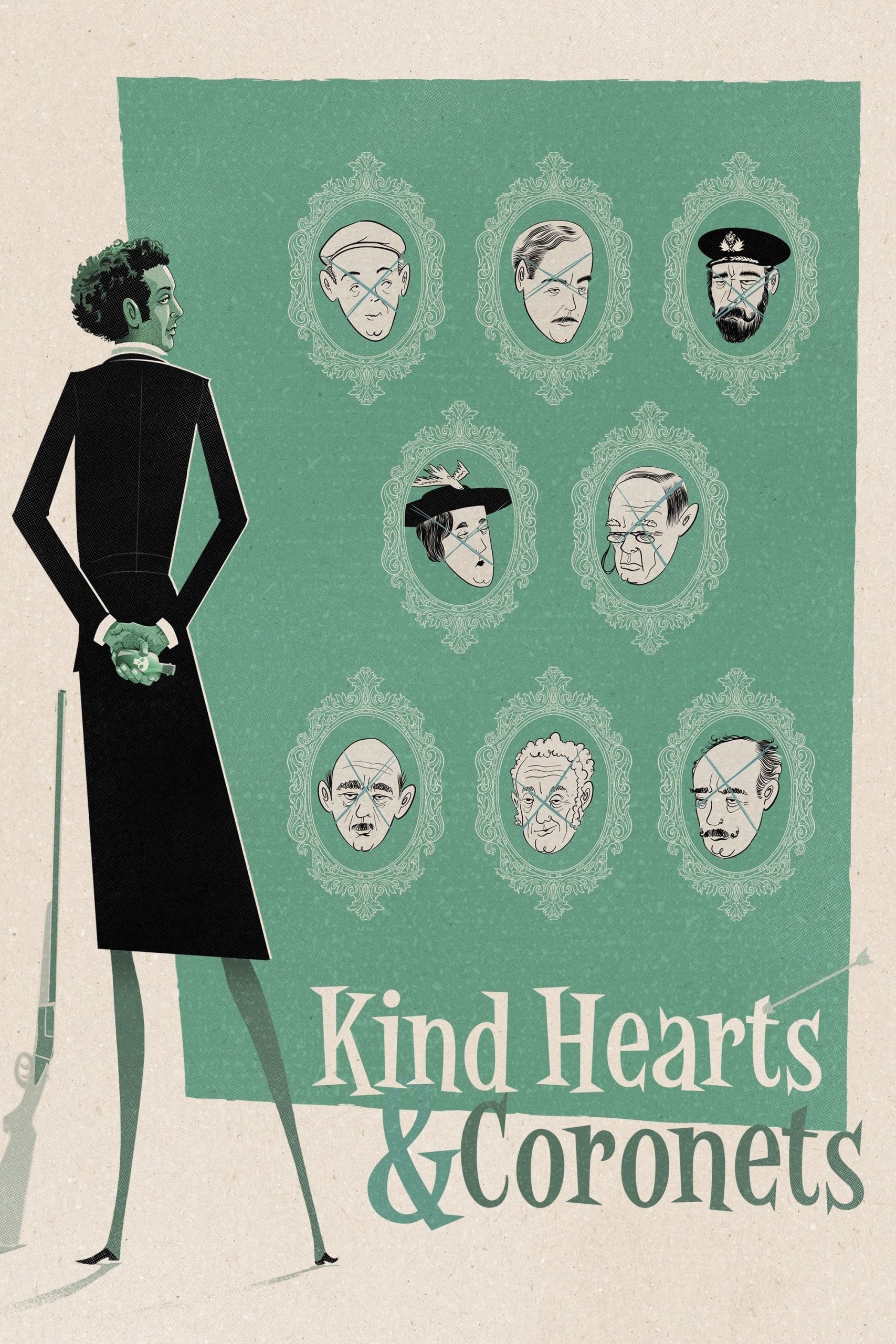
Set in Edwardian England, “Kind Hearts and Coronets” charts the audacious ascent of Louis Mazzini, a distant and disinherited relative of the wealthy D’Ascoyne family. After his mother’s death and the subsequent snubbing by her aristocratic kin, Louis calculates that the only way to restore his birthright is to eliminate every relative standing between him and the Dukedom. This premise, on its surface almost sinister, is treated with a chillingly calm elegance that caught me off guard. Watching Louis, I became fascinated by how meticulous planning mingles with the randomness of fate; his composed narration and the genteel setting mask a core of black comedy that undermines the stately world he inhabits. The real stroke of genius comes in seeing Alec Guinness portray every member of the D’Ascoyne family targeted by Louis, shifting seamlessly between genders, ages, and temperaments. This multi-role performance, to me, drives home the absurdity and insularity of inherited privilege, letting the film skewer class hierarchies with sly, satirical precision.
Spoilers below: If you wish to keep the intricate plot unspoiled, I suggest skipping ahead. The full moral complexity of Louis’s plan emerges as he manipulates not just those above him in the peerage, but also the significant women in his life—his childhood sweetheart Sibella and the virtuous Edith. Each interaction is shot through with duplicity and self-serving calculation. Every step Louis takes brings him closer to his goal but further into ethical ambiguity. All the while, the narrative voice-over, laced with irony, pulled me ever more into his coldly rational worldview—drawing laughter as often as consternation. Even as murders accumulate, the film winks at us: the business of climbing the social ladder is messy, and often outrageously funny, too.
Key Themes & Analysis
What struck me most about “Kind Hearts and Coronets” is its unwaveringly sharp dissection of British class structure and the illusion of inherited morality. Throughout the film, the tone is polite, the countryside genteel, but beneath every afternoon tea I sensed a simmering critique. Robert Hamer, in my eyes, wields his camera as a satirical scalpel. I marveled at how he transforms each scene—whether it’s a sun-drenched garden party or an ornate drawing room—into an arena for subtle power plays and cruel ironies. The cinematography, with its crisp contrasts, frames Louis as both insider and perpetual outsider; he moves through the world of privilege as if on a stage he wasn’t originally permitted to enter.
I find it astonishing how seamlessly the film oscillates between elegance and brutality. The soundtrack, at first so restrained, gains undercurrents of tension as each new plot unfolds. There’s an audacious calmness to Hamer’s direction that holds every shot just long enough for me to absorb all the layers of hypocrisy and repression in play. The script’s understated humor is so pointed that I often found my laughter catching in my throat. It isn’t just a whimsical caper—it’s a scathing statement on the lengths to which society will go in protecting its own privileges, and the poison that seeps through when ambition outstrips conscience.
But at the heart of my fascination with “Kind Hearts and Coronets” is Alec Guinness. Watching him take on eight entirely distinct roles, I saw a masterclass in transformation. His ability to pivot—from the blustery lord to the simpering suffragette—gives the film its surreal, almost Kafkaesque edge. Each incarnation is a caricature of aristocratic insularity, but none lapses into cartoonishness. There’s always a shadow of empathy and humanity beneath the surface. Guinness’s performance is more than a technical tour de force; it’s the film’s beating heart, and for me, sets the standard for comedic versatility.
The other principal players also left their mark. Dennis Price’s Louis manages to balance sympathy and repulsion. I found myself horrified and amused, sometimes within a single line, at his crisp delivery of murderous intent. Joan Greenwood brings a smoky, ambiguous edge to Sibella, oscillating between vulnerability and calculation. The mesmerizing chemistry between these leads makes every exchange feel like a delicately veiled battle of wits, with the stakes only growing as the narrative progresses.
Ultimately, I experienced the film as both a timeless black comedy and a cold-blooded morality play. Its enduring wit, coupled with its subversive energy, continues to challenge my own assumptions about right, wrong, and the seductive (and destructive) power of ambition.
My Thoughts on the Cultural Impact & Legacy
Every time I revisit “Kind Hearts and Coronets,” I’m reminded why it’s widely hailed as the jewel of Ealing Studios. Few films have managed to pull off such a potent combination of acerbic humor, intricate plotting, and lasting social commentary. For me, the influence of this film radiates outward into the entire tradition of British dark comedy; it paved the way for movies like “The Ladykillers” and “Kind Hearts’” modern descendants, such as “In Bruges” and “The Death of Stalin.”
Part of its legacy for me—and I suspect for many cinephiles—is how it redefined what the so-called “gentleman’s crime” could look like on screen. By injecting such a polite and articulate antihero into a highly rigid social world, Hamer carved out space for a new kind of protagonist: thoughtful, articulate, and utterly ruthless. I believe the film’s bold blending of comedy and noir sensibilities inspired both British and international filmmakers to swap out the brash gangster or gumshoe for antagonists who slink through drawing rooms rather than dark alleys.
On a personal level, “Kind Hearts and Coronets” challenged me to read films beyond plot and character, to ask what the surface elegance of any story is concealing. It’s a perfect lens for thinking about the performativity of social roles—a fascination of mine as a curator and critic. Watching this movie, I can’t help but trace its DNA forward: its influence lingers in every pitch-black British comedy, echoing in the clever dialogue and moral slipperiness that so often define the genre today.
What really cements the film’s significance for me is its refusal to settle into easy answers. Even now, the ending feels startlingly modern. The final scene lingers not on triumph or defeat, but on the ambiguities and unintended consequences of Louis’s pursuit. I’m left turning over the possibilities long after the credits roll. That sense of enduring uncertainty is, for me, what gives the film its power to resonate across generations—and what makes it perpetually relevant in any conflict between personal ambition and inherited order.
Fascinating Behind-the-Scenes Facts
Peeling back the curtain on “Kind Hearts and Coronets,” I found several production stories that added even more layers to my appreciation. One of the most fascinating tales concerns Alec Guinness’s extraordinary performance. Guinness famously played eight members of the D’Ascoyne family—a feat that required not just rapid costume changes, but also innovation behind the camera. I learned that the technical challenge of having Guinness interact with himself on screen demanded inventive special-effects work for its era. For instance, in the scene featuring a family portrait, visual trickery and painstaking preparation allowed Guinness to occupy multiple spaces in a single frame—a precursor to the split-screen techniques we take for granted today.
Another detail that always stands out to me is that Dennis Price, who played Louis, was not the studio’s first choice for the role. The filmmakers initially sought Dirk Bogarde, a rising star at the time, but his youthful appearance and lack of gravitas led the team to look elsewhere. Price’s casting brought the necessary blend of sophistication, bitterness, and dry wit that made Louis memorable; his performance has since been vindicated as one of the defining turns of postwar British cinema.
And lastly, there’s the delightful anecdote about the film’s American release. What really intrigues me is how the infamous closing shot had to be censored for U.S. audiences. The original ending posed questions about morality and justice, but squeamish censors insisted on a different version that left Louis’s fate unambiguously damning. This tiny but telling change reflects, in my mind, the film’s ability to provoke discomfort and debate—its willingness to twist the knife, even beyond the borders of Britain.
Why You Should Watch It
- If you appreciate razor-sharp satire and subversive humor, this film is a masterclass in both, expertly lampooning the British class system with elegance and wit.
- For cinephiles, Alec Guinness’s tour-de-force performance—inhabiting eight distinct roles—is a once-in-a-lifetime theatrical experience that redefines screen acting.
- If you’re drawn to films that blend darkness and sophistication, “Kind Hearts and Coronets” offers suspense, irony, and memorable dialogue in equal measure, leaving you with complex questions rather than easy answers.
Review Conclusion
If I could bottle the essence of biting British humor, “Kind Hearts and Coronets” would be it. Its artful direction, extraordinary performances, and daring social critique make it a film I return to again and again—each time noticing a new layer of sly irony or emotional complexity. For me, it’s a perfect example of how far wit, ingenuity, and a touch of darkness can go in reinventing the comedy genre. Star rating: 5/5.
Related Reviews
- The Ladykillers (1955): I recommend this other quintessential Ealing comedy for its similar use of macabre humor, meticulous ensemble performances, and ironic take on morality. If what you loved in “Kind Hearts and Coronets” is its blending of darkness with comic absurdity, “The Ladykillers” delivers in spades.
- Kind Hearts and Coronets’ Contemporaries: “The Man in the White Suit” (1951): This film fascinates me for its portrayal of outsider genius battling against established power structures—a theme that resonates closely with Louis’s underdog trajectory, though here rendered with more whimsy and less malice.
- The Discreet Charm of the Bourgeoisie (1972): I’m often struck by how Luis Buñuel’s surrealist satire channels the same spirit of anti-establishment mischief. Both films lampoon the rituals and pretensions of the elite, making them essential viewing for lovers of social critique with a comedic edge.
- In Bruges (2008): For those keen on modern black comedies that walk a razor’s edge between laughter and discomfort, this film echoes “Kind Hearts and Coronets” in its fusion of existential gravity with scalding wit—but in a thoroughly contemporary setting.
For readers looking to go deeper, these perspectives may help place the film in a broader context.
🎬 Check out today's best-selling movies on Amazon!
View Deals on Amazon