
Plot Summary
From the moment “King Kong” (1933) unfurled its iconic title card, I was instantly swept into what I can only describe as a masterful blend of adventure, horror, and spectacle. Directed by Merian C. Cooper and Ernest B. Schoedsack, this film doesn’t simply present a monster-on-the-loose story; instead, it offers a multi-layered journey that straddles the line between beauty and destruction. I found myself following a ragtag expedition, helmed by an ambitious filmmaker, Carl Denham, as he leads his crew and a luckless young actress, Ann Darrow, to the mysterious Skull Island. There, they encounter not only Kong—an awe-inspiring giant ape—but also a world fraught with dangers that feel exotic, unpredictable, and menacing.
I was particularly drawn to how the film sets up its intrigue early, hinting at a forbidden land that’s rumored to be home to unimaginable creatures. Ann’s evolving relationship with Kong, a creature both terrifying and oddly sympathetic, becomes a central axis around which the narrative pivots. Though I’ll avoid divulging major spoilers, I feel compelled to mention that the story eventually shifts from remote, uncharted territories back to the bustling heart of New York. Here, spectacle turns tragic, and the boundaries between victim and villain blur—a testament to the film’s refusal to settle for simplistic monster-movie tropes.
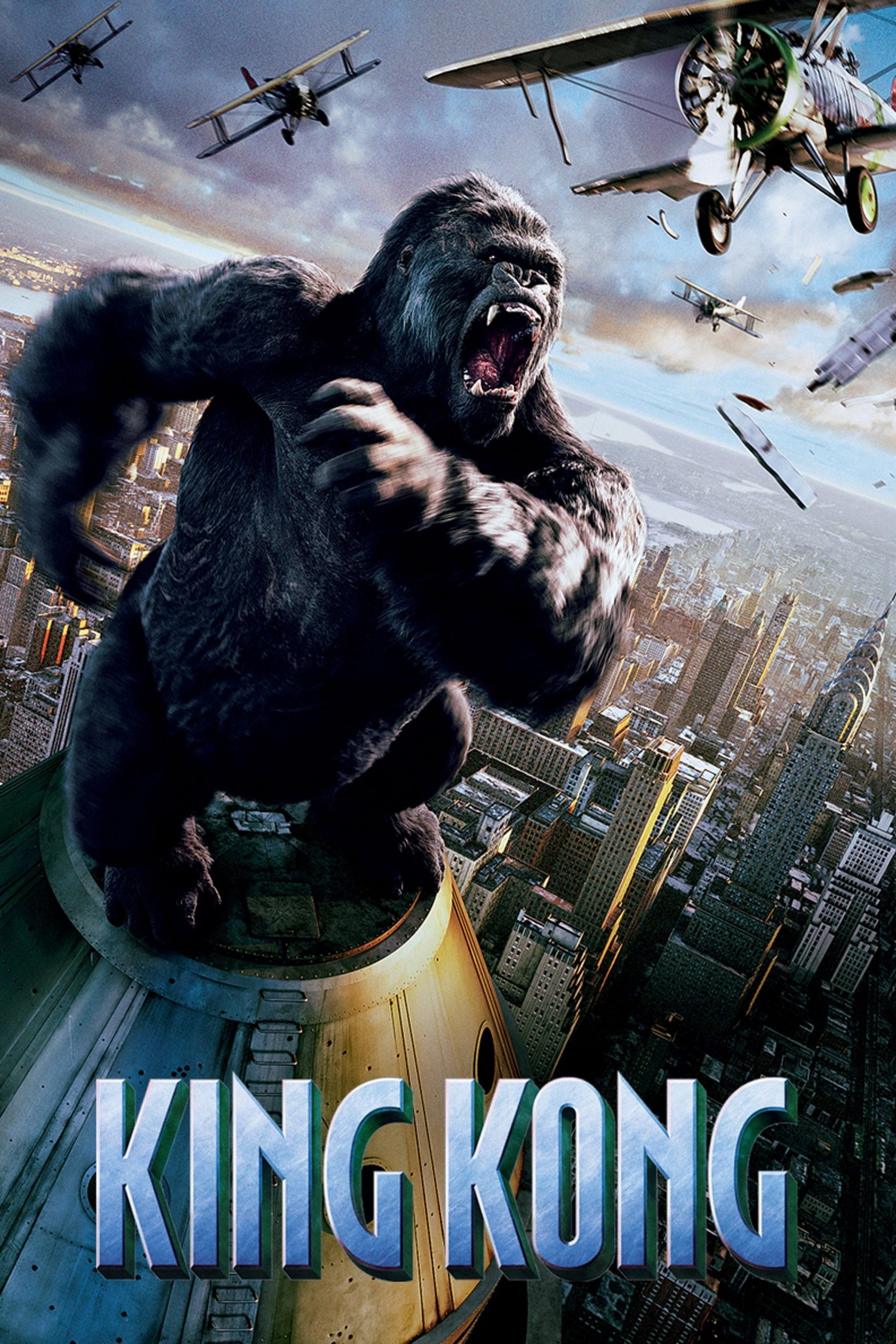
For those wary of spoilers: If you’re new to “King Kong,” brace yourself for a finale that’s not just memorable for its action, but also for its deeply-rooted emotional stakes. The climactic scenes atop the Empire State Building are so embedded in pop culture that their outcome feels almost inevitable, yet I was surprised by how much empathy and awe the film manages to weave into these moments.
Key Themes & Analysis
What endures in my memory isn’t just the stop-motion brilliance or the now-familiar silhouette of Kong on a skyscraper—it’s the potent exploration of obsession, exploitation, and colonial anxiety. The driving theme, for me, is humanity’s reckless ambition versus nature’s raw power. Watching Denham’s single-minded quest, I saw a clear metaphor for the Western drive to conquer the unfamiliar, to tame what cannot (and arguably should not) be tamed. Ann Darrow, as ‘the beauty’, is simultaneously agent and object, embodying both vulnerability and a surprising resilience that constantly subverts expectations of the era’s female leads.
The cinematography is stunningly inventive, especially considering the film’s age. I was particularly struck by the moody, shadow-draped look achieved by cinematographer Edward Linden. The atmosphere is thick with both menace and wonder. On Skull Island, the jungle is more than just a backdrop—it feels alive, encroaching on the characters, threatening to engulf them as much as Kong himself does. The stop-motion animation, orchestrated by Willis O’Brien, blew me away with its uncanny ability to breathe emotion into Kong’s face; somehow, clay and wire convey sorrow, rage, and yearning with astonishing clarity.
In terms of directing, I sense that Cooper and Schoedsack approached their material with genuine awe—the kind that comes from looking at the unknown and realizing you’re dwarfed by it. Every major set-piece throbs with tension: the crew beset by dinosaurs, Ann struggling against her monstrous captor, and Kong’s desperate, tragic end in the city’s heart. The editing masterfully intersperses moments of spectacle with quieter, contemplative beats, allowing me to savor suspense rather than simply endure it.
The acting has an early-Hollywood theatricality, with Fay Wray delivering a performance as Ann that’s both tremulous and unexpectedly strong. While the supporting cast often color within broad archetypes, Wray’s chemistry with the stop-motion Kong is genuinely affecting; in her eyes, I could read living terror and, paradoxically, fleeting flashes of compassion.
For me, “King Kong” isn’t just monster mayhem—it’s a statement about humanity’s capacity to destroy what it loves or fears. Kong is never a mindless brute; he’s a figure of pathos, his tragedy reflecting the film’s recurring question: Who’s the real monster—the beast, or the men who bring him back to civilization?
My Thoughts on the Historical & Social Context
Watching “King Kong” with an understanding of its 1933 release date makes the film resonate on even deeper frequencies. Created during the Great Depression, this movie is very much a product of collective anxiety, disenchantment, and escapist longing. When I consider the era, I see why audiences flocked to theatres—people were desperate for jobs, hope, and even distraction, and yet the film’s story isn’t only about escape to a fantastical world; it’s also a mirror held up to those same anxieties.
The journey to Skull Island felt to me like a darkly romantic extension of Western colonial myths—promises of riches, virgin territories, and ‘untamed’ natives lurking in the imagination of a society still haunted by imperial ambitions. The conquest and capture of Kong echo the period’s attitudes towards the exotic ‘other’. There’s an undercurrent of fear and fascination at encountering the unknown, and this film captures that with remarkable clarity—not through overt politics, but by dramatizing the costs of exploitation and spectacle.
The Depression-era subtext is unavoidable. Kong’s downfall is staged as public entertainment. The chilling spectacle of his captivity, paraded before an eager crowd for profit, reminded me of contemporary anxieties about the commodification of suffering and the relentless hunger for distraction in hard times. There’s a cautionary edge that remains potent—can we consume tragedy without becoming complicit in it?
Yet, there’s another, subtler thread I can’t ignore: the way Ann’s story unfolds. She’s whisked from destitution into danger, her survival bound to men’s decisions and Kong’s fascination with her. There’s a vulnerability here that speaks to the precarious position of women in the 1930s workforce, especially in the entertainment industry. The film’s treatment of gender and race now demands critical reflection, its ‘othering’ both a product of its time and a key area where modern viewers rightfully take pause.
Even so, I see profound relevance in the film’s warnings against hubris and objectification. Today, as industries chase spectacle and humanity faces its own environmental reckoning, “King Kong” asks us, as insistently as ever, what price we’re willing to pay for the world’s wonders—and whether we’ll mourn them once they’re lost.
Fact Check: Behind the Scenes & Real History
As someone fascinated by the intersection of film craft and historical reality, I discovered several production stories behind “King Kong” that illuminate its enduring appeal. First, it’s almost impossible for me to talk about this film without mentioning Willis O’Brien’s stop-motion wizardry. O’Brien’s pioneering use of miniature models, rear-projection screens, and ingeniously constructed sets didn’t just yield convincing monsters; they revolutionized how audiences understood cinematic illusion. I learned that it took months to animate Kong’s climactic climb up the Empire State Building, with O’Brien laboring to create expressive facial movements that would evoke sympathy as well as fear.
Another aspect that fascinated me is the film’s sound design. King Kong was one of the earliest “talkies” to use a fully integrated musical score (Max Steiner’s groundbreaking work). Rather than simply scoring the opening and closing credits, Steiner’s music threads through the entire narrative, punctuating action and enriching character moments. This wasn’t standard practice at the time, and I believe it’s a major reason the film feels so emotionally textured when watched today.
Finally, I uncovered a curious casting struggle. Fay Wray, cast as Ann Darrow, was sold on the role with the promise of “the tallest, darkest leading man in Hollywood”—only to learn she’d be opposite an 18-inch model ape. I love how this story adds a layer of playful irony to Wray’s often-terrified expressions on screen. And as for the film’s “historicity,” Skull Island and its creatures are pure cinematic invention—no such island or ape ever existed—but the anxieties the film explores are rooted firmly in its real-world context.
Why You Should Watch It
- It’s a foundational work that shaped modern adventure, horror, and fantasy—and its innovations still influence filmmakers today.
- The spectacle is truly unforgettable, from stop-motion dinosaurs to the iconic finale atop the Empire State Building.
- You’ll find a surprisingly rich well of themes about exploitation, ambition, and cultural collision—far more than your average monster flick.
Review Conclusion
After revisiting “King Kong” with an eye for both nostalgia and critical reflection, I’m convinced this isn’t only a milestone in special effects, but a lasting meditation on where wonder and terror overlap. Its blend of pulp adventure, technical wizardry, and cautionary fable is as captivating now as it must have been during its Depression-era debut. This is one of those rare films where spectacle and substance go hand in hand, and while some aspects (particularly its portrayal of race and gender) demand a more critical eye today, the overall achievement remains nothing short of awe-inspiring for me.
My final rating: 4.5/5 stars.
Related Reviews
- “The Lost World” (1925) – I recommend this earlier silent-era dinosaur adventure because its groundbreaking stop-motion animation by Willis O’Brien directly paved the way for “King Kong.” If you want another blend of exploration, spectacle, and the uncanny, this is a fantastic companion piece.
- “Mighty Joe Young” (1949) – This film revisits the giant ape genre in a more humane, sometimes comedic fashion, with another innovation in effects by O’Brien. I find it meaningful as an echo of Kong’s themes: exploitation, human-animal bonds, and the unpredictability of spectacle.
- “Jurassic Park” (1993) – Steven Spielberg’s modern monster-classic inherits Kong’s legacy of awe and terror, blending technological innovation with sharp social commentary about hubris and human responsibility. I see it as the direct descendant of “King Kong’s” fascination with unleashing the prehistoric upon the modern world.
- “Metropolis” (1927) – Though not a monster movie, this German science fiction landmark similarly uses technical innovation and visual grandeur to challenge the industrial and social anxieties of its era. If you’re drawn to films that combine groundbreaking visuals with critical undertones, you’ll find “Metropolis” a rewarding experience.
If you want to explore this film beyond basic facts, you may also be interested in how modern audiences respond to it today or whether its story was inspired by real events.
🎬 Check out today's best-selling movies on Amazon!
View Deals on Amazon