
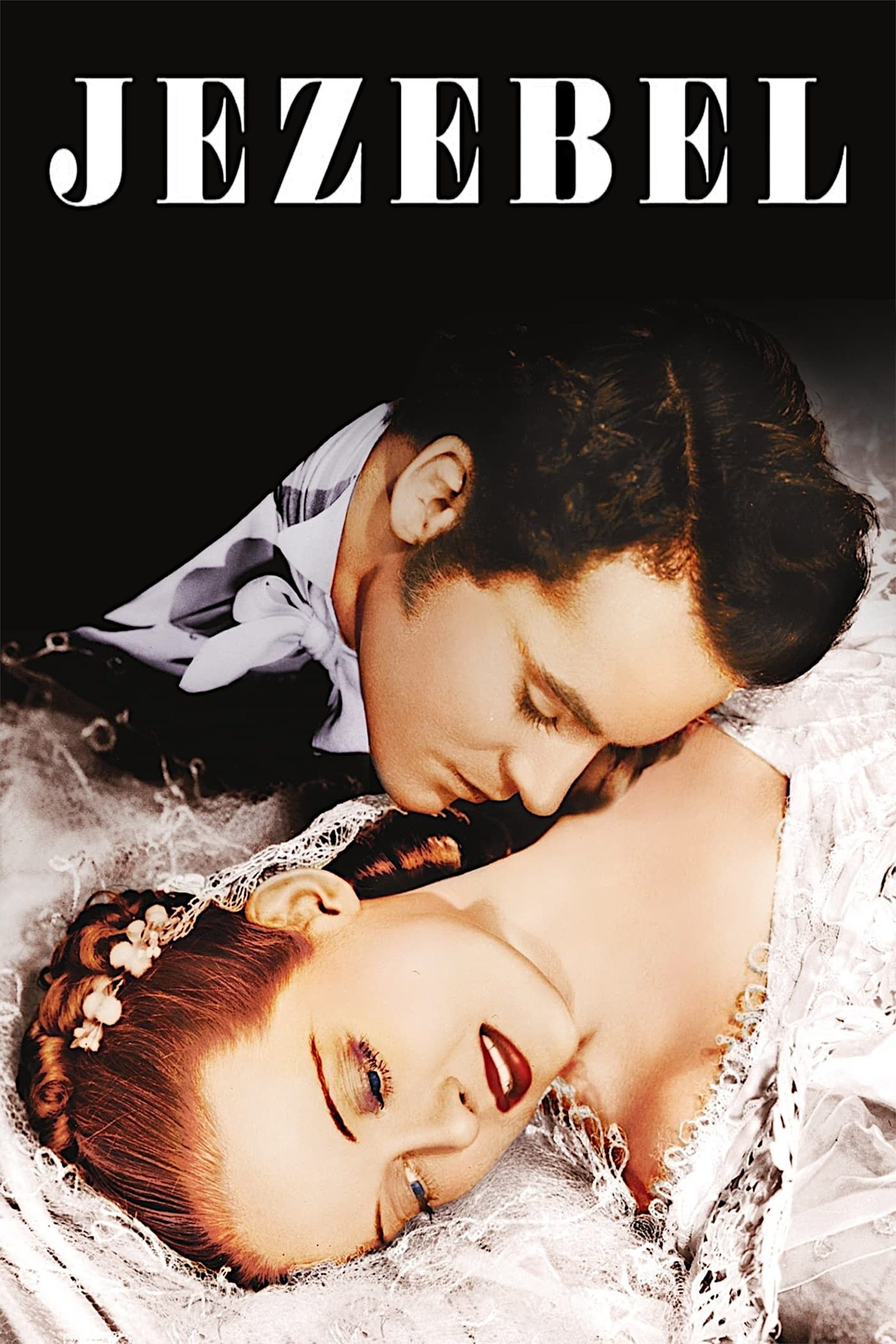
Plot Summary
From the moment I sat down with William Wyler’s “Jezebel”, a 1938 drama wrapped in the lush traditions of the Old South, I could feel a tide of complex emotion beneath its stately surface. At its heart, “Jezebel” follows Julie Marsden, a fiercely independent woman in New Orleans before the Civil War. Her spirited defiance of societal expectations, especially regarding gender roles, places her in constant friction with the conservative world around her and with those she loves most. I was drawn in by how the film balances opulent southern settings with an undertow of tension, building up to a cascade of personal and societal consequences.
What impressed me most was how the narrative steers through pride, love, retribution, and redemption, all while never letting go of the audience’s empathy for its central heroine. Julie’s infamous decision to wear a scandalous red dress to an all-white ball—an act of rebellion meant to provoke her loyal fiancé, Preston “Pres” Dillard—left me equal parts sympathetic and aghast at the fraught emotional stakes. “Jezebel” is not simply a Southern melodrama; it’s a simmering portrait of a woman striving to define herself against a world bent on taming her.
Without delving into major spoilers, I can say that the later acts of the film deepen the initial personal drama, as the outbreak of yellow fever transforms both the physical landscape and the fates of those involved. Choices made in moments of pride echo through every character’s life, giving the final resolution a gravity that stayed with me long after the credits rolled.
Key Themes & Analysis
What I found most compelling about “Jezebel” is how the film interrogates power, pride, and the cost of social nonconformity through the lens of Julie’s journey. The script, adapted from Owen Davis’s play, spins a web where every decision—no matter how rebellious or impulsive—reveals deeper truths about gender, status, and forgiveness. Julie isn’t simply stubborn; she’s a woman clashing with patriarchal restrictions at every step, and I could feel her internal fire through every line Bette Davis delivers.
Bette Davis’s performance owned every frame. With her intense gaze and mercurial posture, Davis makes Julie both admirable and infuriating. I was awed by how she could flash between haughty confidence and heartfelt vulnerability. It’s easy to see why this role won her the Academy Award for Best Actress; Davis lends such emotional depth that her moments of regret and defiance feel universally relatable, no matter the era.
As I watched, I saw how Wyler’s directorial choices elevate even the most intimate scenes. His command of camera movement and staging pulls us into the rarefied world of antebellum New Orleans, but he never lets the visual splendor overshadow the inner turmoil of his characters. The ballroom sequence, with its careful tracking shots and oppressive formality, is possibly one of the best-realized set-pieces in 1930s cinema. The use of shadows and candlelight in the film’s later, fever-stricken segments felt innovative to me—Wyler mirrors Julie’s emotional darkness with literal darkness, amplifying the sense of impending doom.
Another aspect that struck me was the interplay of class and race throughout the narrative. The African American characters, though not centered, are omnipresent in the backdrop, giving an uneasy authenticity to the portrayal of the South. Although the depiction remains firmly within the prejudices of its time, I thought the film’s subtle acknowledgement of these hierarchies made for an unspoken, but critical, undercurrent. This choice by Wyler and screenwriter Jo Swerling layered meaning into the lush decor and genteel facades, exposing societal rot just beneath the surface.
I also want to highlight Max Steiner’s musical score, which I perceived as a vital storytelling device. Steiner’s compositions escalate from genteel waltzes to urgent, stormy themes, mirroring Julie’s emotional trajectory. The music isn’t just background—it pulses with the same energy and volatility that define Julie herself.
Costume design also became a storytelling tool in its own right. That red dress, unforgettable and symbolic, not only becomes a plot catalyst but represents everything at stake for Julie. Edith Head’s work communicates volumes about gender expectations, status, and rebellion, reinforcing the film’s commentary with every lavish stitch.
What lingers for me is how Wyler balances grand melodrama with piercing psychological insight. “Jezebel” is as much about the personal cost of pride as it is about the suffocating codes of the South. Every character is defined by what they refuse to surrender—be it love, status, or integrity. Through Davis’s performance and Wyler’s steady hand, these abstract ideas become flesh-and-blood struggles, and I found myself deeply invested in the outcome, no matter how flawed its protagonists might be.
My Thoughts on the Cultural Impact & Legacy
Whenever I return to “Jezebel,” I’m reminded of how certain films transcend their immediate era to become cultural touchstones. Watching it now, I see how it helped codify the “Southern belle” archetype—but with a crucial, subversive twist. I was particularly moved by the way it prefigured later, even more ambitious films, such as “Gone with the Wind.” Yet, while many might be quick to compare these two, I feel “Jezebel” deserves its own pedestal for how it risks empathy on a protagonist who frequently thwarts her own happiness.
From my perspective as a film curator, the enduring relevance of “Jezebel” comes from its willingness to challenge viewers. I recognize how it broke ground by offering a woman’s story that was layered, messy, and unapologetic in its complexity. I see modern echoes in films that dare to place difficult, headstrong women at the forefront, tracing their defiance and consequence with intelligence and empathy.
Beyond genre, “Jezebel” shaped the way American melodrama addressed the politics of gender and societal expectation. For me, the lasting legacy is twofold: Bette Davis as a screen icon whose blend of ferocity and vulnerability feels just as electrifying today, and William Wyler’s unyielding vision of how style and substance can be fused together. The film’s boldness in exposing the psychological cost of social rigidity inspired future filmmakers to probe the pain beneath the perfection—not just in period pieces, but across drama as a whole.
Every time I share “Jezebel” with others, I find myself reflecting on why it matters: its willingness to depict redemption, sacrifice, and accountability as struggle, not moral certainty. In my own film journey, it stands as a touchstone for how movies can interrogate their own era while pointing toward the dilemmas of ours.
Fascinating Behind-the-Scenes Facts
One detail I find both fascinating and telling is Bette Davis’s casting and her relentless preparation for the role of Julie. Davis was hungry to prove herself after not being offered the leading role in “Gone with the Wind”. Determined, she poured herself into every nuance of her character, reportedly spending weeks rehearsing the infamous red dress scene alone, trying to capture just the right balance of pride and hurt. That personal drive is palpable, and it’s no surprise to me that Davis won an Oscar for her work here.
A technical production anecdote I particularly love involves William Wyler’s meticulous approach to directing. There are stories that Wyler demanded up to 40 takes for certain crucial scenes—most notably the sequence at the Olympus Ball—just to evoke the precise emotional tension he wanted from his actors. While this frustrated some on set, Davis later credited the director’s perfectionism with helping her deliver one of the finest performances of her career. This level of attention to dramatic suspense shaped the entire tone of the picture.
Another piece of behind-the-scenes trivia that fascinates me is the way Edith Head, the legendary costume designer, labored over the symbolism in Julie’s wardrobe. In a time when color film was not available, Head and the filmmakers worked obsessively to select a shade for the infamous “red” dress that would be captured as the darkest possible tone in black-and-white. This not only ensured the audience would recognize the scandalous intent but also made it visually pop against the other costumes, giving the infamous moment more impact despite the technical limitations of the era.
Why You Should Watch It
- For the riveting, career-defining performance of Bette Davis, whose portrayal of Julie Marsden remains a masterclass in screen acting.
- If you appreciate sumptuous, atmospheric dramas that deftly interrogate gender, pride, and the politics of social convention.
- To witness one of the most iconic collaborations between director William Wyler and Davis, a pairing that pushed the boundaries of dramatic storytelling in Hollywood’s Golden Age.
Review Conclusion
My time with “Jezebel” always leaves me in awe of its layered storytelling and the raw, unapologetic power of its lead performance. This film isn’t just a jewel of 1930s cinema—it’s a living document of ambition, rebellion, and the search for forgiveness. When I recommend “Jezebel”, I do so knowing that it offers not only emotional resonance but also an enduring lesson in the sophistication and artistry of Hollywood’s classic period. Every scene pulses with meaning, every character feels lived-in, and the technical craftsmanship is simply a joy to experience.
For any lover of cinematic history—or anyone who simply wants to see performers and directors at the peak of their craft—“Jezebel” deserves a place at the top of your list. My personal rating: 4.5/5 stars.
Related Reviews
- “Gone with the Wind” (1939): I always think of this epic when reflecting on “Jezebel”, not only for its backdrop of the Southern United States but for how it centers on a complicated female lead fighting against the demands of her world. The films also share a lush visual style and a focus on the collapse of an old order.
- “Now, Voyager” (1942): Another Bette Davis triumph, this story explores transformation and forbidden love, much like “Jezebel”, but shifts the action into a modern context. I find both films essential for their honest look at women seeking independence and self-respect against societal pressures.
- “The Heiress” (1949): Directed by William Wyler as well, this psychologically rich period drama resonates with me for its intense focus on pride, emotional abuse, and the assertion of agency—qualities that echo many of the central conflicts in “Jezebel”.
- “A Streetcar Named Desire” (1951): When seeking another Southern set piece with a deeply tormented female protagonist and searing melodrama, I turn to this adaptation. The way it questions desire and social norms reminds me of the emotional stakes and breaking points found in “Jezebel”.
For readers looking to go deeper, these perspectives may help place the film in a broader context.
🎬 Check out today's best-selling movies on Amazon!
View Deals on Amazon