
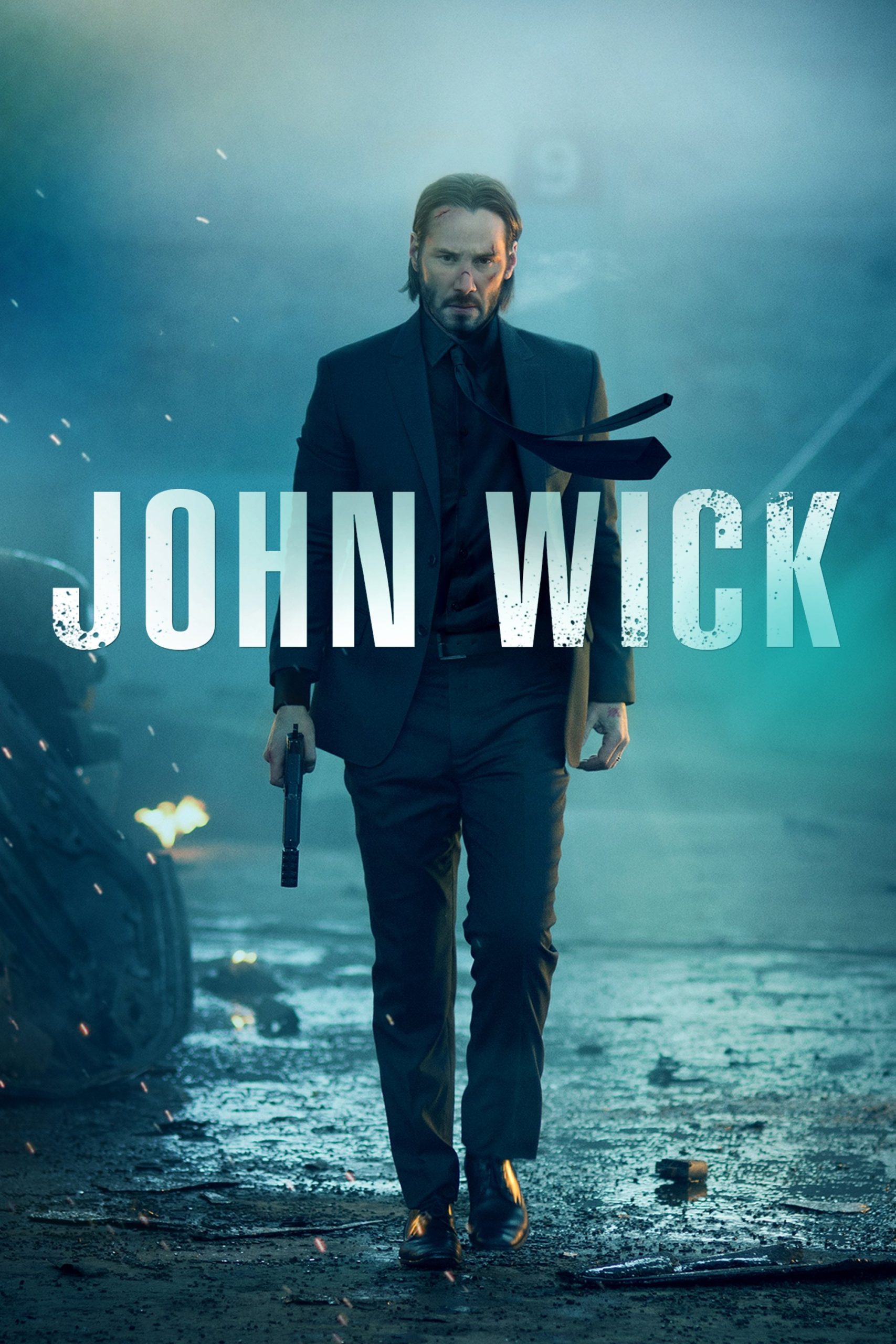
Plot Summary
I still remember the thunderous energy that struck me the first time I watched “John Wick.” Directed by Chad Stahelski, the film instantly asserts itself as more than just another action flick—it’s a visceral journey into a hyper-stylized world of violence and loss. From my perspective, “John Wick” unspools with relentless momentum, following the titular character, a retired hitman, as he’s pulled back into the criminal underworld he so desperately tried to escape. The story begins in the aftermath of a life-shattering personal tragedy—one that is delivered with such raw emotional clarity that I found it impossible not to be drawn into Wick’s grief-stricken psyche.
What I found particularly striking in the film’s opening act is the restrained way it frames John as a man marked by both deep pain and a steely resolve. The inciting incident is simple yet effective—an act of senseless brutality perpetrated by the impetuous son of a notorious Russian mob boss. This choice doesn’t just provide the fuel for the narrative; it sets up a chain reaction that feels both mythic and intimate. The story is thin by design, precisely because it’s not the complexity of the plot but the emotional truth of Wick’s journey that propels the film forward.
Without diving into major spoilers, I can say that as John seeks vengeance, what emerges is a ballet of violence choreographed with meticulous precision. The city’s criminal underworld, punctuated by shadowy clubs and covert hotels for assassins, lends a surreal, comic-book quality to the proceedings. Yet, even as it veers toward the stylized and unbelievable, I found the story anchored by the authentic rawness of Keanu Reeves’s performance. Seeing the world react to John’s return—from fearful whispers to outright panic—made me feel like I was witnessing a modern legend unleashed.
Key Themes & Analysis
On the surface, “John Wick” might look like a classic revenge tale, but I view it as a meditation on grief, identity, and the costs of violence. What resonates most with me is how effectively the film uses action as a language for emotional release. The gunfights and brutal confrontations become more than eye candy—they’re the purest expression of Wick’s anguish, his attempts to reclaim agency after surviving profound loss. The film isn’t just showing violence; it’s interrogating what such violence does to a person.
Chad Stahelski, once a stuntman himself, approaches direction with a clarity rarely seen in the genre. What stands out to me is Stahelski’s signature use of wide shots and extended takes that let the choreography breathe. Instead of rapid-fire editing, the action unfolds in fluid, uninterrupted motion. Watching Keanu Reeves maneuver through the infamous “Red Circle” club sequence, I felt utterly immersed—witnessing every punch, every shift in momentum. This deliberate style gives the violence heft and precision. Stahelski’s camera is always respectful of the performer’s skill, and that respect spills over into a deeper appreciation of the character’s pain.
From an analytical standpoint, “John Wick” is also a showcase for world-building through small details. I marveled at the existence of the Continental Hotel—a sanctum where criminals abide by an almost chivalric code. This isn’t just window dressing. In my eyes, each detail adds a layer of mythology, making John Wick’s universe feel both larger-than-life and strangely plausible. The film hints at histories and codes without bogging us down in exposition, which keeps the pacing taut and lets my imagination roam wild.
Of course, all of this would wobble if not for Keanu Reeves. I was struck by his ability to balance emotional vulnerability with stoic determination. His performance is a study in contrasts—broken but not bowed, weary but unyielding. Surrounded by a supporting cast that revels in the comic-book tone (with particular kudos to Michael Nyqvist as the villainous Viggo Tarasov), I was constantly reminded that the stakes feel real because every actor believes in them. The understated humanity Reeves brings is what makes John a fascinating anti-hero and allows the film to transcend empty spectacle.
My Thoughts on the Historical & Social Context
Reflecting on “John Wick” as a product of its time, I can’t ignore how the mid-2010s marked a shift in the action genre. By that point, audiences, including myself, were growing weary of shaky-cam aesthetics and overblown CGI. What “John Wick” offered was a return to practical effects, clear choreography, and tactile physicality; after years of computer-generated excess, this was downright refreshing. The film arrived at a moment when nostalgia for clean, stylized action—think “Die Hard” or “The Raid”—met a public craving for emotionally charged heroes. It’s clear to me that John Wick’s journey resonated because it taps into very real modern anxieties about loss, isolation, and the desire for a second chance.
From my perspective, “John Wick” touched a nerve by channeling themes of personal justice in a world where institutional justice feels impotent. In an age marked by skepticism toward broken systems—be it politics, law enforcement, or even communities—the idea of one person reasserting themselves against overwhelming odds struck me as powerfully cathartic. Wick isn’t just fighting gangsters; he’s taking on the weight of a universe that’s wronged him. Whether intended or not, I see this as quietly echoing social debates about individual versus collective responsibility, the boundaries of moral action, and how far one should go to reclaim their dignity after trauma.
What continues to impress me is how, despite its gun-heavy premise, the film never reads as a superficial glorification of violence. Instead, each sequence made me reflect on the cyclical nature of vengeance—how acting on pain can only lead to more of it. For me, in a decade defined by so many cycles of retaliation at both a personal and global level, “John Wick” uses its pulp trappings to prod at much deeper questions. Even in its wildest moments, I always felt there was a sadness beneath the gunfire—a lingering suggestion that this never was, and never could be, true victory.
Fact Check: Behind the Scenes & Real History
I love digging into the details that make a film like “John Wick” tick. One behind-the-scenes fact that always fascinates me is that Keanu Reeves performed around 90% of his own stunts for the film, training extensively in judo, Brazilian jiu-jitsu, and even spending months at the shooting range to master the so-called “gun-fu” style the film popularized. Watching those seamless combat sequences, I genuinely felt the authenticity pulse through every move; nothing about the action felt artificial or disconnected. Reeves’s commitment is partly what gives the film its infectious physicality and elevates what could have been rote violence into an elegant, almost balletic spectacle.
Another aspect that caught my attention was the inspiration behind the world-building. The film’s Continental Hotel, with its strict assassin rules and exclusive gold coin system, isn’t drawn from real history—but it does echo secret societies and old-world codes of honor. To me, this blend of noir myth and urban legend gives the film a heightened reality, blending the mundanity of modern crime with the intrigue of ancient rituals. There are no “Continental” hotels lurking in the real world, but the idea of such spaces, where criminals abide by honor, makes the fiction feel more plausible and seductive to me.
I also discovered that the role of John Wick was originally written for an older actor, possibly someone in their late 60s, with the character described as a retired, grizzled hitman “out of the game for 20 years.” The screenplay initially made its rounds with this intention, but after Reeves’s involvement, the story was tailored for a younger character closer to his age. I believe this casting shift allowed the film to balance weariness with agility, blending the gravitas of a hardened killer with the energy to anchor the film’s breakneck pace.
Why You Should Watch It
- The action choreography is groundbreaking in its clarity and intensity; every fight feels earned and meaningful, offering far more than mindless spectacle.
- The world-building teases a rich mythology without bogging you down in exposition, letting your imagination fill in the blanks.
- Keanu Reeves delivers a career-defining performance—balancing anguish, fury, and silent vulnerability in a way that grounds the film’s most outrageous moments.
Review Conclusion
Sitting with all my thoughts, what “John Wick” offers isn’t just the thrill of expertly choreographed action, but a full immersion into the pains and passions of a legend reborn. I keep returning to the way it elevates what could have been a forgettable revenge fantasy into a cinematic statement about loss, resilience, and the lines people cross when the world takes away everything dear. Stahelski and Reeves, in tandem, deliver an experience that is as honest as it is operatic. For me, “John Wick” is an essential watch for anyone craving depth beneath their action thrills.
Rating: 4.5/5
Related Reviews
- The Raid: Redemption (2011) – I recommend this film for anyone who, like me, relishes impeccably staged fight choreography and relentless pacing. “The Raid” shares a similar dedication to practical, visceral action and raises the stakes with each passing minute.
- Collateral (2004) – If “John Wick” draws you in with its lonely antihero and neon-lit cityscapes, “Collateral” offers a tense character-centric journey through the Los Angeles underworld. Both films use the urban night as a character and explore themes of moral ambiguity and existential crisis.
- Atomic Blonde (2017) – For more high-style action painted with neon and attitude, “Atomic Blonde” delivers a female-driven twist on the “lone assassin” formula. I find its elaborate set pieces and world-weary protagonist to be in direct conversation with Wick’s universe—elegant, bruising, and unapologetically cool.
- Logan (2017) – When it comes to stories about vengeance, grief, and personal redemption, “Logan” is a poignant counterpoint. Like “John Wick,” it anchors spectacular action in character-driven pain, using violence not for shock but to probe deeper wounds.
If you want to explore this film beyond basic facts, you may also be interested in how modern audiences respond to it today or whether its story was inspired by real events.
🎬 Check out today's best-selling movies on Amazon!
View Deals on Amazon