
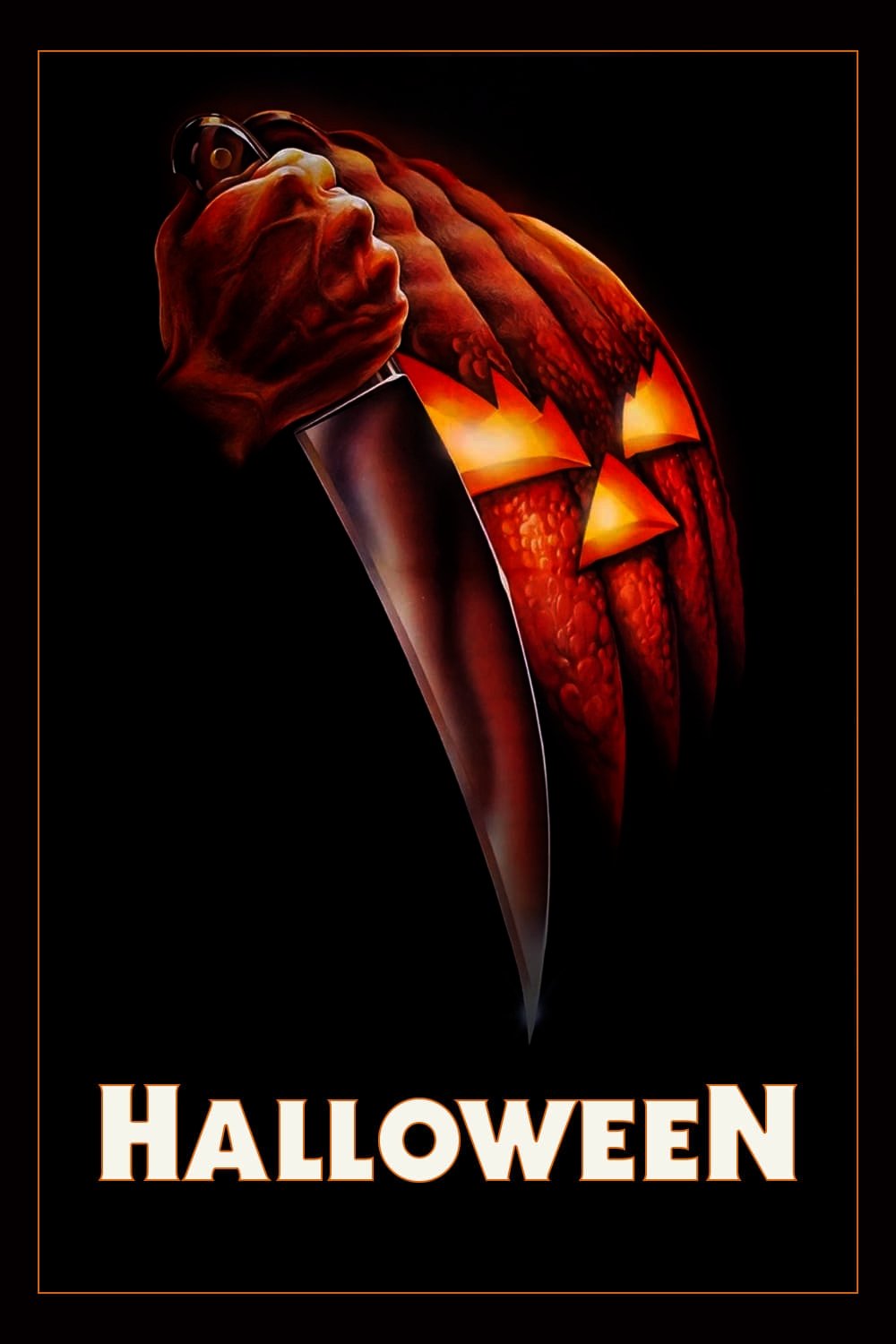
Plot Summary
Sitting down to experience John Carpenter’s masterpiece was like stepping into the cool, unnerving shadows of my own adolescence. I’ve always felt that Halloween, with its razor-sharp focus on suspense over spectacle, used the simplicity of its 1978 setting to tap into the universal fear of the unknown. For those who haven’t yet encountered Michael Myers in suburban Haddonfield, I promise not to spoil the most shocking moments, but I will say that the setup is ingeniously lean: a young Michael commits a brutal act, is confined for years, and then escapes on the titular holiday to return home. From there, I found myself entangled in the tense cat-and-mouse game between Laurie Strode—a high schooler played with understated brilliance by Jamie Lee Curtis—and the ever-silent, ever-stalking Myers. There’s an unnerving sense of inevitability as Michael prowls through the quiet streets, lurking just out of sight, and Carpenter emphasizes this dread by focusing on atmosphere over gore.
What struck me most wasn’t the body count, but how every slow, deliberate tracking shot and every understated exchange between Laurie and her friends worked to build a paranoid energy. The film drew me into its world by letting the smallest moments—a shadow on the wall, a half-glimpsed mask outside the window—carry enormous weight. The real terror wasn’t in what I saw, but what I imagined lurking just beyond the frame. The way Carpenter stretches out silence and refuses to give cheap jump scares gives this story a stamina that left me on edge long after the credits rolled.
Key Themes & Analysis
What makes me return to Halloween time and again isn’t just its status as a pillar of slasher cinema—it’s how the film handles the concept of evil itself. I see Michael Myers not as a typical “madman,” but as an almost elemental force. He’s less a person than an embodiment of relentless, inexplicable childhood trauma projected into adulthood. The way Donald Pleasence’s Dr. Loomis describes Michael as “purely and simply evil” has always stuck with me, but the beauty is that Carpenter leaves so much open to interpretation. One could argue Myers represents the way real-world violence feels senseless and random. For me, this ambiguity is actually more disturbing than any backstory could be. There’s a void behind the mask—a kind of inhuman absence—that makes Myers unforgettable and unsettling.
From a technical standpoint, I can’t overlook Dean Cundey’s cinematography. The wide, steady shots and innovative use of Steadicam create a voyeuristic quality that pulled me into the narrative, making me complicit in the act of watching. Carpenter’s bold decision to shoot scenes largely from Michael’s point of view (especially during those infamous “heavy breathing” moments) made me feel like I was inhabiting both predator and prey. This approach wasn’t just innovative for the era; it redefined horror cinema for decades to come.
When I watch Jamie Lee Curtis as Laurie Strode, I’m reminded why the “final girl” archetype endures. Laurie’s intelligence and vulnerability set her apart from the era’s clichéd damsels—she’s resourceful without ever losing her sense of fear. Curtis’s quiet performance grounds the outlandish premise, making every threat feel intensely personal. Her dynamic with the supporting cast, from P.J. Soles’s carefree Annie to Loomis’s fraught determination, struck me as unforced and organic. The friendships, casual babysitting, and small-town routines only amp up the tension when things go wrong—because, as a viewer, I found myself caring about these characters far more than I expected from a genre film of the late seventies.
Perhaps most significantly, I can’t talk about Halloween without mentioning the score. Carpenter’s chilling, minimalist theme—thumping and relentless—has become so iconic that it can still make my skin crawl decades later. It’s a testament to the director’s instinct for what truly unsettles us. By stripping away overt violence in favor of music, stillness, and suggestion, the film achieves a lingering psychological effect. That lasting dread feels more profound to me than a shock-and-awe approach, and I’m always struck by how much modern horror owes to the patient, immersive pacing pioneered here.
My Thoughts on the Historical & Social Context
Seeing Halloween through the lens of its late-1970s release, I’m always reminded of how deeply films can reflect and challenge the world in which they were made. America in 1978 was facing the aftermath of political scandals and a shifting cultural landscape—there was a sense of collective anxiety simmering beneath suburban tranquility. For me, Myers’s intrusion into the quiet, “safe” neighborhood of Haddonfield felt like an allegory for this loss of innocence. The idea that evil could lurk beneath the most familiar surfaces resonates with my own sense of unease about how quickly peace can shatter.
Looking at Laurie Strode and her friends, I see archetypes that subvert the era’s assumptions. While some critics have read the film’s morality as regressive—punishing rebellious teens—I view it less as a cautionary tale and more of a reflection on how young women navigate spaces that aren’t as safe as they seem. Laurie’s vigilance is emphasized not as moral purity, but as a kind of modern survival instinct. I believe the film’s enduring relevance lies in how it taps into real fears about vulnerability, invasion of privacy, and the unpredictability of violence.
In a time before horror became self-referential or saturated with technology, Halloween used its sparse, lived-in setting to universalize its dread. Watching the film today, I’m struck by how its themes echo the unnerving unpredictability of our own era—whether the threat comes from anonymous violence, breakdowns of community trust, or the simple human fear that the world is less stable than it appears. The timelessness of these anxieties keeps Halloween as potent now as it was in ’78, and I find myself returning to it as both a time capsule and a living, breathing document of how we process collective fear.
Fact Check: Behind the Scenes & Real History
One detail I’ve always found remarkable is how tight the film’s production budget was—barely over $300,000, a shoestring by any standard, even in 1978. What stands out to me is how Carpenter and his crew managed to maximize atmosphere, tension, and style despite financial constraints. For example, the iconic mask worn by Michael Myers was actually a repurposed, spray-painted Captain Kirk mask from a Star Trek costume. This bit of improvisation not only saved money but became a visual shorthand for unknowable terror that no expensive effect could replicate. That blank, emotionless face is now burned into my mind as the very definition of faceless fear.
During my own deep dives into film trivia, I’ve always been fascinated by the timeline in which the movie was shot. Most of Halloween’s autumn scenery was created in Southern California in the spring. The team had to collect bags of fake leaves and carefully scatter them for each shot. That level of DIY ingenuity struck me as a testament to the artfulness that comes from necessity. Watching scenes where the trees are in bloom but the ground is covered in “fallen” leaves gives the movie a strange, dreamlike quality that I only appreciated after learning the truth behind it.
Also, there’s a particular beat that stands out to me: the casting of Jamie Lee Curtis was partly a nod to Alfred Hitchcock’s Psycho, since Curtis is the daughter of Janet Leigh, the original “scream queen.” This intertextual wink added a layer of metatextual fun for film nerds like myself, as well as a sense of legacy that only grows more poignant as Curtis’s own career evolved. Unlike some slasher films that claim to be “based on true events,” there’s no direct historical parallel driving Halloween’s story—yet the attention to the realities of suburban life and the creative strategies forged in the face of limitations give the movie a place in cinematic history that feels genuinely earned.
Why You Should Watch It
- A masterclass in suspense: The atmosphere and pacing set a blueprint for psychological horror, offering an experience that stays chilling rather than relying on gratuitous violence.
- Historic innovation and influence: Watching Halloween isn’t just about thrills—it’s about seeing where so many of today’s horror tropes originated, from the “final girl” to the unstoppable silent killer.
- Unforgettable performances and style: Jamie Lee Curtis’s breakthrough role and Carpenter’s minimalist filmmaking make every scene resonate—you feel the tension, dread, and vulnerability in real time.
Review Conclusion
Whenever I revisit Halloween, I’m reminded that true horror comes from anticipation, uncertainty, and letting my imagination fill in the gaps. John Carpenter’s direction, Dean Cundey’s cinematography, and Jamie Lee Curtis’s unvarnished performance make this film iconic—not just for its scares, but for its artistry. More than four decades later, it still has the power to unsettle me with its quiet, suburban menace and potent, minimalist storytelling. For anyone eager to understand why the slasher genre endures—or simply to feel the pulse of primal fear in a well-crafted frame—I can’t recommend it enough.
My rating: 5/5 stars.
Related Reviews
- The Texas Chain Saw Massacre (1974): I connect this film’s gritty, documentary style and focus on ordinary terror to Halloween’s suburban dread. Both films use low budgets to create a raw sense of realism and anxiety, elevating the unseen and the everyday into the realm of nightmare.
- Psycho (1960): I find that Hitchcock’s psychological terror and his subversion of character expectations set the stage for Carpenter’s work. If you appreciated how Halloween frames its killer as an enigma, Psycho delivers a similarly chilling experience rooted in suspense and ambiguous evil.
- Black Christmas (1974): I see this as an important precursor to Halloween, sharing a focus on female protagonists, seasonal anxiety, and the disruption of safe spaces. The use of shadow, silence, and disturbing POV shots makes it a spiritual sibling to Carpenter’s film.
If you want to explore this film beyond basic facts, you may also be interested in how modern audiences respond to it today or whether its story was inspired by real events.
🎬 Check out today's best-selling movies on Amazon!
View Deals on Amazon