
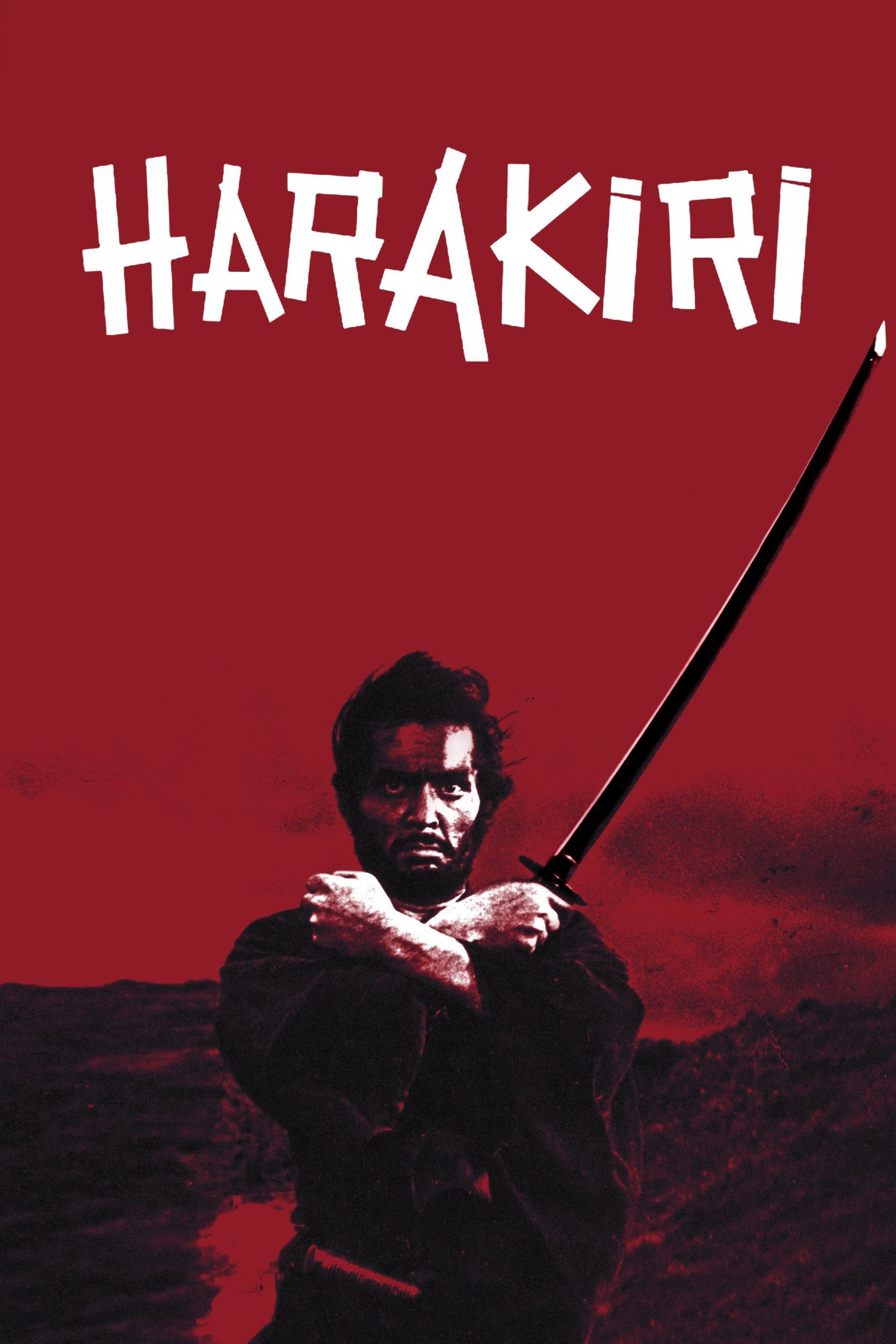
Plot Summary
When I first encountered Masaki Kobayashi’s Harakiri, I was immediately pulled into the world of feudal Japan, but not the romanticized one portrayed in many other samurai tales. Instead, what unfolded for me was a fiercely unsentimental tapestry of despair and human dignity, one that refuses to flinch from the harshness of its era. I watched as a weathered ronin named Tsugumo Hanshiro arrived at the home of a wealthy feudal lord, requesting permission to commit seppuku (ritual suicide) within its honored courtyard. On the surface, his plea felt like the quintessential set-up for a stoic warrior’s exit, but as the layers peeled back, I sensed there was another, deeper truth driving his arrival.
In recounting Hanshiro’s journey, the film crafts a tense and intricate character-driven story. Through dialogue-heavy scenes, I was gradually let in on a web of lies and hypocrisy that bound the noble house’s code of honor. The structure is almost deceptively simple at first—one man lays bare his desperate fate before men of power—but Kobayashi uses that simplicity to trap the viewer, and, as I realized, the viewer becomes complicit in the tension. The film’s pace is patient, building quietly, accumulating the fragments of Hanshiro’s real intent, and I couldn’t help but feel the dread mounting with every exchange. There are major spoilers I would need to warn about for those who want to discover the full impact of its revelations, but the core lies in how tradition and power are wielded—sometimes to protect, but more often to destroy.
Key Themes & Analysis
What struck me most was the way Harakiri turned the conventions of the jidai-geki (period drama) samurai film on their head. Instead of revering the samurai code, the movie interrogates it relentlessly. I was moved by how it exposes the hollowness at the heart of institutionalized honor. Hanshiro’s ordeal isn’t just a personal tragedy; to me, it reads as a devastating indictment of the ways in which the rituals of tradition are weaponized by those in power. Kobayashi’s direction is unsparing, meticulously building tension with every gesture and line of dialogue, until the truths that define Hanshiro’s mission are finally bared.
I found that the film’s formal choices reinforce its moral stance. The cinematography by Yoshio Miyajima floored me with its use of stark black-and-white contrast. I continually noticed how every careful composition—interior shadows, cold stone courtyards, faces half-lit—echoes the characters’ internal conflicts and the claustrophobic social structure that traps them. There’s a formality to the way the camera moves and observes, heightening the sense of ceremony and, at the same time, the cruelty lurking beneath it. The extended sequences where Hanshiro methodically challenges the samurai order are never rushed but instead rumble with a palpable sense of outrage and sorrow.
Throughout the movie, Tatsuya Nakadai, whom I consider one of the greatest actors of his era, delivers a performance that’s all volcanic restraint. I was riveted by his portrayal of a man masking a lifetime of grief and vengeance behind a wounded dignity. Even in the most anguished moments, Nakadai communicates complexity; I could see in his eyes a wellspring of loss, rage, and unyielding moral outrage. Supporting actors like Rentarô Mikuni and Akira Ishihama contribute significantly, but Nakadai’s quiet intensity became the film’s emotional center for me, holding my attention in every frame.
On a thematic level, Harakiri challenges viewers to ask what true honor is. As I watched the supposed arbiters of rectitude bend and twist their own code for appearances, I felt the film’s critique take direct aim at any system that claims moral superiority while failing the very people it’s supposed to protect. I can’t help but see Kobayashi’s broader condemnation of authority—one that resonates not just with Japanese feudalism, but with any society that conceals violence or inequality behind traditions and grand words. The film’s exploration of ritual, violence, family, and hypocrisy isn’t just historical; it is piercingly modern in its implications, and that’s what lingered with me long after the credits rolled.
My Thoughts on the Cultural Impact & Legacy
Whenever I reflect on Harakiri, I’m struck by how it redefined what a samurai film could accomplish—artistically, politically, and emotionally. It’s not simply a subversive take on bushido; it’s an act of cinematic rebellion that continues to ripple through both Japanese and world cinema. As someone who seeks out pivotal works that shift genres, I find that this film’s legacy is immeasurable: it gave voice to the marginalized and exposed the dangers lurking within rigid traditions. What I cherish about it isn’t just its relevance to 1960s Japan, where postwar anxieties about authority ran rampant, but how it remains scalpel-sharp today, whenever questions of justice and institutional violence re-emerge in society.
As a curator and film lover, I consider Harakiri essential viewing—not just for what it says, but for how it says it. Its blending of suspense, intellectual rigor, and emotional depth set a new bar for any filmmaker tackling historical material with contemporary resonance. Kobayashi’s aesthetic—precise, formal, yet seething with quiet anger—has inspired directors as varied as Martin Scorsese and Park Chan-wook, both of whom have cited the film’s influence on their own work. Personally, I find myself returning to Harakiri whenever I want to be reminded that cinema can challenge, unsettle, and ultimately transform our perspective on the world. The film’s echoes show up in later works about institutional corruption, from political thrillers to psychological dramas, and that enduring relevance is, for me, the sign of a true masterpiece.
Beyond its influence on other filmmakers, what makes its legacy so profound for me is how it continues to evoke new questions each time I watch it. Its moral clarity and emotional complexity grow with the years, reminding me that the power of cinema often lies in its ability to unsettle and provoke rather than to comfort or reassure. I feel that every time someone is introduced to Harakiri, the film gets to reinvent itself—becoming part of new cultural conversations and inspiring fresh confrontations with history’s darker truths.
Fascinating Behind-the-Scenes Facts
The behind-the-scenes realities of Harakiri only deepen my appreciation for its artistry. One of the most compelling production stories I came across is how Tatsuya Nakadai wasn’t initially the first choice for Hanshiro. Though he had already made a name for himself with directors like Kurosawa, it was his haunting combination of gravitas and vulnerability that ultimately convinced Kobayashi to hand him one of the most multi-layered roles in Japanese cinema. I find it fascinating that Nakadai threw himself into the role, spending weeks—sometimes months—studying not just the martial atmosphere of the film but the psychological toll of a man who has lost everything. His immersive process, to me, is evident in every anguish-ridden glance on screen.
Another detail that fascinates me is the battle with studio executives over the film’s blunt political messaging. Kobayashi was known for his stubborn independence and refusal to water down his critiques of authority. He famously rejected studio notes encouraging a more positive or redemptive conclusion, instead doubling down on the film’s merciless final act. For me, this kind of unwavering loyalty to the director’s own ethics is what allows Harakiri to resonate so powerfully even decades later. The choices Kobayashi made on set—down to the severe architectural angles and emotionally charged blocking—were all acts of both aesthetic and political resistance.
On a technical front, I’m consistently impressed with the film’s innovative use of sound. Many of the most harrowing sequences feature prolonged silences or the faintest environmental noises—wind, footsteps, clashing bamboo. These weren’t just stylistic choices; Kobayashi worked closely with composer Toru Takemitsu and his sound team to orchestrate an auditory space that would amplify the psychological tension. The controlled soundscape lets the viewer absorb the magnitude of Hanshiro’s isolation and the collective cruelty of the samurai audience. It’s a classic example of how a skilled director can use every tool at his disposal to manipulate mood and theme, and I’m still learning new lessons from it each time I rewatch the film.
Why You Should Watch It
- It is a masterclass in subverting genre expectations, challenging everything I thought I knew about honor, violence, and loyalty in samurai films.
- The lead performance by Tatsuya Nakadai is both devastating and unforgettable; his portrayal draws out the film’s emotional core in a way that lingers long after the film ends.
- The film’s critique of institutional authority and social ritual feels just as urgent and relevant now as it did six decades ago, making it a must-watch for anyone seeking more than just historical costume drama.
Review Conclusion
Every time I recommend Harakiri, I do so knowing that it offers something far more valuable than simple entertainment. This is a film that interrogates, provokes, and dares its audience to confront uncomfortable truths—about history, society, and ourselves. The aesthetic sophistication, the razor-sharp direction, and the powerhouse performances have, in my experience, set a standard few other films of the genre reach. I walk away from each viewing with renewed respect not only for Kobayashi’s vision but for the courage it took to expose the façade of honor that governed so many lives. On every measure—from technical achievement to emotional resonance—I rate Harakiri a 5/5.
Related Reviews
- Samurai Rebellion (1967, dir. Masaki Kobayashi): For me, Kobayashi’s other major samurai drama is essential viewing for anyone moved by Harakiri’s fearless critique of authority. It shares the same blend of austere visuals and deep moral inquiry, with a similarly shattering lead performance by Toshiro Mifune.
- Twelve Angry Men (1957, dir. Sidney Lumet): While not a samurai film, this tightly wound courtroom drama reverberates with the same tension between individual conscience and institutional conformity that I found so electrifying in Harakiri.
- The Sword of Doom (1966, dir. Kihachi Okamoto): If you felt the existential darkness of Harakiri, Okamoto’s psychological samurai thriller offers another dive into moral ambiguity, isolation, and violence—delivered with visual innovation and chilling performances.
- The Human Condition Trilogy (1959-1961, dir. Masaki Kobayashi): For a broader understanding of Kobayashi’s humanistic filmography and his lifelong critique of brutality and dehumanization, this sweeping anti-war epic is, in my view, indispensable.
- Ikiru (1952, dir. Akira Kurosawa): Though different in tone, Kurosawa’s film centers on one man’s struggle against a stifling bureaucracy and delivers a personal search for meaning in the face of indifference—echoing the individual versus society conflict of Harakiri.
For readers looking to go deeper, these perspectives may help place the film in a broader context.
🎬 Check out today's best-selling movies on Amazon!
View Deals on Amazon