
Plot Summary
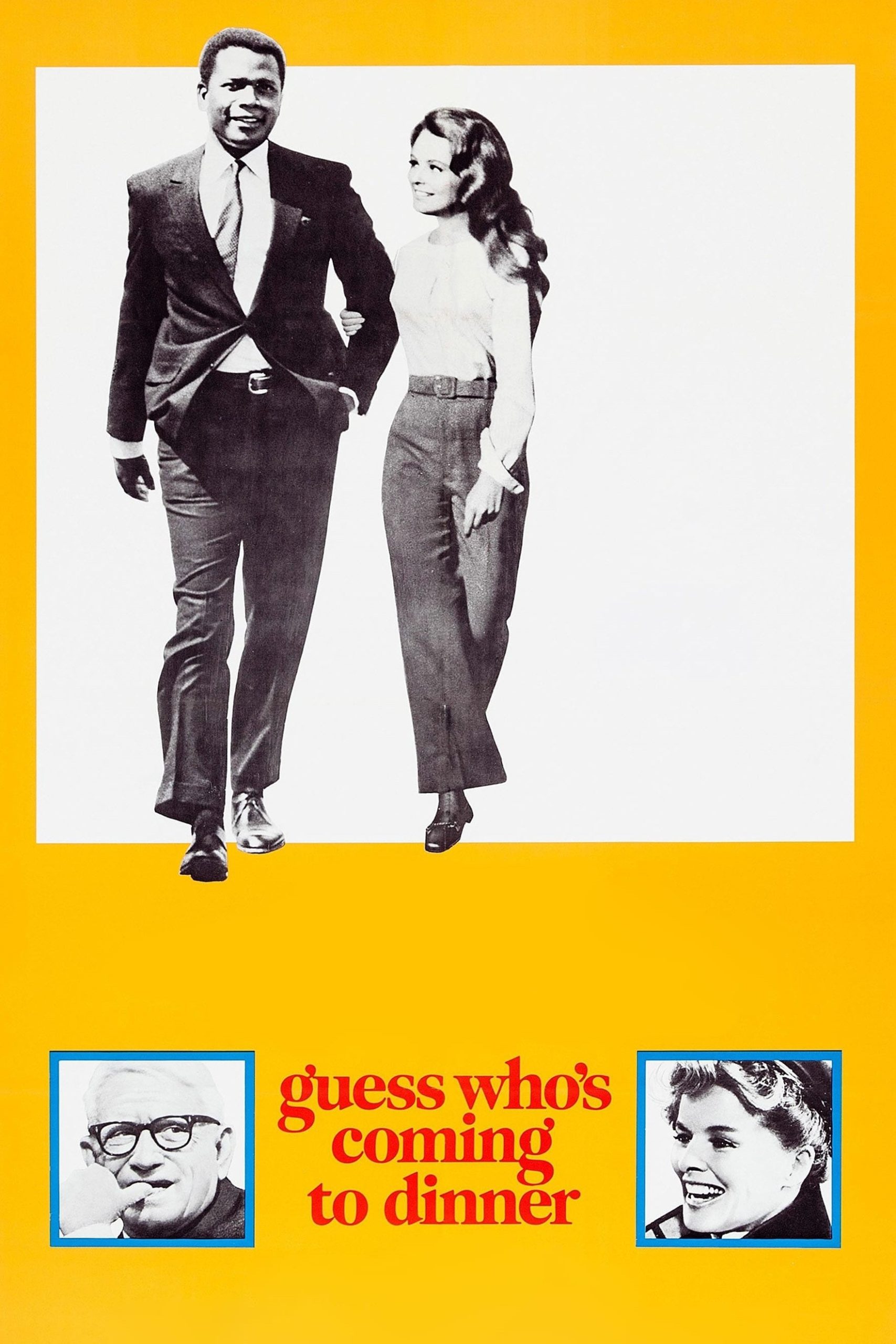
I remember the first time I watched Stanley Kramer’s “Guess Who’s Coming to Dinner”, the air in the room almost shifted as the early scenes unfolded. The film opens with the gentle humor and radiant optimism of a young couple, Joanna Drayton and Dr. John Prentice, returning home to break startling news to Joanna’s parents—a seemingly straightforward narrative, but one that soon reveals a tension rooted in 1960s America. What drew me in was not just the setup of a so-called ‘meet the parents’ scenario, but the realization that beneath this domestic façade, the film was daring to challenge the boundaries of race, marriage, and generational expectations in a time when interracial relationships were not only frowned upon but still illegal in several states.
Without venturing too far into spoiler territory, I found the drama escalating as each parent’s reaction fluctuated between confusion, fear, and a grudging sense of responsibility. Watching the parents—played with extraordinary nuance by Spencer Tracy and Katharine Hepburn—navigate their ideals versus their anxieties felt honest, painfully real, and at times, uncomfortably close to home. The script doesn’t take the easy path of broad comedy or simple moralizing; instead, it lingers in the silences and hesitations, those moments when families are forced to confront what they truly believe. It’s a slow burn that thrives on conversations—sometimes clipped, sometimes rambling, but always with subtext smoldering beneath.
Warning: Minor spoilers follow. Some of the film’s sharpest commentary surfaces as secondary characters—including the family’s longtime housekeeper and John’s own parents—are swept into the emotional maelstrom. Each offers their own perspective, and each complicates the issue further. I was particularly struck by how gracefully the script allows contradictions and discomfort to exist without always resolving them neatly.
Key Themes & Analysis
What struck me most about “Guess Who’s Coming to Dinner” is its refusal to take ideological sides in an overtly didactic way. Instead, I found myself challenged to empathize with every character’s internal struggle, especially as the film negotiates the generational divide between idealism and lived prejudice. Kramer’s direction insists that I cannot simply dismiss the parents as ‘behind the times.’ Their shock and hesitation—while perhaps jarring to a modern viewer—are handled with such sensitive realism that I kept questioning how I might react, faced with sudden shifts in my own assumptions about the world.
I was captivated by the way cinematographer Sam Leavitt stages intimate family conversations. The camera lingers in close-up, rarely letting me escape the rawness on each actor’s face. This artistic choice intensified the film’s claustrophobic mood—every word feels loaded, every silence thick with implication.
From an acting standpoint, seeing Spencer Tracy in his final role is to watch a master at his most vulnerable. I am drawn to the quiver of his voice during monologues, the way he subtly telegraphs fear and pride all at once. Katharine Hepburn, with her trademark warmth, bridges compassion and steely determination; she reminded me that navigating change often demands profound courage. Sidney Poitier, as Dr. John Prentice, radiates dignity and frustration. The restraint in his performance struck me—he embodies a man keenly aware of both his worth and the social barriers designed to limit him.
What elevates the film for me is its deft handling of the complexities of social progress. Instead of offering simplistic villains, it exposes how even progressive-minded individuals struggle to internalize the principles they claim to uphold. The script, penned by William Rose, brims with wit, intelligence, and—crucially—a humble awareness of its own limitations as a Hollywood creation wrestling with real-world pain.
Beneath the surface, I felt the movie engaging in a kind of ethical wrestling match, raising questions about whether love can overcome societal constraints or whether such optimism is a luxury afforded by privilege. The setting—an affluent, liberal San Francisco household—underscores the message: it’s easy to voice support for equality in theory. The real test comes when the issue lands, literally, at your dinner table.
For all its specificity, the film never ceases to feel timeless in its depiction of moral uncertainty and urgent hope. I left each viewing with conflicting emotions: admiration for its courage, lingering discomfort at its compromises (especially in softening the racial dynamics for a mainstream audience), and gratitude for its invitation to look inward.
My Thoughts on the Cultural Impact & Legacy
Few films have unsettled and shaped my perspective on both cinematic storytelling and social history quite like “Guess Who’s Coming to Dinner.” For me, the movie stands as a watershed moment, not simply because it addressed interracial marriage when such unions were still hotly contested, but because it dared to do so within the structure of mainstream entertainment. I am deeply moved by how the film didn’t just reflect changing attitudes in America, but helped push the needle forward. When I consider its release—mere months after the Supreme Court’s Loving v. Virginia decision that struck down anti-miscegenation laws—I see a work of art simultaneously responding to, and participating in, the currents of history.
I find myself returning to the film anytime debates about progress and personal bias reemerge in the cultural conversation. Its power lies in its insistence that real growth must often begin at home, through awkward, painful, and sometimes even comic encounters with change. As a film critic, I appreciate how it opened new territory for Hollywood to discuss subjects previously deemed too volatile or uncomfortable. Its influence echoes in countless later works, from “Do the Right Thing” to contemporary dramas exploring family dynamics across cultural divides.
On a personal level, the film’s willingness to expose its characters’ contradictions feels profoundly honest; it reminds me that being on the ‘right side of history’ is less about slogans and more about confronting ingrained beliefs. The Draytons’ struggle to live up to their own principles continues to resonate with me—serving as both a warning and an inspiration. I believe the film helped broaden the scope of the drama genre, introducing heightened realism and social awareness without abandoning the emotionality that makes classic Hollywood so resonant.
When I think about the legacy of “Guess Who’s Coming to Dinner,” I realize how many directors and screenwriters have borrowed from its template: letting sharp dialogue and lived experience drive social commentary, rather than leaning on didacticism or spectacle. For me, the enduring value of Kramer’s film isn’t just its place in history books, but its ongoing challenge to each new viewer: what would I do if faced with the unexpected, and would my principles withstand the test?
Fascinating Behind-the-Scenes Facts
The film’s production history fascinates me almost as much as what’s on screen. One fact that always stands out: Spencer Tracy’s health during filming. Tracy, visibly frail from years of illness, was not expected to complete the movie. Insurance companies refused to cover him, so both Katharine Hepburn and director Stanley Kramer took huge financial risks, putting their own salaries on the line just to ensure he could be cast. I can actually feel that urgency and vulnerability in every scene Tracy inhabits—his final monologue resonates with a gravitas shaped by personal mortality as much as social upheaval.
An equally compelling behind-the-scenes detail is the muted reaction from some studio executives and critics, who fretted that mainstream audiences would shy away from the subject matter. In the wake of this, Kramer insisted on a tone of optimism and warmth, deliberately avoiding dramatic extremes. This choice, though sometimes critiqued as softening the film’s impact, was a shrewd way to reach a wider audience. I was struck to learn that Hepburn reportedly wept when viewing Tracy’s last scene—an unscripted, deeply human moment that speaks to the intimacy formed on set.
Finally, I’ve always been intrigued by the deliberate casting of Sidney Poitier at the peak of his career. At the time, Poitier was America’s most prominent Black leading man, and Kramer shaped the character of John Prentice directly in consultation with him, crafting lines and situations that aligned both with Poitier’s public persona and his private concerns about representation. This purposeful collaboration meant a great deal to me as a viewer; it amplifies how essential it was to have Poitier portray not a stereotype, but a fully realized, multi-dimensional human being navigating incredible social pressures.
Why You Should Watch It
- A masterclass in ensemble acting. Tracy, Hepburn, and Poitier deliver performances infused with emotional honesty and nuance, elevating the story beyond its era.
- A rare Hollywood film that tackles major social issues without sacrificing warmth or relatability—making profound topics accessible without trivializing their weight.
- Relevance across generations. Its exploration of family, principle, and the limits of ‘liberal’ ideals offers lessons and questions that remain pressing today, especially in ongoing conversations about race, inclusion, and empathy.
Review Conclusion
Reflecting on “Guess Who’s Coming to Dinner,” I find myself stirred by its commitment to social consciousness, its bravery in confronting taboo, and the care with which it handles both confrontations and reconciliations. Few films have achieved such a potent mix of timeliness and timelessness. In my view, Stanley Kramer’s direction, blessed by three towering performances—Tracy in particular—elevates what could have been a mere message movie into a deeply felt meditation on the rhythms of change.
I give “Guess Who’s Coming to Dinner” a heartfelt 4.5 out of 5 stars. Its only shortfall, in my eyes, is a gentle smoothing of racial conflict for the sake of broad appeal, but that in no way diminishes the power or necessity of its message. For anyone curious about how cinema can reflect and even reshape a society’s values, this film remains as urgent and moving as ever.
Related Reviews
- “In the Heat of the Night” (1967) — What resonates with me in this film, also featuring Sidney Poitier, is its unflinching examination of racial tension in the American South. Like “Guess Who’s Coming to Dinner,” it relies on dialogue, nuanced performances, and a strong sense of place to drive its impact. The chemistry between Poitier and Rod Steiger crackles with the anxiety and potential of change, making it an essential companion piece for anyone entranced by 1960s social dramas.
- “A Raisin in the Sun” (1961) — Watching this adaptation of Lorraine Hansberry’s play, I am reminded of the intimate, family-centered stakes that dominate Kramer’s film. Both works probe the intersection of race, aspiration, and tradition, drawing emotional power from everyday struggles and quiet moments of revelation.
- “Rachel Getting Married” (2008) — Jumping forward in time, I’m compelled by how Jonathan Demme’s film similarly weaves family tension and social issues into the high-wire act of a celebratory gathering. Like “Guess Who’s Coming to Dinner,” its greatest strength lies in the disarming emotional honesty and unpredictability of ensemble scenes.
- “Loving” (2016) — This understated drama directly chronicles the real-life couple whose Supreme Court case revolutionized marriage laws in America. I find it a moving complement to Kramer’s fictional account, offering a grounded and quietly powerful meditation on love in defiance of intolerance.
For readers looking to go deeper, these perspectives may help place the film in a broader context.
🎬 Check out today's best-selling movies on Amazon!
View Deals on Amazon