
Plot Summary
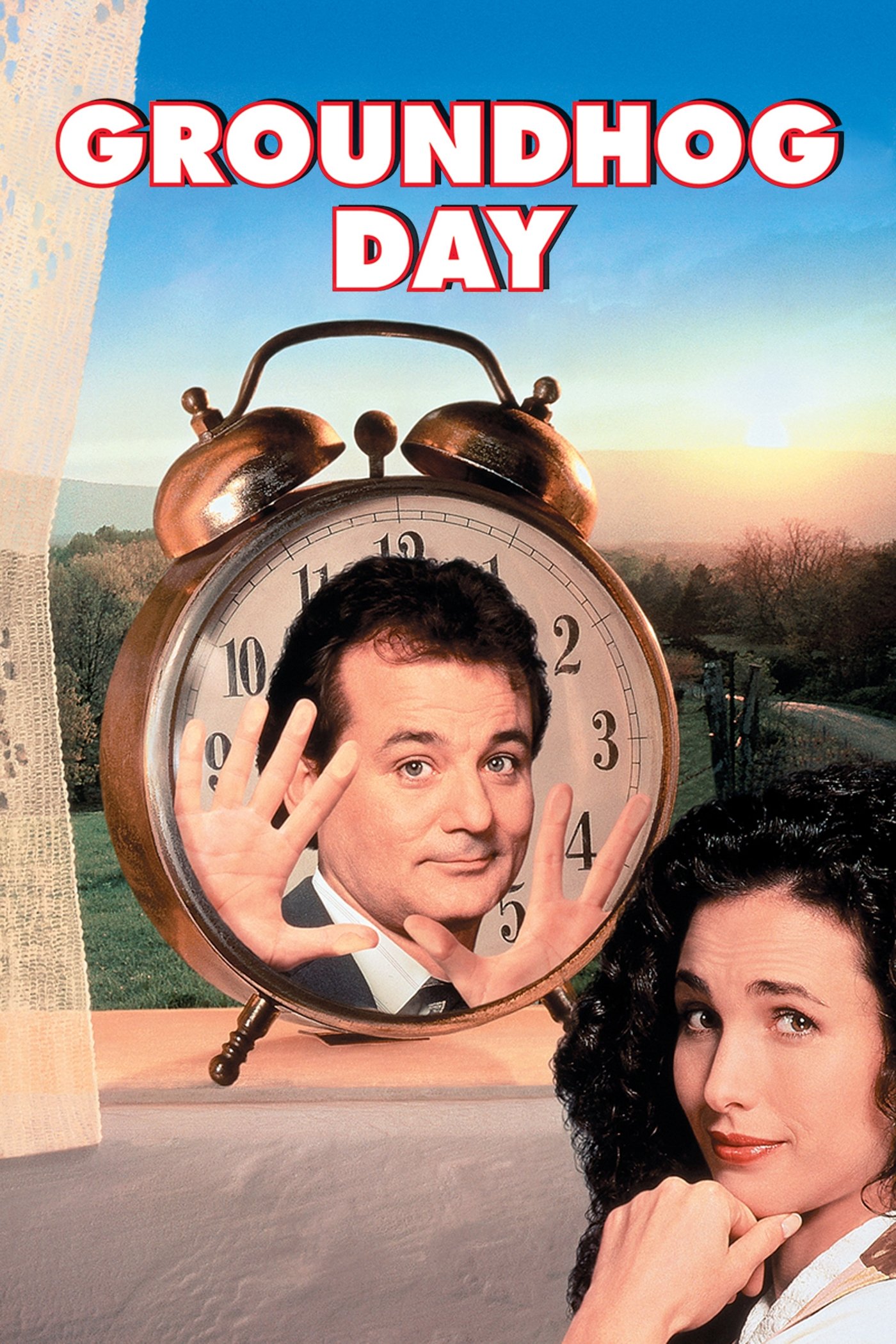
I remember the first time I encountered this film: I had expectations of a quirky Bill Murray comedy, but what greeted me was so much deeper and more resonant than a run-of-the-mill romantic fantasy. Taking place in the small town of Punxsutawney, the plot revolves around Phil Connors, a self-absorbed and sarcastic TV weatherman who is sent to cover the annual Groundhog Day festivities. There’s a cyclical beauty to the structure—Phil finds himself inexplicably trapped, forced to relive the same day, February 2nd, over and over again. Every morning presents the same events, people, and opportunities, though only Phil retains memories of yesterday’s mistakes and triumphs.
Without divulging every twist, I can say that the repetition becomes both a nightmarish prison and an unlikely path toward self-discovery for Phil. What starts as a series of slapstick scenarios and self-indulgent exploits quickly uncovers layers of introspection and emotional growth. Phil’s journey from cynicism to transformation is the film’s emotional heartbeat, and even after all these years—and countless repeat viewings—I find myself rooting for his attempt to break free, not merely from the time loop but from the confines of his own flawed character.
Spoiler Warning: If you haven’t seen the film, I’ll avoid discussing how (or if) Phil escapes this magical predicament, but it’s the arc of his emotional and philosophical evolution that forms the beating heart of the movie.
Key Themes & Analysis
What fascinates me most about this film is how it uses the comedic fantasy genre as a vessel to explore existential and philosophical questions. Director Harold Ramis crafts a story that at once entertains and pokes at deep human anxieties about meaning, second chances, and the passage of time. The repeating day isn’t just a narrative gimmick; it’s a metaphor for the routines and ruts many of us experience. Often, I’ve found myself reflecting on the subtle sense of déjà vu in everyday life, and the film seems to ask: If you could live the same day endlessly, would you change who you are?
Cinematographically, I was struck by how the simple, quietly looping visuals reinforce the sense of entrapment while also creating a playground for Bill Murray’s performance. Each iteration of Groundhog Day is filmed with enough variety—minor camera moves, subtle differences in lighting, measured pacing—to let viewers observe and appreciate Phil’s shifting responses to identical situations. It takes real artistry to make repetition this engaging. Murray delivers one of his finest performances here, balancing biting sarcasm with flickers of emerging humanity. Andie MacDowell as Rita offers a soulful counterpoint, grounding the story with kindness and quiet strength.
I’m always impressed by how Ramis deftly balances slapstick and sincerity. The giggle-worthy antics never overshadow the film’s deeper message about empathy, community, and redemption. I was especially moved by scenes where Phil, after exhausting selfish pursuits, turns his focus outward to help others. It’s as if, with every repetition, new layers of meaning are revealed—not only for Phil, but for me as a viewer. The film’s underlying optimism and faith in personal growth underpin its lasting appeal and have stuck with me long after the credits roll.
My Thoughts on the Historical & Social Context
For me, understanding why this film resonated in 1993 means revisiting the prevailing mood of the era. Early ’90s America was marked by a post-Cold War uncertainty—a society oscillating between technological optimism and existential anxiety. I see “Groundhog Day” as a gentle but sharp reflection of that cultural atmosphere. Phil Connors’ endless loop mirrors the feeling of a society stuck, unsure how to move forward after decades of turmoil and transition. Personally, I think the film’s message about reinvention and finding meaning in repetition would have struck a chord with audiences navigating changing family structures, a shifting workplace, and rising pressures to define personal happiness beyond traditional markers of success.
As I watch this film today, I’m struck by how it fits a broader conversation about mental health and self-actualization. In a world that often feels locked in cycles—be it work stress, social polarization, or digital overload—“Groundhog Day” feels even more prescient. I believe the film’s call for self-reflection, kindness, and purposeful change is as urgent now as it was three decades ago. The relentless focus on the possibility of growth, no matter how stuck or hopeless life may seem, is an unwavering source of hope for me and—judging by its enduring popularity—for many others as well.
Fact Check: Behind the Scenes & Real History
One of the things that keeps me coming back to this movie is the fascinating production lore behind it. First, I learned that the script originally envisioned Phil being stuck in the time loop for 10,000 years—a staggering period, even longer than the film’s implied stretch of several years. This choice was intended to underline the profundity of Phil’s transformation, making his eventual growth feel all the more hard-won and authentic.
Another vivid tidbit I uncovered involves casting. Bill Murray wasn’t Harold Ramis’s immediate choice for Phil Connors—Tom Hanks and Michael Keaton were both considered. I’ve tried imagining how differently the film might have played with Hanks’s earnest charm or Keaton’s manic energy, but for me, Murray’s blend of droll humor and vulnerability is inseparable from the movie’s soul.
I’m also fascinated by the real Punxsutawney, Pennsylvania, which the movie popularized. Despite the story’s location, most of the film was shot in Woodstock, Illinois. This allowed the filmmakers more control over set design and logistics—so while the festivities shown in the film resemble the real Groundhog Day celebration, they are in fact a Hollywood reimagining, replete with charming small-town quirks but lacking literal accuracy.
Why You Should Watch It
- The film uses comedy to explore profound concepts of change, self-improvement, and the human condition, making it both entertaining and deeply thought-provoking.
- Bill Murray delivers one of the most memorable comedic performances, carrying the movie with his unique balance of wit, sarcasm, and emotional growth.
- It’s a visually and structurally innovative film that continues to influence how time loops are portrayed in cinema and television today.
Review Conclusion
Reflecting on my repeated viewings of this film, I continue to find new insights, small details, and emotional truths tucked inside its deceptively simple premise. Harold Ramis’s direction, paired with Bill Murray’s perfectly-pitched performance, ensures that this movie is more than a classic romantic comedy—it’s a guidebook for personal renewal. Few films invite me to reexamine my own life, relationships, and daily patterns quite so profoundly. I recommend it not only as a source of laughter and escapism, but as a film that lingers, urging genuine self-reflection and optimism.
My Rating: 5/5. This is not just one of my favorite comedies, but a movie that genuinely enriches every repeat viewing with something new to ponder.
Related Reviews
- “Eternal Sunshine of the Spotless Mind” (2004): I recommend this for fans who appreciate uniquely structured romantic films that explore memory, time, and regret with inventive storytelling. Its blend of surrealism and emotional intimacy reminds me of the creative risks taken in “Groundhog Day.”
- “About Time” (2013): If the philosophical ambitions of “Groundhog Day” captivated you, I think Richard Curtis’s meditation on time travel and the meaning of everyday life will strike a similar chord—one that’s heartfelt, funny, and gently profound.
- “The Truman Show” (1998): When I reflect on the idea of an everyman protagonist trapped within invisible boundaries, “The Truman Show” feels like a spiritual cousin. Its satirical take on reality, fate, and agency complements the existential comedy found here.
- “Russian Doll” (TV Series, 2019–): For those craving contemporary spins on the repeating-day motif, I believe this series brings dark humor and emotional intelligence, tackling trauma and redemption much like “Groundhog Day,” but with a modern twist.
If you want to explore this film beyond basic facts, you may also be interested in how modern audiences respond to it today or whether its story was inspired by real events.
🎬 Check out today's best-selling movies on Amazon!
View Deals on Amazon