
Plot Summary
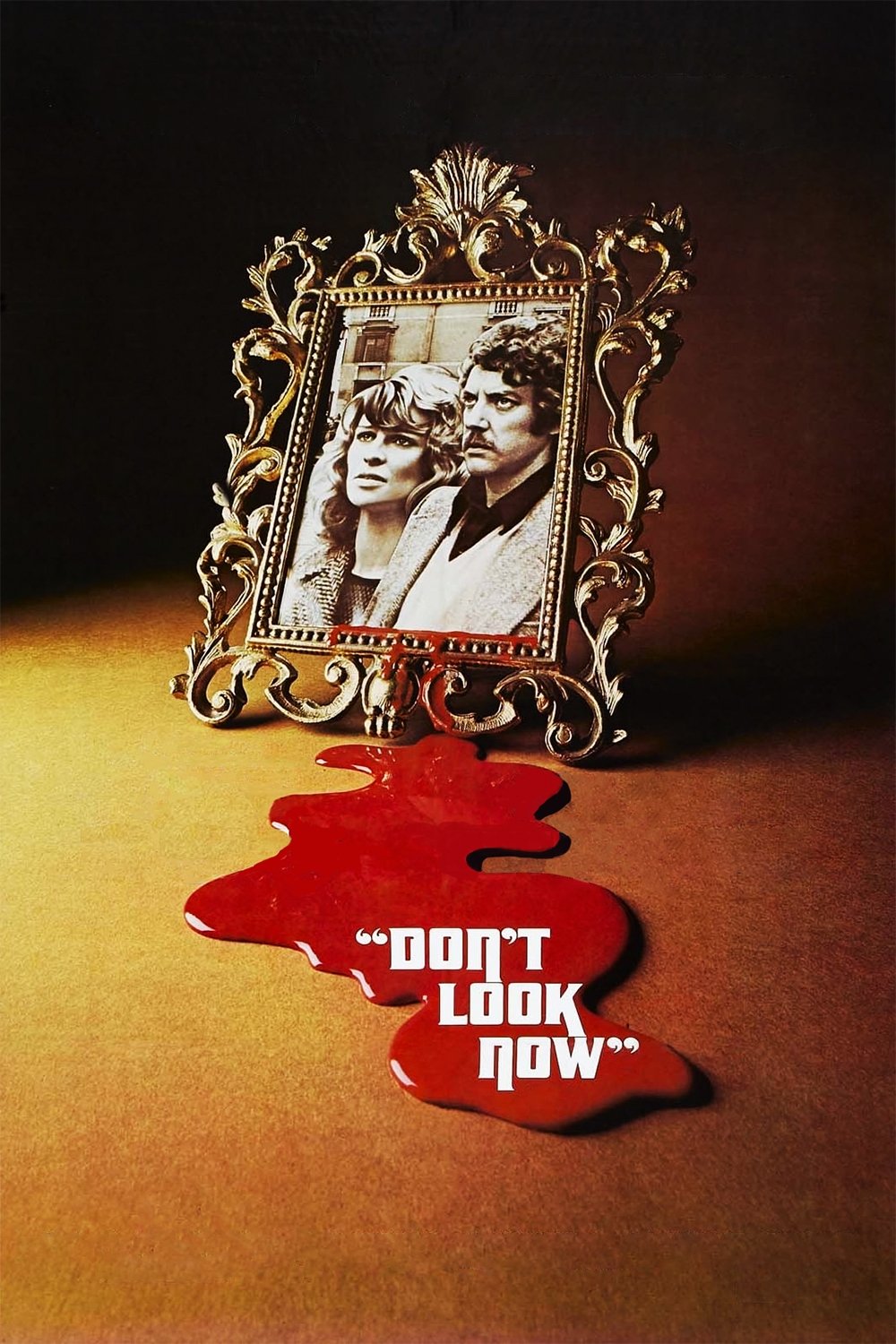
My first exposure to “Don’t Look Now,” directed by Nicolas Roeg, felt like entering someone else’s memory—fragmented, vivid, and always tilting toward something unseen. This film, released in 1973, always strikes me as part psychological drama, part supernatural thriller, but so distinct in tone and atmosphere that it almost creates its own genre. The story, based on Daphne du Maurier’s short story, follows John and Laura Baxter—a couple wrestling with devastating grief after the tragic loss of their daughter. Their attempt to rebuild their lives, set against the decaying beauty of Venice, brings an almost gothic sense of unease that ripples through every frame.
John, played with a haunted intensity by Donald Sutherland, is an architectural restorer working on an old church, while Julie Christie’s Laura hangs suspended between moments of hope and despair. Their emotional isolation becomes more pronounced after meeting two elderly sisters, one of whom claims to be psychic and insists she sees the spirit of their late child. What I’m always drawn to is how the film keeps the line between grief-induced hallucination and actual supernatural encounter deliciously ambiguous. Every canal, every shadow, every distorted reflection, seems charged with significance, drawing me into a labyrinth as much psychological as physical. I should warn readers: the final act contains a startling, iconic twist that I won’t spoil here, but I can assure you—the ending lingers long after the credits roll.
Key Themes & Analysis
For me, “Don’t Look Now” operates on the edge between logic and the uncanny, capturing how grief transforms reality. What struck me most, even on repeat viewings, is Roeg’s manipulation of time. The famed use of elliptical editing and fragmented narrative keeps me slightly off-kilter, mirroring the characters’ psychological states. Scenes often bleed into each other out of chronological order—moments from the past or premonitions of the future interwoven with the present. This technique isn’t just stylish ornamentation; it feels central to the film’s exploration of memory and trauma. I think of the way grief can thrust someone into emotional freefall, where boundaries between past, present, and future break down, and that’s precisely the mental space the movie inhabits.
Visually, Venice becomes a character itself, and I’ve never seen a city filmed with such a sense of isolation. The usual romance of the canals turns eerie here, with misty alleyways, shimmering water, and ancient churches turning into echoes of the couple’s inner fragmentation. Roeg’s eye finds menace in everyday locations, using the city’s labyrinthine geography to parallel John and Laura’s emotional maze. Cinematographer Anthony B. Richmond’s use of red—appearing like a specter in the daughter’s raincoat, a cryptic warning sign, a visual thread—burns into my memory every time, and it’s the single color that ties loss to fate in the film’s storytelling vernacular.
The performances are astonishing, both in subtlety and raw intensity. Donald Sutherland renders John heartbreakingly opaque: grief-stricken, sometimes tender, but increasingly detached from reality. With Julie Christie, I always sense a tension between hope and hopelessness—her Laura is desperately searching for meaning, or just a reason to endure. The chemistry between the two is electric, especially in scenes that hover between love and despair. The infamous intimate scene, which was both controversial and deeply emotional, lays bare a couple shattered and trying, with awkward honesty, to reconnect—something I rarely see portrayed with such authenticity.
The mood is further shaped by Pino Donaggio’s haunting score, which turns from gentle to unsettling on a dime, echoing the film’s jagged emotional landscape. The mosaic-like structure, the ominous score, and the disorienting use of color and sound all combine to create an atmosphere that seeps into my consciousness like a nightmare remembered in daylight.
My Thoughts on the Cultural Impact & Legacy
Whenever I reflect on “Don’t Look Now,” I’m reminded of why certain films become touchstones—not just for me as a critic, but for filmmakers and audiences hungry for something that transcends genre. This isn’t just a gothic thriller or a horror film, though it’s influenced both genres profoundly. For me, its impact lies in how it reframed what cinematic storytelling could look and feel like. The nonlinear editing, bold sensuality, and willingness to blend psychological realism with a kind of hallucinatory horror opened creative doors that directors like David Lynch, Guillermo del Toro, and Ari Aster have tiptoed through since. I see its fingerprints everywhere—from the fractured timelines of “Memento” to the ambiguous supernatural undercurrents in “The Others.”
But on a more personal level, watching “Don’t Look Now” sharpened my own sense of what horror and thriller films can do. It taught me that a movie’s true power sometimes exists in what’s suggested, in the shadows it casts over everyday life. Its willingness to leave questions unresolved—to never offer simple comfort—stays with me every time I recommend it. I love how the film doesn’t manipulate tears from its audience; rather, it lets sorrow settle like mist, challenging me to sit with uncertainty, to experience terror as something both internal and externally manifest.
This film matters to me because it shifted my expectations. It showed me that movies about loss could be unsettling, unresolved, and deeply humane all at once. It’s a film where grief isn’t just a plot device, but the whole terrain—rendered with a level of psychological realism that few horror or thriller films have ever matched. In many ways, “Don’t Look Now” is a defining work that still gives me new things to notice, layers I’ve missed, and unresolved questions to ponder, even after years of revisiting it for analysis and recommendation.
Fascinating Behind-the-Scenes Facts
Behind the chilling atmosphere and technical bravura, “Don’t Look Now” contains a wealth of behind-the-scenes stories that shape how I watch the film. One of the most notorious tales centers on the intense love scene between Sutherland and Christie. Rumors persisted for decades about whether the actors actually had intercourse during filming—a myth fueled by the emotionally raw performances and Roeg’s intimate, near-documentary style. Whether the rumors are true or not, the buzz was so great that, according to interviews, the scene was once cut from TV broadcasts, and executives reportedly believed it was “too real.” I find this fascinating, not for its titillation, but for what it says about 1970s cinema: this was an era pushing boundaries, and “Don’t Look Now” sits at the epicenter of that cultural moment where artistic ambition and taboos collided.
Another detail I love is the unpredictable nature of filming in Venice. Sutherland has described the logistical nightmare of transporting crew and equipment across the city’s tangled canals, which wasn’t just an aesthetic choice but a physical ordeal for everyone involved. The labyrinthine setting wasn’t just captured on camera; it was lived by the cast and crew, bringing an authenticity and exhaustion to performances that I can almost feel, especially in scenes where the city seems to close in on the struggling Baxters.
One more production tidbit that sticks with me: Roeg’s collaborative, sometimes improvisational, approach had its challenges and startling rewards. For example, the famous “sliding tiles” visual motif—unlocked by the shifting, cracked mosaics in the church—wasn’t planned in meticulous detail beforehand; much of it emerged while scouting and shooting on location. That willingness to let the city, and fate itself, influence the storytelling, gives “Don’t Look Now” a spontaneity and texture I rarely encounter in such meticulously designed psychological thrillers.
Why You Should Watch It
- The film’s daring editing and color symbolism create an unparalleled sense of psychological dislocation that every cinephile should experience at least once.
- Sutherland and Christie give emotionally authentic performances that make the supernatural elements hit even harder.
- If you value atmospheric horror, layered storytelling, or movies that refuse to provide easy answers, “Don’t Look Now” will haunt, challenge, and reward you long after it ends.
Review Conclusion
Every time I revisit “Don’t Look Now,” I’m struck anew by how fully it absorbs me into its world of sorrow, dread, and haunting beauty. It’s more than a ghost story; it’s a meditation on memory, mourning, and the ways the past refuses to be buried. I rarely encounter a film so skillful at weaving together technical innovation with raw emotion, creating a tapestry that’s both intimate and indelibly unsettling. For these reasons, I rate “Don’t Look Now” an enthusiastic 5/5—not only as essential viewing for fans of psychological horror, but as a masterwork of 20th-century cinema that continues to shape how I understand loss, fate, and the possibilities of the medium itself.
Related Reviews
- The Innocents (1961) – I connect this eerie adaptation of Henry James’ “The Turn of the Screw” to “Don’t Look Now” because both films thrive on ambiguity and bring psychological depth to supernatural terror, creating tension through what remains unseen rather than shown.
- Picnic at Hanging Rock (1975) – This haunting Australian classic, like Roeg’s work, blends historical mystery with subtle horror, using landscape and editing to generate a uniquely disturbing atmosphere of loss and longing.
- The Others (2001) – Watching “The Others” reminds me of “Don’t Look Now” with its focus on grief, spectral presences, and the ways trauma shapes perception; both films use subtlety and mood to amplify the sense of dread.
- Possession (1981) – I can’t help but link Żuławski’s frenzied psychological horror to “Don’t Look Now” for its depiction of a couple’s emotional unraveling, supernatural undertones, and unflinching approach to raw, sometimes uncomfortable intimacy.
For readers looking to go deeper, these perspectives may help place the film in a broader context.
🎬 Check out today's best-selling movies on Amazon!
View Deals on Amazon