
Plot Summary
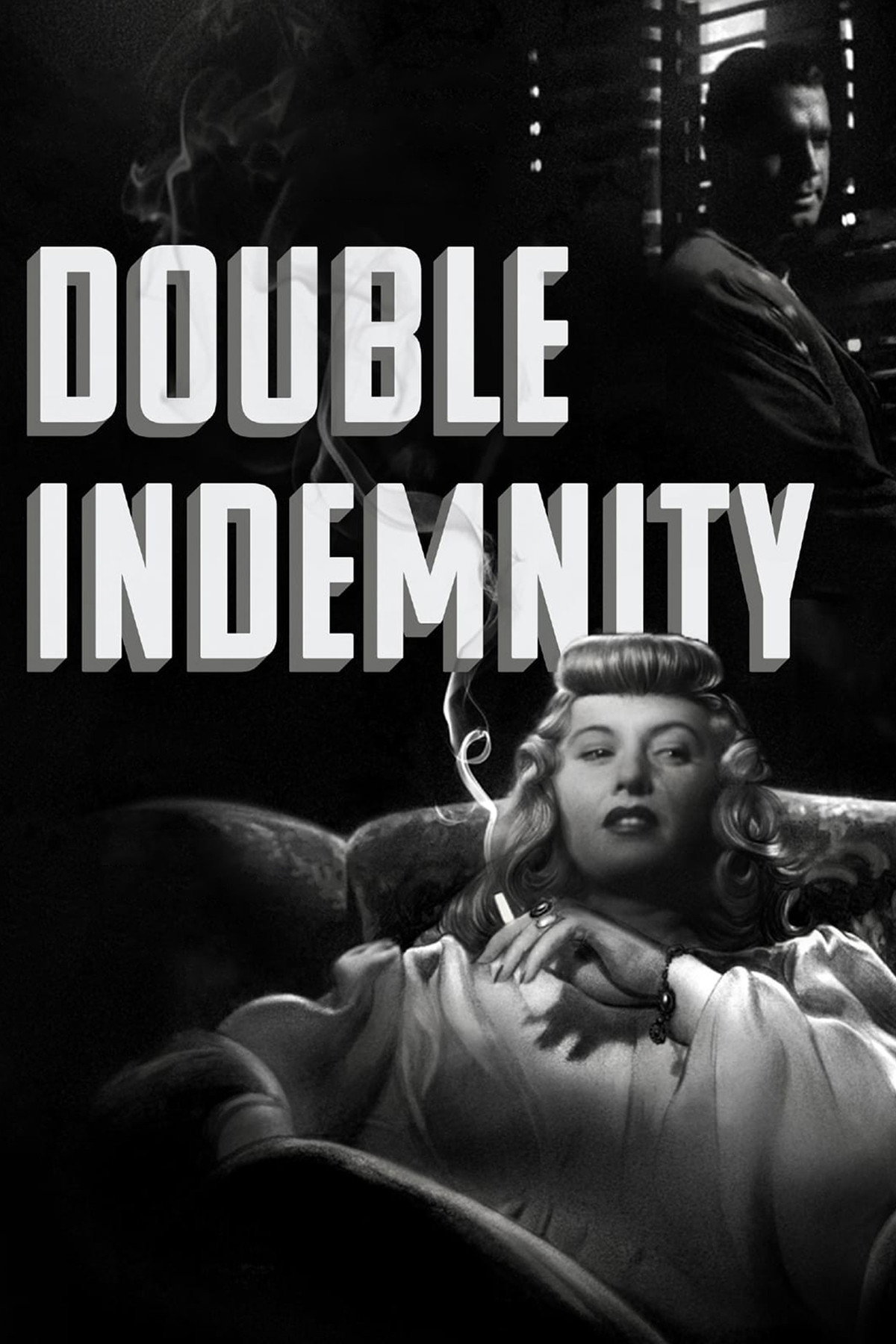
Every time I revisit Billy Wilder’s “Double Indemnity”, I’m struck by how sharply it plunges me into the world of smoky insurance offices, shadowy Los Angeles nights, and the unforgiving logic of desire gone rogue. The film, which is often cited as one of the finest examples of the film noir genre, wastes no time throwing me headlong into the confessional story of Walter Neff, a jaded insurance salesman (portrayed by Fred MacMurray in a career-redefining role). From the get-go, I feel his world-weariness, his dry wit, and, most importantly, his fatal attraction to the beguiling Phyllis Dietrichson (Barbara Stanwyck).
As the film unfolds, I follow Neff’s impulsive decision to help Phyllis orchestrate the murder of her husband, all under the guise of making it look like a freak accident—a plan designed to exploit a loophole in an insurance policy. What’s mesmerizing is that the mechanics of the murder are almost secondary; it’s the tension, the rapid-fire dialogue, and the psychological games that keep me hooked.
Without spoiling key twists, I will say that the narrative is masterfully built upon suspicion, guilt, and the constant threat of discovery by Neff’s boss, claims adjuster Barton Keyes (Edward G. Robinson, delivering what I consider an electrifying and deeply empathetic performance). There are plenty of scenes where everything seems about to unravel, making the film far more suspenseful than most contemporary thrillers. It’s not just a story about crime—it’s a vivid descent into moral ambiguity, where every fleeting glance or nervous cigarette carries freighted meaning.
Key Themes & Analysis
What I admire most about “Double Indemnity” is how it refuses to offer easy answers about right and wrong. For me, the story is a demonstration of how ordinary people—mired in routine and banality—can be drawn into extraordinary corruption, all for the promise of excitement or escape. I’m constantly reminded of how Neff is an everyman, not a cold-blooded killer. His decisions feel eerily plausible, which makes their consequences more haunting.
Themes of greed, betrayal, lust, and the inescapability of fate course through every scene. I’m often left thinking about the way desire warps self-image and blinds people to the obvious crash ahead. Phyllis Dietrichson, especially, stands out as one of the most iconic and complex femme fatales in film history. Her motivations aren’t neatly explained or justified, which, to me, adds another layer of menace and intrigue. I never feel sure where her loyalty truly lies or whether she’s seducing Neff or simply using him as a pawn—that ambiguity is the film’s beating heart.
Wilder’s direction is a triumph of understated elegance and psychological tension. The cinematography by John F. Seitz envelops every scene in an atmosphere of suspicion, using venetian blinds, stark lighting, and deep shadows to symbolize the characters’ trapped inner lives. One detail that always catches my attention is the framing of spaces—doorways, hallways, staircases—all becoming symbols of impending doom. There’s a sweaty, nocturnal quality to the city as filtered through Neff’s cynicism, and the claustrophobia of his world feels almost physical.
The dialogue snaps, crackles, and bites with double entendres and gallows humor—the result of Wilder’s collaboration with Raymond Chandler, whose ear for hard-boiled speech shapes the film’s unique rhythm. I’m especially drawn to Keyes’s lengthy monologues, delivered with conviction that makes me root for him even as his investigation threatens to unravel the protagonists’ plan. The moral center of the film, for me, isn’t Neff or Phyllis—but Keyes, whose clear-eyed honesty and dogged pursuit of the truth provide the only hope for decency in a corrosive world.
My Thoughts on the Historical & Social Context
Watching “Double Indemnity” with the knowledge of the 1940s in mind, I’m struck by how deeply the film taps into anxieties about trust, corruption, and the fragility of the American Dream. It was released during World War II, at a time when the notion of security—whether financial or personal—felt precarious. The average moviegoer in 1944 was living through global chaos and uncertainty, and I sense that the film’s atmosphere of paranoia, its obsession with money and mortality, and its depiction of moral rot beneath a sunny American surface resonated with that audience in a profound way.
From my perspective, the film’s gender politics are just as riveting. Stanwyck’s Phyllis is alluring and dangerous, but she’s also a product of her era—a woman boxed in by marriage and social expectation, craving some measure of power, even if her methods are destructive. It’s impossible for me to ignore how the film both reflects and critiques the limited roles available to women at the time. There’s real anger beneath the surface, as if the characters are rebelling against a society that doesn’t accommodate their desires or ambitions.
Even today, I find the film feels starkly relevant. Its look at superficial normalcy hiding corruption strikes me as timely, especially in an era when trust in institutions is at a low ebb. The blurred lines between right and wrong, the loneliness of modern life, and the seductive pull of transgression are themes that never seem to lose their urgency. I can’t help but connect Neff’s wavering conscience to the compromises so many face in everyday life, where ambition and desire can pull us off course, sometimes irreversibly.
Fact Check: Behind the Scenes & Real History
Every time I dig into the backstory of “Double Indemnity,” I’m amazed at how many hurdles had to be cleared to make the film as stark and provocative as it is. One of the most interesting facts I uncovered is that the Hays Code, Hollywood’s strict morality censorship system, almost killed the project. The original James M. Cain novel was considered borderline unfilmable due to its frank depiction of adultery, murder, and moral ambiguity. Wilder and his screenwriting partner, Raymond Chandler, had to finesse every detail in order to skirt outright censorship. I think their solution—relying on suggestion, coded language, and shadowy visuals—actually made the film ten times more powerful, proving how constraint can fuel creativity.
Another tidbit that grabs me is that Fred MacMurray initially didn’t want the role of Walter Neff. Known primarily for affable, comedic parts, MacMurray thought he wasn’t right for the part of a morally compromised schemer. It took some heavy convincing by Billy Wilder to get him on board, and I honestly can’t imagine anyone else inhabiting Neff’s world-weary charm and guilt-ridden bravado. His performance demonstrated a remarkable range and helped redefine the trajectory of his career, as I see it.
I also find it fascinating how Barbara Stanwyck’s wig became a subject of debate among critics and fans alike. The obviously artificial blonde hair contributed to Phyllis’s otherworldly, almost predatory allure, yet Stanwyck herself was initially self-conscious about it. Over time, the wig has become iconic—a visual shorthand for the femme fatale. It symbolizes, to my mind, the character’s artificiality and inherent danger, amplifying the subversive tone of the film.
If you want to explore this film beyond basic facts, you may also be interested in how modern audiences respond to it today or whether its story was inspired by real events.
Why You Should Watch It
- If you crave psychologically rich storytelling that lingers long after the credits roll, “Double Indemnity” is simply essential viewing.
- The film’s dazzling cinematography and perfectly calibrated performances set the gold standard for everything that followed in the noir genre.
- I believe its exploration of moral gray areas, deceit, and doomed romance has never felt more relevant in our own time of societal uncertainty.
Review Conclusion
Every viewing of “Double Indemnity” is a revelation for me—a chance to spend two hours in a world where tension coils through every whispered word and every shaft of light slicing through a Venetian blind. The interplay between MacMurray, Stanwyck, and Robinson is a master class in acting, and Billy Wilder’s directorial touch leaves me marveling at his economy and craft. What keeps me coming back is the way the film refuses easy answers, always insisting that every decision has its cost, and that nothing—not even the most ingenious plan—is immune to doubt or human fallibility. I rate this film 5 out of 5 stars, not just for its technical achievements, but because it forces me to confront the darkest recesses of desire, guilt, and self-deception.
Related Reviews
- “Out of the Past” (1947): I highly recommend this for anyone enraptured by the fatalistic mood and complex character psychology of “Double Indemnity.” Both films masterfully use flashbacks and a doomed romance to probe the limits of trust and redemption.
- “Sunset Boulevard” (1950): Another Billy Wilder classic, this film’s mordant wit and darkly glamorous look at Hollywood’s underbelly resonate deeply with “Double Indemnity’s” exploration of corrupted dreams and manipulative relationships.
- “Chinatown” (1974): While made decades later, Roman Polanski’s neo-noir echoes “Double Indemnity’s” visual style and obsession with hidden rot beneath glossy surfaces. I find both films excel at exposing moral ambiguity and societal decay in Los Angeles.
- “Gilda” (1946): If you found Barbara Stanwyck’s Phyllis Dietrichson unforgettable, Rita Hayworth’s turn as Gilda offers another magnetic, morally complex woman at the center of a web of intrigue.
🎬 Check out today's best-selling movies on Amazon!
View Deals on Amazon