
Plot Summary
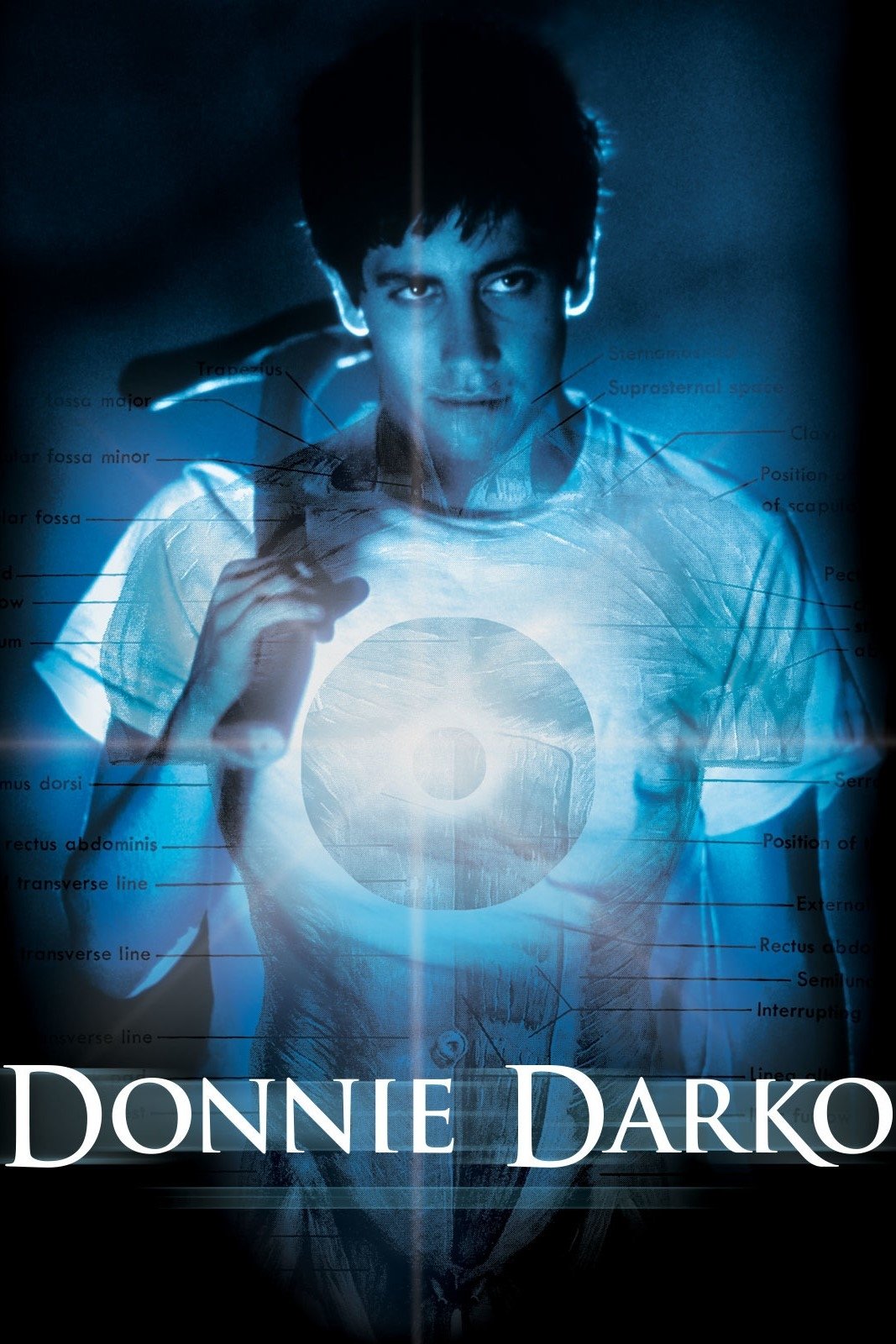
Stepping into the shadowy, suburban world of “Donnie Darko” always feels like being pulled into a fever dream. On my first viewing, I was immediately swept into its disorienting swirl of reality and hallucination. Richard Kelly, the film’s director, weaves together psychological thriller, science fiction, and adolescent drama in a way that never quite lets me rest. The story orbits around Donnie, a troubled teenager living in a quiet Virginia town. His life teeters on the brink as he begins to experience disturbing visions of a mysterious figure in a rabbit costume named Frank, who beckons Donnie to commit seemingly strange acts and warns him about the impending end of the world.
Throughout the film, I watched as Donnie’s interactions grew ever more unpredictable—alienating his family, challenging his teachers, and finding solace in an equally outcast classmate, Gretchen. As I sunk deeper into the narrative, what struck me was how deftly the story walks the line between grounded, suburban malaise and the inexplicable, bending time and causality like a Mobius strip. Even as the plot hints at supernatural causes, it clings to the emotional realism of Donnie’s daily life, his anxiety, and his desperate search for meaning. Be warned: if you delve further into spoilers, the film’s climactic revelations and the specifics of Donnie’s fate may forever alter your first experience of the narrative’s twists. For me, the enjoyment lay in piecing together every surreal clue and personal confession threaded throughout his journey.
Key Themes & Analysis
I see “Donnie Darko” as a meditation on existential dread: the gnawing sense that something about our reality doesn’t quite add up. What I admire is how the film transforms every mundane detail—every clock, every school lesson, every suburban dinner—into a tapestry of metaphysical questions. Themes of fate, free will, mental illness, and adolescent alienation continually resurface, daring me to untangle their meaning. The supernatural elements serve less as answers than as provocations, pushing Donnie—and, by extension, me—toward self-discovery amid chaos.
The visuals captivate me—not just because of the slick, evocative 1980s period design, but because of the way Kelly and cinematographer Steven Poster use wide shots of empty streets, tracking shots through Donnie’s high school, and saturated nighttime blues to build a world that feels both lived-in and otherworldly. I’m always pulled in by the slow-motion sequences set to era-defining music; they don’t just evoke nostalgia but echo the film’s larger preoccupation with time and memory.
Reflecting on the performances, I am consistently impressed with Jake Gyllenhaal’s portrayal of Donnie. His brooding, off-kilter intensity grounds the film’s more bizarre twists. Every flicker of uncertainty, every moment of raw honesty in his interactions with his family or Gretchen, made me care about Donnie beyond just his enigmatic visions. The supporting cast also stood out—Jena Malone’s Gretchen brings a quiet resilience, while Patrick Swayze and Mary McDonnell reveal hidden dangers and unexpected empathy in roles that could easily have felt stereotypical. Kelly’s directing choices—his willingness to let ambiguity sit uncomfortably and his refusal to tie up every thread—felt not just bold, but essential. In my view, the film’s willingness to unsettle is precisely what makes it endure.
My Thoughts on the Historical & Social Context
The early 2000s were marked by mounting generational anxiety and a sense that the old certainties were crumbling—a feeling I recognized in my own life and social circles. Watching “Donnie Darko,” I’m struck by the way it channels this millennial nervousness. The post-Cold War malaise, the disillusionment with suburban stability, and questions of identity and mental health—all feel baked into the film’s DNA. For me, the year 2001 looms large. The film’s release just weeks after September 11th adds a strange weight to its apocalyptic warnings and urgent uncertainty. I remember those days; the sense that the world suddenly felt unsafe, unpredictable, and unknowable. “Donnie Darko” channels that ambient anxiety, but turns it inward, making it about the self as much as the world outside.
Socially, the film’s focus on Donnie’s mental health struggles and the way his community reacts—ranging from well-meaning concern to fearful misunderstanding—felt ahead of its time. I empathize with Donnie’s alienation and search for connection, especially in scenes where adults, clinging to comforting platitudes, fail to hear what young people are trying to say. In my view, the film’s critique of shallow self-help culture and the pressure to conform still resonates today, as mental health and personal meaning remain pressing issues. Even now, I find myself returning to the film as a touchstone for conversations about how young people grapple with fear, isolation, and the pressures of a seemingly predetermined path.
Fact Check: Behind the Scenes & Real History
One detail that has always fascinated me about “Donnie Darko” is how it nearly didn’t get made the way audiences know it. The film struggled profoundly to secure funding and distribution. I’ve read how it wasn’t until Drew Barrymore joined as both executive producer and cast member that the project gained any traction. Her involvement not only brought vital financial backing, but also helped attract the rest of the ensemble. To me, this detail speaks to how the collaborative spirit—and a bit of serendipity—can define a cult classic’s fate.
Another piece of behind-the-scenes lore that stands out is the film’s signature use of the song “Mad World” for its closing montage. Initially, I learned, Kelly envisioned using U2’s “MLK,” but the rights proved elusive. The switch to “Mad World” (in its hauntingly sparse Gary Jules cover) seems, in retrospect, inevitable. The stark, echoing melody pairs perfectly with the story’s tone of weary confusion and isolation. Today, I can’t imagine any other soundtrack capturing Donnie’s world quite so perfectly.
From a technical perspective, the film bends (but doesn’t quite break) real scientific theories. Its time-travel logic is inspired by both Stephen Hawking’s writing and classic science fiction, but veers heavily into metaphysical territory. When I dug into the commentary, I was struck by how the film’s references—like “The Philosophy of Time Travel” book within the story—draw on real-world ideas, only to twist them into a dense symbolic matrix. The movie is more concerned with emotional truth than scientific accuracy, which, for me, heightens its dreamlike pull.
Why You Should Watch It
- It’s a uniquely immersive psychological experience, blending surrealism with authentic teen drama in a way I haven’t seen elsewhere.
- Jake Gyllenhaal delivers a breakout performance that anchors the film’s complex, ambiguous narrative.
- The film’s themes of existential dread, personal discovery, and the search for meaning feel especially relevant in a world full of uncertainty.
Review Conclusion
Every time I revisit “Donnie Darko,” I find myself awed by how much it asks of me emotionally and intellectually. It’s not just a film to watch passively—it’s one to live inside, to puzzle over, to debate with friends long after the credits roll. Its blend of philosophical ambition, technical craft, and raw emotional honesty places it among the most memorable cinematic experiences of my life. The film’s willingness to blur lines—between science fiction and drama, fear and hope, clarity and mystery—never ceases to inspire me anew. For those ready to lose themselves in a story that refuses to be easily categorized, I can’t recommend it highly enough. I give “Donnie Darko” a rating of 4.5/5—an almost perfect fusion of style, substance, and restless, questioning energy.
Related Reviews
- “Eternal Sunshine of the Spotless Mind” — I recommend this for its exploration of memory, love, and the blurry boundary between reality and subjective experience. Like “Donnie Darko,” it merges surreal storytelling with potent emotional resonance, rewarding viewers who want to challenge their perceptions.
- “Primer” — For those intrigued by “Donnie Darko’s” time travel conundrums, “Primer” offers a cerebral, tightly-wound take on temporal loops and causality. I found its low-key, grounded approach to sci-fi both intellectually stimulating and thematically similar in its ambiguity.
- “The Virgin Suicides” — I see this as a powerful companion piece when considering suburban angst and adolescence. Sofia Coppola’s direction mirrors Kelly’s in the way she reveals the hidden turmoil beneath immaculate surfaces, all underscored by a haunting atmosphere.
If you want to explore this film beyond basic facts, you may also be interested in how modern audiences respond to it today or whether its story was inspired by real events.
🎬 Check out today's best-selling movies on Amazon!
View Deals on Amazon