
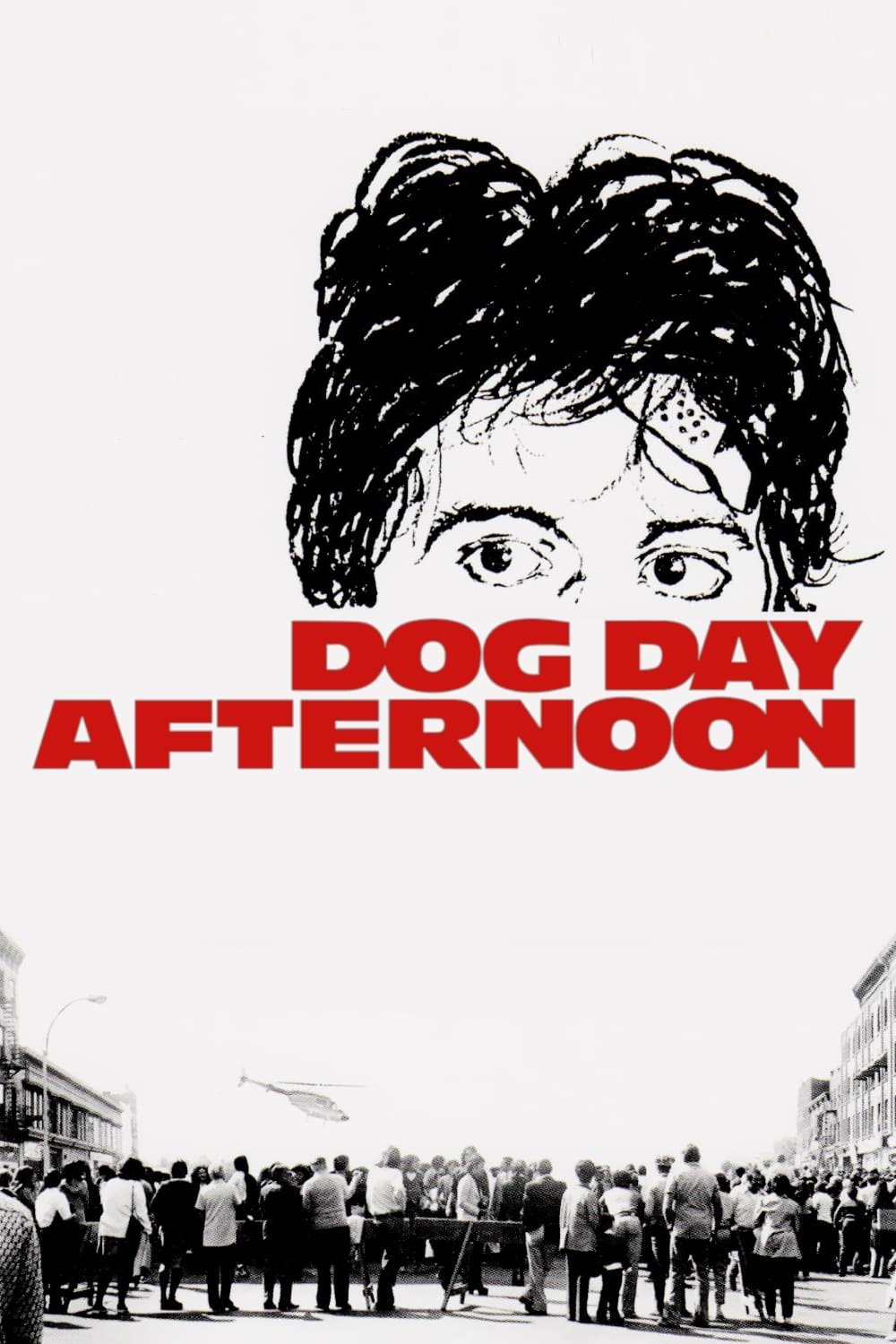
Plot Summary
The first time I watched “Dog Day Afternoon,” I remember being instantly swept up by the raw, pulsing energy Sidney Lumet brought to this unforgettable crime drama. The film starts on a sweltering Brooklyn afternoon, laying the groundwork for what spirals into a high-stakes bank heist with Al Pacino’s character, Sonny Wortzik, on center stage. As I pieced together the story—two desperate men, a bank, a standoff, and a crowd that seems to grow with every passing minute—I was struck by the intimacy of the chaos. Lumet never lets the film slip into generic crime caper territory; instead, he focuses on the tangled mess of humanity at the heart of a botched robbery.
I was relieved to discover that “Dog Day Afternoon” doesn’t rely on breakneck chases or overblown action; the tension is entirely personal, almost suffocatingly so. Through phone calls, standoffs, and the unnerving patience of a summer day, Pacino’s Sonny becomes someone I worry about, rather than someone I solely judge. Without giving away every beat, I will say that the film becomes much more than a simple heist. The negotiations, the motivations behind the crime, and the emotional outpouring—none of these happen in a vacuum. If you don’t want to know specifics, skip the next few sentences! The film reveals Sonny’s true, deeply human motivation—his need to help a loved one—adding a layer of heartbreak to the criminal spectacle.
It’s a story I think about long after the credits roll, because every moment in the bank feels painfully real and loaded with consequences. Lumet’s approach to pacing makes every negotiation, every glance, and every burst of violence count. Even the city outside is a living thing—part character, part cage. That’s what really stays with me: this sprawling story is trapped in the confines of a small bank, and yet it feels as alive and unpredictable as the city itself.
Key Themes & Analysis
Every time I revisit “Dog Day Afternoon,” I find myself unpacking another layer of what the film is really about. Themes of desperation, identity, and public spectacle stand out most for me. Sidney Lumet’s direction is, in my eyes, nothing short of masterful: his ability to craft suffocating tension from confined spaces transforms a single bank branch on a hot day into a microcosm of 1970s America. What resonates most is how Lumet turns the robbery into a lens for examining empathy—for both the robbers and the world watching outside. I believe this is one of the rare films where every character, even the “extras” in the crowd, feel motivated and real.
Cinematography-wise, I was immediately pulled in by Victor J. Kemper’s handheld approach. The film’s visual style often feels like documentary footage—edgy, naturalistic, and intimate in its imperfection. That loose, immediate camera work pulls me closer to the characters’ emotions than I expect from typical heist films. The stifling heat, the ticking clock, and the sweat-soaked faces—all of it feels tactile, almost uncomfortable. I find this discomfort deliberate, a tool Lumet uses to make us sit with the characters rather than judge them from afar.
Watching Al Pacino in this film always floors me. His Sonny is a revelation—emotional, unpredictable, sympathetic in his flaws. Pacino’s performance isn’t showy; instead, it’s fiercely vulnerable, swinging between bravado and panic in a way that feels startlingly honest. John Cazale’s Sal, quiet and haunted, is the perfect counterpoint: I read his silences as just as meaningful as Pacino’s monologues. The supporting cast—from Charles Durning’s exasperated police sergeant to the terrified but sharp-witted bank manager—never feel like props. I am always impressed by how Lumet draws out these lived-in, empathetic performances, breathing humanity into a scenario that would otherwise be sensationalized or caricatured.
Another aspect I can’t get out of my head is the way the film engages with ideas of media and spectacle. The robbery quickly morphs into a media circus; random citizens and news crews flock to the scene, transforming Sonny and Sal into reluctant antiheroes. I see this aspect as a sharp commentary on how the press, and by extension the public, feeds off spectacle and distraction. The criminal act becomes entertainment. I’m still startled by how much this critique of sensationalized news feels relevant today.
I also appreciate how the script, by Frank Pierson, weaves dark humor through the tension. Moments of absurdity and wit bubble up, giving the film a tragicomic edge and making its critique of institutional authority—police, media, corporations—that much sharper. These touches keep the film alive, unpredictable, and human.
What continually impresses me about Lumet’s work here is his light touch with social critique. He doesn’t beat you over the head, but instead wraps complex questions inside each character’s motivation. Whether it’s the longing for acceptance, the struggle for survival, or the sheer unpredictability of human nature, I see the movie as less about the robbery than it is about what pushes ordinary people toward extraordinary actions.
My Thoughts on the Cultural Impact & Legacy
Whenever I reflect on “Dog Day Afternoon,” I’m reminded just how seismic its arrival was in the world of film. This isn’t just a bank robbery story; it’s a cinematic game-changer. What struck me most has always been the film’s compassion for society’s outsiders—those people teetering on the margins, desperate to be seen and heard. The movie’s bold portrayal of a character motivated by love rather than greed, and its willingness to explore LGBTQ+ themes with empathy, set it apart well before mainstream Hollywood dared to tread similar ground.
For me, part of the enduring power lies in how the film blurred the lines between hero and villain. I was inspired by how Pacino’s Sonny became both a product and a critique of his time—someone defined by circumstance, but also by a defiant sense of self. It’s rare for a film to genuinely humanize its “criminals,” and rarer still to do so in a way that invites empathy rather than simple pity or scorn. As a curator, I look back and see how this film shifted the genre: future crime dramas, from “Heat” to “Inside Man,” owe debts to its approach of psychological nuance, social context, and flawed protagonists.
The movie also marks a turning point in how cinema dealt with real events. Drawing directly from a true story, Lumet and company resisted the temptation to fictionalize or sanitize. Instead, I see “Dog Day Afternoon” as a template for interrogating the role of media and public spectacle in shaping narratives, giving the audience both entertainment and something deeper to chew on.
On a personal level, the first time I saw Sonny shout “Attica!”—a spontaneous, desperate invocation of police brutality—I recognized a cinematic moment that would echo through pop culture, invoked by everyone from hip-hop artists to political protesters. This movie remains a touchstone for anyone interested in the intersection of crime, society, and media. The resonance is undeniable: its mix of tension, humanity, and satire lodges firmly in my mind. I still see its fingerprints on modern discussions about policing, celebrity, and social justice.
If there’s one reason I return to “Dog Day Afternoon” as a cornerstone of curation and film culture, it’s because it teaches me, time and again, that the movies we remember are the ones that make us feel for the people we’re told not to root for. It’s a lesson I carry into every film I choose to revisit or recommend.
Fascinating Behind-the-Scenes Facts
Reading up on the production revealed stories that made me appreciate the film’s authenticity even more. For instance, I learned that Al Pacino was initially hesitant to take the role of Sonny, fearing it was too soon after playing Michael Corleone and concerned about being repetitive. What sold him, I discovered, was the script’s emotional complexity and Lumet’s encouragement to embrace unpredictability.
Another fascinating tidbit is how the film owes some of its unscripted energy to the director’s rehearsal methods. Lumet insisted on running the entire film like a play before principal photography began, allowing actors to inhabit their roles fully and improvising as needed. This is why, for example, Pacino’s iconic “Attica!” chant wasn’t scripted—it was Pacino, alive in the moment, channeling the fever pitch of Sonny’s desperation and connecting with the era’s real-life outrage over police misconduct.
And then there’s the casting of John Cazale, whose presence I find haunting in every frame. Lumet reportedly fought to cast Cazale against studio pushback, knowing how critical Sal’s quiet intensity would be to the film’s emotional chemistry. Cazale brought a wordless gravity to every scene, elevating the stakes for Pacino to play off his tension and uncertainty. That on-screen relationship remains, to my eye, irresistible and essential to the film’s haunting effect.
Why You Should Watch It
- An Unforgettable Performance: Al Pacino’s portrayal of Sonny is, for me, one of the most electrifying, emotionally raw performances captured on film.
- Timeless Social Commentary: The film’s exploration of media, police, and social marginalization still rings true—if not more so—in the present day.
- Masterful Tension and Humanity: Sidney Lumet’s direction keeps every moment taut, alive, and deeply human, making you care about every life caught up in the standoff.
Review Conclusion
If I had to summarize “Dog Day Afternoon” in a single feeling, it would be restless empathy. Sidney Lumet doesn’t just deliver a thrilling true-crime story; he excavates something deeply personal from the spectacle, forcing me to see the messy humanity behind every choice and every mistake. The mix of bravura performances, kinetic filmmaking, and pointed social critique sets the movie apart as an enduring classic I champion again and again.
Even now, decades after its release, “Dog Day Afternoon” feels alive—sweaty, loud, desperate, and strange. I believe its relevance is undiminished. For anyone interested in films that challenge and transform the way we see “good guys” and “bad guys,” this one still feels essential—and I’m always eager to revisit it with new eyes.
Rating: 5/5
Related Reviews
- Serpico (1973) – If you’re drawn to Pacino’s blend of intensity and vulnerability, this film is a must. Lumet’s gritty police drama similarly explores moral outrage, personal risk, and life in the crosshairs of corrupt institutions, all through the lens of a flawed, deeply relatable character.
- Network (1976) – For those fascinated by Dog Day Afternoon’s satirical critique of the media, I find “Network” (also directed by Lumet) an essential companion piece. It skewers TV sensationalism, public spectacle, and institutional apathy—just with a more overtly satirical tone.
- Inside Man (2006) – It’s impossible for me not to see the echoes of Dog Day Afternoon in this modern heist thriller. Spike Lee crafts a similarly claustrophobic, twisty, and smartly social crime film—one that keeps you guessing about motive and outcome until the very end.
For readers looking to go deeper, these perspectives may help place the film in a broader context.
🎬 Check out today's best-selling movies on Amazon!
View Deals on Amazon