
Plot Summary
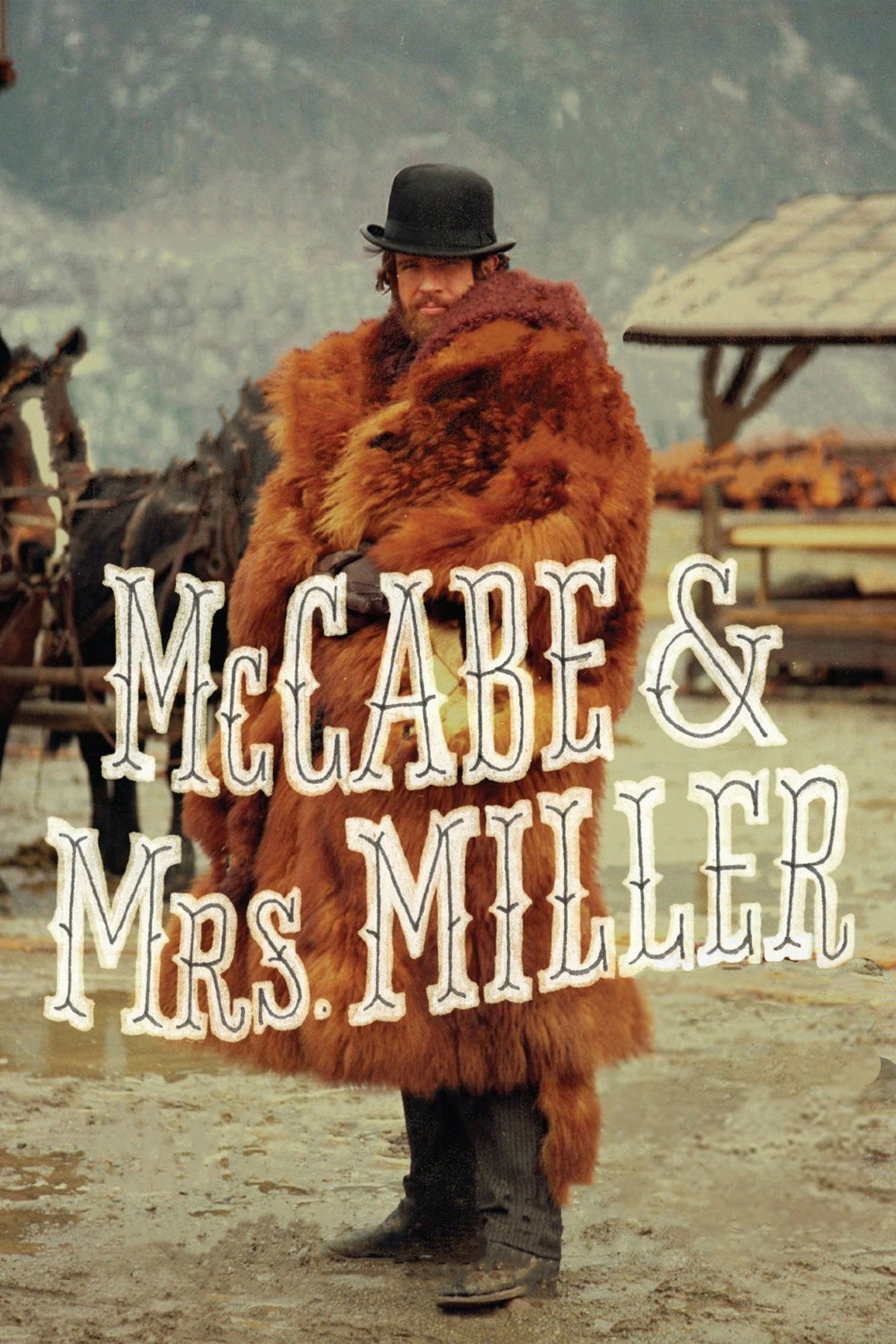
Whenever I return to McCabe & Mrs. Miller, I’m struck first by its spell; there’s a quality of lived-in world-building that pulls me quietly into the small, nascent town of Presbyterian Church. In my experience, Robert Altman’s approach to narrative is less about moving from plot point to plot point and more an invitation to get lost in a mood. The setting—rain-soaked, ringed by forests, populated by luckless dreamers and fatalistic pragmatists—feels like an extension of the characters themselves. The film follows John McCabe, a gambler with an air of mystery, as he establishes a brothel in this budding frontier outpost. Soon after, Mrs. Miller, a hard-edged yet severely practical Englishwoman, partners with him, transforming the enterprise into a lucrative operation.
What captivates me about their dynamic is how it evolves through routine and negotiation rather than cinematic fireworks. Altman’s storytelling prioritizes character interactions unfolding over the passage of days and nights, punctuated by snowfalls and parlor deals. The arrival of outside interests eventually threatens McCabe’s modest empire—if you haven’t seen the film, I’ll be careful not to spoil the way this slow burn ratchets up into smoldering tension, though I will say outcomes hinge not on grand gestures but on the raw, unpredictable edge of survival in a harsh world. I find the story’s gradual escalation, married with atmospheric restraint, to be both quietly suspenseful and deeply affecting.
Key Themes & Analysis
What keeps me riveted during every rewatch of McCabe & Mrs. Miller is how Altman uses genre as a means, not an endpoint. While it’s often called a “revisionist Western,” I feel the term understates just how subversive and melancholic the film truly is. This is not a world of easy heroes and clear villains; instead, I’m constantly confronted with characters maneuvering in the ambiguous gray zone where hope and compromise overlap. The frontier is not so much a symbol of promise, but of capitalist encroachment and personal vulnerability. McCabe and Mrs. Miller, for all their efforts, are not larger-than-life icons, but deeply human—sometimes lucky, often flawed, and always at the mercy of larger forces.
Watching Warren Beatty as McCabe, I’m particularly drawn to his awkward posturing and mumbling bravado. Beatty stitches together a portrait of a man convinced his own legend will save him, yet unsure whether he believes it himself. Julie Christie’s Mrs. Miller has stayed with me longest; her performance is flinty but heartbreakingly tender, a study in endurance masquerading as detachment. When I think of their relationship, what I remember most is the unspoken longing and quiet disappointment, the routine gestures of two people so determined to keep their options open that they rarely let down their guard.
Cinematographer Vilmos Zsigmond’s contribution cannot be overstated. I’m always drawn in by the foggy, golden-hued lensing, achieved through the use of flashing and natural light, and how it suffuses the film with an almost haunted nostalgia. This visual style, which often blurs the edges of the frame, perfectly matches Altman’s penchant for overlapping dialogue and loose, organic blocking. I appreciate how it immerses me in the lives of townsfolk—the miners, the drunkards, the madams—and helps me sense their dreams and failings by simply watching them linger in communal spaces.
One of the film’s most profound themes, in my view, is the collision between individual ambition and corporate inevitability. Watching McCabe bluff his way through negotiations, only to face the raw power of encroaching business interests, I’m reminded that the West Altman presents is a place where myth is quickly snuffed out by monetary calculation. The brothel, far from being a symbol of vice or glamour, is shown as a matter-of-fact survival enterprise. There’s something deeply honest here about the cost of dreams—the way success and happiness are always bartered, never guaranteed.
All of this is set to the plaintive, echoing soundtrack of Leonard Cohen’s songs, which I find to be a masterstroke. Cohen’s haunting voice seems to hover above the story, giving voice to longings and regrets that the characters themselves can barely articulate. Each repetition of “The Stranger Song” or “Winter Lady” deepens my sense of the frontier as a place haunted by everything left unsaid.
My Thoughts on the Historical & Social Context
When I think about the early 1970s, the landscape of American cinema was shifting as dramatically as the world itself. McCabe & Mrs. Miller emerges from this era not as a product of nostalgia, but as a pointed critique of mythmaking—reflecting the country’s growing skepticism about authority and manifest destiny. Personally, I feel the film channels a kind of post-Vietnam cynicism. Where Westerns once served as American creation myths with clear lines between good and evil, here I find a world in which trust is costly and the “frontier” offers no redemption. The dreams of the individual are constantly threatened by larger, impersonal interests—much as the countercultural movements of the late ’60s were being absorbed, repackaged, and commodified by the mainstream as the new decade loomed.
I’m also struck by how Altman, with his refusal to assign simple heroism, aligns the film with a moment of introspection and uncertainty. This is a film obsessed with the invisible systems—financial, gendered, social—that govern its characters’ choices. For me, it’s impossible not to see Mrs. Miller’s relentless practicality as a response to a world where security, especially for women, must be earned at all costs. I read her character as both a product of straitened circumstances and a subtle challenge to the era’s sentimental narratives. While the film’s setting is the dawn of the twentieth century, the anxieties around displacement, exploitation, and the loss of innocence feel just as urgent in my own times. If anything, watching the town of Presbyterian Church become a footnote to the advance of industrial capitalism strikes me as more prescient now, amid debates over gentrification, globalization, and the fading of community spaces. The melancholic undercurrent that Altman weaves throughout his film—this sense that paradise is always just out of reach—still resonates with how I see the world today.
Fact Check: Behind the Scenes & Real History
Strong research always deepens my appreciation for a film, and McCabe & Mrs. Miller is no exception. I’m endlessly fascinated by how Altman approached authenticity: for one, the town of Presbyterian Church was not some Hollywood backlot but an actual set constructed from scratch in British Columbia’s Squamish Valley. Rather than waiting until all the buildings were finished, Altman had the cast and crew construct the structures “in character”—living in the muddy, half-formed town as filming progressed. I think this approach didn’t just give the film its tactile, unfinished look; it also affected the performances, blurring the line between acting and lived experience. This level of immersion comes through vividly for me every time I revisit the film.
Another detail that stands out is the technical innovation behind the movie’s distinctively dreamy visuals. Zsigmond’s use of “flashing”—a process that pre-exposes the film stock to light—subtly washes out the colors, creating a look that I find almost ethereal, like a memory just on the edge of fading. Some audiences in 1971 allegedly complained that the movie looked “dirty” or “out-of-focus,” yet to me, this is exactly what sets Altman’s vision apart—it’s the visual cue that this isn’t just another Western, but a lament for something already broken or lost.
In terms of historical fidelity, the film takes creative license with its depiction of brothels and mining towns, but I find it more emotionally than factually true. The brothel, run as a business partnership, is a sharp commentary on the real economic agency (and lack thereof) available to women in frontier towns. While the specifics are fictionalized, I recognize the film as accurately evoking the precarious, entrepreneurial atmosphere of Gold Rush-era settlements.
Why You Should Watch It
- It redefines the Western by exposing the fragility of American myths—inviting viewers to question the folklore of individual triumph.
- Warren Beatty and Julie Christie deliver nuanced, emotionally raw performances that anchor the film’s thematic complexity.
- Leonard Cohen’s score, paired with Zsigmond’s cinematography, crafts a mood that will linger with you long after the credits roll.
Review Conclusion
Whenever I try to sum up my feelings about McCabe & Mrs. Miller, I can’t help but reach for language that evokes not just admiration but a kind of yearning. This is a film that undoes easy answers and trades spectacle for intimacy—showing me a frontier as haunted by loss as it is by possibility. For me, Altman’s direction, combined with unforgettable performances and a haunting soundtrack, lifts the film into rare company: it’s less a Western, more a meditation on what we give up—and who we become—when we chase after dreams in an unkind world. At a time when so many stories promise resolution, I appreciate how this film lingers on ambiguity, longing, and the unspoken costs of survival. I feel compelled to give it 5 out of 5 stars, not because it is flawless, but because I cannot shake it, no matter how much time passes.
Related Reviews
- Days of Heaven – Like McCabe & Mrs. Miller, Terrence Malick’s frontier drama wraps its immigrant struggle and love triangle within painterly cinematography and moody, elegiac storytelling. I connect both films through their focus on individuals shaped—and sometimes broken—by greater historical tides and the economics of survival.
- The Long Goodbye – While Altman’s take on noir seems at first a world away, I see strong thematic kinship in how both films play with—and undermine—genre conventions. I’m especially drawn to their ironic, melancholy tone and the sense that mythology is being quietly deconstructed with every scene.
- Heaven’s Gate – Michael Cimino’s sweeping saga about another troubled frontier community echoes McCabe & Mrs. Miller’s fascination with the price of progress and the romantic, yet unvarnished, reality of settlement life. Fans of Altman’s film, like me, are likely to appreciate Cimino’s ambition and the way both movies embroider historical settings with broader social critique.
- Pat Garrett & Billy the Kid – Sam Peckinpah’s elegiac Western moves at a similar, sorrow-laden pace and explores the passing of an era with a poetic, almost fatalistic touch. I see both films as meditations on endings, outsiders, and the melancholy truths that come with modernity’s arrival on the frontier.
If you want to explore this film beyond basic facts, you may also be interested in how modern audiences respond to it today or whether its story was inspired by real events.
🎬 Check out today's best-selling movies on Amazon!
View Deals on Amazon