
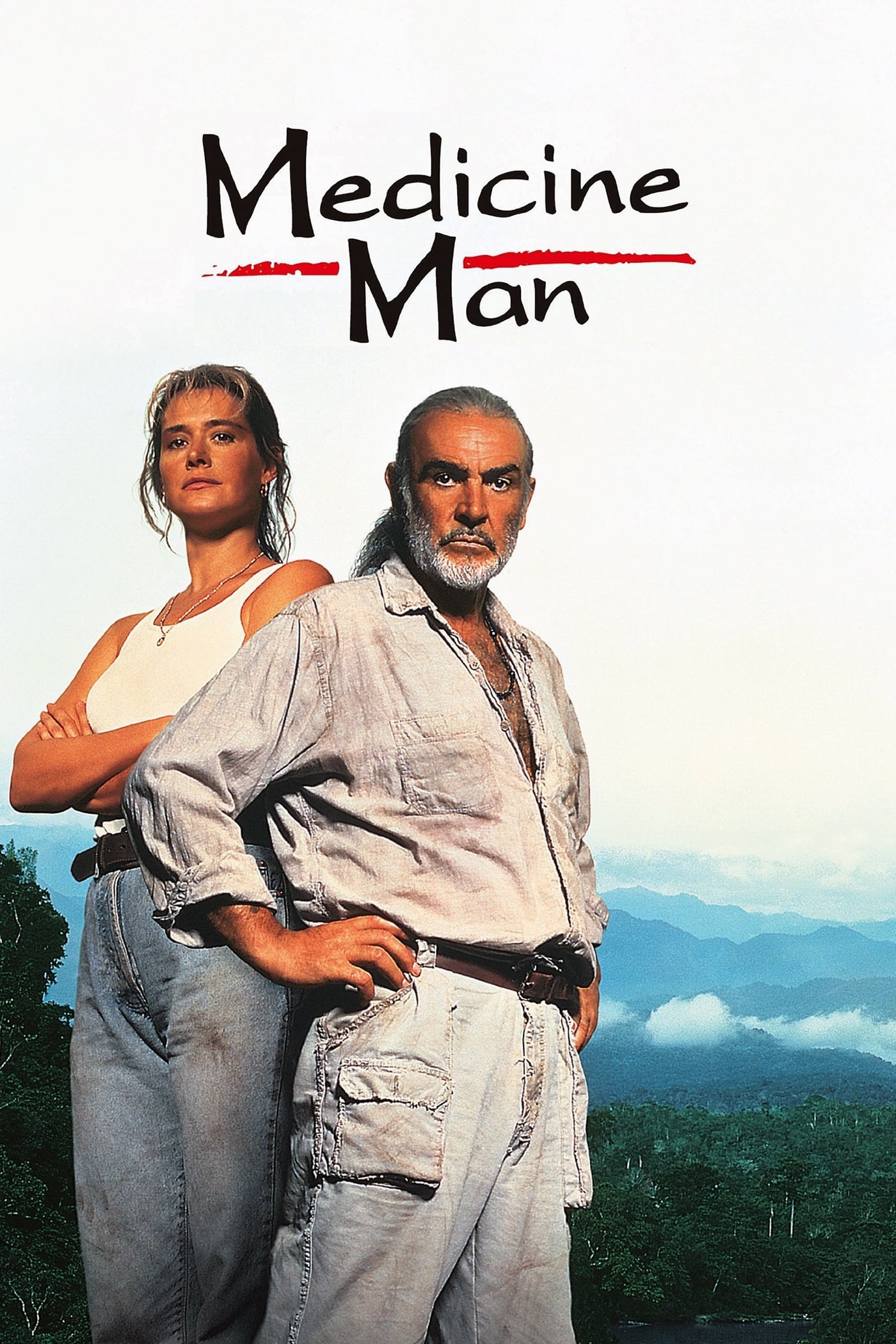
Plot Summary
When I first encountered Medicine Man, I was immediately pulled into the lush, mysterious world that John McTiernan conjures up—a wild Amazonian frontier dense with both danger and hope. Rather than suddenly divulging twists or unraveling the whole ending, I want to focus on the pulse of the storyline without stripping away its discoveries. At the heart of the film is Dr. Robert Campbell, played by Sean Connery, whose search for a miracle cure in the Amazon rainforest becomes as much a journey inward as it is about field research. Lorraine Bracco’s Dr. Rae Crane, a driven biochemist, is thrust into Campbell’s world, believing she’s there for a brief consult, only to find herself tangled not just in his thorny personality but in a battle that pits science against exploitation and indigenous wisdom against outside indifference.
What kept me hooked was not simply the chase for a medical revelation, but the slow reveal of the rainforest itself as an active character—sometimes threatening, sometimes protective. The tension between scientific advancement and environmental preservation pulses through the narrative, but the film’s real adventure lies in its nuanced, sometimes uneasy exchanges between the protagonists. I found myself clinging to every scene set amid the riotous greens and looming canopies, where hope, betrayal, and ethical choices all feel magnified by the stakes of the Amazon’s fragility.
Just a note if you’re wary of spoilers: I won’t give away the last act’s surprises or the fate of the serum, as I think the film is less about a single “solution” and more about the journey into uncertainty itself.
Key Themes & Analysis
What unfolds in Medicine Man is multilayered. For me, the film’s most resonant theme is the clash—and potential communion—between western rationalism and indigenous knowledge. I was deeply intrigued by how Campbell’s arrogance softens in the presence of tribal perspectives, and how Crane’s analytic rigor serves as both a weapon and a shield as she encounters the unknown. The rainforest, rendered with vibrant intensity by Donald McAlpine’s cinematography, becomes a vivid metaphor for the complexity and interconnectedness of life. Every shot, whether it’s the shimmering canopy or the fleeting glimpses of wildlife, underscores the sense that what is at stake is nothing less than the future of unseen worlds.
It’s hard for me to overstate how much I appreciated McTiernan’s directorial restraint here. Known for action blockbusters, he lets the atmosphere breathe, stilling the camera long enough for the quiet moments—whether it’s the deep hum of the forest or the hesitant beginnings of empathy between Campbell and Crane. The performances add further depth; Connery embodies the trope of the grizzled outsider but endows it with vulnerability, especially as the film plumbs his grief and stubborn idealism. Bracco’s portrayal is often bracingly assertive, but I was drawn to her moments of doubt—she navigates a fine line between scientific skepticism and a growing reverence for the living laboratory around her.
What stays with me especially is the way the script addresses moral ambiguity. Rather than lionizing the foreign scientist or demonizing all outside influences, the film insists on uncomfortable questions about who deserves credit, ownership, or protection for scientific discoveries. This ethical gray zone, mirrored in the uncertain beauty of the rainforest, lingers long after the credits.
My Thoughts on the Cultural Impact & Legacy
Looking back, I can’t help but feel that Medicine Man carved out a distinctive place in my own cinematic journey. At a time when environmentalism was starting to enter the mainstream, the film gave dramatic form to questions about tropical medicine, native rights, and the cost of progress that I was only beginning to wrestle with. While blockbuster adventure films of the era rarely foregrounded ecological devastation, here I saw a director daring to blend grand entertainment with urgent commentary. That ambition inspired me. It nudged me to recognize how films can serve as bridges—linking audiences not only to exotic places but to perspectives that had too often been ignored.
Over the years, I have come to see Medicine Man as a precursor to more globally minded blockbusters and documentaries. Its willingness to linger on local characters, muddy the lines between heroism and paternalism, and address exploitation within scientific discovery paved the way for works that would grapple even more explicitly with postcolonial themes. While the movie isn’t flawless—sometimes veering into sentimentality or outdated gender dynamics—its heart seemed always in the right place. I still find myself recommending it, especially as a reminder that adventure, when intertwined with real-world stakes, can have lasting resonance.
What matters most to me is how it planted seeds of curiosity; I left the film wanting to read more, to ask more questions, to view the Amazon not just as a backdrop, but as a protagonist in our shared narrative. It’s a film that, for me as a curator of stories, set a benchmark for balancing spectacle with substance. Watching it again recently, I was struck anew by how its imagery and questions feel even more urgent in the age of climate anxiety and global health crises.
Fascinating Behind-the-Scenes Facts
Beyond what appears on screen, the making of Medicine Man left me genuinely fascinated. The production itself was an odyssey—the cast and crew filmed deep in the Mexican rainforest rather than the Amazon, braving stifling humidity, relentless insects, and logistical headaches. I was impressed by how director John McTiernan insisted on shooting on location to capture an authentic sense of place, despite budget overruns and growing tension between the leads.
One particular production tale that grabbed my attention centered around Sean Connery’s rugged look. His wildman hair and beard weren’t just for show—the humidity and challenging shooting conditions led to unexpected continuity issues, forcing Connery to adapt his appearance mid-filming so scenes could match up. I was also amused to learn that the search for a convincing tree to serve as the story’s botanical focal point took weeks, with set designers finally settling on an imported specimen rigged with prosthetic vines to highlight the elusive beauty at the film’s core.
Lesser known, but significant to me, was that Lorraine Bracco lobbied hard for her role, eager to break out of typecasting following her acclaimed turn in Goodfellas. She faced skepticism about her capacity for high adventure, which mirrored her on-screen outsider status. Witnessing how her determination drove both performance and narrative added, for me, an intriguing meta-layer to the viewing experience.
Why You Should Watch It
- If you’re drawn to adventure films that tackle big, topical questions—like the collision of science, culture, and nature—this is a rare, earnest entry in the genre.
- The sweeping cinematography offers a transportive experience, plunging you into the rainforest and making you feel both its magic and its menace.
- Sean Connery delivers one of the more complex, conflicted performances of his later career, providing a character study that lingers beyond the end credits.
Review Conclusion
When I reflect on Medicine Man, I don’t just recall the plot or the star power—I remember a visceral sense of immersion and a film that dared me to ask, “Who owns knowledge? Whose voices matter in the rush to save the world?” In a landscape where adventure movies often sacrifice complexity for spectacle, I still appreciate McTiernan’s willingness to muddy the waters. Though imperfect and sometimes constrained by the era’s limitations, the film stands out as both a time capsule and a challenge to its audience: to look deeper, to listen harder, and to consider what true stewardship really means.
My rating: 4 out of 5 stars. For any viewer curious about where morality, medicine, and the wild heart of nature intersect, this film is well worth a journey.
Related Reviews
- The Constant Gardener (2005): I recommend this for the way it fuses a suspenseful narrative with ethical questions surrounding pharmaceutical research in the developing world, echoing the moral complexity that drew me to Medicine Man.
- The Emerald Forest (1985): This film’s immersive depiction of rainforest life and its critique of Western interventionism make it a natural companion for viewers intrigued by themes of environmental conflict and cultural collision.
- Gorillas in the Mist (1988): I find its emotionally charged portrait of science, environmental activism, and personal sacrifice to resonate strongly with the dilemmas faced by the characters in Medicine Man.
- At Play in the Fields of the Lord (1991): For those who responded to the film’s atmospheric tension and complicated portrayals of outsiders among indigenous communities, this thought-provoking drama offers parallel pleasures and provocations.
For readers looking to go deeper, these perspectives may help place the film in a broader context.
🎬 Check out today's best-selling movies on Amazon!
View Deals on Amazon