
Plot Summary
I remember the first time I watched “Memento,” I was as disoriented as its protagonist, Leonard Shelby. The director, Christopher Nolan, masterfully crafts a neo-noir psychological thriller that upends traditional storytelling. The narrative unfolds in a fractured, reverse chronology—mirroring Leonard’s own struggle with short-term memory loss. Each scene seems to unravel rather than build upon the previous one, bringing me closer to experiencing the protagonist’s confusion and desperation. As someone hungry for narrative innovation, I found this approach to be boldly immersive and intellectually engaging.
In broad strokes, the journey follows Leonard, played with stunning vulnerability by Guy Pearce, as he attempts to track down the man responsible for attacking him and killing his wife. What sets this investigation apart is Leonard’s unique condition: he can’t make new memories. This makes every interaction and every step of his quest suspect—even to himself. Through a clever interplay of color and black-and-white sequences, I was invited to piece together both the mystery and the man behind it.
If you haven’t seen “Memento,” I promise you’ll appreciate the delicate game Nolan plays with your perception. For those wary of spoilers: the film’s magic is in how each scene reframes all that came before it. The full impact hinges on gradual revelation, so I’ll steer clear of the deepest twists and instead focus on how the structure makes every decision and character seem slippery, shrouded in uncertainty. By the time the credits roll, I found myself questioning not just the truth of Leonard’s story, but the reliability of my own memory as a viewer.
Key Themes & Analysis
At its core, I consider “Memento” a searing meditation on the fallibility of memory and the stories we construct to survive trauma. The most striking theme for me is self-deception. Leonard’s tattoos and scribbled notes feel like desperate anchors, yet they ultimately become tools of manipulation—both self-imposed and external. I was mesmerized by how Nolan manipulates point of view, making us complicit in Leonard’s flawed logic and unreliable narrative. This is not merely a film about memory loss, but about the very human tendency to create meaning, even at our own expense.
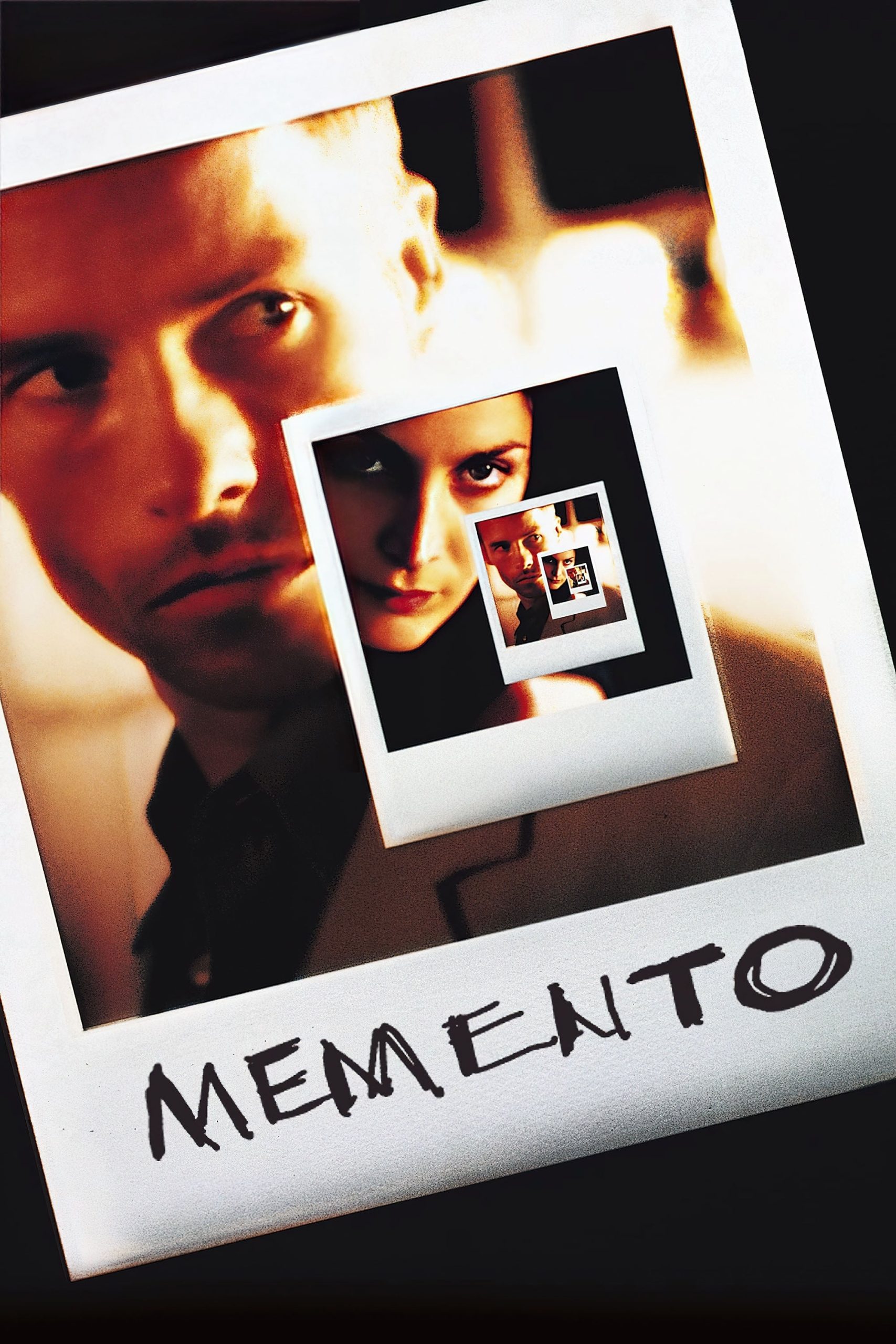
Cinematographically, I was struck by Wally Pfister’s sharp, clinical visuals. The frequent close-ups on Polaroids and inked skin reinforce a tactile realism, grounding the abstract psychological tension in tangible artifacts. Lighting becomes an extension of Leonard’s consciousness—harsh fluorescents in uncertain spaces, washed-out colors where his reality frays. I was especially impressed by the editing, which I found not just impressive but essential: Dody Dorn stitches the film’s reversed and chronological narratives with surgical precision, achieving clarity within intentional disarray. The film’s technical inventiveness is inseparable from its emotional impact.
Looking at the performances, Guy Pearce commands my empathy. He brings profound weariness and wounded pride to Leonard, never devolving into caricature. I was equally compelled by Carrie-Anne Moss as Natalie—a woman whose motives remain opaque and whose presence keeps the protagonist (and me) perpetually off-balance. Joe Pantoliano as Teddy injects a wry unpredictability, challenging not just Leonard but the audience to question every “fact.” It’s the interplay of these performances, filtered through an unsettling script, that endows the film with a feeling of existential anxiety that lingers.
What makes “Memento” more than a genre exercise, in my view, is its existential urgency. It interrogates how identity is constructed from selective memory—and what happens when even those selections are unreliable. Watching Leonard try, and often fail, to trust himself reminded me how fragile truth can be when filtered through trauma and longing. Few films so effectively transform a character’s inner struggle into the very structure of their world.
My Thoughts on the Historical & Social Context
Reflecting on the year 2000, I see why “Memento” resonated so powerfully with audiences. The late nineties and early 2000s marked a period of great cultural introspection—society grappled with the rise of digital technology, the blurring between fact and fiction on the Internet, and a persistent anxiety about authenticity. For me, “Memento” captures this unease perfectly. The film’s non-linear structure and unreliable narration seemed to hold a mirror up to a society wary of information overload and the shifting boundaries of personal truth.
What strikes me most is how the film’s questions about memory and identity feel even more relevant today. In an age of misinformation and curated online personas, Leonard’s predicament—never fully knowing what to trust—feels like a metaphor for modern existence. On a personal level, I can’t help but connect his struggle with my own moments of doubt and the times when I’ve rewritten my past to suit a comforting narrative. This is not just a story about a man with a broken memory, but a story about all of us—how we choose what to believe, and how easily those beliefs can be manipulated.
Politically, I see echoes of the post-1990s disillusionment: trust in institutions was waning, conspiracy theories gained traction, and the very nature of evidence began to feel slippery. When “Memento” asks its audience to interpret clues alongside the protagonist, it’s inviting us all to be suspicious of what we’re told—whether by others or by ourselves. I find that this persistent ambiguity is what endows “Memento” with its lasting relevance, both as a product of its time and as a prescient warning about the nature of truth.
Fact Check: Behind the Scenes & Real History
Diving into the film’s genesis, I was fascinated to learn that “Memento” is inspired by a story written by Jonathan Nolan, Christopher’s brother. The short story, “Memento Mori,” was conceived as a narrative puzzle long before unconventional timelines became Nolan’s trademark. What really grabs me is how they transformed this literary conceit into a visual and emotional experience; Nolan’s decision to tell Leonard’s story backward wasn’t just for spectacle, but to put the audience inside the protagonist’s fragmented mindset.
From a production standpoint, I was amazed by the film’s tight shooting schedule and budget. “Memento” was made for around $9 million—a relatively modest sum for a film of such narrative ambition. The compressed timeline required the cast and crew to work at breakneck speed, yet the intricate structure never falters. Shooting out of chronological order and fitting two concurrent timelines together on a tight budget is, to me, a minor miracle of independent filmmaking. Nolan himself admitted that maintaining continuity was a Herculean task, given both the film’s backwards structure and the protagonist’s memory disorder.
One detail that I found especially telling is that Guy Pearce took it upon himself to study memory loss and amnesia intensely before filming. While certain neuropsychologists have noted that Leonard’s “condition” is more narratively convenient than strictly realistic, I think the portrayal is less about clinical accuracy and more about using amnesia as a metaphor for grief and self-deception. The tattoos and Polaroids that anchor Leonard’s reality are based loosely on real mnemonic techniques, but their use here becomes a kind of visual poetry. I admire how Nolan resists turning the story into a cautionary medical drama—instead, he uses these tools to gesture at larger questions about how all of us construct reality from fragmentary evidence.
Why You Should Watch It
- The film’s unique reverse-chronological structure offers an immersive, puzzle-like viewing experience that challenges you to engage intellectually and emotionally with the story in real time.
- Guy Pearce’s haunting performance as Leonard anchors the narrative, delivering a deeply human portrayal of both vulnerability and tenacity in the face of impossible odds.
- Christopher Nolan’s direction, coupled with innovative editing and thematically rich storytelling, transforms what could be a simple revenge story into a meditation on memory, identity, and truth.
Review Conclusion
I walked away from “Memento” with my mind buzzing—not just from the film’s intricate structure, but from its relentless interrogation of what it means to remember and to believe. It’s a film that turns its limitations—budget, narrative experiment, genre expectations—into strengths, distilling a dizzying array of ideas into a tightly-controlled cinematic experience. The combination of powerful performances, fearless storytelling, and emotional resonance makes it one of the most innovative psychological thrillers I’ve ever encountered.
I give “Memento” 5 out of 5 stars for its audacity, its intellectual rigor, and its enduring relevance in an era increasingly defined by questions of memory and truth.
Related Reviews
- Inception (2010): Another Christopher Nolan creation that toys with the boundaries of reality, “Inception” offers a similarly mind-bending narrative where the rules are constantly shifting. I recommend it for its exploration of memory, dream logic, and identity—themes that echo and expand upon those in “Memento.”
- Eternal Sunshine of the Spotless Mind (2004): If “Memento” left you fascinated by the intersection of memory, trauma, and love, you’ll find Michel Gondry’s sci-fi romance offers a gentler, yet equally thought-provoking perspective on memory manipulation and emotional healing.
- The Machinist (2004): Those drawn to psychological thrillers about trauma and unreliable perception will appreciate Christian Bale’s haunting turn in “The Machinist.” Its fractured narrative and visual style share much in common with the existential disquiet found in “Memento.”
- Donnie Darko (2001): For viewers intrigued by ambiguity and fractured timelines, Richard Kelly’s cult classic delves into the psychological and metaphysical with a protagonist whose grip on reality is constantly in question. The tone and structural experimentation align closely with what I admire in “Memento.”
If you want to explore this film beyond basic facts, you may also be interested in how modern audiences respond to it today or whether its story was inspired by real events.
🎬 Check out today's best-selling movies on Amazon!
View Deals on Amazon