
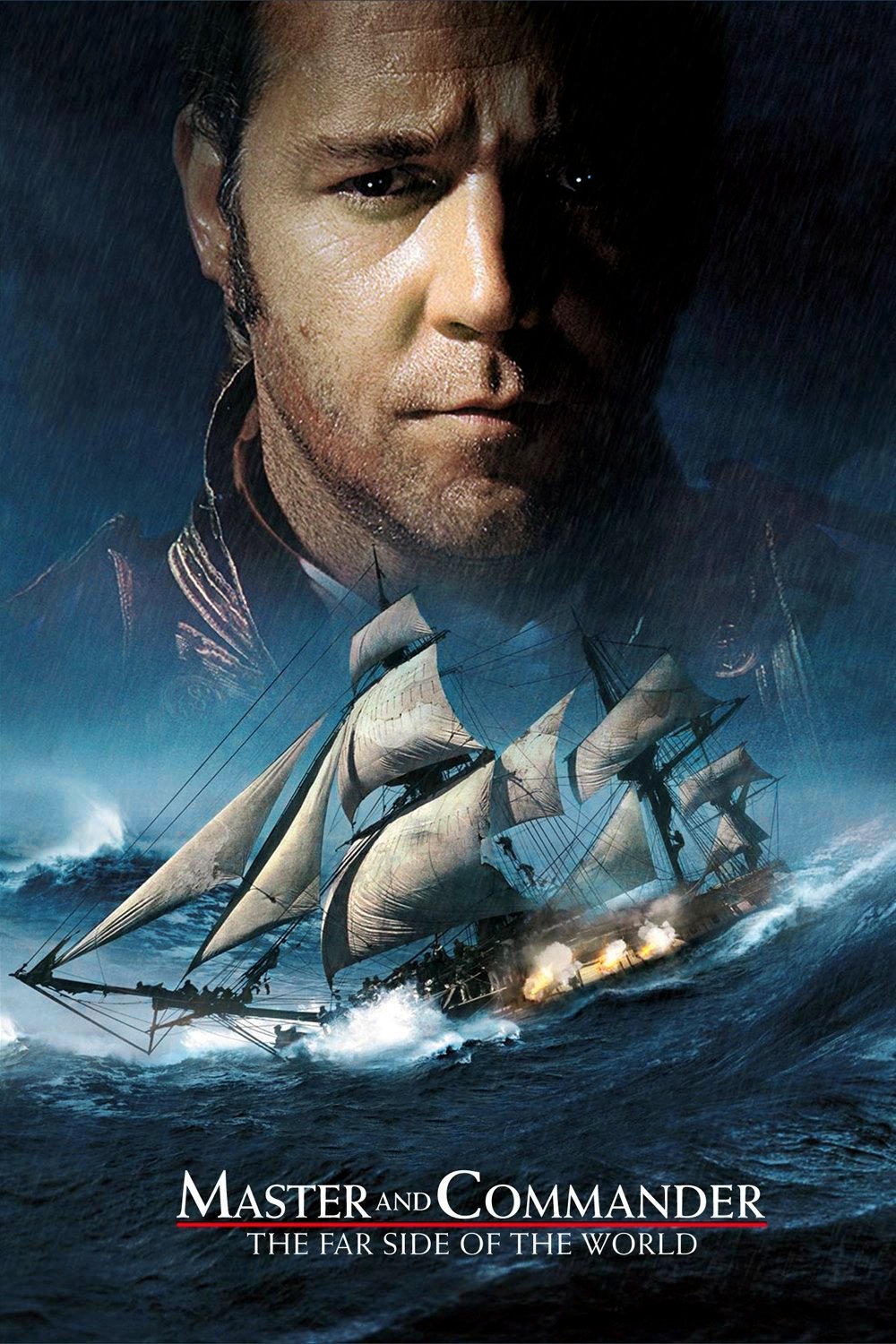
Plot Summary
Rarely do I lose myself so absolutely in a historical action film, but watching Master and Commander: The Far Side of the World, directed by Peter Weir, transported me aboard HMS Surprise alongside a world of meticulous detail most adventure movies barely attempt. The film immediately pulled me into the tension-soaked atmosphere of life at sea during the Napoleonic Wars. Captain Jack Aubrey, played with electrifying presence by Russell Crowe, embarks on a dangerous pursuit to outmaneuver a formidable French privateer threatening British interests in the South Atlantic.
As I followed the rigid routines—and unforeseen upheavals—of this eclectic crew, I admired how the plot chose atmosphere and character over relentless action. The story unfolds almost in real time, chronicling not only nautical warfare but the friendships, griefs, and moral dilemmas each sailor confronts. Without delving into major spoilers, I’ll say the film’s driving tension hinges on the cat-and-mouse chase with the elusive French vessel, which becomes an obsession for Aubrey and a crucible for his men. Every setback at sea—from battered hulls to aching hearts—feels deeply personal, grounding the spectacle with real emotional weight.
What impressed me most was how the plot balanced its epic naval battles with the quieter, more contemplative moments that highlight the humanity behind the uniforms. It’s not just cannon fire that matters here, but the choices that echo down the line, testing both leadership and loyalty aboard a single fragile ship in a vast, indifferent ocean.
Key Themes & Analysis
The first thing I noticed while watching Master and Commander was how it elevates the conventions of the historical epic. Rather than relying on romanticized heroics, Peter Weir—whose directorial vision I’ve long admired for its restraint and clarity—aims for a textured authenticity that lingers in the mind long after the closing shot. The core theme, as I see it, is the tension between duty and humanity. The film is a meditation on leadership—what it costs, what it grants, and how it shapes not only the fate of individuals but the soul of an entire crew.
Russell Crowe’s portrayal of Captain Aubrey is a study in contrasts: swaggering confidence masking self-doubt, charisma alloyed with vulnerability. The dynamic between Aubrey and Dr. Maturin, played by Paul Bettany—who feels more real and complicated here than in nearly any other historical drama I’ve seen—forms the emotional axle of the film. Their debates about war, science, and the morality of command remind me that heroism is rarely pure or simple; it’s a balancing act shaped by the shifting winds of circumstance and conscience.
Cinematographically, I’m always struck by Russell Boyd’s use of natural lighting: lanterns flicker in cramped cabins, fog drifts across a gray horizon, the deck gleams with seawater beneath open sky. Every shot immerses me in the dirt, salt, and sweat of life on an 18th-century warship. The camera lingers on faces etched with fear, resolve, and longing, making every private moment and collective struggle feel vivid and immediate.
Sound, too, becomes its own character. The creak of timber, the slap of waves, and the shouts across the deck build an aural landscape that—at times—makes me flinch or breathe shallowly, as if the cannonballs might break through my own living room walls. Christopher Gordon’s score, merging period-accurate classical music with original compositions, amplifies the stakes and injects a sort of aching beauty into scenes of chaos and reflection alike.
I found the pacing deliberate—sometimes almost stubbornly so—but this decision pays off with a cumulative effect, gradually immersing me into the unrelenting rhythm of life at sea and the fracturing pressure of prolonged pursuit. Unlike most Hollywood war epics, Weir’s restraint—the refusal to oversell violence or melodrama—lends the film a rare gravitas. It’s not just about who wins each skirmish but about who survives, grows, and endures the endless, gray-washed enormity of the ocean.
The supporting cast, too, deserves mention. I recall Jack Aubrey’s young midshipmen—adolescents thrust into adulthood by necessity—and how their fates, hopes, and heartbreaks reflected the broader theme: in war, the sacrifices of the unseen are every bit as crucial as those of the celebrated leaders.
My Thoughts on the Cultural Impact & Legacy
For me, Master and Commander feels like a landmark achievement—a film that dares to trust the audience’s intelligence, patience, and thirst for textured storytelling. It shaped the way I think of the historical adventure genre; after seeing it, I found myself less satisfied with swashbuckling spectacle and more drawn to stories of camaraderie, doubt, and survival under impossible odds.
The film’s legacy lies in the enduring sense of authenticity and integrity it brings to the genre. I credit Peter Weir for not compromising his vision—he seems to ask viewers to lean in, pay attention, and grapple with the ambiguity of real life and real leadership. I often find myself comparing every subsequent sea-based drama to the bar set here in terms of technical rigor and emotional depth.
What resonates with me most, even years after my first viewing, is how the film refuses easy answers. It’s a product of careful research and passionate craftsmanship, but it also serves as a meditation on what binds a group together in the face of overwhelming adversity. There’s a philosophical core—questions about science versus faith, obedience versus selfhood, duty versus empathy—that keeps the story relevant and essential.
When I recommend Master and Commander to fellow cinephiles, I do so not just for its technical achievements (which are many) but because I see it as a rare invitation to contemplate the cost of leadership and the small, unseen moments that quietly define heroism. What a gift, for me as a film curator, to witness an action epic unafraid to sit with uncertainty and evoke the relentless, storm-tossed reality of actual history.
Fascinating Behind-the-Scenes Facts
Over the years, I’ve read and heard behind-the-scenes stories that only elevate my appreciation for this film’s ambition and craftsmanship. One of the film’s most impressive feats was its decision not to rely on computer-generated imagery for the majority of its naval battles. Instead, the filmmakers constructed a life-size replica of HMS Surprise, meticulously detailed down to the last pulley and plank. This replica not only sails in key scenes but actually floats—the crew filmed on open water off the coast of Mexico and in specially designed water tanks at Baja Studios. The sheer logistics involved in achieving this level of verisimilitude astounds me every time I remember those visuals.
I was also struck by the intense training regimen the cast underwent. Russell Crowe and his fellow actors didn’t just memorize lines; they spent weeks aboard the replica ship, learning the ropes—literally—so that every climb, knot, and shouted order would ring true. Crowe, in particular, reportedly became adept at playing the violin for his character’s duets with Maturin, adding another layer of tangible skill that translates into his performance. This relentless pursuit of authenticity, both physically and emotionally, makes the on-screen camaraderie feel utterly real.
For those curious about the film’s creatures and naturalistic detail, I learned that even the animals were cast with care. The ship’s famous Galápagos iguanas, for example, were not mere on-set props, but specially sourced exotics, handled under strict supervision to ensure their welfare. This attention to detail extends not just to the weaponry or dialogue, but to every living thing in the frame—a commitment that shows in every crowd scene, every close-up, every fleeting background moment.
Why You Should Watch It
- Master and Commander redefines what historical epics can achieve—prioritizing psychological complexity over spectacle without ever losing its sense of adventure.
- Russell Crowe and Paul Bettany’s performances anchor the film with a dynamic, nuanced friendship that elevates it far above standard action fare.
- The immersive cinematography, practical effects, and period accuracy offer a rare, transportive viewing experience that stays with me long after the credits roll.
Review Conclusion
I keep coming back to Master and Commander because it respects both its subject and its audience. Far beyond a standard naval drama, it delivers layered character studies, moral urgency, and a tactile sense of place. I find myself absorbed by every high-stakes battle, but even more so by the quiet exchanges at lamplight, the storms of doubt, and the moments when compromise and resolve hang in fragile balance. This film’s craftsmanship is a high watermark for the genre, and its willingness to let ambiguity and authenticity prevail feels, to me, like cinematic courage. It remains one of my favorite historical adventures—a benchmark of integrity and narrative power. My rating: 4.5 out of 5 stars.
Related Reviews
- The Duellists (1977): I recommend this Ridley Scott debut for its similarly immersive historical authenticity and nuanced character conflict. Like Master and Commander, The Duellists explores the obsession, duty, and ambiguous morality set against the backdrop of Napoleonic warfare, though it unfolds on land rather than sea.
- The Hunt for Red October (1990): Fans of slow-burn military suspense will find much to love in this sleek thriller, which echoes Master and Commander’s focus on leadership under pressure and the psychological stakes of confrontation in confined quarters.
- The Last of the Mohicans (1992): This film resonates with me for its fusion of historical narrative, epic vistas, and deeply personal struggles—themes that parallel those in Master and Commander, albeit transported to the forests of colonial America.
- Das Boot (1981): I always return to this German U-boat classic for its claustrophobic realism and meticulous attention to the psychological wear and tear of prolonged naval combat—qualities that align closely with what I value in Master and Commander.
For readers looking to go deeper, these perspectives may help place the film in a broader context.
🎬 Check out today's best-selling movies on Amazon!
View Deals on Amazon