
Plot Summary
When I first sat down to watch Gone Girl, David Fincher’s 2014 adaptation of Gillian Flynn’s pitch-black mystery novel, I was immediately knocked off-balance by how quickly it peeled back layers of marital discontent and suburban dread. This psychological thriller, powered by Fincher’s razor-sharp direction, tiptoes between genres—domestic drama, neo-noir, dark satire—never letting me settle into any particular expectation. What begins as the outwardly ideal marriage between Amy Dunne and Nick Dunne violently fractures when Amy goes missing on their fifth wedding anniversary, and suddenly, suspicion festers from every direction in their quaint Missouri town.
As detectives swarm the Dunne’s restrained home, I became swept up not just in the question of ‘who did it?’ but why so many in Amy and Nick’s orbit seem so eager to project their own truths. Amy’s diary entries provide a counterpoint to Nick’s fraught efforts to clear his name, shifting my sympathy from moment to moment. This dual narrative engine keeps the story restlessly alive. Even if I steer away from any massive spoilers, I have to warn: halfway through the film, a seismic revelation shatters the framework, retooling what you thought you knew about guilt, innocence, and performance itself. The brilliance is in how, right up until that mid-point, every clue and red herring feels plausible yet electric with threat. I was left wondering not just what happened to Amy, but what secrets all couples keep at the heart of their relationships.
Key Themes & Analysis
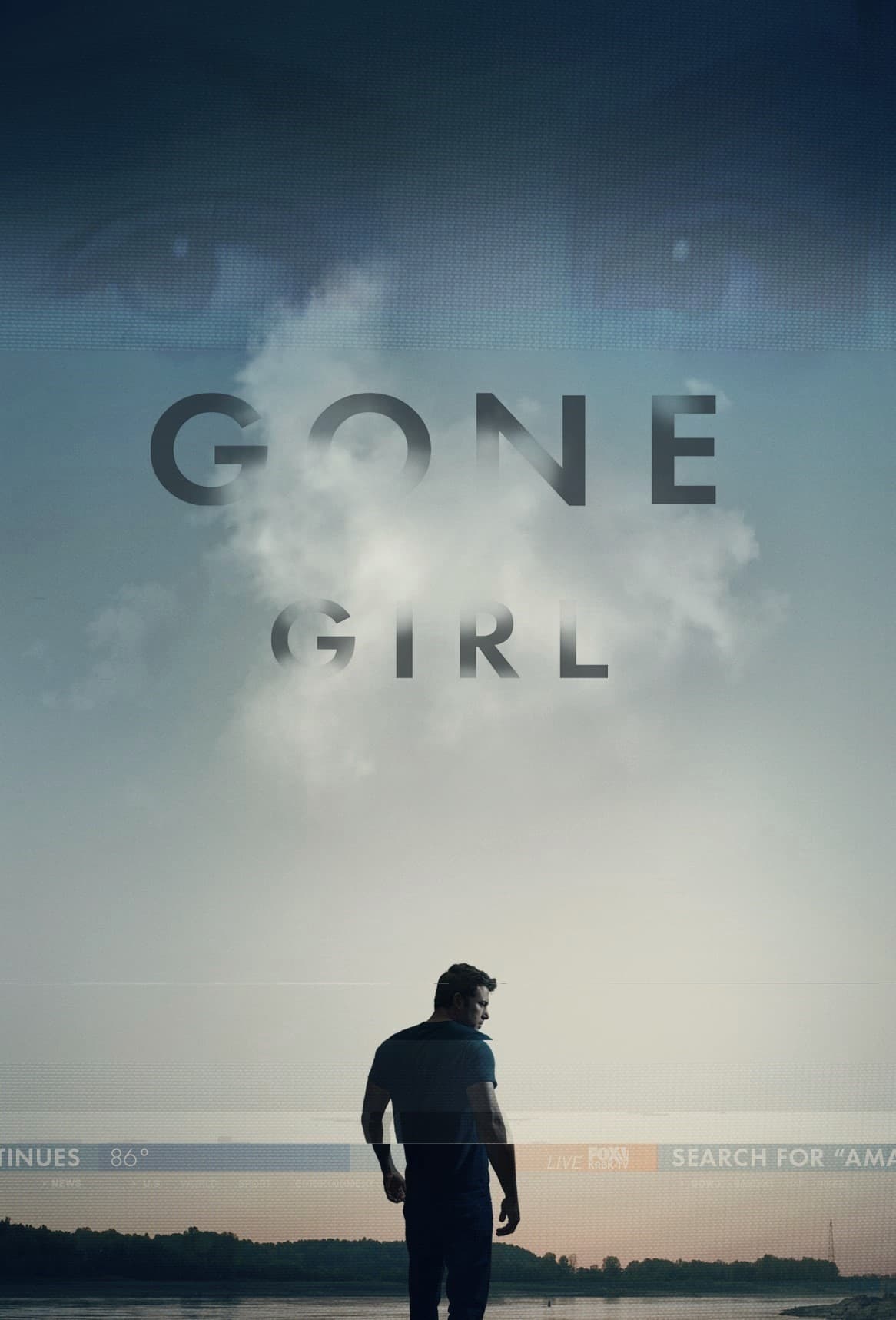
What has kept Gone Girl lodged so firmly in my psyche is how it weaponizes genre tropes as a way to speak about marriage, media, and perception. The notion of truth—subjective, slippery, and manipulated—runs through every frame. I was struck by how Fincher’s aesthetic choices communicate this. The way cinematographer Jeff Cronenweth shrouds the Dunne home in muted blues and icy grays turns everything domestic into a site of menace, as if each perfectly arranged throw pillow could hide a crime.
But what really gnaws at me is the interplay of gender and performance. Amy Dunne, as played by Rosamund Pike, is no mere victim; her intelligence crackles, her motivations always at least a beat ahead of both the other characters and—and here’s the uncomfortable part—me, the audience. I was continuously forced to question my allegiance: is Amy a casualty of a neglectful, unfaithful husband, or is she orchestrating the world’s cruelest revenge? Pike’s performance here is simply volcanic, navigating the razor’s edge between vulnerability and menace with a command that chills me even on repeated viewings.
That leads me to Ben Affleck’s Nick, whose inscrutability works both as character study and social commentary. Fincher utilizes Affleck’s ‘everyman, yet not quite’ persona in perhaps the most subversive way I’ve seen. Nick is both victim and villain; he is sullen, confused, and seemingly hollowed out by circumstance, making it alarmingly easy for a frenzied media and judgmental public to turn on him. I can’t help but see in Nick the manifestation of Fincher’s ongoing fascination with unreliable men—those who wear masks before others, and perhaps before themselves most of all.
It’s this dance between authenticity and performance that I think elevates Gone Girl beyond its genre trappings. Every supporting character—Carrie Coon’s wonderfully wry sister Margo, Neil Patrick Harris’s unnervingly controlling Desi Collings, and Tyler Perry in a surprisingly deft comedic turn as attorney Tanner Bolt—seems drafted into a drama in which everyone is acting, consciously or not. Even the film’s use of flashbacks and parallel timelines echoes the duplicity and half-truths so often found in real-world relationships. Fincher’s decision to keep the viewer in the dark, even as he doles out ‘answers,’ is, for me, a pointed commentary on how we judge, especially in the age of tabloid justice.
Visually, the film’s meticulous attention to detail is something I obsess over: from the antiseptic neatness of Amy’s kitchen to the lurid lighting of network newsrooms, everything coheres to reinforce the theme of constructed reality. Trent Reznor and Atticus Ross’s dread-infused score is an undercurrent that rarely lets up, needling me into a state of fraught tension. Even at its most dialogue-heavy, I felt the pulse of danger behind every word.
The miraculous balance of psychological insight, social critique, and pure suspense is what leads me to return to Gone Girl as a subject of analytical obsession. Here, marriage isn’t just a union—it’s a battleground, a performance piece, and sometimes, a crime scene. This is a film about how sinister the ordinary can be when the masks we wear start to slip.
My Thoughts on the Cultural Impact & Legacy
Thinking back to my first encounter with Gone Girl, I remember emerging from the theater exhilarated and rattled. Beyond the high-wire tension, the film struck me as a snapshot of 2010s anxieties—the pressure to curate perfect public identities, the media’s voracious appetite for scandal, the endless war between perception and reality. Gone Girl redefined the cinematic thriller for me, insisting that suspense can be mined not just from locked rooms and fingerprints, but from the corrosive effects of secrets and the often-unspoken resentments at the heart of modern relationships.
More than anything, I’m drawn to how the film changed the way psychological thrillers are approached in mainstream cinema. Gone Girl’s blend of gender politics, media satire, and pitch-black humor sent ripples into other films and TV projects that dared to dissect marriage and media as intertwined forms of spectacle. In a sense, it mirrored the hyper-connected, hyper-watchful world that defined the mid-2010s, long before “fake news” entered the cultural lexicon. As a curator who relishes films with layers upon layers of meaning, I see Gone Girl as a touchstone—one that invites audiences to question the narrative itself, not just the characters within it.
From a personal vantage point, this film stays with me because of how deeply uncomfortable—yet captivating—it is. Rarely do I see a story so committed to challenging my preconceptions of morality, heroism, and victimhood. The legacy of Gone Girl is its demand that I, as a viewer, interrogate my own biases and complicity in the narratives that shape society, marriage, and criminal justice. That’s a rare gift, and one of the reasons I continue recommending this movie to anyone looking to see how cinema can hold a mirror up to both individuals and the collective culture.
Fascinating Behind-the-Scenes Facts
Peeling back the curtain a bit, I’m particularly fascinated by some of the choices that set Gone Girl’s production apart. The casting process alone sparked many conversations among fans and critics, but it’s especially interesting that Rosamund Pike landed the role of Amy after a highly secretive audition process. Pike was reportedly asked by David Fincher to record herself in multiple emotional extremes, testing everything from fear to triumph to vulnerability. This gave Fincher the trust that she could capture Amy’s layered psyche—something I feel was critical for such an enigmatic character.
Then there’s the way Fincher’s infamous perfectionism demanded take after take for even seemingly simple scenes. It’s reported that Ben Affleck had to perform one door-opening scene over 50 times, supposedly because Fincher wanted the exact right blend of confusion and defensiveness. I read that Affleck brought his own unique baggage to the project, given his experience with the press and public scrutiny; this knowledge shaded every moment of Nick’s awkward, sometimes slippery TV appearances for me as a viewer.
What also strikes me as quintessentially ‘Fincher’ is his collaboration with the design team to meticulously recreate the interior of the Dunne house. The crew sourced hundreds of custom props and wardrobe items to create the impression of a couple who had painted on the trappings of suburban success—a perfect, sterile prison. These behind-the-scenes choices amplified everything that feels so specific and suffocating about Amy and Nick’s shared life to me.
Why You Should Watch It
- The film delivers a relentless, unpredictable narrative that kept me in suspense from the first frame to the last, with twists that challenge even veteran thriller fans.
- The central performances—particularly Rosamund Pike’s audacious, layered Amy—stand as some of the most compelling acting I’ve seen in recent years.
- Gone Girl doubles as a dark social satire, dissecting marriage, media sensationalism, and gender roles in ways I still think about long after the credits roll.
Review Conclusion
If there’s one film that encapsulates my fascination with narratives that both grip and unsettle, it’s Gone Girl. Every time I revisit it, I discover fresh details—subtle performances, sly visual cues, sharp-edged dialogue—that deepen my appreciation for David Fincher’s meticulous craft. Gone Girl is both a razor-edged thriller and a cultural mirror, reflecting back my own doubts and assumptions about those closest to me and the stories we believe. For sheer audacity and technical brilliance, I rate this film 4.5 out of 5 stars. The only thing keeping it from perfection is perhaps the intensity of its bleakness—but then again, that uncompromising darkness is part of its lingering genius for me.
Related Reviews
- Prisoners (2013) – This Denis Villeneuve-directed mystery pulls me into a hauntingly bleak atmosphere of loss and suspicion, exploring the lengths to which ordinary people will go to find missing loved ones. Its emphasis on unreliable morality and family secrets reminds me of why I found Gone Girl’s taut, ambiguous storytelling so riveting.
- Big Little Lies (2017) – As a TV miniseries, it delivers a similarly stylish and psychologically charged take on suburban facades and buried truths. I was struck by how it unpacks complicated female perspectives, just as Gone Girl does with Amy’s character.
- Side Effects (2013) – Steven Soderbergh’s thriller creates layered puzzles around psychological manipulation and perception. Watching it, I feel the same unease and curiosity that Gone Girl inspires, especially in its examination of media, truth, and personal agency.
- Sharp Objects (2018) – Adapted from another Gillian Flynn novel, this miniseries delivers atmospheric mystery, unreliable narration, and a focus on troubled female protagonists. I always recommend it to fans of complex, character-driven suspense.
For readers looking to go deeper, these perspectives may help place the film in a broader context.
🎬 Check out today's best-selling movies on Amazon!
View Deals on Amazon