
Plot Summary
From the very first scene, I found myself immersed in the alluring world of espionage that director Guy Hamilton crafts with a meticulous sense of style and mischief. “Goldfinger” is not just a spy thriller; it’s an extravaganza of 1960s glamor, danger, and moral ambiguity. The narrative follows James Bond (Sean Connery), dispatched to investigate the activities of the enigmatic bullion magnate Auric Goldfinger. Bond’s globe-trotting escapades take him from cool Miami Beach poolsides to shadowy Swiss mountains, and finally deep into the heart of Fort Knox. This journey pits Bond against a series of colorful adversaries, unforgettable henchmen, and, of course, the inimitable Mr. Goldfinger himself. The film is punctuated with high-stakes gambits, cunning double-crosses, and gadget-laden set pieces that keep the adrenaline surging.
What I appreciate most here is how the plot balances suspense and splendor without losing its sense of playful self-awareness. Even after so many years and countless imitators, the story maintains a sense of surprise, deploying twists and reversals that feel cleverly engineered rather than cheap. While I want to avoid major spoilers, I can’t help but mention that the climactic standoff inside Fort Knox is still one of the most tense, inventive action finales I’ve seen in a mainstream blockbuster. There’s a villainous scheme at the film’s core involving a nuclear device, but the magic of “Goldfinger” is less about what happens and more about how it unfolds, and the exuberance with which it’s played. Every step of the adventure feels like a carefully choreographed dance between absurd peril and wicked wit, making the journey endlessly rewatchable—even when you know the beats in advance.
Key Themes & Analysis
When I watch “Goldfinger,” what resonates strongest is the film’s exploration of power, materialism, and the seductions of risk. The entire plot is set in motion by greed—Goldfinger’s lust for gold isn’t merely personal wealth; it becomes an obsession, an ideology. The character’s predilection turns the precious metal into something almost sacred or mythic. As Bond moves through this world of gilded violence and temptation, I see him as simultaneously drawn to and repulsed by the superficial extravagance around him. It’s a dynamic that the film teases out with a wink—never taking itself too seriously but also never diminishing the genuine stakes involved.
Sean Connery’s performance as Bond feels iconic yet nuanced here. He exhibits the signature suavity and steeliness we expect, but there’s a sly vulnerability behind his cool exterior. In moments of genuine danger or moral ambiguity, Connery lets the mask slip just enough for me to sense Bond’s awareness of his own limitations. Against him, Gert Frobe as Goldfinger is masterful: equal parts menacing, ridiculous, and oddly sympathetic. He isn’t just a moustache-twirling villain; his schemes are so outrageous, his pride so towering, I find myself almost rooting for his chutzpah—until the consequences turn genuinely terrifying.
Cinematically, the film’s visual storytelling is stunning in its craftsmanship and color palette. The luxuriously photographed sets, splashed with gold and shadows, make every frame drip with decadent menace. The use of wide-angle shots during key standoffs exaggerates the tension, while quick, punchy edits during action sequences create a momentum that’s practically breathless. Hamilton’s direction shines in the way he orchestrates suspense: every scene feels both grand and precise, sometimes whimsical and often surprisingly dark. The soundtrack, particularly Shirley Bassey’s explosive title song, sets the tone for a film that is both operatic and cheeky, reinforcing the hyper-masculine bravado that defines this era of Bond.
One theme I found compelling, seen through a modern lens, is how the film interrogates the idea of identity and performance. James Bond, always a man adapting to his surroundings, seems to oscillate between authenticity and fabrication—a master of playing roles. His bravado is a shield, and as costumes and locales shift, the boundaries of who Bond truly is become more blurred. That was a clever move for the time, adding a meta-layer to what could otherwise be dismissed as pulp.
Goldfinger’s treatment of gender and sexuality, however, is more complicated and worthy of critical scrutiny. Women are largely objects of conquest or danger, their agency minimized—a reflection of both the pulp origins of Bond and the implicit attitudes of 1960s mainstream cinema. Honor Blackman’s “Pussy Galore” is a rare subversion: resourceful, witty, and capable of beating Bond at his own game. Even so, I’m reminded just how complex and sometimes troubling these gender dynamics are when viewed today. The film’s willingness to toy with expectation—only to revert to formulaic roles—remains its most frustrating contradiction. In today’s context, that dynamic compels me to engage more critically with what I’m seeing, but it doesn’t diminish my appreciation for the movie’s technical and narrative bravado.
My Thoughts on the Historical & Social Context
Placing “Goldfinger” in its original 1964 context, I feel the anxiety and optimism of the atomic age permeate every plot twist and character beat. The film emerged at a time when Cold War tensions and fears of nuclear annihilation were at their peak. The idea of a criminal mastermind threatening economic devastation with a nuclear device must have resonated viscerally with contemporary audiences: here was the persistent dread of the bomb, repackaged as thrilling escapism. Yet, the film’s technicolor excess and campy tone reflect a society both enamored with and fearful of its newfound modernity—the bomb, the jet set, conspicuous consumption, and a rising fascination with international intrigue.
I find it fascinating how Bond himself is a composite of national anxieties and aspirations. He’s both a paragon of individualist cool and a reaction to fears about British decline in the postwar world. The film’s obsession with gold, luxury, and power feels like a response to the uncertainties of the 1960s: a desperate wish for control and mastery over chaotic forces, whether they be economic or metaphysical. Watching it now, I’m struck by how those anxieties are still relevant, albeit in different forms. The superficiality, competitive consumerism, and the fetishization of technology are just as present in our digital age, albeit through different mediums.
What I also appreciate is the subtle way “Goldfinger” critiques the very notion of heroism. Bond’s victories are often pyrrhic, his allies disposable, and his methods questionable. In an era of moral certitude, the film plants seeds of doubt. It’s an ambivalence that feels deeply modern to me; our heroes aren’t unblemished, and our victories come at a cost. By evoking both nostalgia and unease, “Goldfinger” provides a cinematic time capsule that is instructive and a little unsettling, even after all these years.
Fact Check: Behind the Scenes & Real History
As someone who loves probing the shadowy corners of film history, I’ve discovered a trove of behind-the-scenes drama and innovation in “Goldfinger.” One detail that stands out to me is that Gert Frobe, who so memorably embodied Goldfinger, actually spoke very little English at the time. In fact, his entire performance was dubbed by actor Michael Collins in post-production—an amazing feat, considering how seamless his lip movements and expressions match the sinister dialogue we hear.
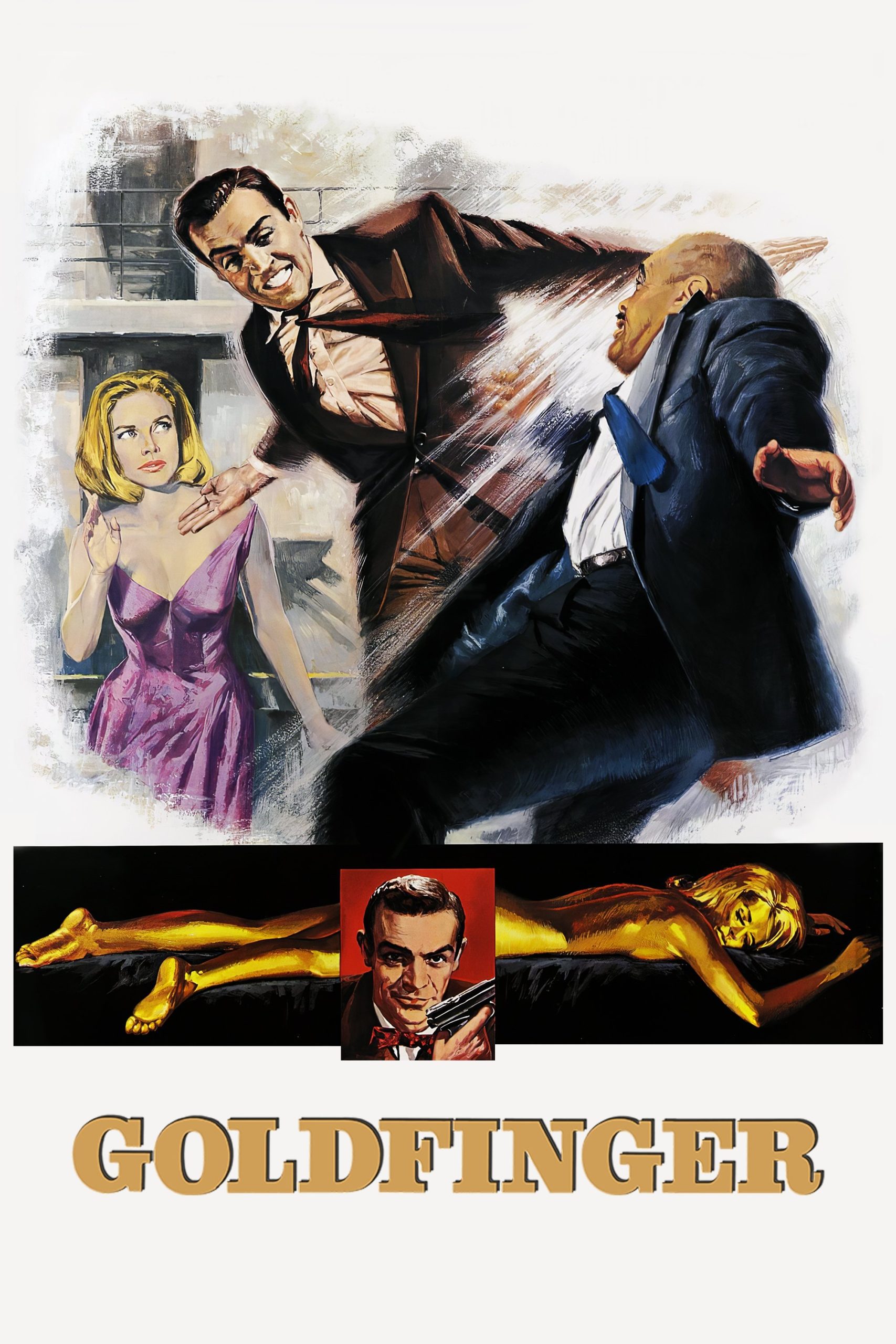
I also learned during my research that the iconic scene where Jill Masterson (Shirley Eaton) is killed by being painted gold was inspired partly by urban legends. The filmmakers played up the myth that being fully covered in paint could cause suffocation by “skin asphyxiation.” In reality, this is a medical impossibility, but the image became so famous and haunting that it entered the lexicon of pop culture. To ensure Eaton’s safety, only her front was painted, and she was given frequent breaks, a testament to both the innovation and the risk-taking of the crew at the time.
Another fascinating tidbit for me concerns the film’s use of real locations and unprecedented technical innovation. Goldfinger was among the first blockbusters to feature major set pieces built inside Pinewood Studios’ new ‘007 Stage’, which would go on to become the home of many Bond classics to follow. Some exterior shots were filmed in the real Fort Knox, Kentucky, but the production famously never had access to the actual gold vaults. Instead, legendary production designer Ken Adam constructed an elaborate and wholly fictionalized version of Fort Knox’s interior, complete with impossibly high stacks of gold bars—an artifact of movie magic that eclipsed reality in the public imagination.
Why You Should Watch It
- It’s a time capsule of 1960s style, wit, and global anxieties, offering both escapism and subtle social critique.
- The performances are iconic, especially Connery’s Bond and Frobe’s larger-than-life villainy, with memorable side characters that set the standard for spy thrillers.
- The film’s technical craft—its set design, innovative action scenes, and lush cinematography—remains groundbreaking and visually striking, even by contemporary standards.
Review Conclusion
After revisiting “Goldfinger,” I’m reminded why it is still a touchstone not just for Bond aficionados but for anyone who cares about the craft of blockbuster filmmaking. The style is irresistible, the action electric, and the commentary on greed and power unsettlingly relevant. While its gender politics demand critical engagement, I’m consistently dazzled by how much personality, humor, and invention pulse through every frame. For all its contradictions, this film remains a high-water mark for pop cinema—a more complicated, joyous, and provocative film than it might appear at first glance. On my scale, I give it a confident 4.5/5 stars.
Related Reviews
- From Russia with Love (1963): I find that this earlier Bond entry delves into a grittier, more shadowy espionage, highlighting spycraft and political intrigue over bombast. Like “Goldfinger,” it deftly mixes suspense and style, but with a colder, more paranoid edge. Essential for anyone who wants to see how the franchise built its foundations.
- North by Northwest (1959): Alfred Hitchcock’s perennial classic is, in my eyes, the spiritual ancestor to Bond—a suave, ordinary man drawn into a world of mistaken identities, secret plots, and larger-than-life villains. Its sense of adventure, continental glamour, and kinetic pacing make it a thrilling double feature with “Goldfinger.”
- The Italian Job (1969): For viewers captivated by Goldfinger’s British wit and heist-centric action, this film delivers a rollicking caper infused with swinging ‘60s aesthetics and a smart, tongue-in-cheek sensibility. The cultural confidence and slickness are unmistakably kindred with the Bond universe.
- Mission: Impossible (1996): While a few decades removed from “Goldfinger,” I see the influence of Bond’s gadgetry, set-piece invention, and twisty plotting in this Tom Cruise vehicle. It exemplifies the evolution of the spy film template—always a step ahead, always fun, and deeply indebted to the trail blazed by Bond.
If you want to explore this film beyond basic facts, you may also be interested in how modern audiences respond to it today or whether its story was inspired by real events.
🎬 Check out today's best-selling movies on Amazon!
View Deals on Amazon