
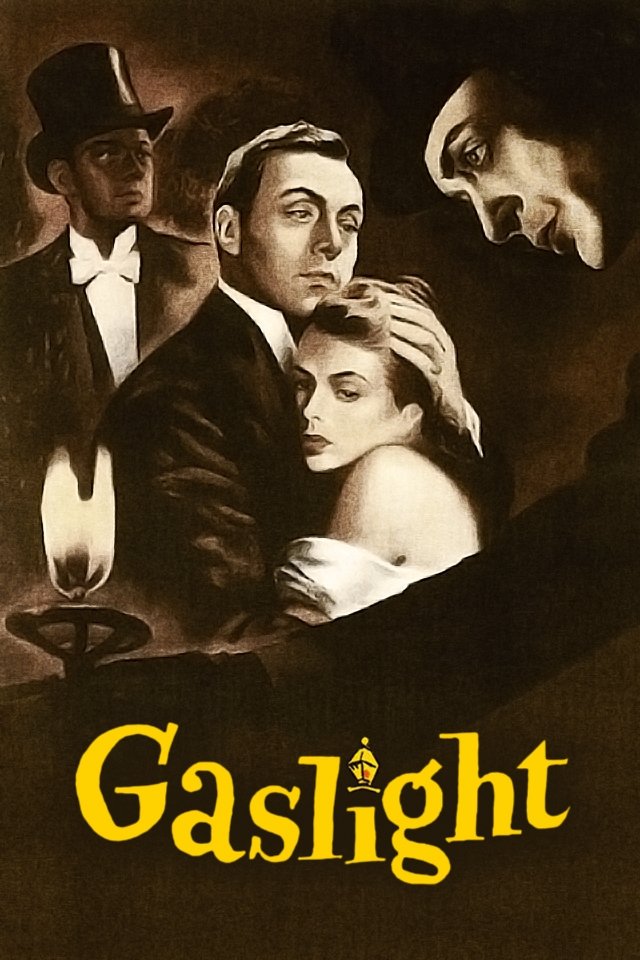
Plot Summary
When I first watched George Cukor’s 1944 psychological thriller, I was quickly captivated by the shroud of suspense enveloping every interaction. The plot revolves around Paula Alquist, brilliantly portrayed by Ingrid Bergman, who becomes increasingly unsettled after marrying the charming but enigmatic Gregory Anton. From the outset, I sensed a quiet menace as the film immersed me in Paula’s new world—a grand, shadow-laden London townhouse whose corridors seem to harbor secrets. As Paula’s sense of reality is methodically undermined by her husband, the narrative skillfully unravels through small, cumulative moments rather than overt confrontations, which I find heightens the tension in ways few thrillers manage even today.
While I could map out each step the story takes, I know the film’s greatest strength is in how it invites you to question what’s real and what’s imagined, both alongside Paula and within yourself. There is a steady, almost maddening unraveling as Paula starts doubting her own memory and sanity, orchestrated by the gentle manipulations and subtle gaslighting of her spouse. Without giving away the central twists—though I will warn a true spoiler lies in the final third compared to the careful hints dropped early on—I can say that the psychological gamesmanship escalates with every act. The sense of claustrophobia in Gaslight feels so real, I found myself second-guessing what I’d just seen each time the gaslights flickered or a picture frame went missing.
More than a standard whodunit, the film places me squarely in Paula’s increasingly fragile perspective, making every revelation, doubt, and moment of hope deeply personal. The plot, though essentially confined to a single, ornate house, felt to me like a pressure cooker, demonstrating the enduring power of setting and atmosphere in classic thrillers.
Key Themes & Analysis
What’s always stood out to me about Gaslight is its fearless exploration of psychological manipulation and vulnerability. Watching Paula slowly come to doubt her senses, I felt a chill—because the core horror of this film isn’t a supernatural force or lurking killer, but the insidious way trust and memory can be weaponized by someone close. The concept of “gaslighting” has since entered our cultural lexicon, but revisiting this film gives it a frightening potency. I see the movie as a dissection of power imbalances in intimate relationships, a theme that remains unsettlingly relevant.
George Cukor’s direction brings an elegance to the suspense. I think the deliberate pacing and long, unbroken takes serve to magnify Paula’s isolation. Instead of explosive confrontations, it’s the accumulation of whispered doubts and dismissals that break her down. Cukor’s camera lingers on Bergman’s expressions—her darting eyes, trembling lips, and clenched hands—making even the smallest gesture a harbinger of doom. I was particularly struck by Joseph Ruttenberg’s shadowy cinematography; the use of light and darkness within the house mirrors Paula’s mental landscape, with the flickering, unreliable gaslights becoming a metaphor for her fading perception of truth.
I can’t discuss Gaslight without praising the performances, most notably Ingrid Bergman’s Oscar-winning portrayal. Bergman captures Paula’s descent from newlywed happiness to the brink of madness with a subtlety that still astonishes me. I found myself rooting for her as she gradually tries to piece together what’s happening, her vulnerability never crossing into passivity. Opposite her, Charles Boyer as Gregory exudes a restrained menace, his tenderness always tinged with control. Angela Lansbury makes her screen debut here, and her role as the sly, flirtatious maid is small but unnervingly memorable—I was amazed at how much presence she brings to a single glance or smirk.
The film’s sound design also deserves mention. I noticed how the clink of jewelry, the echoing footsteps on the staircase, and the literal hiss of the gaslights all contribute to a feeling of mounting dread. Every technical choice seems calculated to place me firmly in Paula’s headspace, which is precisely why the movie’s psychological grip remains so strong, decades after its release. Gaslight isn’t just a thriller—it’s a masterclass in cinematic empathy and manipulation, and it left me pondering its implications long after the credits rolled.
My Thoughts on the Historical & Social Context
The first time I considered Gaslight in the context of its era, I was struck by how much it reflects the anxieties of the 1940s, particularly around gender, power, and autonomy. Released during the closing years of World War II, when traditional roles were being challenged on both sides of the Atlantic, the film resonated as a kind of warning about what can happen when one person’s reality is systematically invalidated by another. As a critic living decades later, I can see in Paula’s story a broader commentary on women’s experiences—how their intuition and perceptions were often doubted or dismissed, both in private relationships and in public life.
To me, Gaslight feels like a precursor to later films and literature that interrogate the nature of truth and the dangers of charismatic authority. It’s not just about domestic suspense; it’s about the insidious ways oppression can masquerade as concern. Watching with a modern lens, I see why the film still resonates—its central conflict remains painfully familiar to anyone who’s struggled to have their voice heard or believed. The term “gaslighting” now describes the very phenomenon depicted in the movie, and I’m continually amazed at how prescient the filmmakers were in capturing such a specific—yet universal—brand of psychological abuse. I also think about how the social climate of the time, still marked by post-war trauma and shifting domestic expectations, made the film’s themes especially urgent for contemporary audiences. In many ways, I think it served as both a mirror and a warning, and I still find myself drawing connections between its story and ongoing conversations about mental health, trust, and autonomy.
Fact Check: Behind the Scenes & Real History
When I dive into Gaslight’s production history, I’m always impressed by the level of craft and ambition behind the scenes. For one, I discovered that the 1944 Hollywood adaptation was not the first screen version—there was an earlier 1940 British adaptation, itself based on Patrick Hamilton’s 1938 play. I find it fascinating that MGM bought the rights to not only remake the film but to suppress the earlier British version, even attempting to have existing prints destroyed so it wouldn’t compete with their release. It’s a striking example of old Hollywood’s approach to managing their investment and creative dominance.
Another detail that intrigues me is how closely the film’s depiction of psychological manipulation tracks with real-life accounts of coercive control, even though, at the time, clinical psychology had yet to fully articulate the phenomenon. The term “gaslighting” didn’t enter common discourse until years later, yet the script and performances capture the mechanics of emotional abuse with startling accuracy. When I read about the film’s script development, I learned that both Cukor and the screenwriters collaborated closely with Bergman, encouraging her to internalize and express Paula’s confusion and terror in ways that felt authentic—something that must have stood out, especially for 1940s audiences.
The casting process also showcases some interesting Hollywood rivalries. Ingrid Bergman, who won her first Oscar here, was not MGM’s original pick—there was interest in both Greer Garson and Hedy Lamarr at various stages. Bergman’s insistence that the role be played with understated vulnerability instead of melodramatic excess helped the movie transcend its roots as a psychological melodrama and become the genre-defining classic that, in my view, it is today. Finally, I was surprised to learn that the film’s gaslight flicker effects were achieved with intricate lighting rigs, making the house itself a participant in the storytelling, rather than relying on optical tricks or post-production effects. This technical ingenuity, to me, highlights the creative lengths Cukor’s team went to in building the movie’s intense atmosphere.
Why You Should Watch It
- The psychological suspense feels as gripping and immediate today as it must have in 1944, making this film a standout for fans of mind games and tension-driven storytelling.
- Ingrid Bergman delivers a performance that is not just historically acclaimed but emotionally resonant, showcasing how cinema can illuminate difficult personal battles.
- Each element—from set design to sound cues to supporting characters—serves to create a unified, immersive experience that I seldom find in modern thrillers.
Review Conclusion
Looking back on Gaslight, I still marvel at how a film set largely in one house can channel so much dread, empathy, and insight. It’s more than just a story about deception—it’s a meditation on trust, perception, and the power of subtle cruelty. There’s a reason I keep returning to it when friends ask for a psychological thriller that stands the test of time: George Cukor knew exactly how to wind the springs of suspense without ever overplaying his hand. For me, the greatness of Gaslight lies in its ability to place viewers in its characters’ emotional turmoil while still providing a visually and narratively rich experience. I give it a robust 4.5 out of 5 stars, docking only for a slight reliance on melodramatic convention in its climax—but rarely have I seen a film from any era handle such thorny subject matter with this much skill.
Related Reviews
- Rebecca (1940) – If Gaslight’s themes of psychological manipulation and a foreboding household left an impact on me, Hitchcock’s Rebecca delivers a hauntingly similar mood, with a vulnerable protagonist navigating love, memory, and control beneath the shadow of a domineering partner and a secret-laden estate.
- Notorious (1946) – Watching Bergman again, this time partnering with Hitchcock, I experienced another tense exploration of trust and identity, set against the backdrop of postwar spying and double-crosses. Like Gaslight, it’s a showcase for ambiguous motives and powerful, understated performances.
- Suspicion (1941) – Cukor’s contemporary, Alfred Hitchcock, crafts a tale where every marital glance and word is suspect. For me, Suspicion’s slow-building uncertainty and its manipulation within a marriage make it a compelling, thematically linked companion to Gaslight.
- The Others (2001) – Although decades newer, Nicole Kidman’s psychological suspense film echoes Gaslight’s sense of isolation and lurking unease within the domestic space. I was reminded of how true terror can come from unseen forces—be they supernatural or all too human.
If you want to explore this film beyond basic facts, you may also be interested in how modern audiences respond to it today or whether its story was inspired by real events.
🎬 Check out today's best-selling movies on Amazon!
View Deals on Amazon