
Plot Summary
I remember my first encounter with Gate of Hell as nothing short of mesmerizing—a visual immersion before I even tried to untangle its intricate threads of loyalty, passion, and responsibility. Kenji Mizoguchi’s 1953 masterpiece, which swept major awards at Cannes and beyond, initially appears to follow a classical tragic romance set against the backdrop of 12th-century feudal Japan. From the opening frames, I sensed an atmosphere thick with both ritual and suppressed desire. The plot revolves around the samurai Morito Endo, whose valiant act during a coup inside Lord Kiyomori’s household thrusts him directly into the realm of impossible love.
What I found so compelling is how the story presents its characters in a time of moral certainty but uncertain personal boundaries. Morito, rewarded for his loyalty with a favor of his choosing, risks everything by expressing his desire to marry Kesa, a lady-in-waiting whose poise initially radiates out of a strict adherence to duty. The real tension for me wasn’t only whether Morito will have his wish granted but whether he realizes the full weight of his choices—a film rooted deeply in consequence. As the film unfolds, what grows is not simply a love triangle but a profound meditation on honor, obligation, and the unseen scars of devotion. Without unveiling too many pivotal moments, let me just warn: from here forward, mild structural spoilers may surface—I feel I can’t capture its emotional impact otherwise.
Where other films might turn to melodrama, I found “Gate of Hell” to be haunted by an unspoken tension—each gesture between Morito and Kesa feels freighted with centuries of cultural expectation and heartbreak. There are no cartoonish villains; decisions emerge from impossible circumstances, making every major development feel inexorable yet devastating.
Key Themes & Analysis
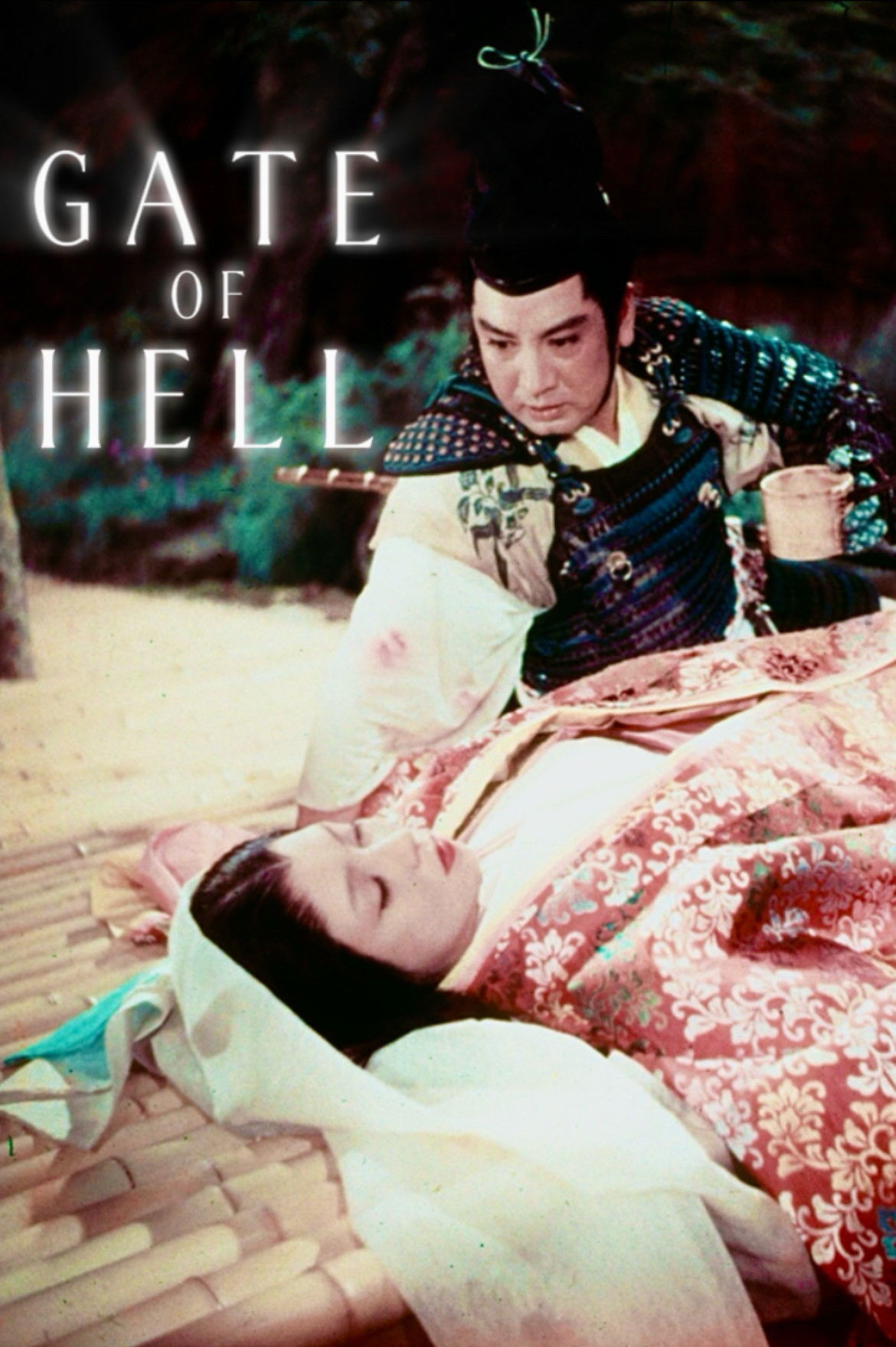
For me, watching “Gate of Hell” is like stepping into a living painting—its unfathomably rich color palette is not merely decorative but acts as a narrative force of its own. The way Mizoguchi uses color, particularly the luminous reds and golds, underscores both the formality and intensity of the story’s emotional stakes. Every frame exudes a tactile sense of place—silks, swords, shadowy screens—luring me into an almost meditative state where beauty and violence coalesce.
I kept returning to the core theme of desire versus duty. I’ve rarely seen a film where the central conflicts are brought to life so fully through the actors’ performances: Kazuo Hasegawa as Morito manages to communicate both the fervor and the fragility of a man in love with an ideal, while Machiko Kyō’s Kesa evokes both empathy and tragic inevitability. Watching Kyō, I was struck by how much she conveys with silence, glances, and stillness—her restraint stands in for an entire tradition’s worth of cultural constraint.
What separates “Gate of Hell” from other tragic romances, in my view, is the way Mizoguchi wields restraint as the highest form of artistry. Instead of resorting to sweeping melodrama, he allows character psychology to unfold in silence, negative space, and ambiguous gestures. This minimalism, paradoxically, made the stakes feel all the more severe—the moments where a single gesture or word means the world. I frequently found myself holding my breath, anticipating not what would be said, but what would remain unspoken—and what that silence might cost.
Behind the sumptuous surface lies a devastating meditation on the inescapable burden of love and loyalty in a world governed by ritual and power. I found deep resonance in how the film interrogates possession—what it means for one person to desire another, and how far someone is willing to bend moral codes for love. That gap between longing and what is deemed right or proper haunts every interaction in the film, making me reflect on both the cultural specificity of the narrative and the universal nature of forbidden passion.
My Thoughts on the Cultural Impact & Legacy
Every time I return to “Gate of Hell,” I’m reminded not just of its beauty but of its role as a genuine cultural turning point. It blazed a trail for color filmmaking in Japan and demonstrated that homegrown films could dazzle international audiences every bit as much as Hollywood epics. Personally, I feel this is one of those films that shaped my appreciation for what cinema from East Asia could accomplish—it’s made me seek out lush, emotionally intelligent melodramas from across decades and borders, forever expanding my own definition of “classic.”
For me, the enduring influence is felt most acutely in how “Gate of Hell” elevated Japanese approaches to narrative and visual storytelling on a global stage. Its accolades at Cannes and the Academy Awards were not just acknowledgments of quality; they were signals that artistic and emotional power could transcend language barriers. It’s a film I think about whenever a new international release shakes up cinematic norms—a reminder that a work rooted deeply in a specific tradition can still achieve universality. As a viewer and curator, I trace the delicate DNA of “Gate of Hell” in everything from slow-burn period dramas to meditative romances that lean on mood and color rather than bombast. This film isn’t just a relic; it’s a living influence.
Fascinating Behind-the-Scenes Facts
It’s always the stories behind the camera that make reverence for a film even richer for me, and with “Gate of Hell,” I’ve been struck by several.
First, the production marked one of the earliest uses of Eastmancolor in Japanese cinema, and the filmmakers struggled mightily to adapt Western color film stock to Japanese lighting needs. This wasn’t just a technical upgrade; it required inventiveness in lighting design, costuming, and set construction. Mizoguchi’s obsession with getting costumes “right” in Technicolor meant painstaking attention to dye and fabrication, resulting in visuals that are as striking today as they were seventy years ago.
I also discovered that Machiko Kyō, who played Kesa, was initially hesitant about joining the cast due to her commitment to a rival studio, but her eventual decision to join lent the picture an added gravitas and authenticity. Her performance, shaped by personal and professional risk, resonates with an almost lived-in honesty—one that I still find moving.
And here’s one last detail I adore: the palace set was allegedly constructed in near-total secrecy to prevent rival studios from copying Mizoguchi’s groundbreaking approach to Technicolor staging. It’s a testament to how competitive and innovative that era of Japanese cinema really was—how desperate filmmakers were to distinguish themselves in a rapidly globalizing industry.
Why You Should Watch It
- It’s visually spectacular, showcasing some of the most lush and painterly uses of color in postwar cinema
- The performances, especially by Kyō and Hasegawa, deliver an emotional complexity that haunts long after the credits roll
- The film’s exploration of love, honor, and the cost of desire feels utterly relevant in any age or culture
Review Conclusion
Whenever I talk about the rare films that changed what I expect from cinema, “Gate of Hell” is one that stands out, both in memory and in its aftereffects. It’s the kind of film that lingers, not only because of its meticulous craftsmanship but because it has something deeply true to say about the human heart caught in the machinery of history. While the story’s tragic undercurrents may not suit every mood, for me they underscore why I keep coming back: to savor the interplay of visual poetry and moral ambiguity that feels as bracingly modern now as it must have decades ago. I enthusiastically rate it 4.5/5 for its sublime synthesis of craft, theme, and enduring emotional power.
Related Reviews
- Ugetsu (1953) – Kenji Mizoguchi’s other acclaimed period drama. I’m compelled to recommend “Ugetsu” because it weaves folklore and tragic romance in an equally painterly register, echoing the hypnotic aura and moral complexity that drew me into “Gate of Hell.”
- Rashomon (1950) – Directed by Akira Kurosawa, this film’s intricate dissection of truth, justice, and memory will appeal to anyone captivated by “Gate of Hell’s” examination of personal versus communal duty. Its narrative and cinematographic style feels similarly timeless.
- The Life of Oharu (1952) – Also by Mizoguchi, this film delves into the harsh realities facing women in a patriarchal society and showcases the same visual precision and emotional subtlety that floored me in “Gate of Hell.”
- Samsara (2001) – While not Japanese, this contemporary Buddhist-infused drama harnesses color, mood, and questions of desire versus duty, making it a meditative companion for anyone taken with “Gate of Hell’s” spiritual undercurrents.
For readers looking to go deeper, these perspectives may help place the film in a broader context.
🎬 Check out today's best-selling movies on Amazon!
View Deals on Amazon