
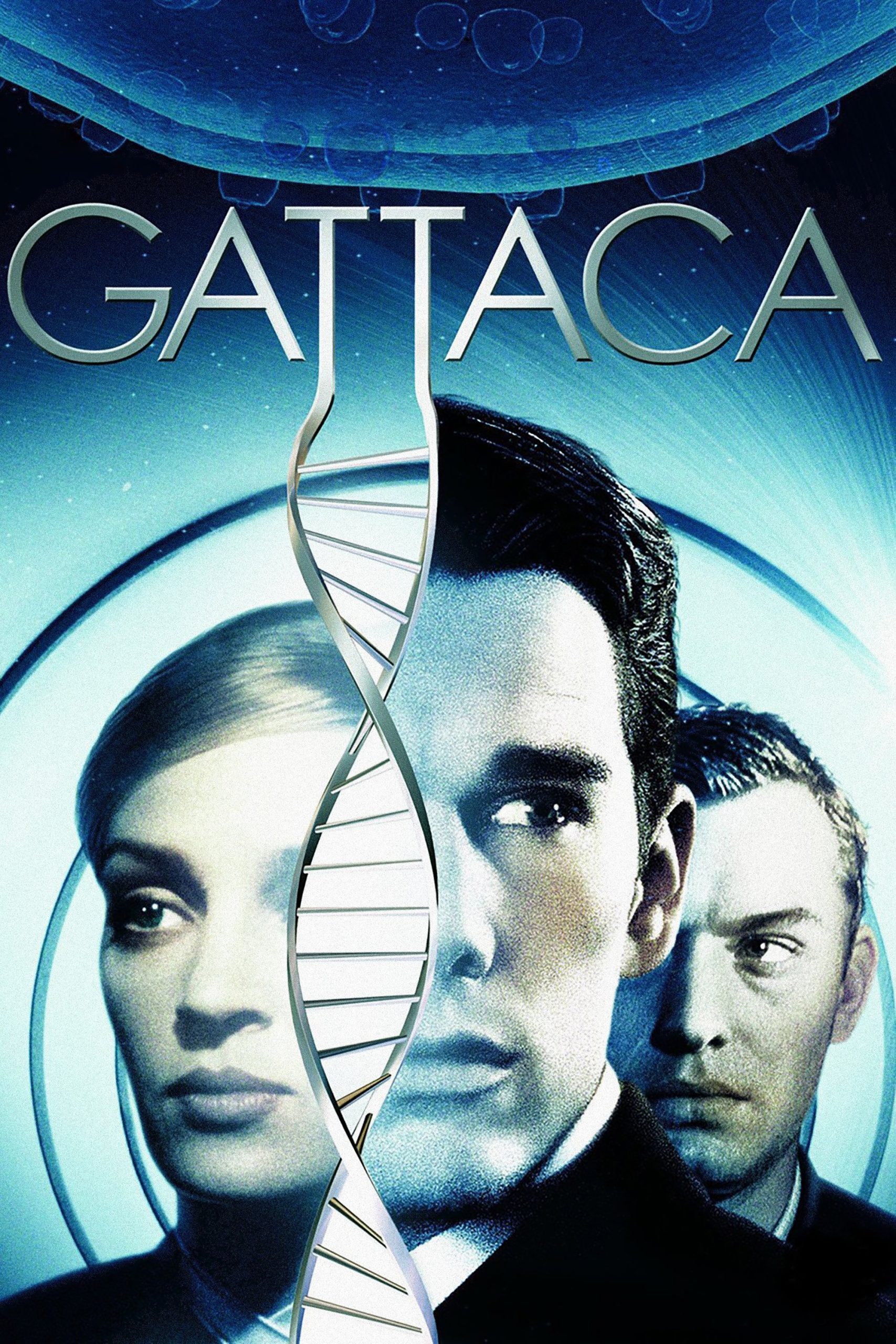
Plot Summary
When I first pressed play on Andrew Niccol’s Gattaca, I expected a standard science fiction tale. Instead, I found myself pulled into a relentless meditation on identity, fate, and ambition. Set in a near-future where one’s life is preordained by genetic code, Gattaca presents a version of society obsessed with the idea of perfection. I watched, transfixed, as Vincent, a man conceived naturally in a world dominated by genetic engineering, attempts to break free of his “in-valid” status and chase his dreams of space travel.
The story spirals around Vincent’s efforts to circumvent a system that literally checks his blood and hair at the door. Each step he takes borrowing the DNA of Jerome, a genetically “superior” individual, is fraught with tension. The film’s plot unspools as a patient but tense cat-and-mouse game, wherein every heartbeat and fingerprint could unravel years of careful planning. What struck me most wasn’t just the suspense, but the searing clarity with which the film exposes the cruelty of a society ruled by genetic discrimination.
While the mechanics of Vincent’s deception propel the narrative, I felt the film’s heart beating loudest in the moments he connects with others—the warmth (and danger) of his relationships, both with Jerome and with Irene, another ambitious soul shaped by this rigid world. And though I won’t spoil the ending, I found the resolution both harrowing and quietly triumphant, reshaping my own views about destiny and agency.
Key Themes & Analysis
On the surface, Gattaca broadcasts itself as a dystopian thriller, but what lingered with me were its philosophical undercurrents. The film interrogates the myth of genetic determinism and the cost of pursuing an idealized human “perfection.” Watching Vincent’s struggle, I was reminded of the flawed beauty of resilience—how humans, no matter how systemically disadvantaged, can summon a stubborn hope that seems almost outlawed in Niccol’s world.
I keep returning to the question: If society could “engineer out” human flaws, what would become of passion, individuality, and drive? The film tackles this question unflinchingly. Scenes bristle with a sterile, symmetrical aesthetic—everything from the architecture to the way its genetically-elite characters move feels calculated and choreographed. This clinical beauty, shot in cold blues and steely grays by cinematographer Slawomir Idziak, left me chilled. The cinematography amplifies the sense of alienation, heightening every risk Vincent takes.
Director Andrew Niccol’s restrained approach might not be for everyone, but for me, it lent an endless tension. Instead of bombarding the audience with action, he lets anxiety simmer, stretching out scenes so I could practically hear the ticking of Vincent’s borrowed heart ticking down. I found that the minimalism forced me to sit with the film’s harsh realities instead of escaping them.
Performances here are never showy, but that only makes them more impactful. Ethan Hawke’s Vincent seethes with vulnerability edged by quiet determination. There’s one sequence where he silently removes every trace of his own genetic material in the hostile glare of morning light—that small act felt loaded with a rage and desperation no words could contain.
Jude Law’s Jerome sinks into a shattered bravado. His performance, tormented and sardonic, echoes longer than most, and I’d argue that the emotional heft of the film wouldn’t land without him. Uma Thurman’s Irene is equally magnetic. Her character’s fragility beneath a poised exterior gives the love story a bitter gravity. For me, these layered portrayals humanize a world that, by design, tries to root out anything messy or unpredictable.
What resonates most is that every element—sound design, lighting, even costume—serves the theme. The film’s score, spare and ethereal, wraps the story in equal parts longing and dread. It’s as if each instrument is a cry against preordained fate.
My Thoughts on the Historical & Social Context
Reflecting on Gattaca’s late-’90s release, I can’t miss its prescience. While genetic engineering was still largely theoretical then, the film seemed to sense society’s unease with a future sketched in DNA, not character. Back in 1997, the Human Genome Project hovered over the headlines; our anxieties about “designer babies” and eugenics had moved from ancient history to living room debates.
What astonished me is how relevant it still feels. Watching it now, I see direct parallels to today’s conversations about CRISPR, genome editing, and even the way algorithms shape opportunity. The film’s portrayal of genetic discrimination—“genoism”—mirrors the subtle, insidious forms of bias I notice in real-world hiring practices or predictive policing. For me, Gattaca isn’t just a cautionary tale about hypothetical science, but a sharp mirror reflecting how society weaponizes difference and meritocracy, even now.
When Vincent’s boss tells him, “No one exceeds their potential,” I’m reminded of every institutional roadblock justified by so-called “objective” metrics. The film became, in my eyes, a plea for humanism in the face of technological inevitability. That’s why I believe it matters as much today as it did to an audience anxious about the millennium. Gattaca tells us that our choices—not just our inherited code—define who we are.
Fact Check: Behind the Scenes & Real History
Digging into Gattaca’s production, I discovered details that deepen my appreciation for its careful construction. First, the film’s minimalist, retro-futuristic look didn’t come from digital trickery; it resulted from a deliberate eye for location and design. The Gattaca Aerospace Corporation headquarters is actually the Marin County Civic Center, a real, futuristic structure designed by Frank Lloyd Wright in the 1960s. This gave the movie a timeless, otherworldly feel without relying on CGI, helping me experience its future as believable and eerily close to our own present.
I was surprised to learn about the cas ting journey for Vincent. Ethan Hawke wasn’t the studio’s initial pick—established stars were considered—but Hawke’s quiet intensity clinched it for Andrew Niccol. This crucial choice, I think, saved the film from slipping into cliché, letting Vincent feel like a real underdog rather than a blandly perfect Hollywood hero.
Finally, on the science front, Gattaca’s vision skirts the line between reality and fiction. By the late ’90s, pre-implantation genetic diagnosis (PGD) was a new but emerging reality, although still far from the world’s precision as depicted in the film. What fascinated me is that, after its release, Gattaca became a staple teaching text in bioethics courses—proof that its blend of fiction and plausible reality struck a nerve. The film didn’t just imagine the future; it helped shape the conversation about how we think about genetics, identity, and fairness.
Why You Should Watch It
- Its core questions about personal agency, ambition, and social stratification resonate more deeply as technology advances—if you love stories that challenge easy answers, this film will grip you.
- The understated yet powerful performances, particularly from Ethan Hawke and Jude Law, offer a rare emotional depth that’s hard to find in mainstream science fiction.
- Visually and sonically, the film creates an immersive, haunting atmosphere—every element, from architecture to music, feels chosen to underline the story rather than distract from it.
Review Conclusion
Every time I revisit Gattaca, I find new relevance in its warnings and wonders. I’m consistently moved by its insistence that our value can’t be written into a string of nucleotides—that drive, heart, and chance still have their role to play, even in a world caught up in perfection. Its technical restraint and moral urgency make it a rare, uncompromising entry in science fiction. As a film lover and critic, I give it 4.5 out of 5 stars. It lingers, provokes, and quietly demands that we look past surface and system to the stubborn souls that persist inside.
Related Reviews
- Children of Men (2006): I find Alfonso Cuarón’s dystopian vision shares Gattaca’s sense of urgency and its meditation on hope in the face of systemic collapse. Both films use bleak futures not just to warn, but to underline the resilience of the human spirit.
- Ex Machina (2014): This cerebral sci-fi story mirrors Gattaca’s philosophical core, asking what happens when technology lurks too close to our identities and ethics. Visually striking and psychologically tense, it’s a natural sibling to Gattaca in exploring what it means to be human.
- Never Let Me Go (2010): If you’re drawn to somber, emotionally charged examinations of genetic engineering’s impact on individuals, this adaptation of Kazuo Ishiguro’s novel will move you. Both Gattaca and Never Let Me Go expose the haunting cost of society’s quest for control over fate.
- Blade Runner 2049 (2017): For those who crave memorable visuals, existential dread, and ethical ambiguity, Denis Villeneuve’s Blade Runner sequel offers a grander, but thematically connected, meditation on identity, purpose, and the search for meaning against an oppressive system.
If you want to explore this film beyond basic facts, you may also be interested in how modern audiences respond to it today or whether its story was inspired by real events.
🎬 Check out today's best-selling movies on Amazon!
View Deals on Amazon