
Plot Summary
There’s a rare level of introspection that hits me every time I revisit Richard Attenborough’s profound historical drama, a film that’s anchored in both biographical authenticity and the sweep of social evolution. The story follows the journey of Mohandas Karamchand Gandhi, affectionately called Mahatma by millions, tracing his transformation from a shy, English-educated lawyer confronting casual injustice in South Africa to becoming the conscience of a nation—India—battling for independence. Attenborough does not simply chronicle historical milestones; he dives into the ebb and flow of moral courage and personal conviction. For those cautious about spoilers, rest assured: I’ll steer clear of explicit turning points, sidestepping any final outcomes or fates. What I found most immersive was not just the chronology of events, but the way the film compels me to engage with the everyday choices, both triumphant and agonizing, that define Gandhi’s legacy. The narrative weaves together sweeping communal actions—mass resistance, civil disobedience, and the ache of communal violence—with Gandhi’s own moments of solitude and doubt, painting a panoramic yet intimate portrait of one of the 20th century’s most consequential lives.
Key Themes & Analysis
What resonates most deeply with me throughout Gandhi is the way the film dramatizes the power (and cost) of nonviolent resistance. Every frame carries the weight of Attenborough’s commitment to portraying not just the spectacle of history, but the moral machinery driving it. I am particularly struck by the film’s unflinching exploration of personal sacrifice—the slow, grinding erosion of comfort, family, and sometimes even sanity, undertaken in service of a transcendent principle. It would be easy for a film of this magnitude to descend into hagiography, but I appreciate how “Gandhi” frequently draws attention to the contradictions and criticisms faced by its protagonist: his uncompromising stance, his periodic blindness to the costs borne by others, and his struggle with the erupting pain of communal violence that even his ideals could not quell.
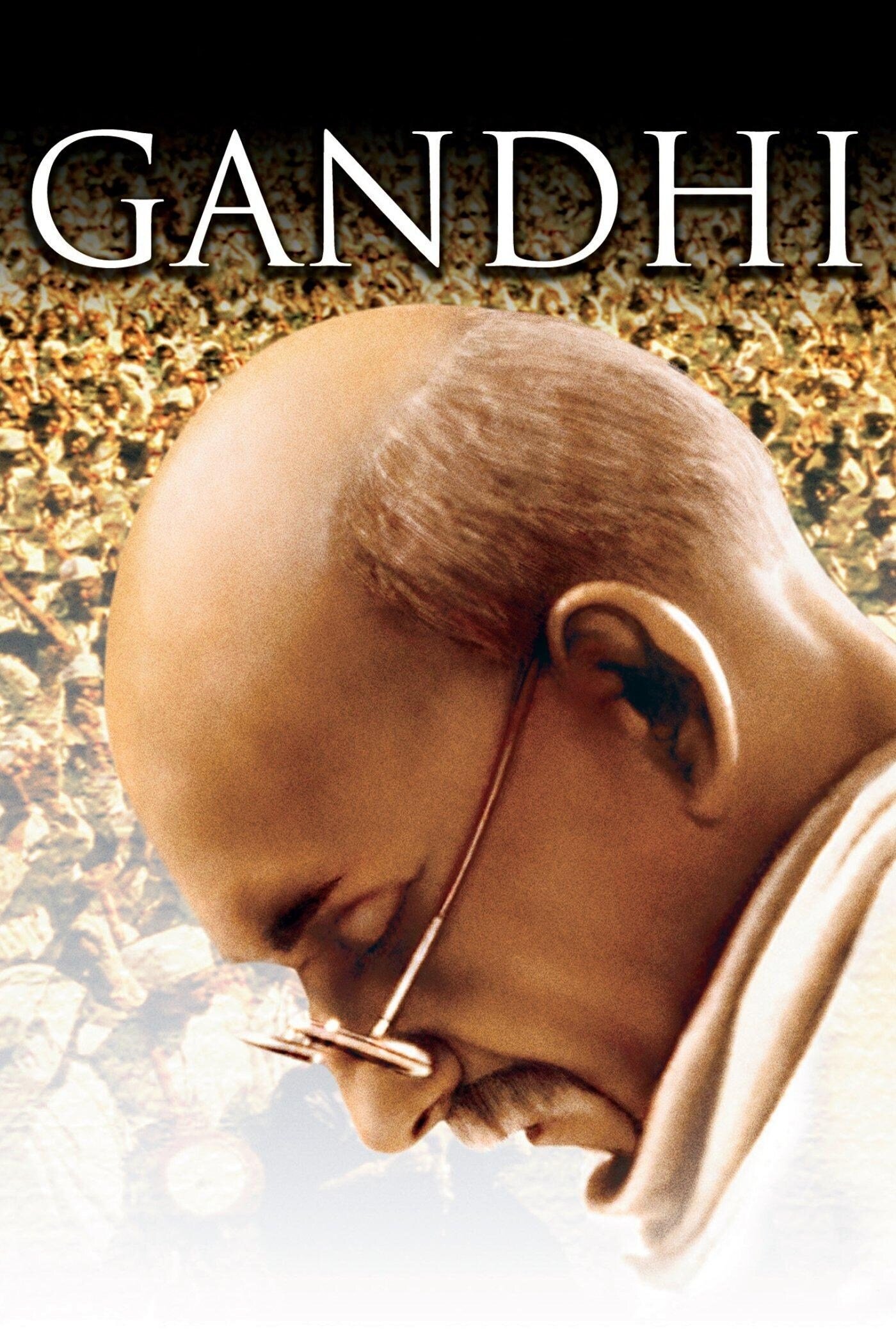
Visually, this film continually astonishes me. Ben Kingsley’s delicate, quietly shattering performance as Gandhi is matched by the cinematography’s patience and precision. I am floored by the meticulous detail in John Briley’s script and Billy Williams and Ronnie Taylor’s camera work—never more so than in the iconic scenes of mass gatherings, where a sea of humanity appears not as an amorphous crowd, but as individual stories united by a common longing. What stands out for me in these scenes isn’t just their scale, it’s the intimacy: the lingering shots on faces, the hesitation before a march, the tremor in a voice as history is made in real time.
Attenborough’s directorial restraint is, to my mind, the heart of the film’s effectiveness. Rather than relying on melodrama, he works in quiet revelation—letting a moment of stillness, a soft plea for justice, or a humble meal convey the weight of a thousand speeches. I find the film’s engagement with religious pluralism and the heartbreak of division particularly affecting. For me, the most challenging moments are the ones that force a reckoning with the limits of idealism in the face of unyielding hate and entrenched prejudice. Key supporting performances—Rohini Hattangadi as Kasturba Gandhi, Roshan Seth as Nehru, and Saeed Jaffrey as Patel—magnify the emotional core, grounding even the grandest scenes in lived emotion.
Perhaps what I value most as a critic is the film’s careful refusal to flatten its characters into symbols. Even Gandhi, avatar of peace, is shown to be painfully human—at times rigid, other times infinitely forgiving. My engagement with the film’s themes of empathy, activism, and the slow tide of social change is never purely intellectual; Attenborough ensures I feel their sting and promise at every turn, aided by a moving score from Ravi Shankar and George Fenton that stitches soul into every frame.
My Thoughts on the Cultural Impact & Legacy
Few films have left a mark on me as indelible as “Gandhi”. From my vantage point as a film curator and cultural analyst, I see in this work a transformative moment—not just for the biopic genre, but for cinema’s capacity to chronicle historical upheaval through personal evolution. What strikes me most, looking back, is how “Gandhi” opened Western audiences, and myself included, to the intellectual and spiritual depth of nonviolent revolution. It arrived at a critical juncture in 1982, when echoes of civil rights, anti-colonial movements, and geopolitical unrest made Gandhi’s lessons startlingly timely and painfully relevant.
On a personal level, Attenborough’s sensitivity to cultural detail reshaped my expectations for historical storytelling. “Gandhi” did not simply recount the facts; it built a bridge to understanding, rendering a distant chapter of world history immediate and urgent. I’ve observed its influences everywhere: countless directors, from Ava DuVernay to Shyam Benegal, have borrowed its patient, immersive style to examine great lives and movements. Yet it’s the film’s insistence on compassion as a political force that continues to move me, urging not just admiration for the protagonist, but a reckoning with my own values and privileges.
What matters to me most is how “Gandhi” has inspired conversations across generations about leadership, responsibility, and the complexities of social change. Its legacy is as much about provoking rigorous self-reflection as it is about historical memory. In surveying its cultural footprint, I am reminded that no film, however celebrated, can claim the last word on a vast subject. But “Gandhi,” in its quiet clarity, brings us closer to the heart of its subject—and to enduring questions I find ever more essential: When is compromise noble, and when is it capitulation? Can virtue survive in the politics of power? The continued resonance of these debates is, for me, “Gandhi’s” greatest achievement.
Fascinating Behind-the-Scenes Facts
Every time I dig deeper into the production of Attenborough’s epic, I discover new layers of ingenuity and risk. One fact I find endlessly fascinating is the decision to cast Ben Kingsley, an actor of partial Indian descent but relatively unknown to Western audiences at the time, in the lead role. This was not just casting for resemblance—though the physical transformation is nothing short of astonishing, with Kingsley reportedly losing significant weight and studying Gandhi’s mannerisms for months—but a dramatic gamble that ultimately paid off, launching a legendary career and setting a new standard for biographical immersion.
Another story I am continually drawn to involves the technical feat accomplished during the recreation of Gandhi’s funeral procession. The film orchestrated one of the largest crowd scenes in cinema history, involving over 300,000 extras on the streets of Delhi. The logistics of this sequence are staggering to contemplate—I’ve read about the meticulous planning: color-coded costumes, military-style organization, and a level of coordination that bordered on the miraculous. It’s a testament to the production’s ambition, and those images remain some of the most visually overwhelming moments I’ve experienced in film.
Finally, I’m struck by Attenborough’s perseverance: he lobbied for nearly twenty years to bring the film to fruition, facing repeated setbacks, funding issues, and skepticism both in Britain and India. That this project reached completion is, for me, a story of creative obsession bordering on the heroic—a mirror of its subject’s own tireless resolve. These behind-the-scenes narratives infuse the film itself with a kind of mythic aura, deepening my connection to the artistry and resolve behind its making.
Why You Should Watch It
- An Unparalleled Performance: For me, Ben Kingsley’s portrayal of Gandhi remains a benchmark of transformative acting—every nuanced gesture and intonation immerses you entirely in the period and person.
- A Rare Historical Epic Driven by Ideas: I appreciate how this film places moral conviction and philosophical debate at the center of its spectacle, offering more than just historical reenactment.
- Visual and Emotional Immersion: The scale of the production is matched by an attention to the smallest human details, creating an experience that is both vast and intimately moving.
Review Conclusion
As I reflect on “Gandhi,” I feel both awe and humility. Its commitment to exploring not just history, but the burden and promise of leadership, sets it apart from the conventional biopic. Though some sequences plod and its reverent tone can border on the elegiac, I never lose my admiration for the delicate balancing act between spectacle and soul. The film’s rewards—intellectual, moral, aesthetic—are manifold, and every return viewing offers new insights and questions worth wrestling with. It remains, for me, an indispensable viewing experience: 4.5/5.
Related Reviews
- “Selma” — I see Ava DuVernay’s chronicle of Dr. Martin Luther King Jr.’s activism as a spiritual descendant of “Gandhi.” Both films weave the intimate with the historical, spotlighting the high cost and quiet persistence of nonviolent protest against systemic injustice. The two works share a contemplative tone and an immersive style that places principle above spectacle.
- “Lagaan” — For those who resonated with the intersection of colonial history and collective struggle in “Gandhi,” Ashutosh Gowariker’s sports epic offers a different yet equally insightful exploration. It combines rousing visual storytelling with incisive social commentary, inviting the audience to reconsider what resistance can look like within Indian history.
- “Schindler’s List” — Though set in a very different historical context, Spielberg’s masterpiece echoes Attenborough’s devotion to bearing witness to moral courage in the face of atrocity. Like “Gandhi,” it uses a deliberate visual style and meticulous character study to draw out the extraordinary within the ordinary.
For readers looking to go deeper, these perspectives may help place the film in a broader context.
🎬 Check out today's best-selling movies on Amazon!
View Deals on Amazon