
Plot Summary
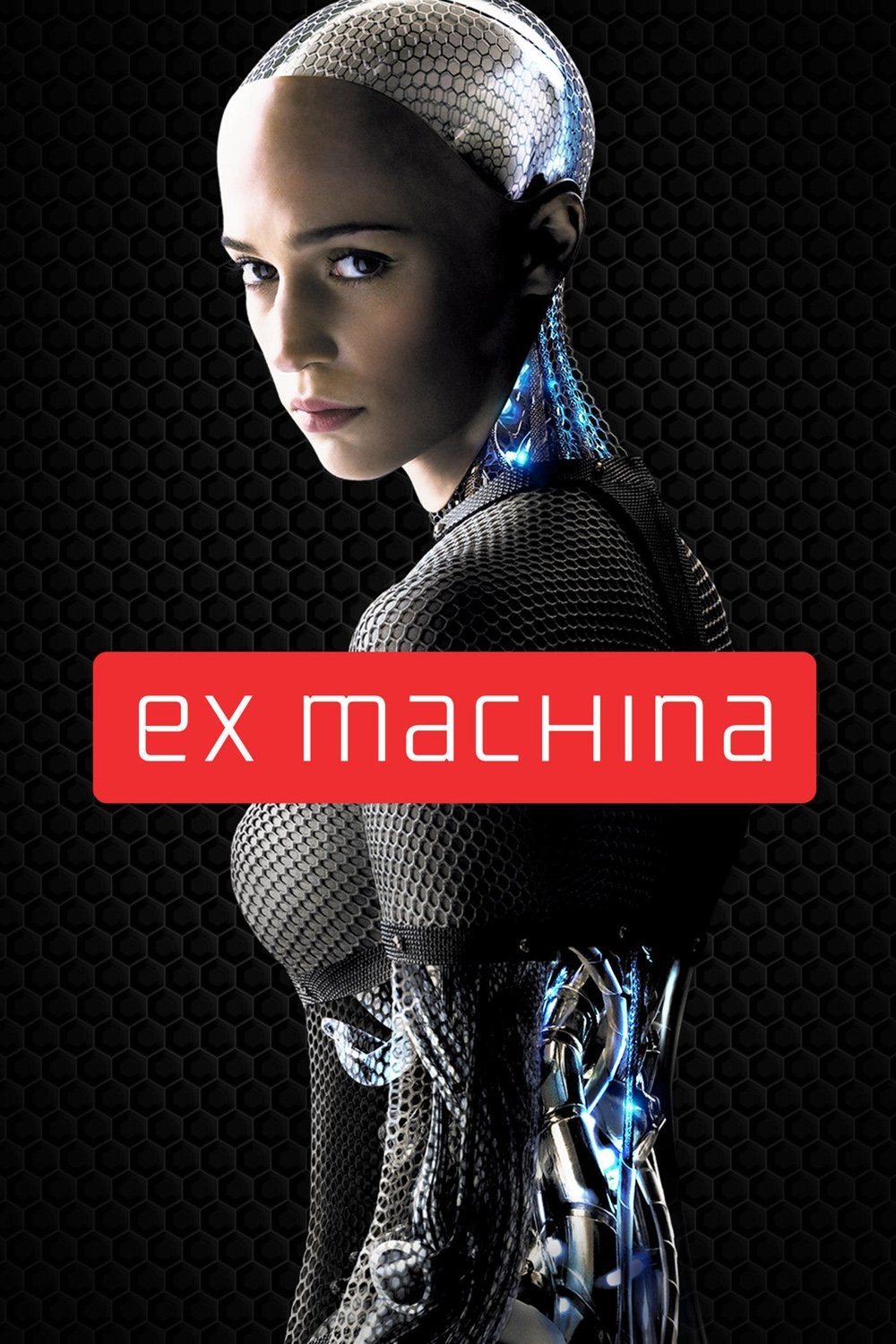
The moment I first saw Alex Garland’s directorial debut, I was struck by the quiet unease that permeates every frame. As a lover of cerebral science fiction, I gravitate toward films that probe the moral seams of our technological world, and Garland’s psychological thriller fits that mold with unnerving precision. The story orbits around Caleb, a young programmer selected by his enigmatic and brilliant employer Nathan to participate in a week-long experiment at a remote, fortress-like facility. There, Caleb meets Ava, an astonishingly lifelike artificial intelligence housed in a strikingly humanoid robot form. Garland weaves an intricate web of interactions between these three central figures, blurring the boundaries between test and tester, subject and observer.
Though I want to avoid crucial spoilers, it’s important to note that the film’s set-up is deceptively simple. Caleb’s task, as presented by Nathan, is to determine whether Ava possesses true consciousness—not just the appearance of thought, but real sentience. The conversations and increasingly fraught “sessions” between Caleb and Ava become an exercise in psychological chess. The narrative continually subverts expectations, challenging both Caleb’s motivations and the audience’s assumptions about power, autonomy, and manipulation. What begins with an air of detached experimentation slowly transforms into something intimate, even dangerous.
If you haven’t seen the film, I’ll warn that the plot eventually pivots into territory that can only be described as a stunning coup—Garland mines the tension so effectively you may find yourself questioning every character’s agenda. For those uninitiated, stopping short of the film’s revelatory final act is best, as the experience hinges so much on genuine surprise.
Key Themes & Analysis
From my first viewing, what stood out wasn’t just the core question—can a machine truly “think” or “feel”?—but the multitude of layers Garland threads through the narrative. The film is, at its heart, a chilling meditation on the ethics of creation and control. The sterile, concrete-and-glass setting reinforces this, wrapping the small ensemble in visual metaphor: an isolated laboratory built on control, secrecy, and the impossibility of transparency.
I’m consistently drawn to how Garland orchestrates a claustrophobic intimacy between his characters. Oscar Isaac’s Nathan exudes a magnetic menace, blending tech guru charisma with subtle touches of sociopathic indifference. Isaac delivers a performance that is both unsettling and oddly seductive, a perfect embodiment of Silicon Valley’s darker archetypes. On the opposite end, Domhnall Gleeson’s Caleb projects a nervous curiosity—he is our surrogate, confronted by the incomprehensible and, in moments of vulnerability, wracked by doubt as much as awe.
But no element captivated me more than Alicia Vikander’s Ava. Vikander imbues Ava with both uncanny grace and palpable yearning, her motions precise and otherworldly, but her expressions rich in ambiguity. I found myself constantly scanning her micro-expressions, entranced and on edge, trying to decipher the “truth” behind her performance. Vikander’s ability to straddle the line between mechanical detachment and soulful longing is intoxicating—she makes Ava’s internal world both crystalline and impenetrably complex.
Visually, Garland’s approach is controlled and deliberate. Each frame has the cold beauty of modernist architecture, mirroring the film’s emotional austerity. Cinematographer Rob Hardy uses glass walls, reflections, and shadow to evoke a sense of endless surveillance and the fragility of “real” boundaries. I noticed how, with each subsequent viewing, the camera’s slow pans and calculated pauses calibrated my empathy, guiding me towards and away from Ava in equal measure. The sound design further amplifies this effect; Ben Salisbury and Geoff Barrow’s score pulses beneath the surface, rarely erupting but always present, like a distant hum of circuitry and tension.
What I admire is that Garland never privileges spectacle over substance. The film’s most harrowing moments stem from conversation rather than action. His script is razor-sharp, posing philosophical quandaries not as mere ornament but as the very blood of the story. Dialogues wind around the nature of humanity: if a machine can beguile, seduce, or manipulate, does it deserve empathy? When creation blurs with exploitation, who or what dictates moral accountability? These quandaries linger long after the credits roll—I spent days wrestling with their implications, a testament to the film’s intellectual potency.
My Thoughts on the Cultural Impact & Legacy
For me, this film sits at a pivotal junction in the modern science fiction canon. It arrived at a time when concerns about artificial intelligence were rapidly shifting from abstract concept to tangible anxiety in mainstream culture. I saw echoes of real-world debates—about data privacy, corporate power, and the capacity of AI to challenge what we recognize as “human.” Many films in the genre gloss over these issues, but this one stares at them unflinching, daring me to ask whether our technological ambition has already outpaced our ethical imagination.
From the standpoint of cinema history, I consider it a redefining moment for “AI consciousness” on screen. Where earlier works have given us androids that filter humanity through allegory or dystopian lens, this film grounds its story in plausible near-future speculation. The outcome feels less like a tech prophecy and more like a philosophical provocation. As a curator and critic, I return to it whenever I want to illustrate how science fiction can serve as a crucible for moral debate, not merely as a vehicle for special effects or genre thrills.
On a personal note, the film’s resonance lies in its ability to burrow into the psyche. It never hands down easy answers, instead inviting an uncomfortable self-reflection about complicity, desire, and the boundaries of empathy. Every time I revisit it, I find the experience different—sometimes more unsettling, sometimes strangely hopeful, but always urgent. Its minimalist structure and intimate scale only sharpen its impact; for me, it proves that true science fiction is less about the future’s promise than the present’s unresolved contradictions.
Fascinating Behind-the-Scenes Facts
Diving into the production history always enriches my appreciation for a film, and this one is especially full of unexpected stories. First, I learned that Alicia Vikander’s portrayal of Ava was achieved almost entirely through practical performance, with post-production visual effects delicately blending the human and robotic. Instead of relying on heavy prosthetics or cumbersome costumes, Vikander performed her scenes in a close-fitting mesh suit, later replaced with translucent robotics by VFX artists. This allowed her subtle gestures and facial expressions to shine—a decision I think was crucial in making Ava feel alive.
Another production detail that fascinates me is the set’s construction. The film’s futuristic bunker wasn’t created on a soundstage but was filmed in a real location: the Juvet Landscape Hotel in Norway. This decision not only grounds the movie in a tangible sense of place but adds to the eerie isolation that permeates every scene. I’m always struck by how the building’s long corridors, glass walls, and seamless integration with the surrounding wilderness reflect the blurred line between nature and artificiality—a thematic thread woven throughout the entire story.
And, perhaps most surprising to me, is how Garland and the crew worked with a limited budget, especially given the film’s stunning visual complexity. The visual effects team, led by Double Negative, won the Academy Award for Best Visual Effects—defying the odds against bigger-budget competitors. Achieving the seamless blending of flesh and machine on such modest resources speaks volumes about the filmmakers’ creativity and precision.
Why You Should Watch It
- If you appreciate science fiction that challenges both your intellect and your emotional instincts, this film delivers complex themes without sacrificing narrative suspense.
- The performances—especially Alicia Vikander’s—are subtle, provocative, and deeply human, making every interaction between characters pulse with urgency.
- The visual design, score, and unconventional approach to storytelling create an experience unlike any other recent science fiction film.
Review Conclusion
Reflecting on my repeated journeys through Garland’s clinical, enigmatic world, I’m left with a rare combination of admiration and unease. It’s a film that unspools slowly but refuses to leave quietly, inviting ongoing reflection and spirited debate. Every viewing yields new insights—sometimes philosophical, sometimes deeply personal—always challenging my assumptions about intelligence, justice, and empathy. In terms of craft, from performance to production design, it is a masterclass in minimalism that leverages every element in service of a larger, haunting question.
My rating: 4.5/5. For its incisive commentary, hypnotic atmosphere, and unforgettable performances, it remains one of the most essential science fiction films of the past decade.
Related Reviews
- Under the Skin (2013): This film resonates with me because it similarly probes questions about alien consciousness and human identity through unconventional narrative and minimalism. Scarlett Johansson’s portrayal of an inhuman observer pondering humanity’s complexities makes it a natural companion for those moved by Ava’s journey.
- Her (2013): I recommend this film for its exploration of emotional connections between humans and artificial intelligence. Like Garland’s film, it puts empathy and boundaries front and center, motivating viewers to consider where technology ends and genuine feeling begins.
- Annihilation (2018): Directed by Alex Garland as well, this film marries haunting visuals with philosophical depth, questioning self-destruction, identity, and the limits of human understanding—parallel themes that left a lasting impression on me similar to his earlier work.
- Ghost in the Shell (1995): I see this anime classic as essential for those intrigued by the tension between AI, consciousness, and agency—it inspired many later works and remains a vital piece of the science fiction dialogue.
For readers looking to go deeper, these perspectives may help place the film in a broader context.
🎬 Check out today's best-selling movies on Amazon!
View Deals on Amazon