
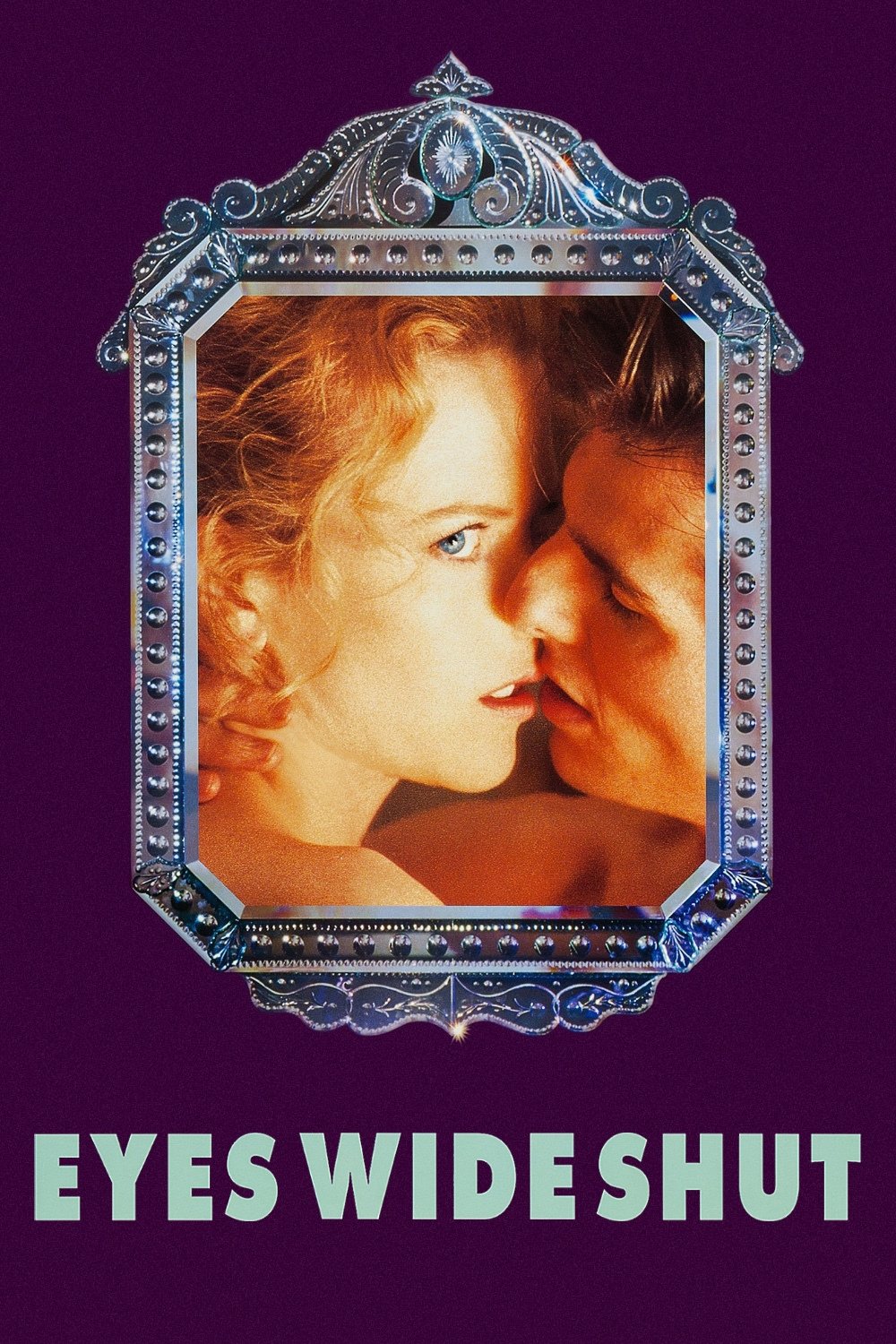
Plot Summary
From my first encounter with Stanley Kubrick’s final film, I felt as if I had stepped into a fever dream masquerading as a marriage drama. “Eyes Wide Shut” plays as a psychological thriller, weaving a web of erotic intrigue against the winter-lit streets of New York. The story follows Dr. Bill Harford (Tom Cruise) and his wife Alice (Nicole Kidman), a seemingly successful couple who, beneath their opulent exterior, wrestle with trust, desire, and unspoken fears. When a conversation with Alice about fidelity unsettles Bill, he is propelled into a surreal journey through the city’s shadowy corners, mingling with its underworld of masked strangers and forbidden rituals.
The film’s narrative progression is less about major events than about shifting psychological states. I found myself less concerned with what precisely happens from scene to scene and more intrigued by the film’s atmosphere of ambiguity and moral questioning. Bill’s night-long odyssey teeters constantly between reality and fantasy—Kubricks’s vision is so deliberately slippery that I kept asking myself what was actually happening and what existed only in Bill’s anxious, repressed imagination. For viewers sensitive to spoilers, I won’t reveal the ultimate resolutions of Bill’s journey or what becomes of his marriage, since the movie’s value lies in these accumulating, uncertain, haunting moments rather than in any singular twist.
Key Themes & Analysis
Confronted by the hypnotic power of “Eyes Wide Shut”, I was taken aback by how the movie interrogates the fragile boundaries of marriage, fidelity, and the subconscious drives lurking behind polite society. There’s a distinct sense that Kubrick isn’t interested in providing easy answers—rather, he prods us to scrutinize our own relationships with power, desire, secrecy, and social performance.
The film’s use of color and lighting struck me as especially pointed. Kubrick and cinematographer Larry Smith paint interior spaces with golden lamplight and baroque detail, then plunge Bill into swaths of blue and black as he prowls the city at night. These contrasts create palpable tension; home feels safe yet suffocating, while the city pulses with risk and temptation. Every frame feels purposeful, laced with clues just out of my reach.
I was continuously drawn to the performances, which have a calculated, dreamlike intensity. Nicole Kidman’s portrayal of Alice is one of delicate restraint paired with volcanic undercurrents. Her quietly devastating bedroom monologue anchors the film’s thematic core: what do we admit and what do we conceal from our partners and ourselves? Tom Cruise, meanwhile, seems genuinely unsettled throughout—I believe his natural air of confidence is essential to the film’s slow unraveling of Bill’s certainty, as if watching the polished mask slip from an actor who built his career on control.
Underneath everything simmers the movie’s dissection of class and sexuality. I see the secret society scenes—notorious for their ritual masks and orgiastic choreography—as a potent symbol for privilege and the invisible laws of social exclusion. Bill is forever on the outside, observed and judged, even as he moves within circles of immense wealth. This layering of eroticism, menace, and social commentary is where I think the film is most successful.
Keenly, Kubrick’s direction is methodical, elegant, even hypnotic in its repetition and subtle menace. The gliding camera, the endlessly echoing piano score, and the slow dissolves all feed into a sense of perpetual dread and possibility. I felt the film inviting me to project my own anxieties onto Bill’s journey, making for a uniquely personal viewing each time.
My Thoughts on the Historical & Social Context
Looking back at “Eyes Wide Shut,” I cannot help but filter it through the cultural moment of the late 1990s. The film’s release in 1999—on the verge of a new millennium—felt, for me, fraught with the same unease and shifting values brooding beneath Kubrick’s icy surfaces. The public was starting to openly discuss the taboos of sexuality, privacy, and marital honesty in ways that felt new and, for many, threatening.
For me, the film reflects its era’s anxieties about the erosion of boundaries—between public and private lives, between fantasy and reality, and between the self and the masks we present. The Clinton impeachment crisis had just unfolded; questions of sexual morality and personal conduct were splashed across newspaper headlines. I sensed that the culture, like Bill himself, was obsessed with what was hidden versus what was confessed. The film’s dreamlike tension speaks to a world where digital technology was about to forever alter our notions of privacy, truth, and fidelity—and where the old rules no longer guaranteed safety or meaning.
Even today, I find its examination of sexual jealousy, power structures, and secrecy remains disconcertingly relevant. As social media and surveillance culture have deepened our relationships with exposure and performance, I see Kubrick’s ambiguous answer to the question “How much should we show?” resonating more strongly than ever. The movie’s biting exploration of privilege, estrangement, and existential anxiety still hits close to home, encouraging modern audiences like me to probe beneath our own social facades.
Fact Check: Behind the Scenes & Real History
Learning about the making of “Eyes Wide Shut” has only deepened my appreciation for the film. I was particularly fascinated to discover that the movie set an official Guinness World Record for the longest continuous film shoot—over 400 days. Kubrick was nothing if not meticulous; both Tom Cruise and Nicole Kidman reportedly endured hundreds of takes for singular scenes, sometimes without knowing whether Kubrick wanted subtle variation or complete transformation.
Another detail that struck me is how Kubrick transformed England’s Pinewood Studios into a near-exact replica of late-1990s New York City. Since Kubrick was famously reclusive and unwilling to leave the UK, the production team even sourced traffic signals, street signs, and newspaper kiosks from Manhattan, meticulously crafting city streets inside sound stages. For me, this technical achievement directly impacts the film’s uncanny, dreamlike atmosphere—I became lost in a city that looked familiar yet always felt slightly off, mirroring Bill’s own alienation.
Finally, I was intrigued by the way Kubrick adapted the source inspiration—Arthur Schnitzler’s 1926 novella “Traumnovelle” (“Dream Story”). While the original is set in early 20th century Vienna and tackles similar questions of sexual anxiety and bourgeois unrest, Kubrick’s relocation to modern America and focus on a power couple in the public eye adds contemporary relevance. Kubrick’s approach is less about historical fidelity and more about using history as a canvas for modern existential dread. For me, this explains the film’s unique blend of timelessness and unease.
Why You Should Watch It
- The film’s hypnotic visual style and immersive direction make every frame worth studying for lovers of cinematic artistry.
- It offers a rare, provocative dissection of marital trust, erotic longing, and the hidden power dynamics that shape intimate relationships.
- Cruise and Kidman’s raw, at times unsettling, performances push both actors beyond their typical repertoire, laying bare a vulnerability few Hollywood films dare to touch.
Review Conclusion
For me, “Eyes Wide Shut” is a puzzle box that reveals new layers of meaning each time I return to it. I am always stunned by how Kubrick fuses sensuality, suspense, and emotional honesty without sacrificing his command of atmosphere or pacing. It’s a film that lingers in my mind for days—not just for the provocative set pieces or infamous sequences, but for its relentless, ambiguous questioning of what it means to know and trust someone, or even oneself.
If you crave films that challenge your certainties and demand repeat viewings, I consider “Eyes Wide Shut” essential viewing. Out of 5 stars, I rate it 4.5/5—near perfection in mood, thematic richness, and technical mastery, with only its chilly detachment occasionally holding it back from full emotional resonance for me.
Related Reviews
- Mulholland Drive (2001) directed by David Lynch – The dreamlike structure, questions of identity, and deeply cinematic use of Los Angeles as both character and maze make Lynch’s film spiritually akin to Kubrick’s final work. I frequently return to both when considering psychological thrillers that blend the erotic with the uncanny.
- The Double Life of Veronique (1991) directed by Krzysztof Kieślowski – This film’s exploration of parallel lives, the subconscious, and atmospheric European settings provides a meditative, visually rich experience that echoes the introspective tone of “Eyes Wide Shut”. For audience members drawn to symbolism and emotional ambiguity, it’s a logical next step.
- Seconds (1966) directed by John Frankenheimer – A chilling dive into identity, reinvention, and midlife malaise, this lesser-known gem utilizes surreal visuals and paranoia in ways that heavily influenced Kubrick’s own sense of nocturnal dread and social alienation.
If you want to explore this film beyond basic facts, you may also be interested in how modern audiences respond to it today or whether its story was inspired by real events.
🎬 Check out today's best-selling movies on Amazon!
View Deals on Amazon