
Plot Summary
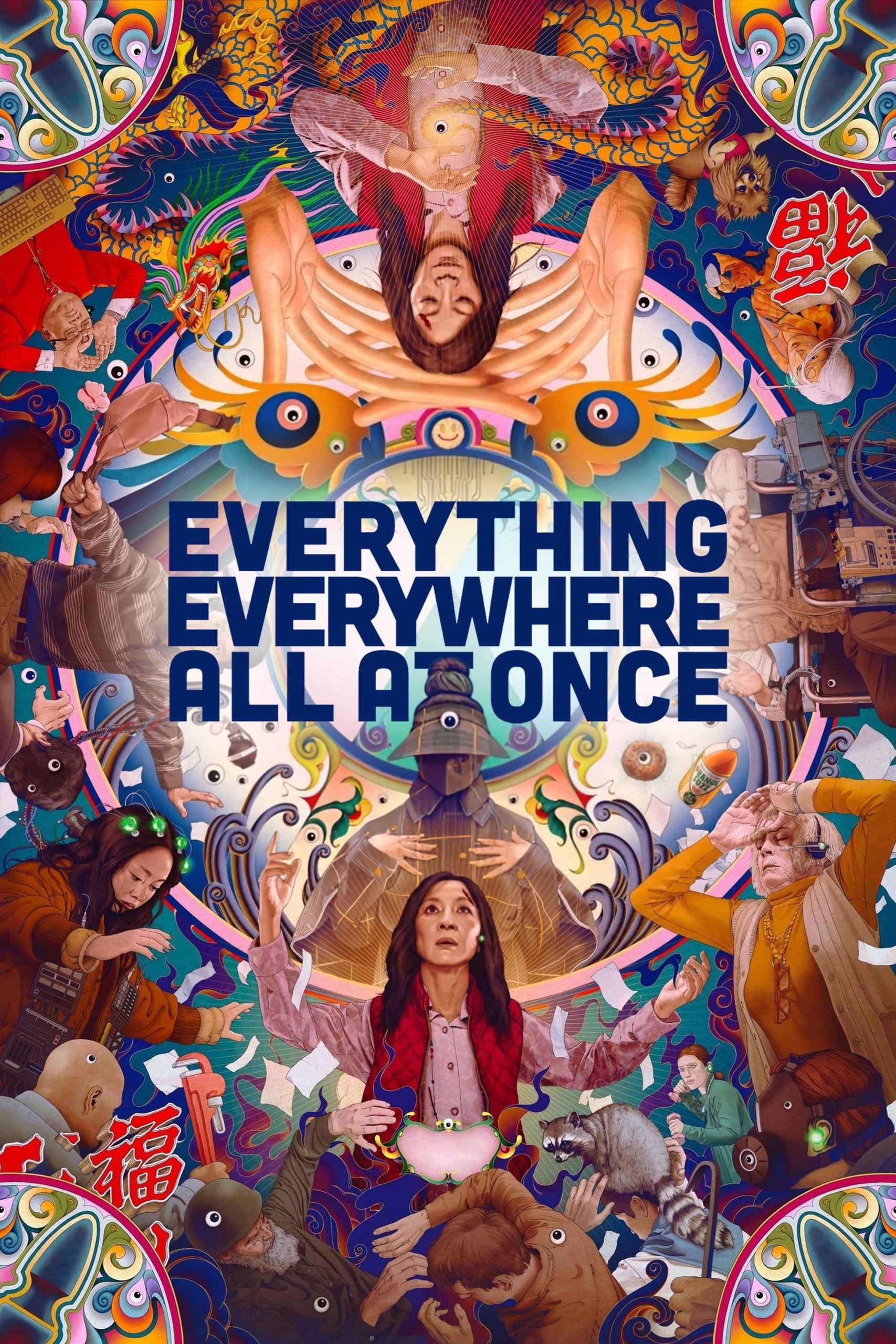
Stepping out of my local theater after watching Dan Kwan and Daniel Scheinert’s whirlwind film, I remember feeling like I needed to catch my breath. I was swept up in a genre-blurring journey that combined science fiction and existential drama in ways I’ve rarely witnessed. Everything Everywhere All At Once follows Evelyn Wang, a weary laundromat owner struggling to hold together her family and faltering business while grappling with generational expectations. The story launches into chaos when she discovers a multiverse threatening to collapse—and “she” is the only version of herself who might save not just her world, but every possible world. There’s an audacious fusion in how the Daniels balance emotional complexity with absurdist humor, turning a small family conflict into an epic adventure. If you want to avoid significant spoilers, I’ll note here that some descriptions teeter on the edge of giving away plot twists—though the sheer density and inventiveness make the film nearly impossible to spoil in a traditional sense.
I was especially captivated by how the filmmakers weave action sequences that would make Marvel blush, intercut with moments of unyielding vulnerability. From IRS audits to martial arts showdowns, to bagel-shaped black holes, the narrative ricochets between timelines and realities with a feverish energy. The way the story re-centers on Evelyn’s struggle to connect with her daughter Joy, her husband Waymond, and her demanding father, Gong Gong, gives the fantastic premise genuine emotional stakes. This use of the multiverse as a canvas to portray the fractured, often paradoxical emotions of immigrant families makes the film profoundly relatable.
Key Themes & Analysis
What resonated most with me is how the film interrogates the seemingly endless possibilities of “what could have been” in our own lives. The multiverse here is not just a sci-fi trope—it’s a metaphor for regret, resilience, and the splintered identities we all carry. I kept thinking about the anxiety that comes with trying to be everything for everyone, especially in the context of immigrant family life. Evelyn’s exhaustion, her fierce independence, and her longing for approval all pooled together into a character with real psychological texture.
Thematically, I found the film to be a meditation on choice—every decision branches into new universes, and yet, there’s an aching suggestion that true fulfillment comes not from chasing infinite potential, but by fully inhabiting the life in front of us. The way this is visualized—through dazzling editing, ping-pong transitions, and sharply contrasting visual styles—kept me mesmerized, but it was Evelyn’s quieter moments that stayed with me after the credits. When she faces her daughter’s despair or her husband’s quiet empathy, the film feels mythic and intimate at once.
It’s not just the narrative ambition that floored me, but also the technical bravura. The Daniels create visual gags and transitions that feel both comedic and oddly profound. Editing, in particular, becomes a character of its own—mirroring the fractured mindscape that we all navigate when our lives splinter beneath us. Michelle Yeoh’s performance as Evelyn is, for me, the gravitational center of this cinematic experiment. Her ability to jump from slapstick to heartbreak in a single breath is nothing short of miraculous. Ke Huy Quan’s portrayal of Waymond feels revolutionary; his gentle optimism and unassuming strength anchor the film emotionally. Stephanie Hsu, playing Joy, brings raw vulnerability to a character who could have easily become a plot device. Their chemistry builds a foundation for the chaos, elevating the film far beyond mere spectacle.
I’m still in awe of how the film bends genre—the martial arts action is kinetic and self-aware, yet it blends seamlessly with moments of absurdity or even philosophical reflection. Costume and production design are saturated with details that feel both outlandish and uncannily familiar. And then there’s the humor: from googly eyes to an anthropomorphic raccoon chef à la Ratatouille, this is a movie that laughs boldly in the face of existential dread. For me, this genre-collision creates a language all its own, allowing the Daniels to say something deeply personal about hope, disappointment, and the power (and terror) of possibility.
My Thoughts on the Historical & Social Context
I’ve thought a lot about why this film struck a chord with audiences in 2022—and why it still speaks to me today. There’s an urgency to its questions about identity, belonging, and disconnection that feels specifically rooted in the anxieties of our digital, post-pandemic world. In my view, the proliferation of “multiverse” narratives in popular culture mirrors our collective sense of fractured reality—endless possibilities, endless decisions, and yet so many of us feel lonelier than ever. The film resonates with me as an immigrant child, seeing Evelyn’s internal conflicts—the desire to succeed by her parents’ standards, her fear of disappointing her own daughter, the way her husband’s gentleness is both infuriating and redemptive. These threads reflect a broader conversation about intergenerational trauma, cultural assimilation, and the struggle for meaning in a world full of distractions.
What makes Everything Everywhere All At Once so timely is its willingness to stare directly into the chaos—a chaos that reflects the “age of anxiety” we all seem to be living in. It’s hilarious and absurd but never dismissive of real suffering or isolation. The politics are present but subtle. Joy’s queerness is not a source of spectacle, but a node in the web of misunderstanding and longing that so many families can recognize. I believe the film’s deeper impact lies in its invitation to choose empathy—both for ourselves and for others—even when reality feels unmanageable.
Watching this film, I felt like I was being handed a mirror to my own fears—my sense of falling short, my wish to start over, the hope that simply loving the people in front of me could be enough. That’s why this film mattered when it came out, and why it continues to matter to me: it articulates the messiness of modern life with humor, heartbreak, and a luminous sense of possibility.
Fact Check: Behind the Scenes & Real History
Digging into the story behind the camera, I found several remarkable details. For one, the directors originally conceived the main character for Jackie Chan before rewriting the part for a Chinese immigrant mother—opening the door for Michelle Yeoh to deliver one of the most defining performances of her career. This switch not only shifted the tone but also deepened the film’s generational and gender dynamics. Watching Yeoh in action, I couldn’t imagine anyone else anchoring this surreal rollercoaster.
Another behind-the-scenes marvel is the film’s shoestring budget paired with blockbuster-worthy special effects. Unlike most contemporary sci-fi epics, nearly all the effects were conjured by a minuscule VFX team—reportedly just five people, many of whom were learning new techniques as they went. The fact that the film’s most mind-bending sequences (like multiverse jumps and body swaps) stem not from expensive software, but creative problem-solving, made the visual storytelling all the more impressive for me.
It also struck me that the Daniels were inspired by the loopiness of internet meme culture and the hyper-stimulation of contemporary online life. This feels apparent, especially in the film’s frenetic editing and rapid-fire visual jokes—which succeed, in my opinion, because they never lose sight of the emotional throughline. Knowing this, it’s clear to me how the movie taps into social anxieties and a kind of “meme logic” that dominates younger generations’ sense of reality.
Why You Should Watch It
- Michelle Yeoh’s virtuosic performance breathes soul into a universal struggle for acceptance, identity, and love.
- The film’s inventive direction and editing deliver a visual experience that is both cerebral and electrifyingly entertaining.
- Underneath the chaos, the story’s heart is a call to choose empathy in a world that often feels overwhelming and divisive.
Review Conclusion
The sensation I walked away with after experiencing Everything Everywhere All At Once is hard to describe, but unforgettable: a heady mix of exhilaration, sorrow, and awe. This is a film that refuses to be boxed into one genre, one emotion, or one meaning. It’s a beautifully chaotic meditation on family, regret, and hope, punctuated by some of the most inventive filmmaking I’ve ever witnessed. I felt changed not just by its story, but by the imaginative conviction of everyone involved. My rating: 5/5 stars.
Related Reviews
- The Farewell (2019): I was deeply moved by this poignant look at intergenerational family ties, immigrant experience, and unspoken emotional truths. Like Everything Everywhere All At Once, it wrestles with cultural expectation and the power of love across generations, albeit with a quieter resonance.
- Anomalisa (2015): If I had to recommend a film that captures existential longing and the surreal nature of identity, this stop-motion drama delivers an intimate, dreamlike journey that echoes the emotional complexity of the Daniels’ film.
- Eternal Sunshine of the Spotless Mind (2004): Every time I watch this modern classic, I’m reminded of its boundary-pushing visual storytelling and heartfelt meditation on regret, love, and the multiverse of “what-ifs”—making it a spiritual sibling to Everything Everywhere All At Once.
- Swiss Army Man (2016): Another Daniels creation, this film’s wild genre mashups and deep dive into loneliness and absurdity make it a kindred spirit in both philosophy and visual playfulness.
If you want to explore this film beyond basic facts, you may also be interested in how modern audiences respond to it today or whether its story was inspired by real events.
🎬 Check out today's best-selling movies on Amazon!
View Deals on Amazon