
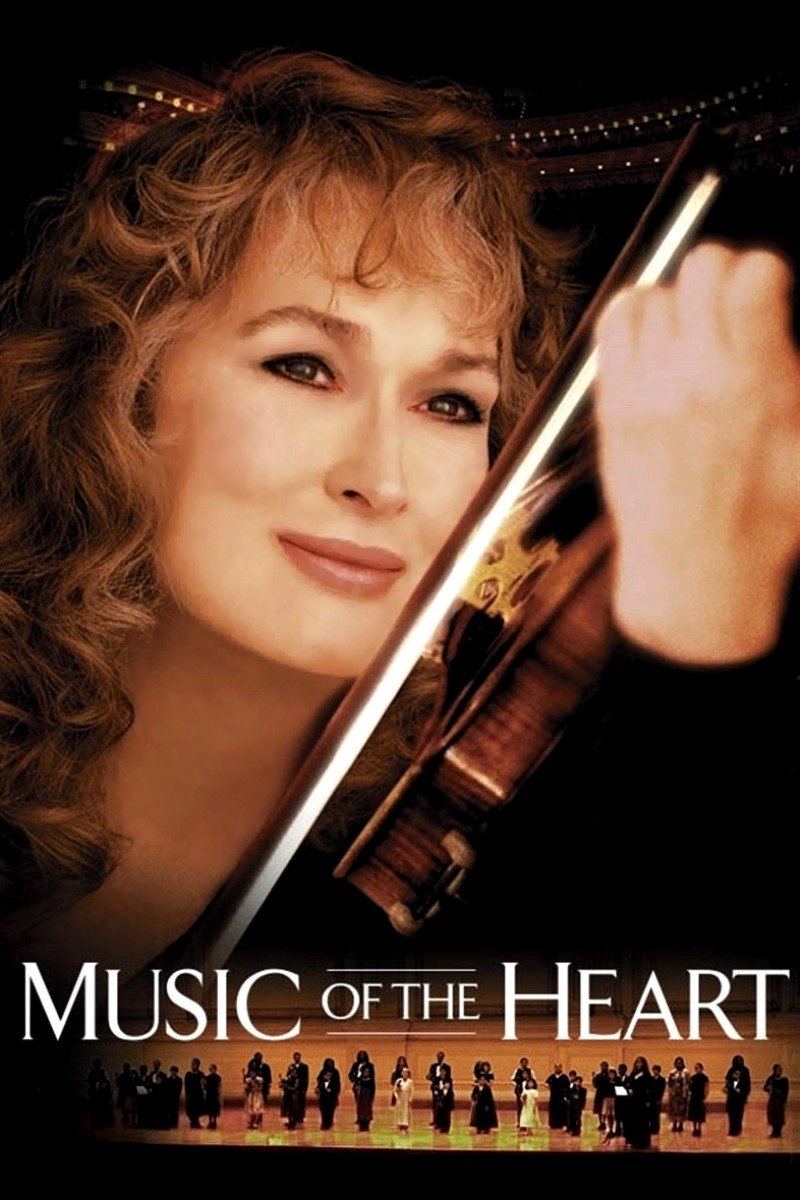
Plot Summary
The very moment I stepped into Wes Craven’s “Music of the Heart,” I felt an unmistakable energy—a blend of creative defiance and earnest hope. I remember walking away from my first watch moved by the story’s powerful heartbeat, soaring far above the bounds of a typical drama. As someone who has spent years parsing the nuances of inspirational cinema, I found myself unexpectedly swept up in this ode to artistic resilience.
“Music of the Heart” opens its arms to the audience by inviting us into the life of Roberta Guaspari (Meryl Streep), a woman rebuilding her identity. After her marriage crumbles, Roberta lands in East Harlem—a neighborhood punctuated by hardship, yet humming with a vibrant, tight-knit sense of community. She is determined to teach violin to a group of children with little exposure to classical music or the privileges that often support such an education.
Every scene pulses with Roberta’s relentless resolve. The film avoids haloed portrayals of its protagonist; instead, it reveals the anxious nights, shattered self-doubt, and micro-victories that define her journey. There are moments when Roberta feels like she’s facing an unmovable wall—hostile administrators, skeptical parents, tight resources. But what holds the entire narrative together is the film’s focus on the slow, often grueling process of building trust—both in her students, and, more poignantly, within herself.
As the school program grows, Roberta faces her largest obstacle yet: the threat of program cuts that would silently erase years of progress. I won’t spoil the climactic turns, but suffice it to say, the last act of the film—underscored by a stirring benefit concert—reminds me of why music, and those determined to share it, can be lifelines in a weary world.
Key Themes & Analysis
What struck me most was how “Music of the Heart” handles the interplay between personal reinvention and collective empowerment. There’s a recurring motif of music as a form of resistance—not just against poverty or bureaucratic inertia, but against the erosion of hope itself. Every rehearsal, discordant at first, builds toward something whole. To me, it’s not simply about the violin lessons; it’s about what those lessons represent: the transformative power of discipline, belonging, and artistry in the lives of young people who society often overlooks.
I’m continually impressed by Craven’s directorial choices here. Famous for horror, Craven brings the same intensity and attention to emotional pacing. The cinematography doesn’t romanticize East Harlem; instead, John Kienz’s camera lingers on faces, small details—a frayed violin bow, a child’s determined frown, the chipped paint of a school corridor. These choices ground the film, making the stakes deeply personal. It’s a drama that refuses to look away from discomfort, which I deeply admire.
As for the acting, there are few cinematic performances as buoyant and achingly real as Meryl Streep’s take on Roberta Guaspari. I found myself believing every note—her awkward candor, flashes of impatience, and especially those eyes brimming equally with terror and devotion. Streep’s scenes with her students leave a lasting impression. Every supporting character—from Gloria Estefan’s sensitive school official to Angela Bassett’s stern, passionate educator—feels lived-in, providing a vibrant tapestry that echoes the polyphony at the film’s core.
What makes “Music of the Heart” truly resonate for me is its deliberate avoidance of white savior tropes. The narrative pays equal attention to the ways the children and their families shape Roberta’s growth. Their own ambitions and struggles are given space to sing, making the classroom a stage for mutual learning rather than one-sided salvation.
In terms of sound design and score, the film brims with classical pieces, and I remember being swept up by the fusion of lush orchestration and raw, sometimes halting, beginner performances. The soundscape reinforces the central idea that beauty in art is often mixed with imperfection—a theme woven delicately through every rehearsal and performance depicted.
Ultimately, the film’s cinematic language feels like a quiet act of advocacy. Every frame contends that art matters—not just for enrichment, but as a critical anchor in turbulent lives. “Music of the Heart” isn’t content to simply inspire; it demands that viewers consider what’s lost when arts education is neglected, and what it takes to safeguard creativity in the face of apathy.
My Thoughts on the Cultural Impact & Legacy
I have always measured a film’s relevance not by its box office returns but by the tremors it sends through both culture and consciousness. “Music of the Heart” may not have become a mainstream phenomenon, but I see its impact echo quietly in unexpected places. For me, the film embodies a genre-defining moment: a collision of autobiography and advocacy, directed by a filmmaker stepping boldly outside his established horror domain.
What this film did for the genre of inspirational school dramas was, in my view, nothing short of radical. It demonstrated that narratives centered around education—especially arts education—could carry stakes as high, and emotional charge as acute, as any crime thriller. I personally felt empowered by the recurring assertion that passionate teaching can defy systemic constraints; it’s a message that, as a curator of nuanced cinema, shaped my understanding of how docudrama can galvanize social action.
There is also something quietly subversive about witnessing a largely female-led production explore authority, tenacity, and vulnerability all at once. I return to this film when I want to remember why stories rooted in real-life struggle feel essential; they bridge the gap between policy debate and lived humanity. No public campaign for arts education has ever, in my opinion, matched the urgent intimacy of Roberta’s story as depicted here.
Looking back, I find traces of “Music of the Heart” in countless later films—“Mr. Holland’s Opus”, “Freedom Writers”, even certain television dramas. It set a benchmark for how Hollywood could dignify both teacher and student in their flaws and aspirations. Personally, I believe its greatest legacy lies in encouraging a generation of filmmakers and audiences to value the invisible craftsmanship of educators. One can trace a ripple effect across documentaries, fundraising for school music programs, and even the evolving portrayal of women reshaping their destinies on screen.
For me, “Music of the Heart” is a pivotal reminder that film doesn’t just imitate life; sometimes, it plants the seed for change.
Fascinating Behind-the-Scenes Facts
Whenever I delve into the making of “Music of the Heart,” I uncover layers that transform my appreciation for every scene. Three facts consistently intrigue and enliven my experience:
First, Meryl Streep’s commitment to authenticity went far beyond the script. She reportedly trained extensively with violinist Itzhak Perlman, devoting many months before filming and even practicing up to six hours a day at the height of preparation. Seeing her bow grip and posture on screen, I always found a sense of genuine hard-won artistry—no clever camera tricks, just dedication that shines through the performance.
Second, the film was initially a surprising departure for Wes Craven. Known best for his horror legacy, Craven approached this project as a personal challenge. In interviews, he shared that he found the subject matter both intimidating and invigorating, often drawing parallels between creating suspenseful horror and wringing emotional truth from biography. What’s more, the studio at one point had proposed Madonna for the lead role. Steeped in curiosity, I can’t help imagining what a radically different flavor the film might have taken on with that casting.
Lastly, the climactic benefit concert in the film isn’t just Hollywood magic—it’s a recreation of a historic Carnegie Hall event staged to save Roberta Guaspari’s real-life violin program. Many of the world-class musicians who appear in the movie were part of the original show, including Itzhak Perlman and Isaac Stern. That blending of documentary and fiction always gives me chills; I feel as though I’m witnessing cinema actively rewriting and preserving the truth.
Why You Should Watch It
- Meryl Streep’s transformative performance delivers a masterclass in vulnerability and strength, anchoring every emotional beat.
- The film captures the rarely explored intersection of personal healing and collective empowerment via arts education.
- Wes Craven’s unexpected but deft direction brings suspenseful pacing and authenticity to an uplifting true story.
Review Conclusion
When I revisit “Music of the Heart,” I am reminded of how cinema can be both a mirror and a catalyst. This is a film overflowing with empathy, urgency, and the bittersweet beauty of imperfect progress. Wes Craven’s leap across genres proves more than a curiosity; it becomes a testament to the versatility of both filmmaker and form. Streep, embodying Roberta, grounds the drama with finesse that’s neither easy nor sentimental—and the ripples of her character’s journey continue to move me.
It’s rare for a film about music to eschew fairytale transformation and instead ask us to value the grind of daily effort, the raw nerves of teaching, and the persistence needed to keep hope alive. For anyone hungering for stories where conviction triumphs despite institutional inertia, this film is, in my experience, unmissable. I give “Music of the Heart” 4.5 out of 5 stars—not for being perfect, but for reminding me why art, in any form, can heal and ignite.
Related Reviews
- Mr. Holland’s Opus (1995): I often pair this film with “Music of the Heart” because both celebrate teachers who become forces of transformation through music. It’s equally poignant in its depiction of the sacrifices and triumphs that define educational journeys.
- Freedom Writers (2007): Like Craven’s film, “Freedom Writers” centers an educator committed to empowering marginalized youth. I find the two films complementary in their refusal to sanitize the realities of teaching under duress.
- Dead Poets Society (1989): This classic resonates for me whenever I seek stories of unconventional teaching methods and the life-altering potential of passionate instruction. The emotional stakes echo those of “Music of the Heart,” and the message about challenging societal norms lingers long after the credits.
For readers looking to go deeper, these perspectives may help place the film in a broader context.
🎬 Check out today's best-selling movies on Amazon!
View Deals on Amazon