
Plot Summary
There are rare moments in cinema when I feel transported—not simply by sweeping visuals or grand narrative arcs, but by an almost spectral intimacy. Barry Jenkins’s Moonlight enveloped me in such an experience from the very first scene, drawing me into the quiet, shifting world of a boy named Chiron as he comes of age in Miami. While the film’s plot unfolds in three distinct chapters—each one reflecting a particular stage in Chiron’s life—what truly captivated me was not just the what, but the how: the tender, deliberate way the camera lingers on faces, the measured silences, the layers of longing and vulnerability painted into each frame.
Without delving deeply into spoilers, I’d summarize my experience of Moonlight’s story as a deeply personal odyssey. I followed Chiron, who is first introduced as a shy, withdrawn child nicknamed “Little”. He navigates harsh realities: bullying, poverty, the complexities of his mother’s addiction, and a persistent search for safe harbor. There’s a precious gentleness to the relationships, especially between Chiron and Juan—the compassionate drug dealer who becomes an unexpected mentor. As the narrative advances into Chiron’s adolescent and adult years, the weight of unspoken feelings intensifies. Love, masculinity, sexuality, and survival entwine in luminous, painful, revelatory ways.
Spoiler warning—though I’ll remain vague: The film’s greatest power for me rests not in plot twists but in small, cumulative moments—glances, gestures, the rush of surf or the hum of a crowded cafeteria. Moonlight is structured with precision, but what elevated my viewing into the sublime was how these moments accrued meaning, inviting me not just to witness Chiron’s journey but to inhabit it on an emotional level rarely achieved in mainstream cinema.
Key Themes & Analysis
What struck me most about Moonlight was its unwavering commitment to interiority. The film’s central exploration of identity—especially Black, queer identity—unfolds with a lucidity and compassion that is as radical as it is necessary. I found myself undone by the delicate tension Jenkins cultivates between silence and speech, hiding and revelation. The ongoing motif of “masking”—of concealing true feelings or adopting hardened personas to survive—felt painfully familiar and universally human.
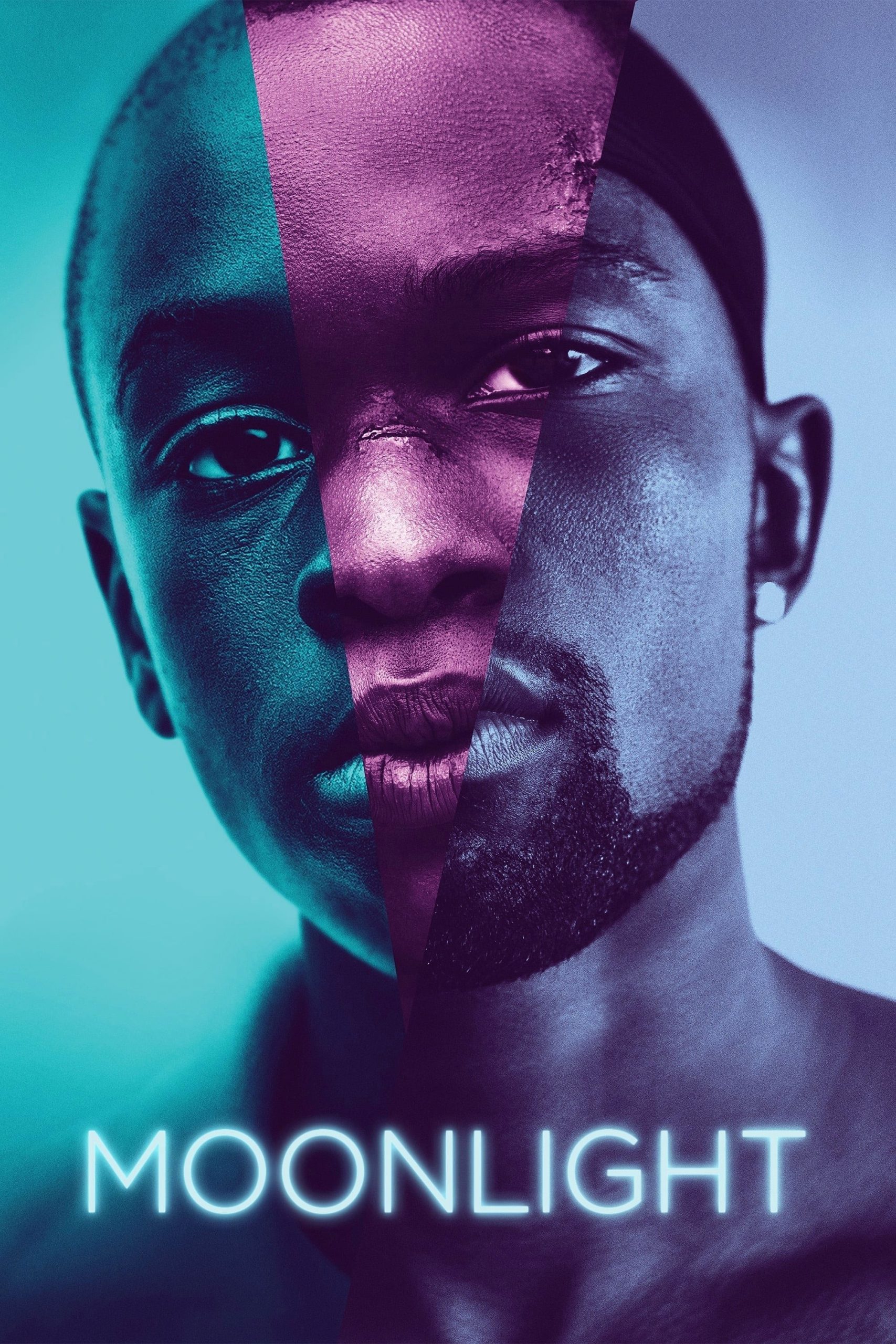
Every time the camera lingered on Chiron’s face, I sensed a director deeply attuned to the power of visual storytelling. James Laxton’s cinematography, for me, redefined what light can do: moonlit skin glowing blue, water reflecting both refuge and danger. I was continually mesmerized by the washed-out pastels of Miami, which seemed to hover between dream and reality, memory and the present. There’s such intentionality in Jenkins’s choices—the handheld cameras, the shifting aspect ratios—that I found myself re-examining each scene, searching for meaning in the margins.
Acting, too, anchors this film so relentlessly that I can’t think of a weak link. For me, the triple-casting of Chiron in childhood, adolescence, and adulthood (Alex R. Hibbert, Ashton Sanders, Trevante Rhodes) stands as one of the most profound feats of cinematic continuity. Each actor, without explicitly mirroring the others, transmits the essentials of Chiron’s core: woundedness, yearning, the quest for tenderness. Watching Mahershala Ali as Juan, I was deeply moved by how he infused a seemingly archetypal role with grace, warmth, and contradiction. Naomie Harris, as Chiron’s mother Paula, delivered a volatile and nuanced performance that elicited both frustration and deep empathy in me. The naturalism of the dialogue—its lyricism, its restraint—reminded me just how powerful a film becomes when it trusts its characters to breathe.
As I rewatched Moonlight, it struck me how Jenkins manipulates time and memory, sometimes flowing seamlessly through the past and present, often inviting the viewer to question what is real and what exists only in longing. I was fascinated by the sound design: the use of silence, the surging classical score, and the way music intertwines with the landscape to underscore Chiron’s interiority. The ocean, a recurring motif, took on a nearly spiritual dimension for me—representing freedom, rebirth, and unresolved trauma all at once.
If asked to articulate the film’s core, I’d say that Moonlight is an extended meditation on the cost—and the necessity—of vulnerability. It’s a story about what survives after childhood is stripped away: the hope for gentleness, the hunger for connection, and the indelible marks of love and abandonment. This is a film that trusts its audience to interpret silences and pierce beneath the surface; as someone who often tires of expository cinema, I found that exhilarating.
Moving from the micro to the macro, I’m struck by the way Jenkins resists easy answers to the struggle for self-acceptance. The questions of masculinity, sexuality, and community are never treated as mere sociological artifacts but as living, shifting realities. Never have I witnessed such a careful avoidance of stereotypes; the film’s greatest achievement, to me, is its patient excavation of interior struggle—something that lingers with poignant resonance long after the credits roll.
My Thoughts on the Cultural Impact & Legacy
Reflecting on Moonlight’s impact, I believe it shifted the axis of American cinema in ways I’m still unpacking. The night of the 2017 Academy Awards—when the film made history by winning Best Picture—felt to me like more than a correction for decades of Hollywood oversight; it was an acknowledgment of the vitality and importance of stories too often left untold. Personally, I experienced the film as a kind of cinematic permission slip: a validation that art can—and should—center experiences that subvert dominant narratives.
One of the legacies I notice, as a curator and passionate advocate for underrepresented voices, is how Moonlight opened the gates for a new generation of filmmakers. Its quiet triumph said to the industry: these stories matter, these lives deserve visibility, and there is an audience—hungry, diverse, engaged—ready to receive them. I return to Jenkins’s work often when I discuss intersectional storytelling, because for me, the film demonstrates how Blackness and queerness need not be filtered through trauma alone; there’s space for grace, complexity, sensuality, and hope.
On a personal level, Moonlight made me rethink both the limits and potential of the coming-of-age genre. I felt seen in ways I rarely do, not because my own story mirrors Chiron’s, but because the film’s empathy is so thorough that it cracks open empathy in the viewer. What lingers, years later, is not just the poetry of its images or the heartbreak of its silences, but the sense that films can be as soft and as sharp as life itself. The gentle audacity of Jenkins’s approach continues to reverberate every time I witness discussions around representation, authenticity, and the boundaries of cinematic language.
Fascinating Behind-the-Scenes Facts
I relish the chance to dig into the production stories behind films I love, and Moonlight offers an abundance of fascinating details that enrich my appreciation for what unfolded onscreen. The triple-casting of Chiron surprised me, not just as a bold storytelling move, but as a logistical feat; Barry Jenkins and his team intentionally kept the three actors—Alex R. Hibbert, Ashton Sanders, and Trevante Rhodes—separate throughout filming, ensuring that each would bring their own authenticity and physicality to Chiron, not through imitation or mimicry, but through an organic sense of emotional continuity. Watching the film knowing this made every subtle gesture and glance feel even more impressive to me.
Another behind-the-scenes story that caught my attention was the astonishing timeline and budget. Moonlight was shot in just 25 days on a modest budget of roughly $1.5 million. That’s a fraction of what most prestige dramas command, and I’m amazed by how Jenkins translated that constraint into artistic strength. Many scenes were filmed with natural lighting, and the filmmakers used real Miami locations—including Liberty City, the neighborhood where Jenkins himself grew up—infusing the film with a palpable sense of place and authenticity that I felt in every frame.
I’m particularly compelled by the casting of Mahershala Ali as Juan. He actively campaigned for the role, stunning the filmmakers with his reading. Knowing that Ali filmed his pivotal scenes in just a few days (due to a tight schedule) and still delivered such a nuanced, layered performance is mind-blowing to me. The same can be said for Naomie Harris, who shot all of her scenes in only three days—sandwiched between other projects—yet brought astonishing emotional immediacy to Paula’s struggles. These facts underscore, for me, the power of collaboration and trust on a low-budget, independent film set.
Why You Should Watch It
- Moonlight showcases masterful storytelling that redefines the coming-of-age genre with honesty and lyricism.
- The film offers a rare and vital lens on Black and queer identity, delivered with elegance and compassion.
- Every element—from performances to cinematography—exudes authenticity and innovation, making it a must-see for anyone who values transformative cinema.
Review Conclusion
If I could distill my lasting impression of Moonlight into one phrase, it would be “radical empathy.” I was moved, not simply by the story on the surface, but by the depths it dared to plumb: identity, longing, the violence and beauty that can coexist in human connection. Jenkins’s vision reminded me of cinema’s power not just to mirror reality, but to heal, to reveal, and to invite us to reimagine what stories we can tell. This is a film I will return to for years—4.5/5 stars—not because it is perfect, but because it breathes.
Related Reviews
- If Beale Street Could Talk – Barry Jenkins’s follow-up film left me with the same sense of poetic realism and aching intimacy, transporting me into the emotional center of its characters’ lives. Like Moonlight, it’s a deeply personal exploration of love, injustice, and resilience within the Black experience.
- Pariah (dir. Dee Rees) – I was struck by this film’s raw honesty in portraying a young Black woman’s coming-out journey. The way it handles identity, family, and vulnerability aligns beautifully with the emotional honesty and thematic complexity of Moonlight.
- The Last Black Man in San Francisco – Watching this film, I felt the same convergence of lyrical camerawork and deeply felt questions around race, place, and belonging. Its visual poetry and character-focused storytelling echo the best elements of Moonlight.
- Call Me by Your Name – Though tonally different, this romance’s unspoken yearning and evocative sense of time and place reminded me of Moonlight’s power to create atmosphere and internal landscape—particularly in its treatment of love and identity.
For readers looking to go deeper, these perspectives may help place the film in a broader context.
🎬 Check out today's best-selling movies on Amazon!
View Deals on Amazon