
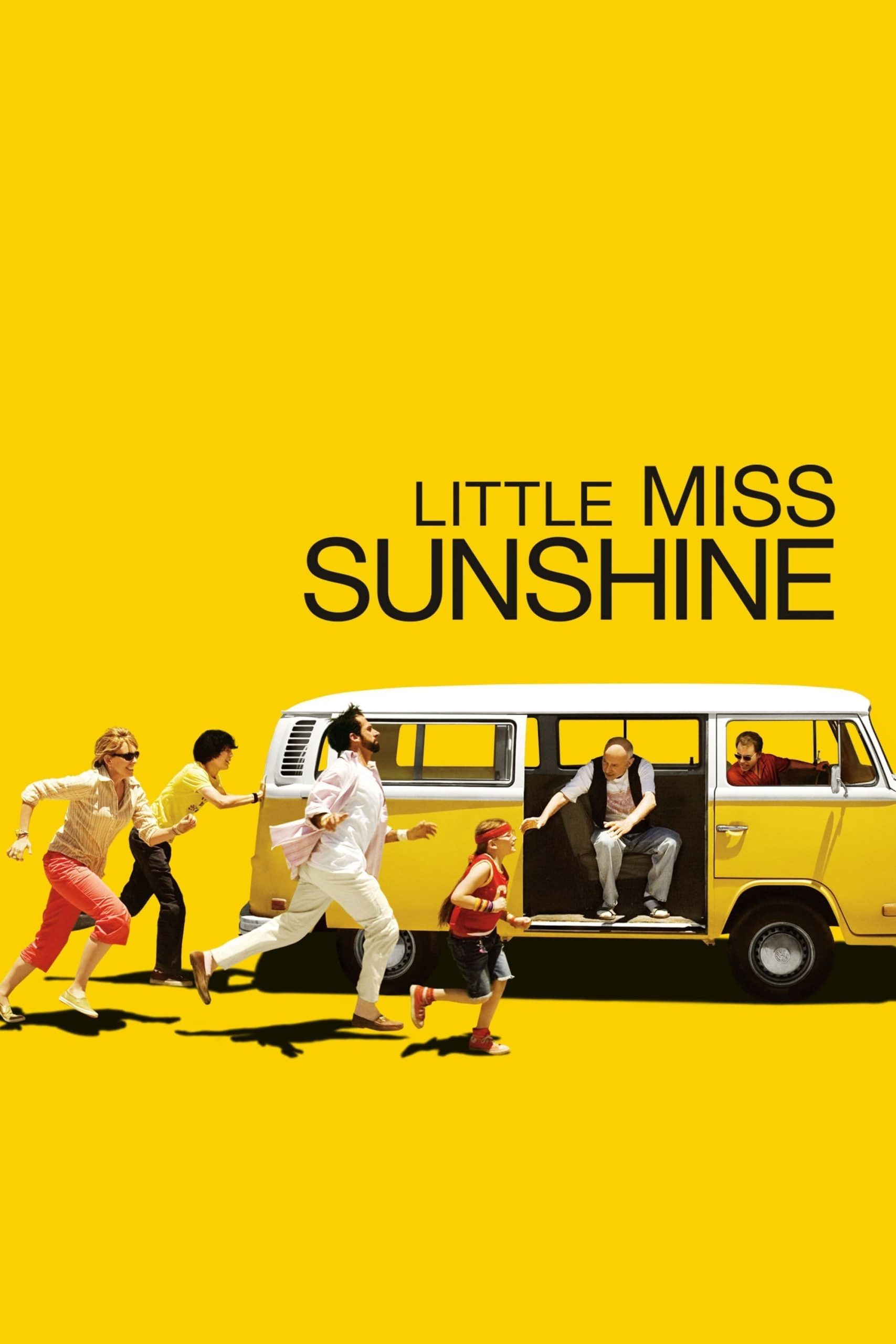
Plot Summary
From my very first encounter with Little Miss Sunshine, I felt swept up in a quietly chaotic road trip, driven by characters that felt like echoes of people I know—or, in some ways, parts of myself. Under the confident direction of Jonathan Dayton and Valerie Faris, this indie dramedy became more than a tale of a dysfunctional family; it was a sharply observed microcosm of American ambition and vulnerability. What I appreciated most about the film’s plot was its refusal to take the easy route. The story follows the Hoover family—each member precariously balancing their own fractured dreams—as they pile into a rickety yellow Volkswagen van, determined to support seven-year-old Olive’s improbable quest to compete in the Little Miss Sunshine beauty pageant. This journey, literally across the Southwest, cleverly unpacks the ways our aspirations often crash up against unforgiving realities.
Without delving into explicit spoilers, I can say the film is structured as a series of escalating, darkly comedic misadventures that expose every raw nerve of family life. Miscommunication, hidden resentments, and deeply flawed love fuel every mile on the odyssey. At every turn, I found myself grinning at the absurdity while swallowing a lump in my throat at the heartbreak. Dayton and Faris avoid cartoonish sentimentality; instead, their direction consistently lingers on small gestures and awkward silences, which breathe authenticity into the otherwise absurd premise. By the time Olive and her family reach the pageant—and I would recommend experiencing those scenes with as little prior knowledge as possible—I was as emotionally invested as if I’d been stuffed in that van myself, holding my breath for the outcome.
Key Themes & Analysis
What struck me immediately about Little Miss Sunshine was its deep dive into the contradictions of the American Dream. The Hoover family, on the surface, is united only by their dysfunction; but as the film develops, I realized that their struggles are universally recognizable. The tension between personal failure and collective hope gives every scene a jittery emotional edge. The film asks, with an unblinking gaze, whether it’s healthier to keep chasing success or to embrace the messiness of failure. As I watched Richard (Greg Kinnear) stubbornly cling to his failing self-help philosophy and Dwayne (Paul Dano) implode under the pressure of unspoken expectations, I felt the pain and absurdity of these contradictions in my own bones. Olive herself, with her bright innocence and endearing oddness, becomes the film’s beating heart; her journey resonates as a rebellion against tightly-scripted societal roles.
Cinematographically, I found the film’s visual language delightfully understated. The dusty, sun-bleached palette of the American Southwest sets the emotional tone; it perfectly matches the Hoover’s emotional drought, interrupted only by moments of color—usually signaled by Olive herself. Cuts are rarely flashy, but always honest. Andrew Droz Palermo’s camera lingers just long enough on uncomfortable conversations, never veering away from the raw vulnerability that each actor invests in their role. The film’s editing, too, avoids melodrama, instead coaxing moments of unexpected humor out of silence and failure.
As for the acting, what astonished me was how Dayton and Faris sculpted such a balanced ensemble performance. Toni Collette, as Sheryl, gives what I consider to be one of her most nuanced portrayals—a mother stretched thin by devotion and fatigue, always teetering between hope and resignation. Greg Kinnear’s portrayal of a motivational speaker who can’t seem to motivate his own family felt, to me, razor-sharp in its irony. Alan Arkin’s role as the anarchic grandfather, sarcastic yet fundamentally loving, is the kind of performance one wishes to anchor a script—and his Oscar win was, to my mind, richly deserved. Steve Carell’s subdued, aching turn as Uncle Frank became a revelation for me; he shows how comedy and tragedy often sit quietly beside each other.
Ultimately, Little Miss Sunshine is a portrait of perseverance against absurd odds—one that argues, through small victories and honest laughter, that it’s okay to be a loser if you still show up for those you love. This lesson, to me, remains both timeless and urgently necessary, especially in an era obsessed with perfection and endless self-improvement.
My Thoughts on the Cultural Impact & Legacy
Few films from the past two decades have lingered in my mind like Little Miss Sunshine. I often return to it not primarily for comfort, but because it feels like a litmus test for my own perspective on failure, ambition, and family. The film arrived during a boom in American indie cinema, yet it carved out a unique space through its sharply observed humor, stripped-back emotionalism, and refusal to offer tidy resolutions. When I think about the cultural landscape of the early 2000s, I see this film as a corrective to both Hollywood cynicism and saccharine feel-good narratives; it gave space to messiness without falling into bleakness.
What matters to me most is how the film dared to subvert notions of beauty, success, and “normal” family life. In a genre often dominated by manufactured quirk or forced sentiment, it allowed its characters to be painfully real. As a curator, I recognize the ripple this created in subsequent dramedies—the space for raw vulnerability coupled with offbeat comedy became more visible after this film’s success. The movie’s quiet but persistent optimism—rooted not in accomplishment, but in acceptance—has inspired countless stories about outcasts and dreamers, both within cinema and beyond.
On a deeply personal level, I see this film as a reminder of the stubborn pulse of hope in unlikely places. Its focus on empathy and persistence shaped my taste for narratives that explore not just triumph, but dignity in failure. I find myself recommending Little Miss Sunshine to anyone curious about the evolution of the indie road movie, and to those who, like me, value the humor that emerges from honest pain. Its legacy, for me, is its enduring insistence that family—however fractured—can still be a site of transformation and meaning, even in our lowest moments.
Fascinating Behind-the-Scenes Facts
I’ve always been drawn to the stories that unfold off-screen, and with Little Miss Sunshine, the production tales are every bit as compelling as the narrative itself. First, I learned that the film’s iconic yellow Volkswagen van broke down so frequently during production that multiple duplicate vehicles were needed just to keep shooting on schedule. This mechanical unreliability mirrored the family’s own tumultuous journey, with cast members pushing the van for real in several takes. That authenticity isn’t just acting—it’s a result of the genuine sweat and frustration of the team.
Another production detail that stuck with me was the casting of Alan Arkin. Arkin reportedly accepted the role of Grandpa Edwin because he saw the script as something his children and grandchildren could be proud of. His comedic timing and heartfelt delivery didn’t just come from the page; it was rooted in a sense of purpose. Knowing this gives his performance, already layered and moving, an extra dimension of intergenerational spirit.
Finally, I find it fascinating that the filmmakers faced serious challenges just getting the project greenlit. Dayton and Faris, primarily known for music videos, struggled to convince studios to invest in a story that was “too dark” and unpolished for mainstream tastes. Fox Searchlight eventually saw the film’s potential, a risk that paid off when it became a surprise box office hit and a multiple Oscar nominee. I think this underdog journey mirrors the film’s own central message: stubborn hope can yield extraordinary results, even in the face of pervasive skepticism.
Why You Should Watch It
- Unforgettable characters and brilliant performances make every scene unpredictable and deeply felt
- The film’s sharp, self-aware humor turns bleakness into catharsis, reminding me how laughter and pain often walk side by side
- Its unapologetic embrace of imperfection feels as radical now as it did in 2006, inspiring me to appreciate the beauty in flawed families and uncertain journeys
Review Conclusion
After every viewing, I’m reminded that Little Miss Sunshine is less about aesthetics or narrative perfection, and more about recognizing grace amidst chaos. Each performance, every awkward conversation, and every misadventure builds toward a final message that resonates on both an artistic and personal level. Dayton and Faris drew a line in the sand for American indie filmmaking—insisting that comedy can be wrenching, and heartbreak can be hilarious. My personal experience with the film has only deepened with time, and I see its fingerprints everywhere in today’s landscape of character-driven comedy-dramas. Without hesitation, I would rate it 4.5 out of 5 stars: a near-masterpiece whose imperfections are exactly what make it unforgettable.
Related Reviews
- The Way, Way Back (2013): I find this coming-of-age road movie echoes some of the same bittersweet humor, focusing on how awkward family dynamics shape the young and the lost. Its mix of comedy and earnestness makes it an ideal follow-up for fans of Little Miss Sunshine’s tone.
- Lars and the Real Girl (2007): For those struck by the offbeat empathy and embrace of outcasts in Little Miss Sunshine, Lars and the Real Girl carves a similar path. It’s a peculiar, heartfelt story of acceptance that draws comedy and warmth from isolation.
- The Savages (2007): When I rewatch The Savages, I see another unvarnished exploration of family dysfunction—here centered around adult siblings confronting their own baggage. It’s drier and quieter, yet equally rich in empathy and subtlety.
- Little Children (2006): This drama approaches suburban disillusionment with a darkly satirical edge, crafting flawed characters and ambiguous outcomes that will appeal to those who enjoyed Little Miss Sunshine’s unwillingness to fit into neat moral categories.
- Juno (2007): If you loved the fresh sense of voice, the idiosyncratic characters, and the refusal to pander to easy tropes in Little Miss Sunshine, Juno’s witty script and emotional honesty offer a fitting companion piece for your next movie night.
For readers looking to go deeper, these perspectives may help place the film in a broader context.
🎬 Check out today's best-selling movies on Amazon!
View Deals on Amazon