
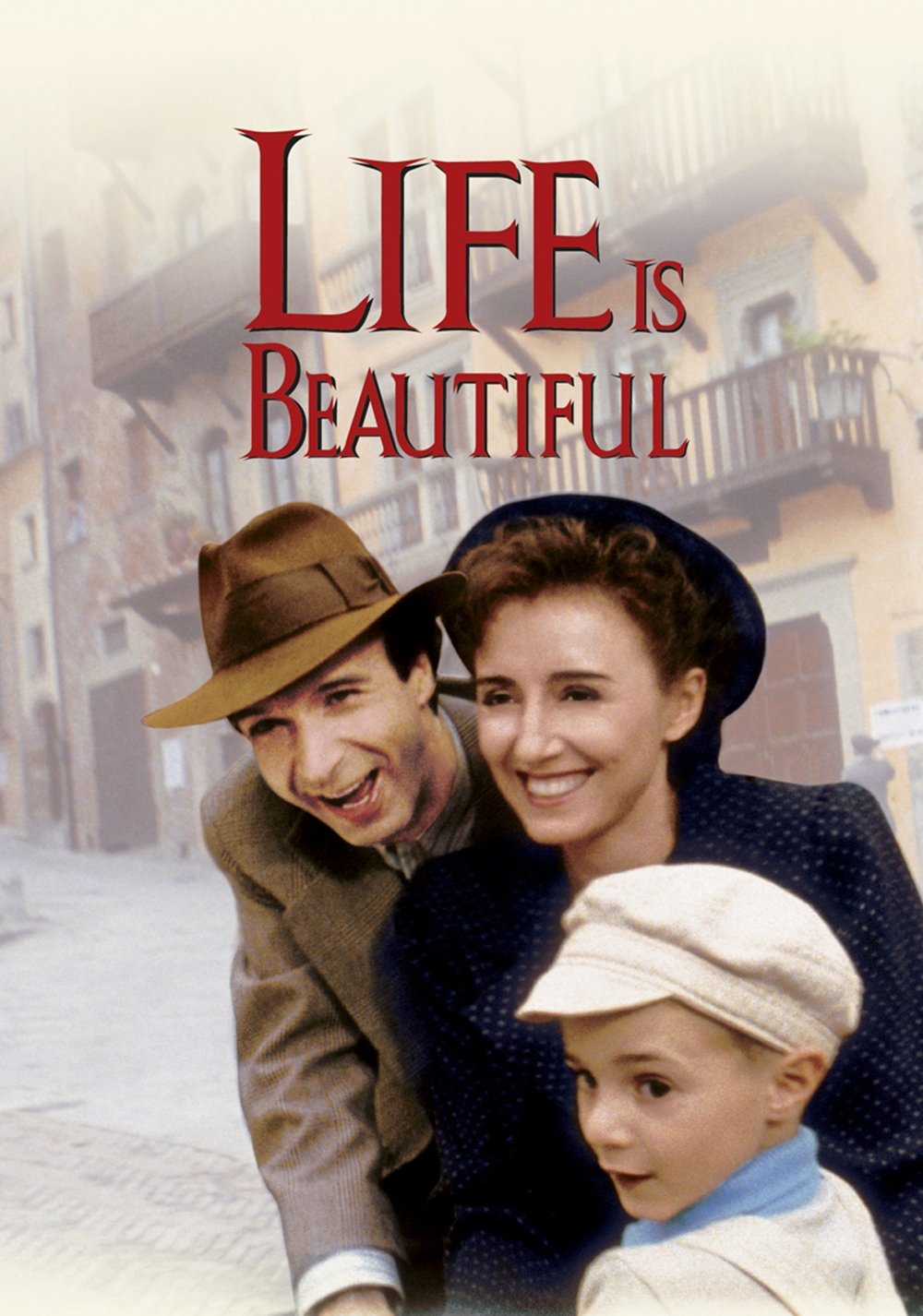
Plot Summary
I still remember the first time I saw Roberto Benigni’s “Life is Beautiful.” I walked out carrying a mix of delight and heartbreak, and I realized I had never encountered a film quite like it. The premise seemed audacious—set in Italy during the rise of fascism and World War II, this film blends comedy with tragedy in a way that rewired my expectations for what cinema could do. Its early half revolves around Guido, a Jewish-Italian bookshop owner, whose exuberant charm and imagination win over both the love of his life, Dora, and the audience. I’m endlessly impressed by how Benigni as both director and leading man introduces whimsy and slapstick even as darker historical realities quietly gather at the film’s edges.
Without delving too deep into spoilers, I can say the story’s axis pivots sharply halfway through, as Guido’s life with his family is upended by the horrors of Nazi occupation. He finds himself with his son, Giosuè (Joshua), in a concentration camp, and it’s within these grim confines that the film’s audacity becomes fully apparent. Guido contrives an elaborate game for his child, creating the illusion that their incarceration is part of an intricate contest, a ruse to shield Giosuè from terror. That structural balancing act, simultaneously comedic and tragic, is unlike anything I’ve seen before or since. For those worried about major story turns, I’ll hold back on the specifics, but it’s enough to say that “Life is Beautiful” takes you to places emotionally few films dare to travel, and the transformation it undergoes remains genuinely surprising.
Key Themes & Analysis
What I find so extraordinary about “Life is Beautiful” is its conviction that hope—no matter how absurd—can be a powerful tool of survival. The film is, on the surface, a meditation on the horrors of the Holocaust, but what sets it apart is Benigni’s insistence on showing us the persistence of love, humor, and imagination in the bleakest circumstances. That’s not to say it sanitizes, trivializes, or underplays the suffering—far from it. The very use of slapstick and farce in the camp is a pointed commentary: Guido is quite literally performing for his son’s life. I felt a knot in my chest watching how comedy becomes an act of rebellion, a means to shield innocence from institutionalized brutality.
The cinematography by Tonino Delli Colli impressed me with its deliberate use of color and light, especially in contrast between the sun-soaked Tuscan scenes and the cold, listless grays of the camp. The palette mirrors the tonality shift from buoyant romance to chilling suspense. Benigni’s direction never indulges in sentimentality, despite toeing the line between laughter and tears. Instead, he orchestrates the narrative with a dancer’s grace, knowing exactly when to let lightness breathe and when to let reality intrude.
As an acting showcase, it’s a revelation. Benigni’s performance is a masterclass in balancing manic energy with subtlety. He imbues Guido with infectious warmth and physical wit, but what struck me hardest were those fleeting, almost imperceptible moments where the mask slips—moments where the horror is unmistakable, but Guido marshals himself to face his son with a smile. Nicoletta Braschi as Dora is equally impactful; her longing and fierce devotion shine through, particularly as the odds grow direr. But it was Giorgio Cantarini as Giosuè who truly anchored the film for me. His innocence casts every playful invention in a tragic light, making the central conceit all the more moving.
Beneath its surface, “Life is Beautiful” is a story about the ethics of fantasy. I found myself wrestling with questions it raises: Is lying ever justified if it preserves hope? Do stories shield us, or do they merely delay the inevitable pain? The film’s refusal to offer easy answers is, for me, its greatest strength. It invites not judgment but empathy.
My Thoughts on the Cultural Impact & Legacy
Reflecting on the legacy of “Life is Beautiful,” I see a film that has both challenged and enriched global cinema in ways that still move me today. It shattered preconceived ideas about how to represent trauma on screen, especially Holocaust narratives often marked by solemn realism. Benigni’s unapologetic blending of humor and pathos was, for me, a necessary risk. I recall how critics and audiences alike fiercely debated this tonal tightrope, but I maintain that the very controversy proved just how profound the film’s impact was. Instead of diminishing the suffering, the moments of levity make the real tragedies land with even greater force.
On a personal note, I don’t think I would be as fascinated by films that blend genres or play with tonal ambiguity if I hadn’t seen what Benigni accomplished here. This film showed me that laughter and grief are not opposites—they’re two sides of what it means to be human, especially within families struggling to hold onto their dignity in a broken world. Its influence is visible not just in subsequent Holocaust films, but in any story that dares to find light in the darkness. “Life is Beautiful” constantly reminds me that even the most personal stories can have universal reach.
It also stands as an essential point of reference for filmmakers taking creative risks with sensitive historical subjects. Seeing the global acclaim and enduring audience affection (as well as the Oscars it garnered) convinced me that taking bold, unconventional approaches can lead to works of lasting resonance. I honestly believe that “Life is Beautiful” will remain a touchstone for anyone who treasures the redemptive possibilities of art, because it dares to show that even amidst unspeakable horror, moments of grace—and even joy—can persist.
Fascinating Behind-the-Scenes Facts
I’ve always been curious about the magic behind the camera, and the production stories behind “Life is Beautiful” only deepen my admiration. First, Benigni’s casting of his own wife, Nicoletta Braschi, in the role of Dora wasn’t just a sentimental choice—it was rooted in years of artistic collaboration. Watching their on-screen chemistry, I learned that many of their most tender scenes were improvised or developed through playful rehearsals, a reflection of real trust and intimacy that radiates through the film.
What truly amazes me is the meticulous research Benigni poured into the film’s creation. He spent months speaking with Holocaust survivors, striving to understand the psychological dynamics of families trying to protect children from the realities encircling them. That dedication shaped the structure and tone of Guido’s “game,” which remains the film’s emotional anchor. Even the mechanics of the camp scenes were drawn from survivor testimonies—Benigni consulted with historians to avoid trivializing the suffering while still honoring his narrative vision.
On a technical level, I was impressed to learn that Benigni directed many scenes while fully in character. His physical comedy and precise choreography—even under emotionally charged or logistically complex circumstances—required an extraordinary blend of discipline and spontaneity. This approach encouraged genuine reactions from the cast, especially young Giorgio Cantarini, who often wasn’t told in advance when the story would take a darker turn, lending his performance an authenticity that’s hard to replicate.
Why You Should Watch It
- It redefines what tragicomedy can do by daring to find humor and hope in even the bleakest historical moments.
- The lead performances, especially Benigni’s, provide a masterclass in emotional range and physicality.
- The film opens a window to conversations about family, resilience, and the redemptive power of imagination under duress.
Review Conclusion
I’ve rarely been so affected by a film’s courage, its inventiveness, or the sheer humanity it radiates. “Life is Beautiful” isn’t just a Holocaust film; it’s a deeply felt tribute to storytelling, to the ways laughter can coexist with sorrow, and above all to the stubborn stubborn hope that binds families together. Even after multiple viewings, I come away with new questions and a revitalized appreciation for the gifts of resilience and imagination. For anyone who values movies that linger in the heart and mind, this film is required viewing. My rating: 5/5.
Related Reviews
- “The Pianist” (2002): I recommend this film for its somber, meticulously crafted portrait of survival during the Holocaust. Like “Life is Beautiful,” it explores the endurance of hope under oppressive systems, but through a more restrained, dramatic lens.
- “Jojo Rabbit” (2019): If you appreciate films that blend humor with dark historical material, “Jojo Rabbit” offers a satirical, off-beat look at wartime innocence contrasted against tragedy. Its tonal daring and focus on the child’s-eye view connect directly to Benigni’s approach.
- “Central Station” (1998): This Brazilian drama shares with “Life is Beautiful” a profound warmth and an emphasis on unlikely bonds formed amid hardship. Both films champion the transformative power of compassion and human connection during tumultuous eras.
- “Children of Heaven” (1997): For those who admire the child’s perspective in difficult times, this Iranian gem infuses daily struggles with tenderness, blending humor and sorrow in a manner reminiscent of Benigni’s tonal mix.
For readers looking to go deeper, these perspectives may help place the film in a broader context.
🎬 Check out today's best-selling movies on Amazon!
View Deals on Amazon