
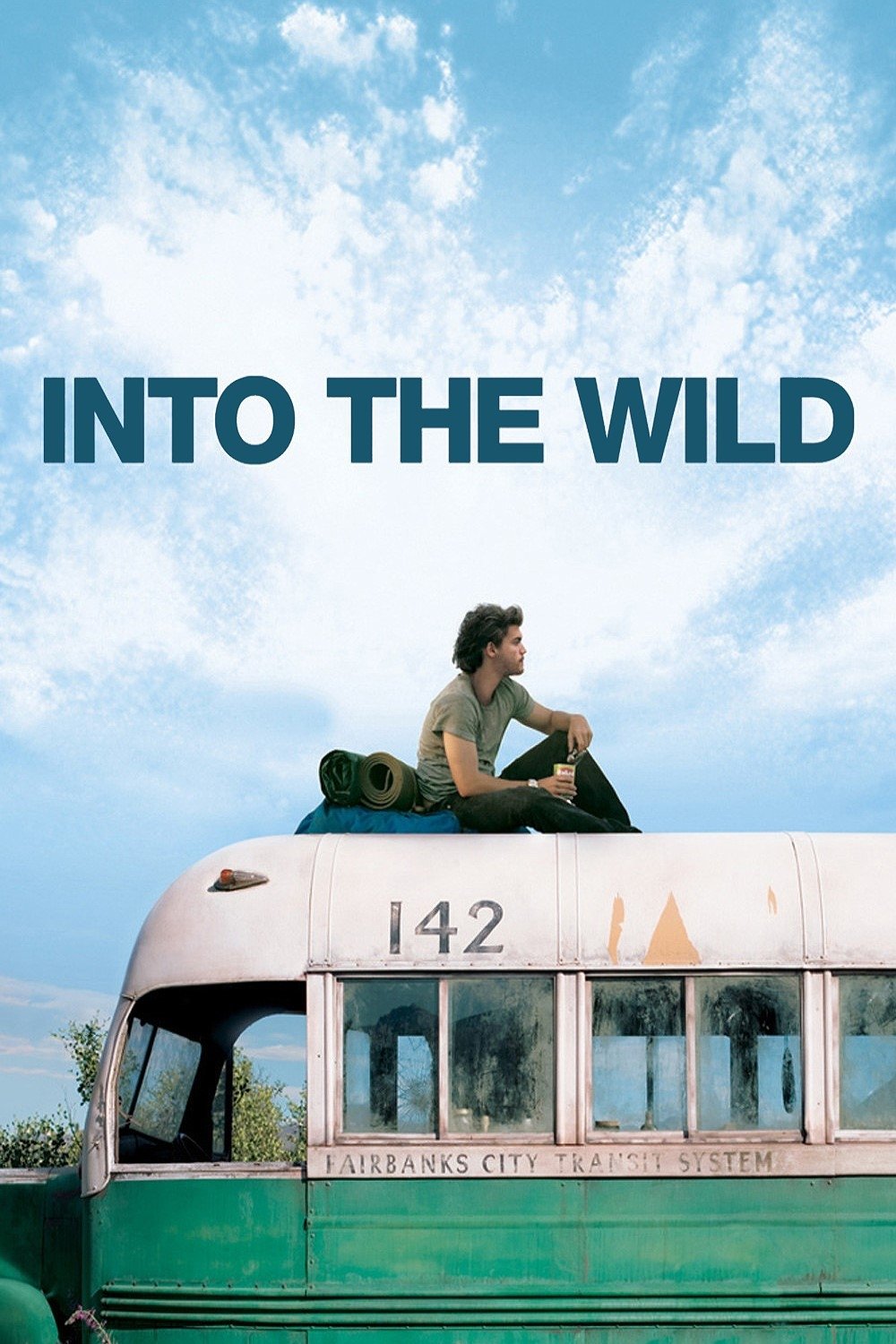
Plot Summary
For me, the journey into a film like Into the Wild begins not just with the story but with a deep sense of anticipation—knowing I’m about to step into the vast, unpredictable wilds portrayed by director Sean Penn in this 2007 drama. The film centers on the life of Christopher McCandless, a freshly graduated young man who, instead of following the prescribed route of career and social expectation, sheds his possessions, donates his savings, and embarks alone into the American wilderness. Strongly inspired by Jon Krakauer’s non-fiction book, the movie maps McCandless’s transformation into “Alexander Supertramp,” detailing his encounters with strangers who, on his odyssey, become as pivotal as any physical challenge he faces.
What I discovered was that Into the Wild is driven not by a traditional plot but by a feeling—restlessness, defiance, and longing. Without spoiling the core revelations, I want to say that each chapter of his journey introduces him to new landscapes and faces: a pair of hippies in the desert, a gentle old man with his own regrets, a young girl whose affection is quietly devastating. The story unfolds in a series of vignettes, each illuminating the cost and beauty of choosing a life untethered. The final act of McCandless’s trek—his attempt to “find himself” in Alaska—is, I believe, more gripping for what it withholds than for what it shows directly. Viewers unfamiliar with the real-life story may want to brace themselves if they choose to dig further into history: the ending, and the fate of its protagonist, carry weight.
Key Themes & Analysis
I approached Into the Wild ready to be challenged, and I was not disappointed. The movie is deeply invested in the ideals of freedom, escapism, and self-invention, continually circling the big, messy questions: What does it mean to be “authentic”? When does the pursuit of solitude become selfishness? I found myself reflecting on McCandless’s fierce rejection of consumerism, parental expectation, and the comforts of modern life. Unlike so many films that romanticize youthful rebellion, Into the Wild complicates it. We’re drawn to admire Chris’s courage even while recognizing the pain and confusion his choices leave in his wake.
The cinematography is, to my eyes, equally audacious. Penn and his director of photography, Eric Gautier, embrace an epic visual style: wide shots that seem to swallow Chris whole in mountain landscapes or desolate plains. There’s a poignancy in the way the film frames isolation—beauty set against the threat of insignificance. Several sequences forgo dialogue in favor of landscape-driven emotion, with Eddie Vedder’s original score adding a plaintive, searching quality. I noticed how the pacing slows to let the audience sit with nature’s stillness, contrasting brilliantly with the bustling, cacophonous city scenes. It’s not just a stylistic flourish—these visual contrasts make the film’s arguments about civilization and wilderness all the more visceral.
Performance-wise, Emile Hirsch’s work as Chris is the film’s essential anchor. Hirsch doesn’t just mimic the real McCandless—he embodies his contradictions: hopefulness, arrogance, innocence, and growing humility. There’s a rawness in his transformation that I found hard to shake off. Supporting turns, especially from Hal Holbrook as Ron Franz and Catherine Keener as Jan Burres, ground the odyssey in real human ache. For me, Penn’s directorial choices are confident but never overbearing—he allows his actors space to just exist, resulting in a film that feels lived-in and intimate despite its grand scale.
What lingers after the credits is the indelible question: Is Chris a hero, a cautionary tale, or something far less easily classified? The film keeps this ambiguity alive, resisting simplistic judgements and leaving me wrestling with my own values long after viewing.
My Thoughts on the Historical & Social Context
Looking back at 2007, I am struck by how the film’s release echoed the anxieties and aspirations of its era. America was grappling with the aftermath of 9/11, ongoing wars, and an impending economic crash. There was a visible cultural hunger for stories of reprieve, simplicity, and unplugging from the excesses of technology and corporate ambition. Into the Wild arrives as both a balm and an indictment—a reminder of what we lose when the pace of society becomes unlivable, but also a critique of naïve idealism.
On a personal level, I feel like Chris McCandless’s story still resonates in today’s world where disillusionment with traditional success is widespread. We’re living in an age of “quiet quitting,” van life, and digital nomadism. The film’s themes of rejecting materialism and searching for genuine connection feel very much of the current zeitgeist. I found myself thinking about social media’s constant push for authenticity—how often do people today abandon stability for a version of freedom that’s as constructed as the world they left behind? The film’s unsparing look at the costs of radical independence is especially relevant as new generations negotiate the fallout of economic precarity and the lure of escape.
For me, what made the historical timing of Into the Wild so potent is that it dared to revisit the American myth of the wilderness as a place of reinvention, while also asking whose dreams get erased in that process, and at what price. In a world obsessed with optimization and achievement, the tragic beauty of Chris’s story retains its challenge: are we brave enough—or foolish enough—to walk away from it all?
Fact Check: Behind the Scenes & Real History
Diving behind the curtain of Into the Wild revealed a handful of details that genuinely fascinated me. First, Emile Hirsch’s commitment to the role was nothing short of staggering: Hirsch lost more than 40 pounds to depict Chris McCandless’s declining health, performing nearly all his own stunts—including repeatedly wading into a freezing river (the “Teklanika”) that was filmed on location in Alaska. This immersion in the physical ordeal of McCandless’s journey adds a layer of realism that I believe is palpable onscreen.
Second, I was surprised to learn just how involved Chris’s real-life sister, Carine McCandless, was in the film’s production. Penn consulted her extensively, incorporating many of her family’s actual letters and personal insights into the script. That intimacy is evident in the voiceover narration, which I felt avoided melodrama and instead grounded the story in lived experience. This decision to stay authentically close to family memory sets the film apart from more sensational biopics.
Lastly, from a historical perspective, some have debated how accurately the film captures the “why” behind Chris’s fatal decisions. Jon Krakauer’s book proposed a theory involving the consumption of toxic seeds, while Sean Penn’s adaptation emphasizes the emotional undercurrents—alienation from family, idealism, a longing for purity. The film takes necessary dramatic liberties, condensing timelines and focusing on select relationships, but I believe it retains the most vital aspect of the true story: the cost, and sometimes futility, of living on one’s own terms against the wild. The movie’s tremendous fidelity to nature, including shooting at many of the real locations (such as the very bus where Chris spent his final months), is not just technical authenticity—it’s an act of homage and empathy.
Why You Should Watch It
- If you are drawn to stories of rebellion and soul-searching that refuse easy answers, this film will leave you moved, unsettled, and eager to reflect on your own definition of happiness.
- The breathtaking cinematography and immersive performances make the American landscape a living character, offering a visual experience that is as profound as the narrative.
- You’ll encounter a rare, deeply personal meditation on family, freedom, and the price of chasing ideals—one that lingers long after the final scene.
Review Conclusion
For me, watching Into the Wild was like joining a pilgrimage within and without—a film that dares its audience to imagine living beyond the bounds of safety and comfort. What stays with me are the questions it raises about love and loss, courage and naïveté, and what it really costs to leave civilization behind. Sean Penn’s direction, paired with Emile Hirsch’s vulnerable performance and the luminous visuals, is as fearless and searching as the man whose story they tell. While Chris’s journey may not be for everyone—and I often found myself oscillating between admiration and frustration at his choices—I can’t deny that this film commands both my respect and my continued curiosity.
My rating: 4.5/5 stars.
Related Reviews
- Wild (2014) – Watching Cheryl Strayed’s solitary trek across the Pacific Crest Trail gave me much of the same sense of raw vulnerability and personal reckoning as Chris McCandless’s odyssey. “Wild” explores grief, healing, and the limits of self-reliance in a way that’s thematically aligned but from a distinctly female perspective.
- Into the Abyss (2011) – Werner Herzog’s documentary doesn’t focus on the wilderness, but its meditation on fatal choices, life journeys, and human longing for freedom resonated with my feelings after “Into the Wild.” Both works probe the consequences and ambiguities of the road less traveled.
- The Motorcycle Diaries (2004) – For me, this film deserves mention because it follows a youthful vision quest via real landscapes, existential questions, and social commentary. Like “Into the Wild,” it balances romantic adventure with sobering truths, charting the shifts that happen when an idealistic traveler confronts reality.
If you want to explore this film beyond basic facts, you may also be interested in how modern audiences respond to it today or whether its story was inspired by real events.
🎬 Check out today's best-selling movies on Amazon!
View Deals on Amazon