
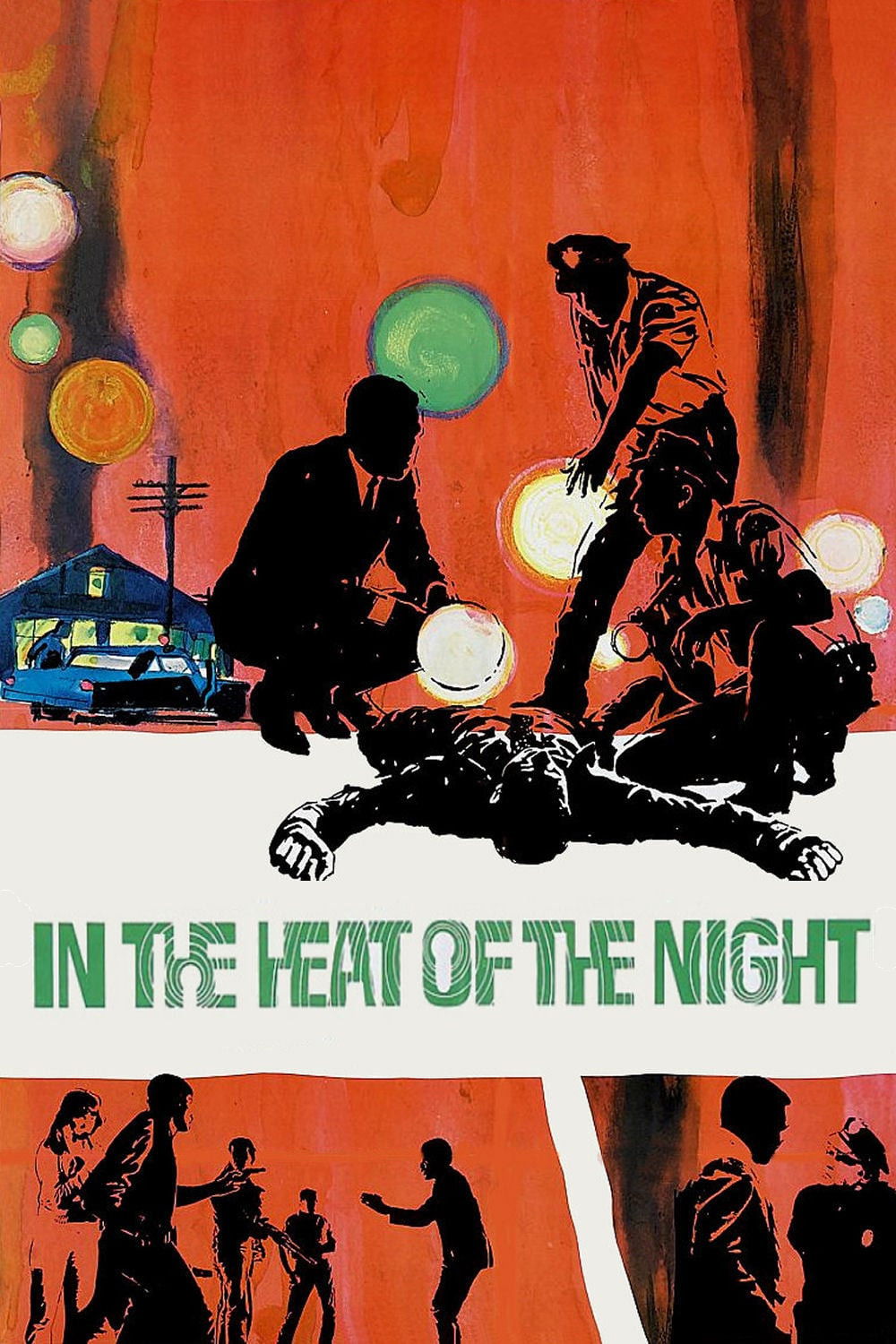
Plot Summary
From the very first moments, I felt the charged atmosphere that only a Sidney Poitier-led drama can conjure. Under the deft direction of Norman Jewison, “In the Heat of the Night” shaped itself into a thrilling tapestry of racial tension, murder investigation, and clashing identities. The film draws me in with its setting: a small Mississippi town tinged with suspicion, heat, and resentment. I watched as Virgil Tibbs, portrayed by Poitier with magnetic stoicism, gets swept into a homicide case after the local police chief, Bill Gillespie (Rod Steiger), reluctantly asks for his expertise. What strikes me most in this story isn’t simply the whodunit structure. It’s how every character interaction carries the heavy weight of decades of prejudice and regional hostility.
Without giving away the vital twists, I can emphasize how each revelation builds not only the criminal case but also Tibbs’ precarious status as a Black man forced to prove himself—over and over, to every new face he encounters. The plot pulses with confrontations, interrogations, and moments of subtle grace that, to me, illuminate the simmering undercurrents shaping the town. I find the police procedural keeps the tension alive, but it’s the interplay between Tibbs and Gillespie—where suspicion morphs into the begrudging respect—that truly captivated me throughout.
Key Themes & Analysis
As I reflect on the themes, what stands out is the film’s fearless dissection of prejudice and social hierarchy. “In the Heat of the Night” doesn’t skirt around the ugliness of racism; instead, it reframes the detective genre as a powerful lens through which to examine who gets to speak, command respect, and seek justice. Every scene seems designed to make me question where authority truly resides and whether integrity can survive in hostile soil.
Poitier’s performance as Tibbs anchors the entire film in a quiet, resolute dignity. He internalizes rage, indignation, and pride, communicating it all through subtle expressions and immovable posture. When Tibbs finally utters the now-iconic line, “They call me Mister Tibbs!”, I feel it’s not just a demand for respect, but a seismic shift in the dynamics both in that fictional town and in American cinema itself. Steiger, meanwhile, injects Gillespie with a complexity I found surprisingly layered—he’s blustery, bigoted, and yet, as the film progresses, I began to glimpse real humanity and even vulnerability.
The brilliance of “In the Heat of the Night” also lies in its visual choices. I noticed cinematographer Haskell Wexler’s use of lighting and color to accentuate the oppressive heat and the simmering hostilities. The sweat on every brow, the shadowed alleys, the stark, empty streets at night—all serve as a metaphor for the town’s collective discomfort, both literal and philosophical. I’m particularly impressed by the way the film’s pacing never lingers too long on exposition, instead thrusting me directly into confrontations that force the characters—and viewers—to confront uncomfortable truths.
For me, the music underscored everything so perfectly. Quincy Jones’ score brims with blues and emotional tension. Each note seems soaked in humidity and unease, tying together the narrative’s sharp edges. The interplay of music and visuals keeps me riveted, and I’m reminded constantly of how a film can use its technical aspects to heighten its social critique.
My Thoughts on the Historical & Social Context
Watching this film today, it’s impossible for me to separate the story from the America of 1967. The Civil Rights Movement was reaching a boiling point, and “In the Heat of the Night” arrived like a fist slammed on the table—a challenge to both Hollywood convention and mainstream audience complacency. I’m struck by how Poitier’s character refuses to be reduced to anyone’s stereotype, especially in an era when such roles for Black actors were exceptionally rare. The subtext of every conversation, the microaggressions, and the outright hostility Tibbs faces—these are not just dramatic devices; they’re reflections of a country wrestling with itself.
What makes the film resonate with me decades later is that the mechanisms of exclusion, suspicion, and eventual empathy still ring true. The questions it poses—who gets to define justice, who deserves dignity—are as urgent now as they were during that tumultuous summer. I see “In the Heat of the Night” not only as a whip-smart crime story, but as a cultural artifact that confronts viewers with the reality that change is never comfortable or easy. In my eyes, it’s a rare film that understood its moment—and helped shape the cultural conversation that followed.
Fact Check: Behind the Scenes & Real History
I’ve always been captivated by what happens behind the curtain, and with this film, the story behind the story is nearly as fascinating as what unfolds onscreen. I learned, for instance, that Poitier faced extreme real-life danger during production. Because much of the movie was shot in southern Illinois—substituting for Mississippi—due to fears for his safety in the actual Deep South, I realized just how risky a project like this was for its Black lead. In fact, Poitier insisted on staying in the same hotel as the rest of the cast and crew, a detail that to me speaks volumes about the courage required, not just in performing the role but in confronting real-world racism alongside his character.
Another stunning element I uncovered is the film’s subtle historical inaccuracy regarding police cooperation across states. In reality, local authorities in the South rarely called in outside forensic experts as willingly as Gillespie does here, especially from northern areas. Yet, I see how Norman Jewison cleverly bends facts not so much for dramatic convenience, but to make a broader point: the act of asking for help, across boundaries of race and geography, is itself a radical gesture. That’s a narrative choice I find thought-provoking.
One last production detail resonates with me: Rod Steiger’s improvisational approach to Gillespie, particularly the iconic scene where both men share a moment of silent understanding after the heat and noise of conflict. I’ve read that some of these scenes weren’t strictly scripted, and as I watched, the naturalness of Steiger’s reactions stood out—the film felt alive, as if it were balancing on a knife edge between collaboration and chaos.
Why You Should Watch It
- Sidney Poitier’s performance delivers a seismic, career-defining portrayal that elevates the entire film, making it an essential experience for anyone interested in powerful, character-driven drama.
- The storyline weaves social commentary seamlessly into a suspenseful murder investigation, providing both intellectual and emotional impact with every turn.
- The film’s technical artistry—its cinematography, score, and direction—combine for an atmospheric journey that lingers long after the credits roll.
Review Conclusion
Sitting with “In the Heat of the Night,” I keep returning to the depth and texture of its scenes, the sheer audacity of its social critique, and the magnetic pull of its leads. Poitier and Steiger operate at the very top of their craft, delivering not only one of the most gripping mysteries I’ve ever seen but a nuanced meditation on identity, respect, and the uncomfortable road toward mutual understanding. The technical innovations, from Wexler’s luminous cinematography to Jones’ evocative score, all still feel vibrant to me, proving why this film is a staple both artistically and culturally. For its historical significance, its cutting-edge artistry, and its continued relevance, I give “In the Heat of the Night” a 5/5 stars.
Related Reviews
- “To Kill a Mockingbird” (1962): I recommend this classic for its similarly piercing treatment of racial injustice in the American South. Like “In the Heat of the Night,” it uses a crime as the catalyst for moral inquiry and personal growth, with Gregory Peck’s Atticus Finch offering a counterpoint to both Tibbs and Gillespie in his own fight for what is right.
- “Mississippi Burning” (1988): This film, though more overt in its depiction of violence and systemic oppression, echoes much of the tension and urgency I felt in Jewison’s work. Its focus on race relations, law enforcement, and the uneasy search for truth connects directly in tone and thematic substance.
- “The Defiant Ones” (1958): Featuring Poitier in another challenging role, this film examines unlikely alliances forged between white and Black protagonists under extreme circumstances, offering a raw and revelatory exploration of prejudice, empathy, and survival.
- “L.A. Confidential” (1997): Although set in a different time and place, I found its atmospheric crime storytelling and layered social commentary make for a compelling modern companion piece—another film that refuses to limit itself to procedural drama, delving instead into the soul of its city and its characters.
If you want to explore this film beyond basic facts, you may also be interested in how modern audiences respond to it today or whether its story was inspired by real events.
🎬 Check out today's best-selling movies on Amazon!
View Deals on Amazon