
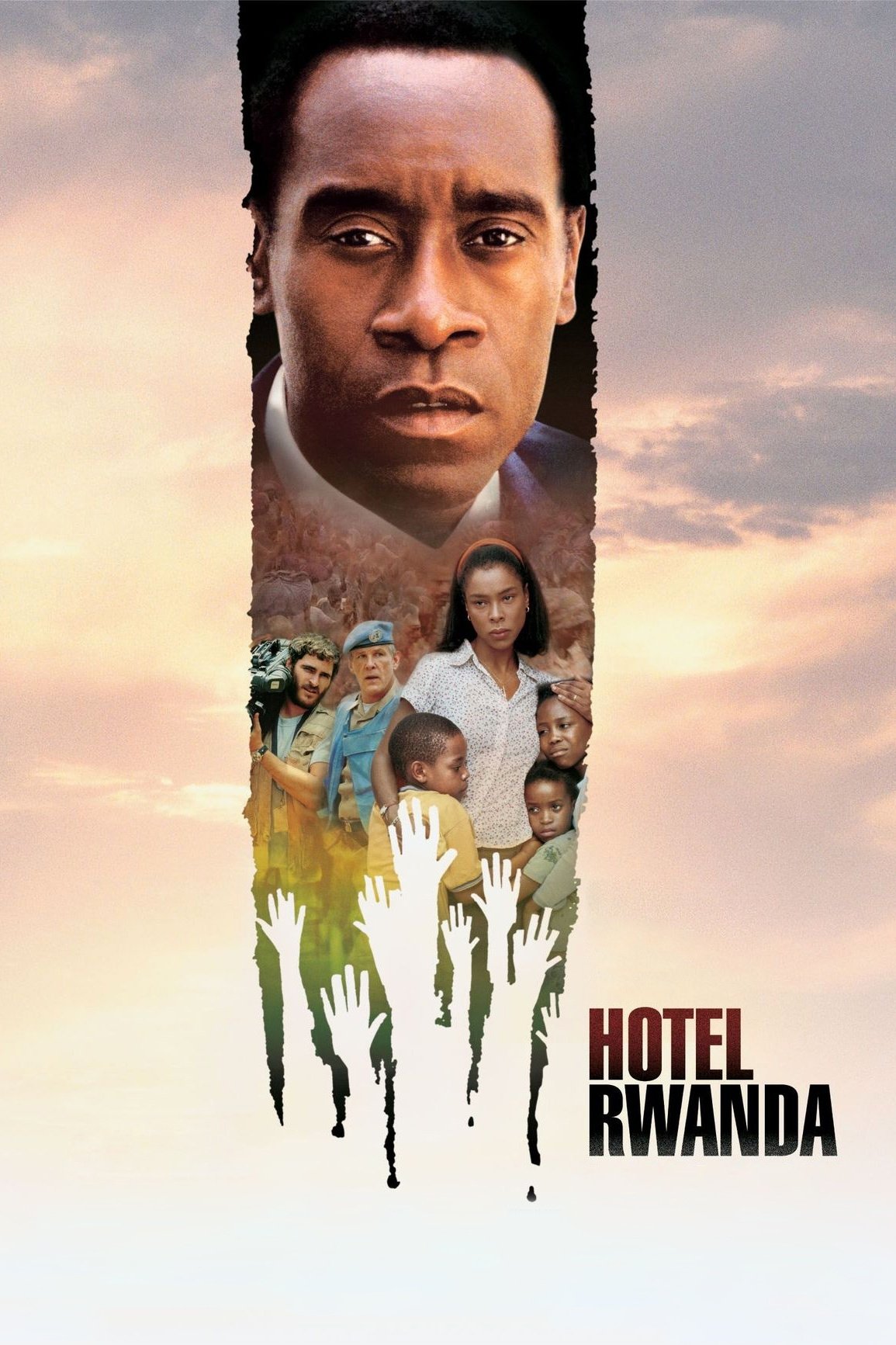
Plot Summary
Walking into Hotel Rwanda, I expected to be shaken, but nothing quite prepared me for its emotional impact. Guided by director Terry George, the film places me right in the heart of the 1994 Rwandan genocide, yet it never turns trauma into spectacle. Every moment is crafted to get under my skin, to demand my attention. The central figure, Paul Rusesabagina, is not a hero in a conventional sense, but an ordinary hotel manager thrust into unimaginable circumstances. As I watched him navigate the chaos and terror erupting outside—and eventually inside—his hotel, I found myself gripped by the small decisions that, collectively, form a kind of quiet rebellion against violence and hatred.
The film traces Paul’s effort to shield his family and hundreds of refugees at the Hôtel des Mille Collines from the threat of massacre. Everyday routines become acts of courage—negotiating with militia, bribing officials, keeping up appearances for foreign guests, and steadily absorbing the mounting pressure. With every scene, I felt the unrelenting tension between individual courage and societal collapse. The screenplay reveals the story mostly through Paul’s unassuming pragmatism, which only underscores the futility of waiting for help from a disinterested international community. The film doesn’t flood me with images of violence. Instead, it focuses on the insidious terror that moves through silent glances, trembling hands, and the impossibility of certainty. I appreciated that while major plot choices are carefully revealed, the movie’s suspense comes from moral decisions as much as physical threats.
Key Themes & Analysis
Hotel Rwanda is, at its core, a deeply personal chronicle of morality under siege. I found the film’s exploration of individual responsibility amidst collective horror to be both harrowing and inspiring. What struck me most was the way the movie rejects the idea of easy heroism. Paul is not a savior designed for the big screen; he’s a resourceful everyman who sometimes acts out of fear as much as conviction. In this way, the film raises questions about how far a person will go to protect others, and what it means to stand up against injustice when the world looks away.
The cinematography unsettled me in ways I hadn’t anticipated. Unlike flashy action dramas, there’s a restrained intimacy here. The camera draws in close on faces—especially Don Cheadle’s, who delivers a nuanced, unforgettable performance. The moments that haunted me weren’t just filled with violence, but with desperate negotiations, whispered pleas, and hollow stares. Every frame supports the immersive realism, reminding me that these events weren’t distant history for the people who lived them.
George’s direction feels quietly confident. There’s no attempt to glorify suffering; instead, the film confronts me with the limitations of intervention, even as it celebrates the small acts of defiance that keep hope alive. The supporting cast deserves their due as well, with Sophie Okonedo bringing a sense of lived-in reality to her role as Paul’s wife, Tatiana, and Nick Nolte lending gravitas to the conflicted UN colonel. Together, they strip away any lingering notions of outsiders as unambiguous saviors.
What makes the storytelling so resonant is its refusal to let me distance myself; the terror and heartbreak feel personal, no matter how many years have passed. I walked away rethinking the cost of apathy, the meaning of duty, and the ways in which history judges—or forgets—acts of conscience.
My Thoughts on the Historical & Social Context
Watching Hotel Rwanda as someone deeply interested in history, I often wondered what it meant to experience the story in 2004, just a decade after the genocide. The world was still reckoning with global interventions and failures to prevent atrocities in places like Bosnia and Rwanda. I remember the headlines about Darfur at the time; the implications felt painfully current. The filmmakers made deliberate choices to ask audiences—then and now—not to look away from horrors that happen out of sight, or to people deemed “other.”
For me, the film’s relevance has only grown in an era of renewed ethnic conflicts and the persistent failure of the international community to intervene effectively. Perhaps that’s why certain scenes hit me with such force. Strong moments, like the doors closed to desperate refugees or the UN soldiers bound by inadequate mandates, echoed not just the past but ongoing headlines. I understood that the movie’s challenge wasn’t simply to record history, but to hold a mirror to our present-day responsibilities.
One reason the film continues to matter, in my opinion, is its reminder that heroism is often thrust upon ordinary people when institutions fail. Every act of hospitality, every effort to maintain dignity in the face of hate, becomes a radical statement. I believe that when audiences see themselves in Paul’s uncertainty and resolve, the distance between “us” and “them” collapses. That’s why I still recommend this film, not as a cautionary tale from a distant era, but as a warning and a call to empathy in our own time.
Fact Check: Behind the Scenes & Real History
Delving into the film’s production history opened up even more layers for me. I was fascinated to learn that Don Cheadle’s casting as Paul Rusesabagina wasn’t always a foregone conclusion. The producers auditioned several other actors before recognizing the depth and subtlety Cheadle brought to the role—his performance, restrained yet urgent, became one of the most critically celebrated aspects of the movie. Cheadle reportedly met with the real Rusesabagina to understand his voice and mannerisms, which elevated the role beyond caricature or sentimentality.
Another point of interest: I discovered that the film was shot on location in South Africa, not Rwanda. This choice was driven mainly by security concerns and the need for existing infrastructure—but it also meant the filmmakers had to carefully recreate the atmosphere of Kigali. The use of actual survivors as extras and consultants brought an uncanny realism to several pivotal scenes, making me feel the invisible weight of collective memory shaping every shot.
Comparing cinematic choices to the historical record, I found the film generally accurate in depicting the atrocities and bureaucratic indifference. However, some critics and survivors have pointed out that the movie condenses and omits certain harrowing events to make the story more palatable to Western audiences. For instance, the timeline of the siege at Hôtel des Mille Collines was shortened, and some supporting characters were amalgamated for narrative clarity. While dramatic license is inevitable, I felt the core of the story was respectfully preserved.
Why You Should Watch It
- For a nuanced portrayal of courage: The film lets me see heroism as complicated, flawed, and thoroughly human, avoiding clichés or easy answers.
- To understand history through lived experience: Instead of presenting the genocide as distant tragedy, the movie brings history uncomfortably close, making it impossible for me to remain a passive observer.
- Because of the standout performances: Don Cheadle’s deeply felt performance, supported by an exceptional cast, adds authenticity and gravity that linger long after the credits roll.
Review Conclusion
Reflecting on my experience with Hotel Rwanda, I am left with a sense of quiet devastation and profound admiration. Few films have compelled me to question my own responsibilities in the face of injustice as urgently as this one. The artistry lies in its restraint—never shying away from the horror, but always foregrounding the choices and humanity of its characters. The legacy of the film, in my judgment, is its continued relevance: it is a story that shames our failures and honors the capacity for compassion in the darkest times. My rating: 4.5/5.
Related Reviews
- Shooting Dogs (2005): This British drama covers another true account of the Rwandan genocide. I strongly recommend it alongside Hotel Rwanda for its raw depiction of international indecision and the relationship between foreign aid workers and local communities. Shot on location in Rwanda, it brings a contrasting, yet equally devastating, viewpoint.
- The Pianist (2002): Although set during World War II in Warsaw, I see clear parallels in its portrayal of individual survival amid historical atrocity. Both films rely on quiet, understated performances and focus on resilience amid overwhelming odds, making for a complementary thematic experience.
- Sometimes in April (2005): This HBO film offers a more direct, unfiltered look at the Rwandan genocide, tracing multiple perspectives. I found that it works as an invaluable companion to Hotel Rwanda, providing additional context on how ordinary people responded—sometimes heroically, sometimes in complicated, ambiguous ways.
- Beyond the Gates (2005): Like Hotel Rwanda, this film focuses on the moral conflicts of expatriates and Rwandans during the genocide. Visually stark and emotionally charged, it pushes viewers to consider just how complex the choices were when the world closed its eyes.
If you want to explore this film beyond basic facts, you may also be interested in how modern audiences respond to it today or whether its story was inspired by real events.
🎬 Check out today's best-selling movies on Amazon!
View Deals on Amazon