
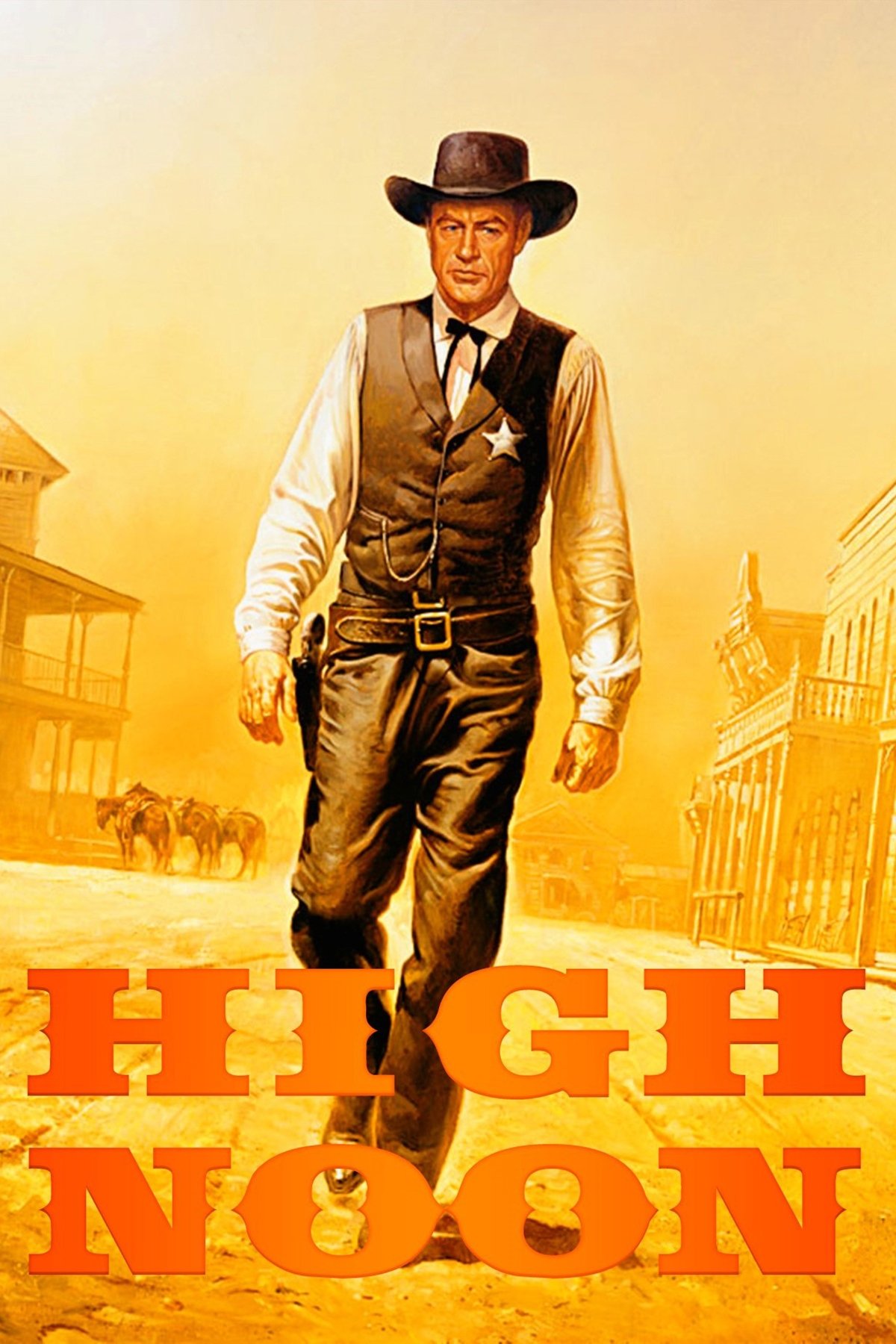
Plot Summary
From the very first time I watched “High Noon,” I recognized something different—something urgent—beyond what I’d come to expect from westerns. The film, directed by Fred Zinnemann, doesn’t unfurl as a traditional cowboy saga packed with gunfights and showdowns for the sake of spectacle. Instead, I found myself drawn into a taut, real-time narrative where the clock’s ticking becomes as lethal as the menacing outlaws themselves. The suspense stems not so much from violence, but from the suffocating isolation and moral wrestling of its central character, Marshal Will Kane, portrayed with haunting gravity by Gary Cooper.
Without diving into major spoilers, I’d describe the story as a stripped-down examination of a man facing retribution from a gang arriving on the noon train—an event he knows will upend his wedding day and peaceful retirement. I was struck by how the story’s power doesn’t reside in epic action set-pieces; instead, the relentless build-up comes from the conversations, the betrayals, and the ticking clock marking every anxious decision. As Kane pleads for help from townsfolk, I was surprised by the depth of their excuses—each reason sharper than any bullet.
Those unfamiliar with the film should know that the plot operates almost in real-time, unfolding over roughly the same 85 minutes you spend watching it. If you want to avoid key spoilers, stop here: The journey doesn’t just test Kane’s resolve but exposes the community’s shifting values, leaving us to wonder—if duty demands sacrifice with little reward, who truly stands by us when the clock strikes twelve?
Key Themes & Analysis
What I find enduringly powerful about “High Noon” is the way it reframes the concept of heroism, dissecting notions of loyalty, duty, and individual conviction in the face of communal abandonment. Zinnemann’s directing is crisp and unyielding—if anything, the technical precision mirrors Kane’s sense of urgency. I’m constantly reminded, watching the camera linger on anxious faces and empty streets, that fear can be far more contagious than courage.
The use of pace in “High Noon” is its unsung weapon. Every shot—every close-up of a ticking clock or a shadowy alley—builds dread instead of excitement. I felt the pressure closing in on me, just as it does on Kane. The absence of triumphant music, the oppressive silence punctuated by the haunting refrain of “Do Not Forsake Me, Oh My Darlin’,” makes every moment heavier. It’s not action but anticipation that becomes suffocating.
Then there’s Gary Cooper. His performance is one of the few I’d call truly internalized—he speaks volumes with a droop of the shoulders or a resigned glance. The vulnerability Cooper brings to Kane demolishes the myth of the stoic, invulnerable Western hero. This isn’t a man seeking glory; he’s desperate, scared, and heartbreakingly human.
I was fascinated by Zinnemann’s use of space and environment. The sun-bleached, nearly deserted town isn’t just a backdrop but a living entity, symbolizing both hope and abandonment. The cinematography, with its stark shadows and glaring midday light, underscores the film’s moral clarity—there are no places to hide, no shortcuts, only hard choices exposed beneath the glare.
But what elevates “High Noon” for me is its unapologetic social commentary. It’s a film about standing alone for one’s beliefs, an allegory that hit especially hard during the era of McCarthyism in America. The cowardice of the townspeople, their rationalizations, and the isolation of the individual confronting injustice resonate with anyone who’s ever felt abandoned by the group for doing what’s right. I can’t help but see it as a parable not just for its time, but for any era where conscience becomes costly. This is what keeps the film relevant—and unsettling—after all these years.
My Thoughts on the Cultural Impact & Legacy
When I reflect on why “High Noon” matters to me, it’s more than just its surface excellence. This film fundamentally redefined what a western, or frankly any genre work, could achieve in terms of complexity and conscience. For years, I saw cowboy tales as escapist fare—hero rides in, saves the day, rides off. But “High Noon” shattered that illusion. Here, the real tension comes not from an external villain, but from the pressure of principled loneliness and the ugliness of collective fear.
Its influence echoes through generations of movies that deal with protagonists abandoned by their supposed allies. Every time I watch a film where a hero must go it alone because doing the right thing is unpopular, I trace that lineage back here. Filmmakers from Sergio Leone to modern auteurs have borrowed this palpable tension and ethical ambiguity, using isolation and time as their primary antagonists.
Personally, I return to “High Noon” whenever doubts creep in about the relevance of old Hollywood. This isn’t a relic to me—it’s a living reminder of the risk and artistry possible when a movie dares to confront uncomfortable truths. The courage of its convictions—both onscreen and behind the camera—is something I hold as a curator of great films. I’m continually stunned by the way it prompts debate, whether at film clubs, classrooms, or in whispers among cinephiles. Its legacy is not nostalgia, but challenge: will we stand up when it’s hardest, especially if everyone else sits down?
Fascinating Behind-the-Scenes Facts
As someone fascinated by the nuts and bolts of filmmaking, “High Noon” has no shortage of compelling production stories. Notably, Gary Cooper’s casting came at a challenging point in his career—he was considered somewhat past his prime. The role rejuvenated him, and his nuanced performance ended up winning him the Academy Award. I find it deeply moving that an actor facing industry doubts gave such a vulnerable performance about perseverance under pressure.
Another captivating tidbit: The screenplay, written by Carl Foreman, was irrevocably shaped by the politics of the era. Foreman was blacklisted by Hollywood due to alleged Communist sympathies during production, which charged the movie’s theme of moral courage with even more personal stakes. I’m always astonished at how the fear and ostracism looming over the project seeped into every frame—it becomes impossible to separate the art from the lived experiences of its creators.
And then there’s the technical accomplishment. Zinnemann’s decision to shoot much of the film in actual real-time was almost unheard of in its day. The relentless ticking clock isn’t just a narrative conceit—it meant meticulous scheduling and on-set discipline. I marvel at how this practical challenge elevated the film’s atmosphere, placing viewers right in Kane’s shoes as the minutes slip away.
Why You Should Watch It
- It’s a masterclass in building suspense, where real-time pacing turns every second into a source of tension I haven’t felt in any other western.
- The film’s exploration of moral choices and the cost of integrity speaks louder today than ever, making it a significant touchstone for anyone interested in cinematic courage.
- Gary Cooper delivers a performance so raw and affecting that it redefined what a Western hero could be—and continues to inspire actors and filmmakers alike.
Review Conclusion
For me, “High Noon” remains that rare classic that deepens every time I watch it—its tight pacing, morally thorny landscape, and emotional honesty never lose their edge. Every frame feels urgent, relevant, and alive with unsparing questions about bravery, duty, and the cost of silence. I always find myself wrestling with my own notions of courage long after the credits roll. My rating: 5/5—an uncompromising landmark I believe every film lover should experience at least once.
Related Reviews
- “Shane” (1953): I recommend “Shane” for its more introspective look at the myth of the gunslinger and the costs of violence. Like “High Noon,” it transforms the Western genre, inviting us to question what it means to be a hero—or an outsider—within a conflicted community.
- “3:10 to Yuma” (1957 & 2007): Both versions of this classic riff on similar themes of duty and personal sacrifice under impossible odds. The relentless ticking clock and moral ambiguity echo “High Noon” in vital ways, giving audiences a parallel journey into the soul of the Western antihero.
- “The Ox-Bow Incident” (1943): For anyone taken by the social allegory in “High Noon,” this earlier drama offers a powerful meditation on mob mentality, justice, and conscience. Its stark narrative provides a sobering companion piece for those interested in the darker questions raised by frontier law.
- “Rio Bravo” (1959): John Wayne’s riposte to “High Noon” stands as a fascinating counterpoint. Watching “Rio Bravo” alongside “High Noon” illuminates divergent philosophies about heroism, community, and standing up under pressure—themes I can’t stop debating.
For readers looking to go deeper, these perspectives may help place the film in a broader context.
🎬 Check out today's best-selling movies on Amazon!
View Deals on Amazon