
Plot Summary
I’ll admit, stepping into Häxan for the first time felt like diving into a fever dream from another era. Since the film is almost a century old, its storytelling doesn’t follow the familiar beats of modern horror or documentary, but that’s part of its strange charm. The Swedish-Danish silent film, shepherded by director Benjamin Christensen, weaves through a tapestry of vignettes surrounding witchcraft and the historical roots of superstition. I was struck by how Christensen structured his “lecture”—it’s not really a conventional narrative. Instead, he juxtaposes images of medieval engravings, staged re-creations of rituals, and essays on witch trials, knitting together historical study with macabre theater. Rather than unfolding like a straightforward story, it’s a mosaic of chilling scenes and eerie tableaux that gradually immerse me in the paranoia and fascination surrounding witches. For those wary of spoilers, rest assured: the journey is more about sensations than plot twists, with the horror lying in the universal dread of the unknown, and not a specific reveal.
Early on, I was absorbed by the film’s “scholarly” approach, blending pseudo-academic intertitles with unsettling dramatizations. We visit scenes of inquisitions, confessions extracted through torture, and the feverish delirium of mass hysteria. There’s a recurring motif of ordinary women—outsiders, healers, or simply the unlucky—branded as witches, their lives derailed by ignorance and fear. By the time the film pivots towards early twentieth-century psychology, drawing links between “witchcraft” and mental illness, I felt both disturbed by the injustices and fascinated by Christensen’s uncannily modern analysis. The plot isn’t so much a straight road as an escalating spiral: one that depicts society’s darkest rituals as well as its slow awakening.
Key Themes & Analysis
What keeps Häxan alive in my mind long after viewing is how it snatches away the safe distance of history, forcing me to look into the face of our collective past. The recurring theme of blind superstition and its social consequences is the film’s living core. For me, it’s not merely about witches; it’s a study in how societies construct “others,” projecting their anxieties onto anyone who doesn’t conform. There’s real horror in watching these scenes of persecution—not because of supernatural menaces, but because of how real people become collateral damage in the name of righteousness.
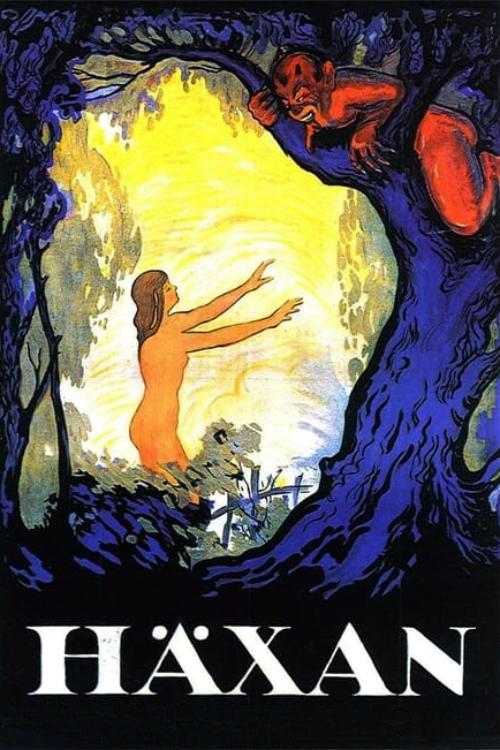
I’m drawn to how Christensen mixes documentary flourishes with a visual language borrowed from horror and surrealism. The film’s aesthetic is relentlessly inventive: gnarled hands, contorted faces, stark shadows, and feverishly imaginative set-pieces. Scenes such as the wild Sabbath dances or the grotesque torture-chamber sequences linger with me due to their hallucinatory detail. The montage of witches flying through the night—suspended by wires—isn’t just a technical marvel for its time, but emblematic of how the film blurs reality and nightmare. The use of special effects, makeup, and optical tricks feels radical even now, creating a sense that truth and myth are intertwined in every frame.
The performances deserve their own spotlight. While silent cinema often teeters between theatrical exaggeration and rawness, here, I was surprised by the subtlety with which fear and hysteria are portrayed. The women accused of witchcraft (many played by non-professional actors) exhibit a despair that is chillingly human, and I found myself believing their panic and resignation far more than I expected. When Christensen himself turns up as the Devil, the screen ignites—not because he’s menacing, per se, but because the performance makes evil seem both ridiculous and horrifying, as if the roots of social panic lie not in monsters but in our own grotesque impulses.
One of the most haunting elements is the shift from medieval superstition to modern diagnoses. The film’s concluding arguments—suggesting that many so-called witches were likely suffering from illnesses misunderstood in their time—strike me as eerily prescient. There’s compassion here, and an undercurrent of anger, aimed at systems that punish vulnerability. What makes Häxan enduring for me is that it forces viewers to ask how much society has really changed when it comes to scapegoating and hysteria.
My Thoughts on the Historical & Social Context
Watching Häxan through the lens of its own era, I’m always amazed by how bold Christensen’s vision was for 1922. Europe was still reeling from the psychic wounds of the First World War—an environment of shattered certainties and social anxieties. I felt the film’s obsession with the dangers of unchecked belief reflected contemporary fears of mass irrationality. Christensen was not just chronicling the past; he was, in my mind, issuing a warning to modern audiences about what happens when reason collapses and fear takes its place. The linking of witch hunts to more modern forms of mass hysteria—such as the treatment of women, the persecution of outsiders, or the growing authority of nascent psychology—lends the film a relevance that hasn’t faded with time.
For me, Häxan is as much about the fragility of truth as it is about the supernatural. I can’t help but see parallels between the waves of suspicion in medieval times and current-day moral panics—whether rooted in religion, politics, or technology. The anguish on the faces of those accused in the film resonates with the knowledge that our social institutions still sometimes fail those who are most vulnerable. I appreciate how the film’s silent format, far from being primitive, strips away distractions and forces me to really confront the images and their implications.
It’s intriguing how the film treats its “monsters.” Witches here are not the villains—ignorance and power are. In the hands of less subtle filmmakers, the grotesque imagery might glorify the supernatural dangers. Instead, I see a critique of the systems that scapegoat women and other marginalized people for society’s misfortunes. The transition to a sympathetic, scientific perspective by the documentary’s end is revealing. I think Christensen was deeply invested in challenging the boundaries of acceptable discourse at a time when challenging dogma could result in censorship, scandal, or both.
Why does the film still feel so immediate to me today? Frankly, it’s because the struggle between reason and panic is as alive as ever. The conversation about who gets to define “normal” or “dangerous” or “other” still echoes through modern controversies. Häxan’s horror feels so modern precisely because the mechanisms of demonization—gossip, institutional power, willful ignorance—are perennial. Its psychological insight into the roots of collective fear and its compassion for the wrongly accused never lose their sting, regardless of era.
Fact Check: Behind the Scenes & Real History
Digging behind the curtain of Häxan reveals a production as unconventional as the film itself. One detail I love: Christensen spent years researching historical documents, paintings, and the Malleus Maleficarum (a notorious witch-hunting manual) before beginning the shoot. That level of scholarly obsession explains the richly detailed costumes and the authentic sense of time and place. The set design and makeup effects were so elaborate that early Danish censors reportedly worried the film might inspire occult activity.
Another aspect I find compelling is the casting. Christensen famously cast his own housekeeper, Maren Pedersen, in the role of Maria the accused witch. She wasn’t a professional actress, but her stoic, almost haunted presence gives the film a documentary gravitas that a seasoned actor might not have achieved. This casting choice makes the suffering and confusion of the accused feel heartbreakingly real to me, not just theatrical artifice.
Finally, I’m always fascinated by the film’s technical innovations. Häxan uses double exposures, stop-motion, and early animation to create scenes of flying witches and demonic apparitions. One standout moment—Sabbath feasts filled with writhing demons and nightmarish beasts—required painstaking frame-by-frame work. For a 1922 film, these effects are nothing short of revolutionary. Where many films of its era stick to the stage-bound, Häxan aims for the dreamlike and the surreal—pushing silent cinema into territory usually reserved for later experimental filmmakers.
Why You Should Watch It
- It’s a groundbreaking experiment in blending horror and documentary, creating an experience unlike anything else in silent cinema.
- The film’s commentary on mass hysteria, scapegoating, and the roots of superstition remains hauntingly timely and relatable.
- Technically and visually, Häxan delivers unforgettable sequences that still impress with their creativity and ambition.
Review Conclusion
In my years of watching and critiquing films, I’ve rarely encountered anything quite like Häxan. This isn’t just a silent film curiosity or an early horror artifact—it’s a feverish, inventive probe into the ways we manufacture fear and police the boundaries of our own communities. I continue to find new layers in Christensen’s vision: a sharp critique of power, a plea for compassion for the misunderstood, and a technical marvel that still captivates almost a century later.
Whether you’re drawn in by the gothic imagery, the sociological commentary, or simply a desire to see something truly different, Häxan remains essential viewing for cinephiles, students of history, and anyone curious about the dark roots of our collective imagination. For me, its ability to provoke, disturb, and enlighten makes it an enduring classic.
My rating: 4.5/5 stars.
Related Reviews
-
The Passion of Joan of Arc (1928)
Dreyer’s silent masterpiece dives deep into hysteria, persecution, and the thin line between religiosity and mania—a perfect companion piece to Häxan with its relentless focus on the tragic consequences of institutional fear. Both films are pioneering in their depiction of female suffering at the hands of authority and highlight how society often creates its own “devils.”
-
The Seventh Seal (1957)
Though made decades later, Ingmar Bergman’s reflection on mortality and faith during the time of the Black Death echoes Häxan’s atmosphere and themes. I find both films unafraid to confront the existential dread of their eras, using powerful imagery to question what it means to live with (or against) spiritual anxiety.
-
The Cabinet of Dr. Caligari (1920)
Its surreal visuals and focus on distorted perceptions of reality feel right at home beside Häxan. Both films push the boundaries of the silent medium, but where Caligari is psychological horror, Häxan is social horror—each innovative in its analysis of madness, control, and the power of suggestion.
-
Day of Wrath (1943)
This Danish drama offers an unblinking look at witch hunts and social suspicion, revisiting themes explored by Häxan but in a grimmer, more naturalistic style. For me, the parallels in tone and historical perspective make it a natural follow-up for viewers interested in the consequences of fear-driven justice.
If you want to explore this film beyond basic facts, you may also be interested in how modern audiences respond to it today or whether its story was inspired by real events.
🎬 Check out today's best-selling movies on Amazon!
View Deals on Amazon