
Plot Summary
I still remember the first time I watched Alfonso Cuarón’s Gravity, completely rapt in the dark, the silence of space vibrating through the entire theater. At its core, Gravity drops me not just into a physical orbit, but into a kind of existential one: a space thriller that feels at once impossibly grand and deeply intimate. If you haven’t seen it yet, you should know this is less a traditional narrative and more an experiential odyssey. In the interest of preserving the many tense surprises, I’ll only sketch the premise without venturing into spoiler territory.
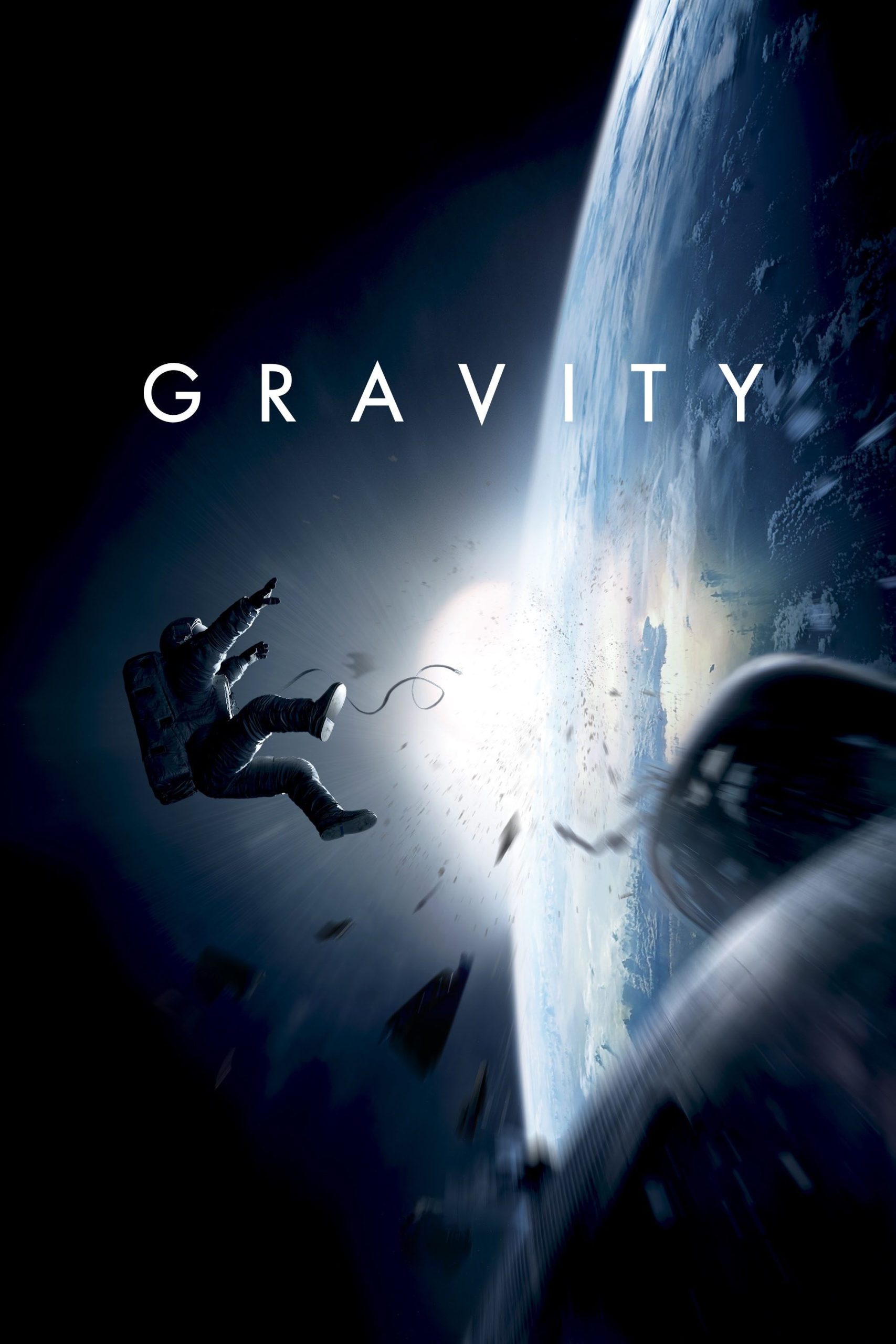
Right from the opening moments, we join Dr. Ryan Stone (Sandra Bullock), a medical engineer on her first shuttle mission, and veteran astronaut Matt Kowalsky (George Clooney), as a routine spacewalk is upended by disaster. What begins as a breathtaking view of Earth quickly devolves into a struggle for survival, with the station obliterated, oxygen depleting, and all hope seemingly tumbling into the void. The plot, as I experienced it, strips away the trappings of traditional space operas. Instead, it’s a raw, minute-to-minute survival tale, where every decision is a gamble and every breath feels hard-won. What I found so unique was the way the narrative grounds its tension not in cosmic threats, but in our own human frailty; the vastness of space becomes a mirror for Stone’s internal battle with grief, loss, and her desperate will to live.
If you’re sensitive to spoilers, I urge you: experience the urgency and desperation of this film first-hand—especially as the story vaults through quiet reflection and panicked turbulence, culminating in one of the most cathartic endings I’ve encountered in science fiction.
Key Themes & Analysis
What struck me most, and has kept this film orbiting in my mind ever since, is its relentless exploration of isolation and rebirth. Gravity isn’t content to dazzle with slick NASA tech or heroic banter. It instead casts an unwavering gaze on what it means to be alone, truly alone, drifting in a silence so complete it’s at once meditative and terrifying. I was drawn in by Cuarón’s masterful manipulation of long takes—some shots last for several minutes without a single cut. These aren’t technical gimmicks; they create a relentless intimacy, as if the camera is as stranded and vulnerable as Stone herself. The effect is uncanny: I felt my own breath slow, my heartbeat thumping along with every pulse of the astronauts’ life signs.
The film’s cinematography, orchestrated by the great Emmanuel Lubezki, is its own kind of protagonist. I remember being stunned by the sheer choreography involved: the camera floats and tumbles with Stone, its point of view shifting effortlessly from omniscient panorama to first-person instability. The use of 3D, which I usually find distracting, felt crucial here. It didn’t just poke objects at the audience; it enveloped me, pulling me into every shudder, every star-lit spin. When cables snap and debris hurtles by, it’s not spectacle for spectacle’s sake—I felt the fragility of human life, the way catastrophe can unfold in an instant.
Beyond the technical prowess, what lingers is Sandra Bullock’s performance. I’ve seen her in dozens of roles, but here she is transformed. Her portrayal of Dr. Stone is raw, stripped bare of pretense. I remember her panic as tactile—mouth dry, voice cracking—as well as her gradual surrender to acceptance and, ultimately, hope. Clooney, ever the charmer, provides just enough humor and calm to ground the terror. Cuarón’s script is spare, the dialogue minimal, which lets every silence fill with meaning. I interpreted this creative choice as a reflection of the vast, uncaring universe Stone must navigate. To me, Gravity is less about space than about the weight carried inside us, how chaos can spur transformation, and how even at our most alone, the urge to survive persists.
Thematically, I see Gravity as a parable of grief—Stone’s journey mimics the stages of trauma and eventual catharsis. She is untethered not only physically, but emotionally, her survival challenged by external forces and internal demons. Cuarón’s direction makes use of visual metaphors—a subconscious rebirth symbolized by a floating fetal position, the flicker of hope cast against infinite darkness. The uncanny quietness of space becomes a crucible, burning away distractions so that Stone (and through her, I) must grapple with what is essential. I emerged from the film with a renewed appreciation for the fragility of life and the tenacity of the human spirit; it’s an existential thriller in every sense of the word.
My Thoughts on the Cultural Impact & Legacy
What continues to astonish me about Gravity is the seismic impact it had on both the science fiction genre and my own appreciation of what cinema can achieve. Rarely does a film so thoroughly upend my expectations of big-budget spectacle—every second in that zero-g environment feels handcrafted, not just technically polished but narratively loaded. For me as a curator, Gravity sits at a pivotal point where spectacle became inseparable from substance. Cuarón didn’t just deliver awe; he delivered awe with emotional heft, a sense of personal vulnerability that I hadn’t felt since classics like 2001: A Space Odyssey.
The film’s success ignited a wave of space epics that tried—and often failed—to emulate its blend of realism and wonder. Its influence is obvious: productions like The Martian and Interstellar arrived after, but for me, Gravity occupies a unique emotional register. It shifted mainstream perceptions of what female leads could embody in science fiction. Before Stone, survival in space was a macho affair, but Bullock’s performance demonstrated a new kind of grit—vulnerable, skeptical, profoundly human. I credit Gravity with opening up the genre not only to more nuanced storytelling, but also to a more diverse kind of protagonist.
Personally, the lasting resonance of Gravity comes from its power to evoke empathy in a setting that almost by definition should be alien. I find it remarkable that a story set hundreds of miles above the Earth could bring me closer to the rawness of loss and endurance. It shaped my belief that science fiction isn’t just about new frontiers “out there,” but about profound journeys within ourselves. I revisit Gravity not for its visuals (magnificent though they are), but for the sense of connection it forges—to loss, to resilience, to the simple, monumental act of drawing another breath.This is a film that defies gravity not just in physics but in emotional weight.
Fascinating Behind-the-Scenes Facts
The technical journey to bring Gravity to life was, in itself, the stuff of legend. I was fascinated, for example, by the invention of the “lightbox”—a 20-foot tall, LED-studded cage that encased Bullock for much of the shoot. This contraption, conceived by Cuarón and his team, allowed them to simulate the constant movement of sunlight, shadows, and reflections in space with unprecedented realism and control. Bullock was basically performing in isolation for hours on end while robotic arms moved cameras around her; for me, knowing this only adds to the intensity of her solitary, fully embodied performance. When I learned this, it struck me just how much endurance and trust Bullock poured into the role—even when she wasn’t floating in actual zero-g, she was at the mercy of technical machinery that had never been used in such a way before.
I also find the development timeline almost as suspenseful as the film itself. Cuarón spent more than four years coaxing the technology to catch up to his vision. Originally, the film was set to star Angelina Jolie and Robert Downey Jr., but protracted pre-production, effects challenges, and Cuarón’s meticulous standards led to cast changes. Bullock came on at just the right moment, a decision I think ultimately defined the project’s emotional core. Reading about these hurdles, I’m reminded that creative tenacity matters as much behind the camera as in front. The movie’s seemingly effortless flow camouflages the years of trial, error, and risk required just to reach the starting gate.
What I found most jaw-dropping in my research, though, is how the sound design shaped the audience’s perception of space. In reality, space is silent—but that doesn’t always translate to compelling cinema. The sound team crafted the film’s audio to immerse us in Stone’s perspective: thunderous impacts are muffled, vibrations transmit through her suit, and even breathing is amplified until it’s nearly suffocating. I doubt I’ll ever forget the feeling of being so present in another character’s headspace, all thanks to a production willing to break away from Hollywood convention in pursuit of authenticity. It’s choices like these that solidify Gravity not merely as spectacle, but as genuine cinematic art.
Why You Should Watch It
- For the unprecedented cinematic experience—this film demands to be seen (and felt) on the biggest possible screen, if only to immerse yourself fully in Cuarón’s vision of zero gravity and emotional vulnerability.
- To witness a tour-de-force performance by Sandra Bullock, who redefines what courage and survival look like for a protagonist in a perilous, unforgiving environment.
- Because it’s a rare marriage of technical innovation and deeply human storytelling—Gravity doesn’t just push special effects, it uses them to forge a truly emotional journey.
Review Conclusion
Reflecting on my journey with Gravity, I see it as much more than a visual spectacle or a nail-biting adventure. It’s a film that moved me, unsettled me, and ultimately inspired me with its portrait of resilience in the face of overwhelming odds. Every frame is infused with purpose—whether it’s a spinning bolt or a whispered prayer, nothing is wasted. Gravity accomplishes what few films do: it makes vast silence feel deafening, and the simple act of survival feel mythic. For all these reasons, I happily rate the film 4.5 out of 5 stars. It’s an essential work, both for genre fans and anyone seeking to connect with cinema’s power to move and transform us.
Related Reviews
- Interstellar – I often recommend this for its similarly stunning visuals, immersive sound design, and soul-searching journey across cosmic frontiers. Both films blend scientific realism with emotional stakes, challenging viewers to consider our place in the universe and the endurance of hope.
- Arrival – Like Gravity, Arrival is a meditation on loss and personal transformation, wrapped in the trappings of science fiction. I’m drawn to its similarly intimate narrative, where communication and memory take precedence over explosive set pieces.
- Children of Men – Another Alfonso Cuarón masterpiece, Children of Men shares Gravity’s ability to balance relentless suspense with profound meditations on humanity, loss, and the fragile hope that can emerge in crisis. These two films together showcase Cuarón’s singular gift for making genre cinema feel intensely, indelibly personal.
For readers looking to go deeper, these perspectives may help place the film in a broader context.
🎬 Check out today's best-selling movies on Amazon!
View Deals on Amazon