
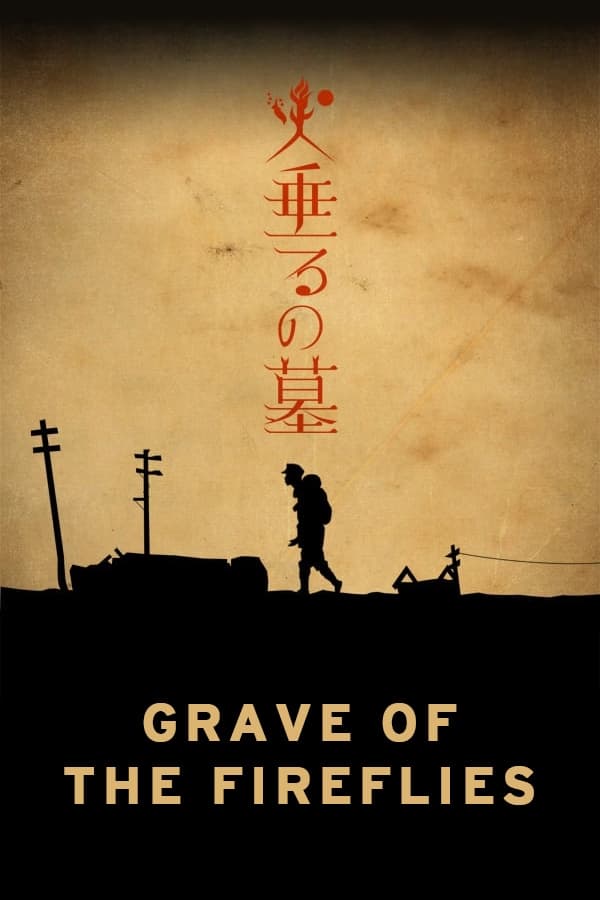
Plot Summary
Even after decades as a critic, there are only a handful of films that shake me to my core every time I revisit them, and Grave of the Fireflies sits unflinchingly at the top of that list. Far beyond what I’d typically expect from an animated film, director Isao Takahata’s wartime masterpiece shatters the clichés of the genre and instead crafts a painfully intimate portrait of sibling survival in the waning days of World War II. The story follows young Seita and his little sister Setsuko, stranded and alone after the firebombing of their city. As the war around them retreats only to reveal a deeper battle for dignity, food, and love, I found myself less a distant observer and more a powerless witness. Takahata employed subtlety where others might have leaned on spectacle, making every quiet moment between brother and sister reverberate with a resonance unique to animation—but deeply, achingly human.
If you’re hoping for a traditional plot-driven war movie, this will surprise you with its focus on daily struggles rather than battlefield drama. The narrative is elegantly straightforward yet emotionally devastating, immersing viewers in the small gestures, the fleeting comforts, and the crushing realities that define Seita and Setsuko’s journey. While I won’t lay bare the final moments (which frankly devastated me on first, second, and fifth viewings), I must offer a warning: Spoilers ahead for those unfamiliar with its ending or the real-world context surrounding these children’s fate.
Takahata’s choice to frame the film through Seita’s eyes grants each moment—be it sharing a rice ball or catching fireflies—its full emotional weight. As the siblings navigate hunger, displacement, and the slow dissolution of their hope, every minute builds toward a shattering but honest illumination of love’s limits in a world consumed by cruelty and indifference. It’s less about what happens and more about the ineffable feeling that lingers once the credits roll—a feeling I find nearly impossible to shake, regardless of how many times I watch.
Key Themes & Analysis
What has always astounded me about Grave of the Fireflies is the way it upends the conventions of animated storytelling. I walked into the film years ago expecting the gentle escapism that Studio Ghibli often provides; instead, I was met with an unyielding humanism that left me changed. The most searing theme, to my mind, is the merciless cost of war on innocents. Instead of focusing on soldiers or generals, Takahata lingers on two children, unmoored and adrift, forced to bear a burden never meant for small shoulders.
The animation itself operates as more than aesthetic; Takahata and his team use soft watercolors and precise brushwork to capture the ephemeral beauty of everyday life amid devastation. There’s a scene where Seita and Setsuko catch fireflies to light their darkened shelter, and I still recall the lump in my throat as the soft glow contrasts with the world’s harshness outside. It’s a reminder that the fleeting joys of youth and innocence shine brightest in the darkest nights—a moment I feel encapsulates the entire film’s heart.
The performances, especially in the original Japanese language version, brought me to tears more than once. Tsutomu Tatsumi and Ayano Shiraishi give Seita and Setsuko an authenticity and vulnerability rarely seen in animation. Their desperation and small joys feel utterly lived—their hunger, their laughter, even their silences, are painted with the brushstrokes of exhausted hope and encroaching despair. I find the relationship between the siblings to be the emotional epicenter of the film. Every sacrifice, lie, and smile carries the haunted knowledge that their world may never return to what it once was.
Directorially, Takahata’s hallmark restraint and refusal to exploit the material for easy sentimentality stays with me most. He never indulges in melodrama; instead, he invites us to notice the sounds of cicadas, the cold glint of river water, the way silence envelops the children after every loss. This minimalist approach amplifies the gravity of what we are witnessing—inviting us to sit in discomfort rather than look away.
Rewatching recently, I found fresh meaning in the way the film is structured as a memory—framed by ghostly images and remembrances. It’s as if Takahata is suggesting that trauma lingers, looping endlessly, waiting for us to acknowledge its presence. In this way, the film is not just about survival, but the slow erosion of what it means to be alive when every institution and adult authority has failed you.
My Thoughts on the Historical & Social Context
When I first encountered Grave of the Fireflies, I was struck by how urgently it spoke to the specific time of its creation, yet how timeless its messages remain. The late 1980s in Japan were a moment of unprecedented economic growth, and with prosperity came a desire to reckon honestly with the past. The country’s cinematic landscape was still processing the memory of World War II and its devastating legacy. For me, the film’s release in 1988 felt like an act of cultural exorcism—an invitation to acknowledge the wounds that lingered long after the bombings ceased.
What stands out is how Takahata refuses to frame the children as mere victims of “the enemy” but rather as casualties of the indifference and systemic breakdowns that plague societies in chaos. Watching the film here and now, decades later, I see in Seita and Setsuko’s ordeal powerful echoes of refugee crises, displaced families, and the neglected casualties of modern conflicts. Their suffering is not rooted in nationality or ideology—it is the universal suffering of all children made invisible by war.
I often think about how the film’s context matters to its original Japanese audience, who would have recognized both the lingering trauma of wartime loss and the potential for societal amnesia in economic recovery. But what stuns me is how raw and necessary the film feels today, as global headlines recount stories of innocent lives upended by conflict. Every time I watch, I am reminded not just of history, but of our continued responsibility to protect the vulnerable—and to remember those who fall between the cracks when institutions fail.
In my view, Grave of the Fireflies still matters because it makes individual suffering visible in a way that statistics and textbooks never can.
Fact Check: Behind the Scenes & Real History
One element I’ve always found fascinating is how deeply personal the source material is for author Akiyuki Nosaka, whose semi-autobiographical novella inspired the film. Nosaka lost his own sister to malnutrition during the war, and I can feel the weight of that guilt in every scene Takahata adapts. This real-life pain grounds the film with emotional authenticity—when Seita makes fateful decisions, I can sense the author’s own search for understanding and forgiveness.
The production process itself was notable for its intensity and Takahata’s creative vision. Unlike many animated films of the time, each character’s movements were meticulously rotoscoped and hand-animated for precise realism. I learned that Setsuko’s movements in particular were modeled on recordings of a young child’s natural behavior, rather than exaggerated for comic effect. This decision brings a heartbreaking believability to her actions—even her silent expressions and subtle gestures cut through me like few performances ever have.
Historically, I always remind myself that while some story beats are dramatized for emotional impact, the depiction of shortages, civilian suffering, and firebombing devastation is rooted in documented historical events from Kobe and other Japanese cities. The scenes of mass displacement, shattered infrastructure, and government impassivity are not embellishments—they echo first-person accounts from survivors. The accuracy with which the film renders the landscape of post-raid Japan stands out as both a tribute and a warning against forgetting the real human cost of war.
Why You Should Watch It
- An unflinching look at the human cost of war—this film made me feel deeply for the lives erased by conflict, pushing me to think beyond abstract statistics.
- Profound emotional storytelling and artistry—the animation, voice work, and music blend seamlessly, inviting you into a lived experience rather than a simple viewing.
- A timeless and globally relevant message—even now, the lessons about empathy, resilience, and loss could not be more essential.
Review Conclusion
Every time I recommend Grave of the Fireflies, I do so with both excitement and a certain amount of caution—because few films have ever left me so emotionally shattered, and so insistent on the necessity of bearing witness. Takahata’s direction, anchored by honest storytelling and devastating visuals, turns a personal tragedy into a universal one. For those willing to engage with its difficult truths, this film is not only a technical and artistic triumph but a vital act of remembrance. It’s an experience I believe everyone should seek out, even at the risk of tears.
My Rating: 5/5 stars—for courage, beauty, and a degree of empathy that few films, animated or not, have ever matched.
Related Reviews
- My Neighbor Totoro – While radically different in tone, I connect these two Studio Ghibli films for their gentle portrayal of sibling relationships and their ability to find hope and wonder in the everyday, even against a backdrop of absence and uncertainty.
- When the Wind Blows – I recommend this animated British film for its unblinking portrayal of civilian fallout in the wake of catastrophe; like Grave of the Fireflies, it crafts an intimate family portrait amidst world-altering events.
- The Boy in the Striped Pajamas – If you’re moved by stories of innocence lost to war, this live-action drama similarly explores a child’s perspective on tragedy and the costs of adult conflicts.
- Come and See – I find this Belarusian film one of the few live-action works with a comparable impact, immersing you in the nightmare of war through a young protagonist’s eyes, with an intensity and artistry that matches Takahata’s vision.
If you want to explore this film beyond basic facts, you may also be interested in how modern audiences respond to it today or whether its story was inspired by real events.
🎬 Check out today's best-selling movies on Amazon!
View Deals on Amazon