
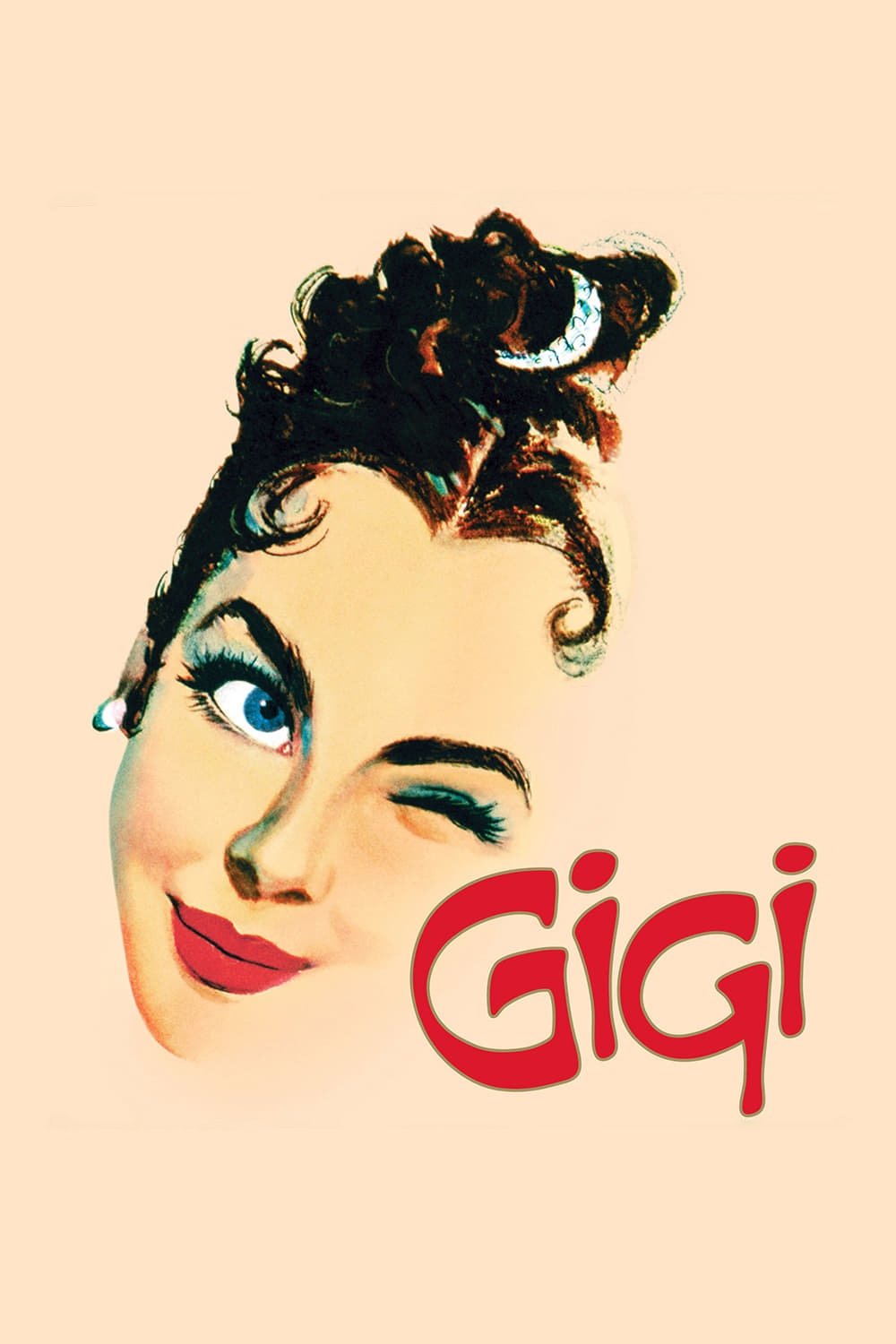
Plot Summary
As I settled into the world of “Gigi,” I was instantly charmed by its lively depiction of Belle Époque Paris—a setting that feels as sumptuous and enchanting as a daydream. Directed by Vincente Minnelli, this romantic musical waltzes through the social circles where wealth and decorum determine everything, introducing me to a youthful, spirited heroine whose coming-of-age story feels as effervescent today as it did in 1958. Delicately walking the line between innocence and sophistication, I watched Gigi—played with infectious energy by Leslie Caron—grow under the sharp-eyed tutelage of her grandmother and great-aunt, both determined to prepare her for the complex marriage market of their time. The film’s plot follows the relationship between Gigi and Gaston, a wealthy bachelor whose ennui with high society is pierced by her natural wit and sincerity. While the story orbits around romance and social maneuvering, I felt it was far more a meditation on how we define love, freedom, and identity within strict societal expectations.
Warning: Minor spoilers ahead. What truly gripped me was the transformation that both Gigi and Gaston undergo. Their journey isn’t marked by sudden plot twists, but rather by subtle shifts in outlook. The musical numbers, from “Thank Heaven for Little Girls” to “The Night They Invented Champagne,” aren’t mere interludes; they’re integral to the storytelling, offering emotional insight and framing the duo’s evolving dynamic. Each scene felt like a rich tapestry, woven not just with lyricism and elegance, but with observation about the performances that perpetuate or challenge social norms.
Key Themes & Analysis
I was struck by how “Gigi” uses its vibrant visuals and lilting score to disguise what is, at its core, a bold, almost subversive critique of contemporary gender roles. The film’s focus on societal grooming, courtship rituals, and the transactional nature of upper-class romances makes it as much a commentary as a fairy tale. For me, the heart of the narrative lies not in the romance itself, but in its dissection of class, agency, and the choices faced by women in a rigidly stratified world.
The cinematography, with its decadent palatial interiors and sunlit Parisian exteriors, offers more than just pretty backdrops. I noticed how the set design ingeniously mirrors the confines of Gigi’s world—her home, though warm and nurturing, doubles as a gilded cage. Minnelli’s direction is smart and self-aware; he uses the musical form to grant characters a license to be forthright about their greeds, fears, and desires. Those moments of song—set against bustling cafés or glittering ballrooms—felt like windows into the characters’ true selves, offering glimpses of authenticity amid societal masks.
The performances are what really lingered with me long after the credits rolled. Leslie Caron captures Gigi’s evolution from playful mischief to self-assured adulthood with subtlety and genuine warmth. Maurice Chevalier, as the charming narrator Honoré, walks the tightrope between avuncular observer and sly social commentator. His delivery of the opening and closing numbers feels light-hearted on the surface, but there’s a poignant nostalgia crackling beneath. Louis Jourdan elegantly inhabits Gaston’s restlessness, his portrayal making the transition from jaded playboy to sincere romantic believable and affecting. What amazed me was how each actor navigates the delicate balance between satire and sincerity: their performances elevate what could have been a simple confection into something richly layered.
I think the film’s musical choices deepen its satirical edge. Where other musicals of the era might shy away from frankness, “Gigi” winks at its own audacity—songs like “The Parisians” slyly catalog social foibles, while “I’m Glad I’m Not Young Anymore” becomes a self-aware lament about lost youth and changing mores. It’s in these moments where I felt Minnelli’s direction truly shines, coaxing performances that are knowing and emotionally honest, even as the characters play their prescribed social roles.
My Thoughts on the Historical & Social Context
Watching “Gigi,” I couldn’t help reflecting on how the late 1950s was a period caught between conservative mores and the dawn of a new, questioning era. The film is set in turn-of-the-century France, but its release came at a time when American culture was grappling with its own identity: post-war optimism mingled with anxiety about changing gender roles and the beginnings of a youth-driven cultural revolution. What I found compelling was how the film uses nostalgia both as a comfort and as a quiet form of critique. The lush costuming and sparkling romanticism seem on the surface to uphold traditional values, but on closer inspection, I see “Gigi” quietly interrogating them.
In 1958, gender and class norms were actively reinforced by mainstream cinema, but here, Minnelli offers a heroine who resists being passively packaged for marriage. Gigi’s wit and self-possession push against the rigidity of Belle Époque etiquette, mirroring contemporary anxieties about women’s autonomy and the pursuit of authenticity within a system designed to curtail it. I find myself admiring how the film’s finale doesn’t tidy away these anxieties, but rather presents them as open-ended—love, in this world, represents not just romance, but the possibility of personal agency.
For me, “Gigi” still feels relevant because it manages to address the tension between tradition and transformation—a subject that continues to preoccupy audiences today. The questions the film raises about choice, freedom, and self-determination are as resonant now as they were over sixty years ago. Watching it, I found myself asking: To what extent are we all shaped—and sometimes trapped—by the roles society assigns us? How do we reconcile the pursuit of happiness with the expectations inherited from our families and our culture? These are questions I see echoed in modern cinema, and they’re the reason “Gigi” persists as a touchstone in discussions about gender and autonomy on screen.
Fact Check: Behind the Scenes & Real History
My fascination with “Gigi” only deepened after diving into its production history and its relationship to the world it depicts. First, I discovered that Leslie Caron was not the first choice for the role—audiences today might be surprised to learn that Audrey Hepburn, herself once a Parisian ingénue on the stage, was initially sought for the part. Caron eventually won over the creative team with her mixture of innocence and confidence. Her casting became a defining element of the film’s success, as her nuanced performance grounds the musical’s whimsy in emotional reality.
I also found the film’s approach to the Parisian demi-monde—an upper class tradition where women were trained as courtesans—both daring and sanitizing in equal measure. In Colette’s original novella, Gigi is initiated into this world with greater bluntness. Minnelli’s adaptation, flagged by the Production Code, transforms the story into a surprisingly frank, yet ultimately decorous, meditation on that social practice. The film’s coded references were a clever means of navigating contemporary censors while retaining the critical heart of the original story.
Another behind-the-scenes tidbit stood out for me: the visual world of “Gigi” is a technical marvel. The film won a then-record nine Academy Awards, including one for Best Art Direction. The opulent costumes and meticulously researched sets were inspired by period photographs and paintings, which lend each frame a painterly authenticity. This immersive attention to detail helped transport me to a time period where every gesture, every glance, felt laden with implication.
Why You Should Watch It
- It’s a masterclass in musical storytelling, with songs and cinematography that feel as fresh and emotionally honest now as in 1958.
- Leslie Caron’s performance delivers a timeless heroine who manages to be both playful and empowered, challenging stereotypes with every line and gesture.
- If you’re interested in films that balance dazzling romance with subtle social critique, “Gigi” offers a rich, layered viewing experience that rewards careful attention and reflection.
Review Conclusion
To me, “Gigi” isn’t just a frothy romantic fantasy—it’s a striking example of how a mainstream Hollywood musical can smuggle subversive questions about gender, class, and identity beneath a glossy surface. Its vibrant performances, especially from Caron and Chevalier, make it both a nostalgic period piece and a surprisingly modern meditation on agency and selfhood. The sensational production design and clever direction elevate what could have been simple escapism into something more lasting and thought-provoking. I continue to be surprised by how relevant its themes of choice and conformity remain, and by how rewarding it is to revisit, whether for the music, the wit, or the underlying commentary. For all these reasons, I happily award “Gigi” a 4.5/5.
Related Reviews
- An American in Paris (1951): Like “Gigi,” this vibrant Vincente Minnelli musical immerses me in a painted Paris and explores the collision of youth, romance, and artistic aspiration. The film’s blend of music, dance, and visual artistry feels like a spiritual sibling, especially for viewers who appreciate lush aesthetics and bittersweet narratives.
- My Fair Lady (1964): I consistently notice striking parallels between Gigi’s transformation and Eliza Doolittle’s journey in this Lerner and Loewe adaptation. Both center women navigating the rigid codes of their eras, and both use song as a means to critique and transcend social boundaries. For those fascinated by musicals that interrogate class, gender, and power dynamics, it’s an essential pairing.
- Moulin Rouge! (2001): This contemporary pastiche captures the same Parisian glamour and melancholy that “Gigi” channels. Though bolder in style, Baz Luhrmann’s film echoes the earlier musical’s fascination with love, societal expectation, and the performance of identity. If you crave a modern spin on lavish, music-driven period romance, this is my personal recommendation.
If you want to explore this film beyond basic facts, you may also be interested in how modern audiences respond to it today or whether its story was inspired by real events.
🎬 Check out today's best-selling movies on Amazon!
View Deals on Amazon