
Plot Summary
From the very first frames, I was absorbed by the cool, noir-infused world director Louis Malle conjures in this 1958 French crime classic. The film unfolds with a hypnotic momentum, refusing traditional thriller conventions. I found myself following two seemingly ordinary lovers, whose dangerous scheme sets off a swirling chain of chance, desperation, and moral ambiguity. While the set-up centers on a murder engineered by these lovers, what grabbed me were the unexpected ripples—a botched escape, a disappeared getaway car, and the relentless passage of hours ticking away inside a claustrophobic elevator. This narrative design turns every small misstep into a fresh crisis, with each character drawn deeper into a web of their own making. I want to caution readers that the true emotional payoff of this film is in the mounting tension and poetic coincidences, so if you haven’t seen it, perhaps skip a full synopsis and savor its revelations in real time.
What I love about “Elevator to the Gallows” is how easily it pivots from intimate close-ups of its anguished leads to wide, rain-soaked Parisian avenues. It feels less like watching a tidy crime story and more like stumbling into a fever dream about fate and regret, where the city itself seems to conspire with the characters’ worst instincts. As events spiral during a single restless night, I watched how love can become entangled with guilt, how chance encounters can upend careful planning, and how even the simplest choice—a locked door, a missed call—carries outsized consequences. At every turn, Malle’s direction kept me one step behind, always guessing where the story might leap next, always haunted by the invisible, ticking clock at its center.
Key Themes & Analysis
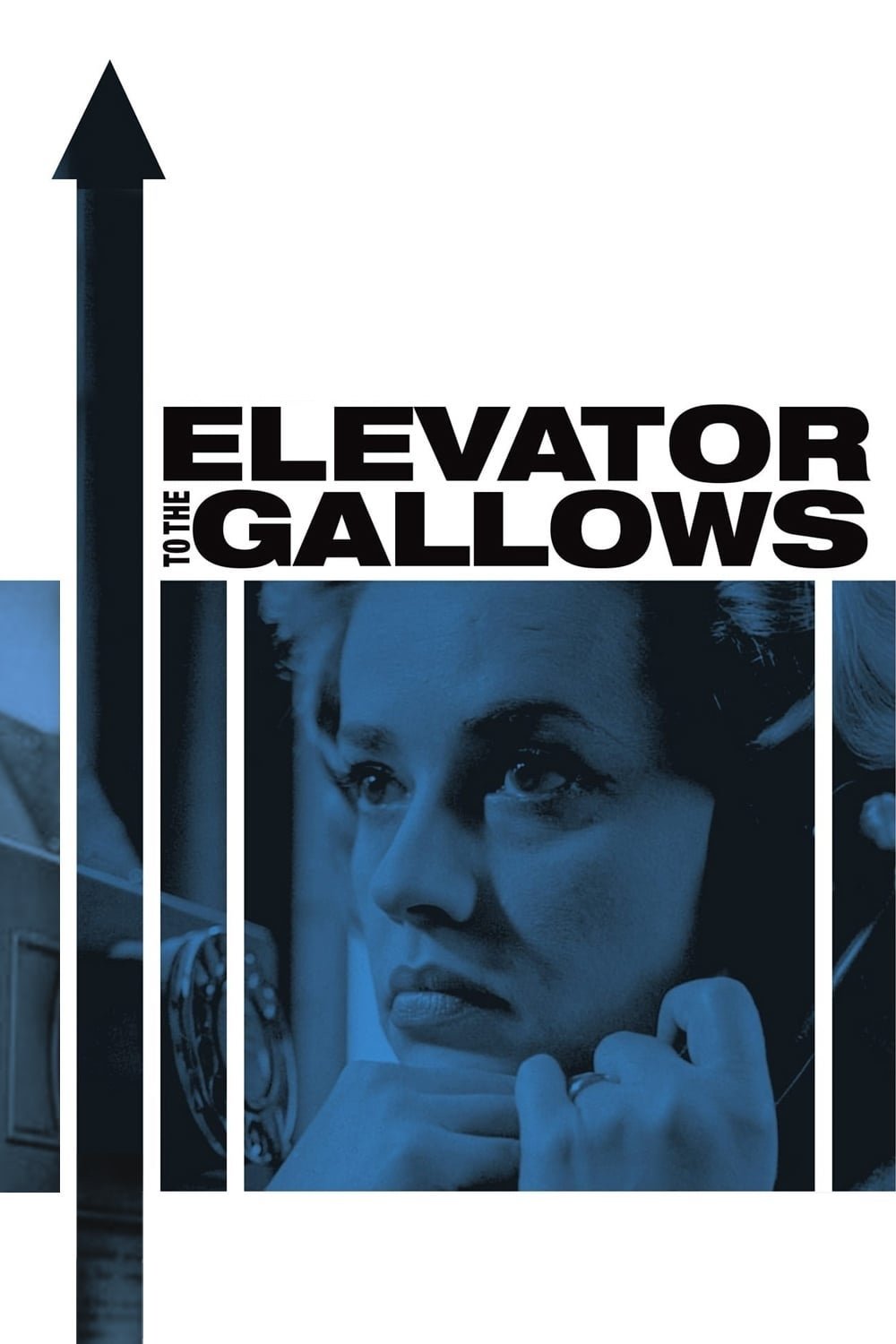
Few films have left me as spellbound by their atmosphere and psychology as this debut by Malle. The most striking theme I noticed is the inexorable pull of fate—how one impulsive act shatters not just lives, but trust, identity, and entire narratives. To me, this is not just a film about crime. It is a meditation on the fragility of our plans and the ease with which ordinary people slide into chaos. I was especially drawn to the way the characters, especially Florence (portrayed by Jeanne Moreau in a tour de force performance), drift helplessly through a city that offers no comfort. Her midnight wanderings, underscored by Miles Davis’s yearning trumpet, are like visual jazz: graceful, mournful, improvisational.
Malle’s directorial choices set this film apart from both French and Hollywood noirs. He is less interested in plot mechanics than in emotional truths. I found his willingness to linger on faces—wracked with fear, longing, or confusion—enormously powerful. It is in those silences and stretches of uncertainty that the tragedy erupts most forcefully. The cinematography by Henri Decaë felt revolutionary during my viewing: the handheld camera work and use of available light create a raw immediacy that strips away safe distance. I felt plugged directly into the urban night, privy to every drip of rain and flicker of anxiety.
The acting, for me, stands as a model of restraint in the service of psychological realism. Moreau, in particular, conjures a character adrift between worlds—marked by hope and horror all at once. Every glance and gesture feels weighted by inner contradiction. Her nocturnal odyssey made me reflect on the limits of obsession and the quiet dignity of despair. Meanwhile, the supporting cast inhabit a range of Parisian archetypes, each contributing to the film’s cruel logic: the aimless youths, the suspicious police, the unwitting bystanders—all orbiting the central crime, unable to break free from its gravitational pull.
The film’s soundscape also demands attention. Miles Davis’s improvised score—famously recorded as he watched the film play—casts a laidback, melancholy spell that deepens the sense of alienation. I experienced each muted trumpet passage as a kind of lament, echoing the feelings of characters who are trapped, misunderstood, or chasing after shadows. For me, it is one of those rare marriages of image and music where soundtrack feels essential, not decorative.
When I step back, I see this film as a study in unintended consequences, moral ambiguity, and the impossibility of a “clean” crime. Its ambiguous ending—refusing simple justice or redemption—has lingered with me for years, a reminder that the real “gallows” lie in the mind rather than the courtroom.
My Thoughts on the Historical & Social Context
It was impossible for me to watch “Elevator to the Gallows” without reflecting on the era in which it emerged. The late 1950s in France was a time of seismic cultural upheaval, when old hierarchies and moral certainties were collapsing in the shadow of both World War II and the colonial conflicts brewing abroad. What fascinated me most is how Malle’s film anticipates the restless energy of the French New Wave, but does so with a noir classicism that makes the rupture feel both thrilling and nostalgic.
I couldn’t help but see the film as a metaphor for postwar disillusionment—these characters are no longer constrained by old codes of honor or patriotism; they instead drift through a city that offers little meaning outside of money, sex, and fleeting escape. As I follow Florence through her solitary journey, I’m reminded how the existential philosophy of the period—echoed by writers like Camus—pervades even the film’s genre trappings. Where American noir often offers solutions (however dark), Malle’s vision feels more bitterly resigned: fate is arbitrary, salvation impossible, and happy endings a lie.
But what really resonates for me today is how relevant these questions remain. Do we still believe in justice, or are we resigned to moral grey zones? When I see the rapid unraveling caused by a few desperate choices, I can’t help but think of our own cynical times, where trust feels fragile and control illusory. The city streets Florence wanders are as haunted by loneliness and anxiety as any modern metropolis. In this sense, the film’s blend of thriller mechanics and existential dread feels as urgent—if not more so—than ever.
Fact Check: Behind the Scenes & Real History
In diving deeper into the story behind “Elevator to the Gallows,” I discovered several details that shifted my appreciation from admiration to awe.
First, the music alone has become legendary for a reason: Malle didn’t commission a pre-written score. Instead, he screened the film for Miles Davis and a cohort of local musicians, who improvised compositions on the spot. The fact that Davis forged one of film noir’s quintessential soundtracks in a single overnight session is, for me, both astonishing and emblematic of the film’s spirit—loose, spontaneous, and packed with emotion.
Second, Jeanne Moreau’s nocturnal Parisian walks were a technical feat. Since Parisian streetlights were dim and the use of heavy lighting equipment would have ruined the documentary feel Malle craved, cinematographer Henri Decaë pioneered the use of ultra-fast film stock. This allowed the camera to capture realistic, moody nighttime footage—a method I learned later became crucial to the emerging French New Wave.
Lastly, the casting process itself was almost accidental: Moreau wasn’t yet a marquee name. Malle, barely in his twenties, fought to cast her over studio objections, sensing that her unconventional beauty and naturalistic style matched his vision for a modern tragic heroine. I’ve often thought how her weary face—far from the lush artifice of many 1950s stars—is as iconic to the film’s identity as its score or its story.
While the plot isn’t directly inspired by a specific real event, its sense of doomed romance and postwar alienation fits uncomfortably close to the mood of France in the late ‘50s. This film may not claim documentary accuracy, but it captures a social truth I find all too recognizable: the way ordinary lives can be undone in a heartbeat, not by grand schemes, but by ordinary, petty errors.
Why You Should Watch It
- You will witness a masterful marriage of noir suspense and psychological depth, crafted by a filmmaker on the cusp of revolutionizing cinema.
- The haunting, improvised jazz score by Miles Davis creates an atmosphere unlike anything I’ve experienced in any other crime film—moody, sensual, and unforgettable.
- The film asks timeless questions about fate, accountability, and the human craving for connection—questions that still feel vitally relevant today.
Review Conclusion
What has always set “Elevator to the Gallows” apart for me isn’t just its technical innovation or genre flair, but its profound empathy for those caught in the undertow of their own choices and desires. The film’s spare, lyrical storytelling and obsessive attention to mood mark it as a vital turning point—not just in French cinema, but in the whole trajectory of the suspense genre. Every time I revisit it, I’m reminded that no plan, no matter how carefully made, can outwit the randomness of fate or the weight of conscience.
If you are willing to immerse yourself in its slow-burn heartbreak and poetic paranoia, you’ll find a film that rewards patient, contemplative viewing. My personal rating: 4.5/5—a near-masterpiece whose shadows still stretch well beyond its closing frames.
Related Reviews
- “Le Samouraï” (1967, dir. Jean-Pierre Melville) – I recommend this film for its similarly icy, minimalist style and existential tone. Like Malle’s work, Melville’s thriller turns the crime genre inward, becoming a meditation on loneliness, obsession, and the ethics of detachment. If you appreciated the ambiance and moral ambiguity of “Elevator to the Gallows,” “Le Samouraï” offers a parallel exploration within the Parisian underworld.
- “The Third Man” (1949, dir. Carol Reed) – This British noir classic pairs perfectly for viewers drawn to themes of betrayal, fate, and postwar malaise. The film’s moody visuals, haunting zither score, and morally compromised protagonist echoed for me much of what makes Malle’s film unforgettable.
- “Breathless” (1960, dir. Jean-Luc Godard) – Watching this immediately after “Elevator to the Gallows” clarified for me how closely the New Wave would soon follow in its wake. Godard’s film explodes genre expectations, embracing jump cuts, street-level authenticity, and restless characters who refuse easy labels. If you want to experience the evolution of French cinema’s approach to crime, alienation, and youth, this is an essential companion piece.
If you want to explore this film beyond basic facts, you may also be interested in how modern audiences respond to it today or whether its story was inspired by real events.
🎬 Check out today's best-selling movies on Amazon!
View Deals on Amazon