
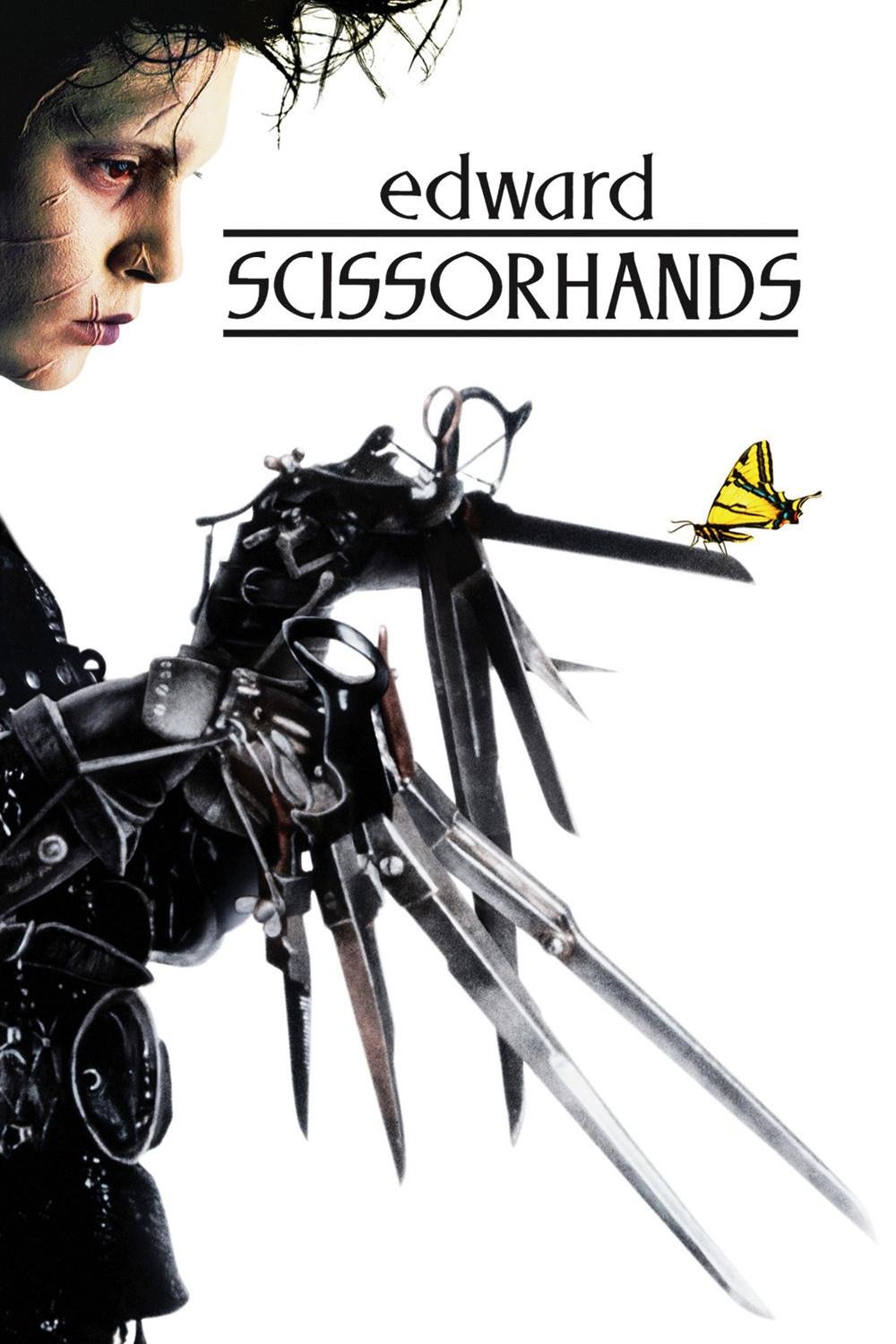
Plot Summary
As I revisit Edward Scissorhands, every frame feels like peering through a frosted window at a world both inviting and dangerous. The story, as imagined by director Tim Burton, introduces me to Edward, a gentle artificial man whose hands are made of sharp blades instead of flesh and bone. This unique predicament defines his existence on the edge—literally and metaphorically. From the opening moment, I’m swept into a pastel suburbia, all manicured lawns and precise routines, where Edward arrives—a relic of his inventor’s wild imagination, and immediately becomes a neighborhood curiosity. He’s discovered by Avon saleswoman Peg, who welcomes him into her home, making him a fixture in the hearts and suspicions of her small community.
I’m continually struck by the film’s balance between fairy tale wonder and underlying darkness—a collision embodied by Edward’s attempt to fit in among people who are both fascinated by and fearful of his strangeness. He’s the ultimate outsider, observing the rituals of “normal” life, yearning for acceptance, and developing a soulful connection with Peg’s daughter, Kim. Despite the film’s dreamlike tone, Edward’s journey is marked by moments of joy and heartbreak, as the story evolves into a bittersweet meditation on conformity, compassion, and the piercing ache of loneliness. Without giving away any major spoilers, I can say I often reflect on how the film navigates Edward’s growing attachment to Kim, the community’s shifting perceptions of him, and the events that push Edward toward an inevitable reckoning with his place in the world.
If you haven’t seen it, I promise the narrative’s surprises are worth experiencing firsthand. I’ll avoid revealing the film’s climax, but the transformation of characters and the evolution of relationships left an undeniable mark on me, both emotionally and visually.
Key Themes & Analysis
What struck me most on my most recent viewing was the persistence of themes of isolation, beauty found in the unexpected, and the dangers of conformity. From the moment Edward lumbers into Peg’s cheery home, I’m reminded how the film positions difference not as something to be feared but as an opportunity for connection. Burton crafts suburbia into a pastel prison, each house a box concealing silent anxieties and unmet desires. The moment Edward uses his unwieldy hands to sculpt hedges—and later, to cut hair—felt to me like a metaphor for artistic expression: his creativity transforms the bland into something magical. I couldn’t help but see in Edward a reflection of anyone who’s ever felt their talents misunderstood or stifled by a society that only values the familiar.
There’s a melancholic ache running through Johnny Depp’s performance, and I believe this shapes the emotional heart of the film. Depp brings a physical delicacy and wounded sincerity to Edward—his eyes wide, movements timid, as if every gesture risks breaking the fragile trust he’s been shown. I find it fascinating how Depp communicates so much with so little dialogue, relying on posture and glances to express Edward’s internal world. The supporting cast brings distinctive flavors to the mix: Winona Ryder’s Kim radiates gentle curiosity and eventual empathy, while Dianne Wiest’s Peg anchors the story with maternal resolve. The antagonism of the neighborhood—veiled at first in curiosity, then escalating to suspicion—rings as true now as it did in 1990. It’s a biting observation on how we, collectively, often destroy what we do not understand.
Cinematographically, I’m consistently amazed at how Burton and his frequent collaborator, cinematographer Stefan Czapsky, employ color and set design. The clash between the monochrome, gothic atmosphere of Edward’s castle and the synthetic cheer of the neighborhood is not just stylistic; it’s an extension of the film’s core conflict. The juxtaposition of lush, shadowy interiors and exaggerated, almost saccharine exteriors visually underlines Edward’s internal struggle between belonging and individuality. The music, too, lingers with me: Danny Elfman’s delicate, haunting score becomes a character in itself, adding air and ache to every key scene.
More than anything, I read the film as a parable about the longing we each carry—whether to fit in or to be accepted for who we really are. Watching Edward move through the world, I keep returning to a single idea: kindness, when it meets vulnerability, is powerful and perilous in equal measure. Tim Burton’s storytelling lingers on this knife’s edge, drawing compassion from pain, and beauty from difference.
My Thoughts on the Cultural Impact & Legacy
Reflecting on why Edward Scissorhands continues to resonate with me—and remains a cornerstone of modern fantasy cinema—I’m struck by how personal the experience of watching it has always been. For me, this film arrived at a time when the cinematic landscape was divided rigidly between safe studio fare and the edgier, less accessible world of indie cinema. Then came Edward: tender, terrifying, impossibly strange. The first time I saw it, I felt like I was being given permission to see beauty in the margins, to celebrate the misunderstood aspects of myself and others. I return to it often because its empathy is so radical—a film that insists, again and again, that vulnerability is not weakness, but a kind of superpower.
Beyond those personal resonances, I believe this film’s legacy is immense. I see its fingerprints on countless later works that blend fantasy, romance, and satire—films that dare to embrace the odd and the offbeat, and foreground emotional sincerity over traditional heroism. The way Edward Scissorhands bridges mainstream visibility and idiosyncratic, almost gothic storytelling directly paved the way for movies like “Big Fish” and “Pan’s Labyrinth.” Burton’s influence as a director expanded from this point outward, giving rise to a generation of filmmakers who view the outsider not as a tragic figure, but as the soul of the story. From set design to costume, from the sound of Elfman’s orchestration to Depp’s haunted visage, I see echoes of Edward’s world in everything from “Lemony Snicket’s A Series of Unfortunate Events” to modern music videos and television.
As a lifelong curator and critic, this film shaped how I champion films that blend genres and challenge expectations. It’s more than the sum of its parts; to me, it’s a call for compassion—a cultural touchstone for everyone who’s ever felt outside the frame. What I love most is how, even three decades later, Edward remains present in conversations about difference, storytelling, and the promise of cinema as a medium for catharsis and acceptance.
Fascinating Behind-the-Scenes Facts
Peeking behind the curtain of Edward Scissorhands only deepens my appreciation. One detail I cherish: Tom Cruise was considered for the role of Edward before Johnny Depp was cast. I shudder to imagine what that version might have felt like—with Depp, the movie achieves a fragile oddness that I can’t see anyone else delivering. What I found especially intriguing was how Depp, desperate to embody Edward’s sensitivity, wore extensive makeup and frequently limited his speech on set to stay in character. That level of commitment radiates from his performance; I sense the vulnerability in every moment, making his Edward as much a creation of body language and silence as anything in the script.
The production design tells its own story. The neighborhood’s unique appearance—those almost surreal, brightly-painted houses—wasn’t accomplished with CGI. Instead, the filmmakers found an actual subdivision in the Tampa Bay area and repainted the homes to achieve Burton’s candy-colored vision. Imagine the logistics of transforming a real block into a living pastel diorama—the result is somehow both comforting and alien, a perfect stage for a modern fairy tale. To this day, that choice stands out as a triumph of practical set design over digital shortcuts, and it’s a testament to Burton’s willingness to ground fantasy in reality.
I’m also fascinated by the small army of prop designers who engineered Edward’s ‘scissorhands.’ Depp underwent hours of fittings and rehearsals just to move in the unwieldy apparatus. This wasn’t comfortable movie magic, but a painstaking process where every click and clatter mirrored Edward’s on-screen awkwardness. That tactile authenticity seeps through the screen; as I watch, I’m acutely aware of the challenges behind every lovingly awkward handshake and accidental snip.
Why You Should Watch It
- A visually stunning, emotionally charged fairy tale that blends fantasy and suburban satire, truly unlike anything else I’ve ever experienced.
- Johnny Depp’s career-defining performance captures vulnerability and strangeness with aching sincerity, making Edward one of cinema’s most memorable outsiders.
- The film’s core themes of compassion and otherness invite reflection on our own society, offering a timeless message about empathy and acceptance.
Review Conclusion
Looking back on Edward Scissorhands as both a film lover and a professional critic, I can say there’s nothing else quite like it—not just because of its unmistakable style, but because it reaches deep into the private corners of my heart. It’s a film I measure others against when I think about what it means to be truly original, and what it means for cinema to offer us a mirror for our own hopes and wounds. The fusion of technical craft, daring direction, and naked emotional honesty is at the core of what I love most in movies. For every scene that made me wince, there’s a sequence that made me soar. In my eyes, this is near-perfect storytelling.
My rating: 4.5 out of 5 stars.
Related Reviews
- Big Fish – Every time I watch “Big Fish,” I feel shades of Burton’s same blend of magical realism and emotional depth that defines Edward Scissorhands. If you’re drawn to stories that intertwine reality and fantasy, and explore complex parent-child dynamics through whimsical lenses, this is essential viewing.
- Pan’s Labyrinth – For me, Guillermo del Toro’s “Pan’s Labyrinth” is a spiritual cousin to Burton’s work. Both films use the language of fairy tales to tackle dark and adult themes, making them powerful meditations on innocence, imagination, and resistance to cruelty.
- Amélie – Watching “Amélie,” I’m reminded of Edward’s gift for finding wonder in the everyday. Jean-Pierre Jeunet’s whimsical Parisian fable shares a profound compassion for outsiders and a knack for uncovering the magic right beneath the surface of the mundane.
For readers looking to go deeper, these perspectives may help place the film in a broader context.
🎬 Check out today's best-selling movies on Amazon!
View Deals on Amazon