
Plot Summary
From the moment I first watched Ryusuke Hamaguchi’s “Drive My Car,” I was captivated by the film’s slow-burning introspection and depth. Often, I find that many contemporary dramas rush their narrative, eager to gratify with quick reveals or punchy moments, but this film embraces patience, lingering on silences and conversations that gradually unravel the soul of its protagonist. The story follows Yūsuke Kafuku, a respected theater actor and director, whose life is set spinning after a devastating personal tragedy—his wife, Oto, passes away, leaving behind more questions than answers. Through a unique set of circumstances, Kafuku is invited to stage a multilingual production of Chekhov’s “Uncle Vanya” in Hiroshima. The production requires that he be chauffeured, leading him into the company of the young, stoic Misaki Watari, whose own mysterious past intersects with his journey in unexpected ways.
While the outline seems straightforward, I felt the plot pulsing beneath with layers of grief, longing, and fragile connection. The fusion of a play within the story, especially the resonance of “Uncle Vanya,” drew me deeper into Kafuku’s psyche. As the rehearsal process evolves and relationships among the cast—each speaking a different language—unfold, the film weaves personal hauntings and unspoken regrets into its narrative fabric. For those seeking spoiler-free insight, I’d say the heart of “Drive My Car” is not about shocking twists, but about the slow and steady revelation of internal truths. (If you wish to avoid even subtle spoilers, you might want to skip past this point, as future sections will discuss some character arcs and underlying motifs.)
Key Themes & Analysis
I find it nearly impossible to discuss “Drive My Car” without beginning with its unflinching exploration of grief and forgiveness. What struck me most was the way the film foregrounded silence—the pauses in dialogue, the tension behind unsaid words—inviting me to notice not just what is spoken, but everything left unspoken. That’s a language I don’t often see on-screen: an emotional syntax that pulses between actor and audience, allowing me to feel not just sympathy, but kinship with Kafuku’s aching loneliness.
The relationship between Kafuku and Misaki is, to my mind, the film’s emotional core. I was struck by the fact that their connection isn’t forged through melodramatic revelations or forced camaraderie, but through gradual, mutual recognition of shared pain. Their car rides, rendered in Hamaguchi’s trademark long takes, gave space for me as a viewer to meditate on their interior landscapes—almost as if the car itself became a confessional booth on wheels. This literal journey, paired with the metaphoric journey through grief, allowed me to engage with the film at an unusually introspective level.
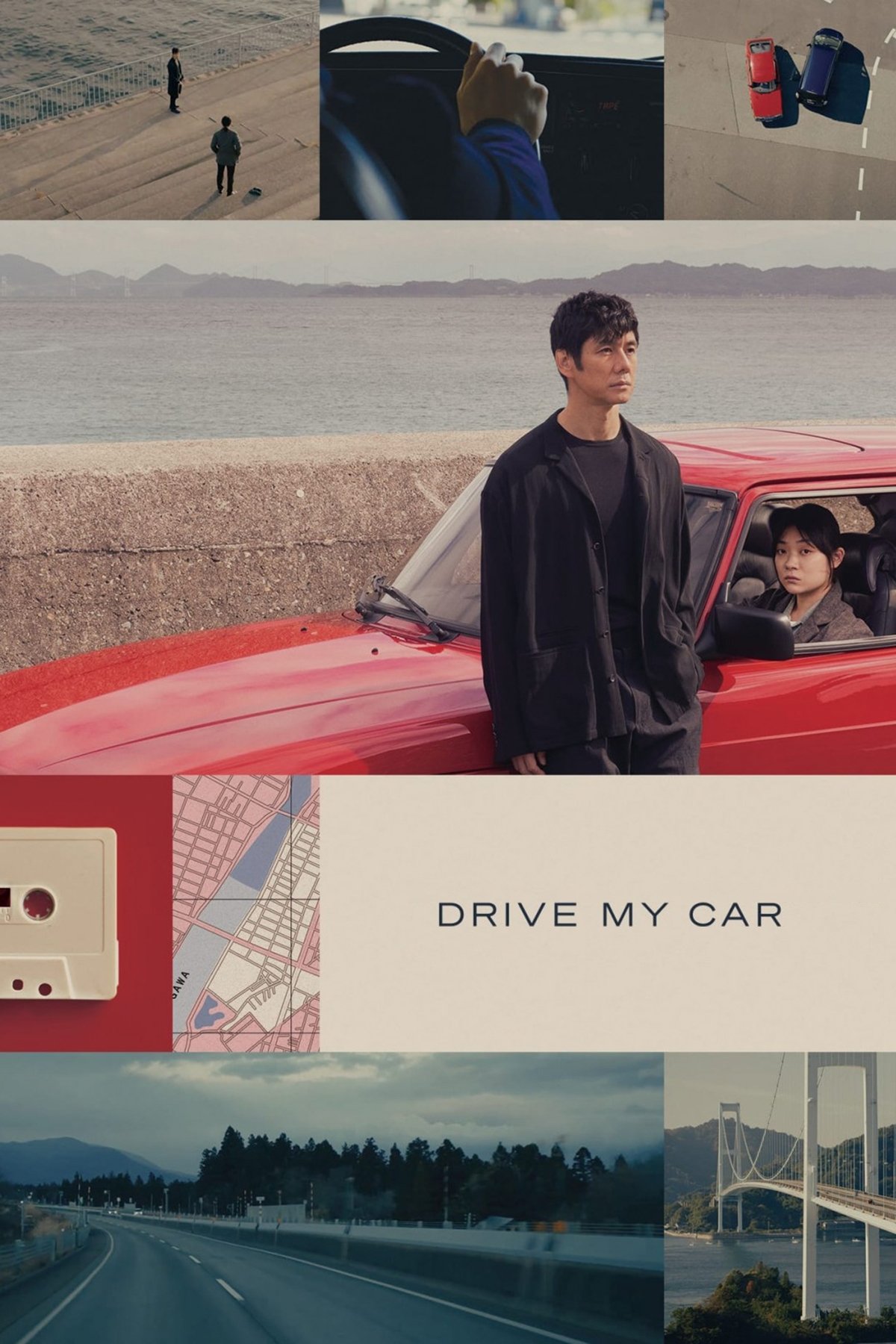
Visually, I found Hamaguchi’s choices mesmerizing. The cinematography leans heavily on natural light and minimalistic framing—nothing distracts from the actors, and everything within the frame feels intentional. I was especially drawn to scenes where the outside world flits by through the car window, emphasizing the sense of movement but also the isolation of the vehicle’s confined, intimate space. Even the contrasting colors—the crimson of Kafuku’s Saab 900 Turbo, the steely palette of Hiroshima—felt like visual metaphors for the characters’ emotional states.
Acting-wise, Hidetoshi Nishijima as Kafuku delivers one of the most quietly powerful performances I have witnessed in recent memory. Rarely have I seen an actor convey so much with such restraint. Nishijima’s ability to project internal anguish through subtly shifting expressions held me captive; the smallest flicker of regret or surprise on his face often left a far more profound impact than any monologue could. Toko Miura, playing Misaki, was equally spellbinding. Her stoic exterior belies a reservoir of feeling, and the moment she lets that vulnerability surface, the effect is seismic.
The integration of multilingual performances within the play rehearsals further complicated the exploration of communication and misunderstanding. I found it fascinating how the film rehearses Chekhov in multiple languages—Korean sign language, Mandarin, Japanese, and more—forcing me to contemplate how much meaning exists beyond words. In many ways, the film suggests that true understanding emerges not from shared language, but from a willingness to listen and wait.
Hamaguchi’s directorial style is methodical, yet it never feels cold or affected. His commitment to duration, allowing scenes to breathe and develop organically, felt to me like an implicit challenge: can we sit with discomfort? Can we truly pay attention? For me, “Drive My Car” didn’t just ask these questions; it embodied them, immersing its audience in a cinematic rhythm that is both contemplative and quietly radical.
My Thoughts on the Cultural Impact & Legacy
More than any recent film I’ve seen, “Drive My Car” has redefined what international acclaim looks like for Japanese cinema. Personally, as someone devoted to curating films that stir and disrupt accepted narratives, I’m astounded at how this film managed to punch through language barriers and cultural preconceptions, earning a Best Picture nomination at the Academy Awards—a rare feat for a non-English language film. To me, this is not just a signal of critical success, but a bellwether for the future: stories rooted in cultural specificity can resonate universally when told with honesty and depth.
On a personal level, it shaped how I think about grief, not just as a theme in cinema, but as a living process we all carry. The film’s refusal to hurry, to solve or tidy up its characters’ traumas, resonates with how I process personal loss. I’ve often felt impatient with depictions of emotional recovery that hinge on clear catharsis, but “Drive My Car” disrupts that expectation. It’s the first film in years that encouraged me to embrace the unresolved, to accept that some mysteries—about those we love, and about ourselves—may never be answered fully.
The legacy of “Drive My Car” will, I think, rest not only in its critical accolades or box office success, but in its quiet reimagining of what cinematic adaptation can accomplish. For those of us who love both literature and film, the fact that Hamaguchi translated the tone and complexity of Haruki Murakami’s short story to the screen with such fidelity, yet expanded it with his unique sensibility, felt groundbreaking. It convinced me that adaptation, when done thoughtfully, can become its own original work of art.
Fascinating Behind-the-Scenes Facts
One detail I find endlessly intriguing is how the casting process brought together actors from remarkably diverse backgrounds. Hamaguchi insisted on real-life multilingual performances during the play rehearsals, so each actor delivered lines in their native language, creating authentic moments of both connection and alienation among the ensemble. Watching those scenes with this knowledge added a fresh layer of tension and realism—the actors themselves were navigating communication barriers, mirroring their characters’ struggles.
Another behind-the-scenes fact that deeply impresses me involves the iconic red Saab 900 Turbo. Finding and maintaining this rare car proved to be a logistical challenge for the production team, especially since the car needed to survive extensive outdoor shooting through changing weather in Hiroshima. The production staff tracked down the right model, refurbished it for camera work, and designed creative rigging for interior car shots that would not intrude on the sense of intimacy between the actors. The Saab ultimately became a silent character in the film, embodying freedom, safety, and the passage of memory.
Finally, the method used for the “Uncle Vanya” rehearsals is itself a statement about acting craft. Hamaguchi required all actors—including those using sign language—to participate in table reads at a controlled pace, with significant pauses. This process, inspired by Russian theater techniques, compelled actors to listen deeply, fostering organic reactions rather than rote recitation. These rehearsals lent every performance an understated intensity that shows on screen.
Why You Should Watch It
- The film’s nuanced meditation on grief and forgiveness is unlike anything else in contemporary cinema—an experience that invites you to sit with your own emotions, not just those of the characters.
- The interplay between stunning cinematography and minimalistic storytelling makes for a visually and emotionally immersive journey that stands apart from more conventional dramas.
- Hidetoshi Nishijima and Toko Miura deliver performances of rare depth and restraint, making every pause and interaction resonate long after the credits have rolled.
Review Conclusion
Reflecting on “Drive My Car” weeks after my latest viewing, I’m still haunted by its atmosphere and the vulnerability of its characters. Hamaguchi’s willingness to let scenes breathe—to give us time to feel and not just observe—is something I crave in filmmaking yet so rarely find. The deliberate pacing, the interplay of language and silence, and the honest exploration of unresolved pain all left me changed as both a viewer and a curator. This film is a masterclass in restrained storytelling and a deeply moving meditation on the human condition. If you value cinema that invites introspection and empathy, I can promise you—this is a journey worth taking. My rating: 5/5.
Related Reviews
- Still Walking – I recommend Kore-eda’s profoundly human family drama for its similarly graceful pacing and attention to grief and reconciliation. Both films value subtle emotion over melodrama and trust the audience to listen beyond words.
- Burning – Lee Chang-dong’s adaptation of another Haruki Murakami story shares “Drive My Car’s” meditative tone and blend of the everyday with enigmatic psychological depth. Those intrigued by ambiguous narratives and lingering mysteries will find a kindred spirit here.
- Secret Sunshine – For viewers drawn to nuanced depictions of loss and resilience, this Lee Chang-dong film offers a striking, emotionally complex journey grounded in quiet performances and social observation.
- Tokyo Story – Ozu’s classic, while rooted in an earlier era, masterfully examines generational disconnect and the quiet currents of sadness. If you admired Hamaguchi’s patience and observational eye, this foundational work will resonate.
For readers looking to go deeper, these perspectives may help place the film in a broader context.
🎬 Check out today's best-selling movies on Amazon!
View Deals on Amazon