
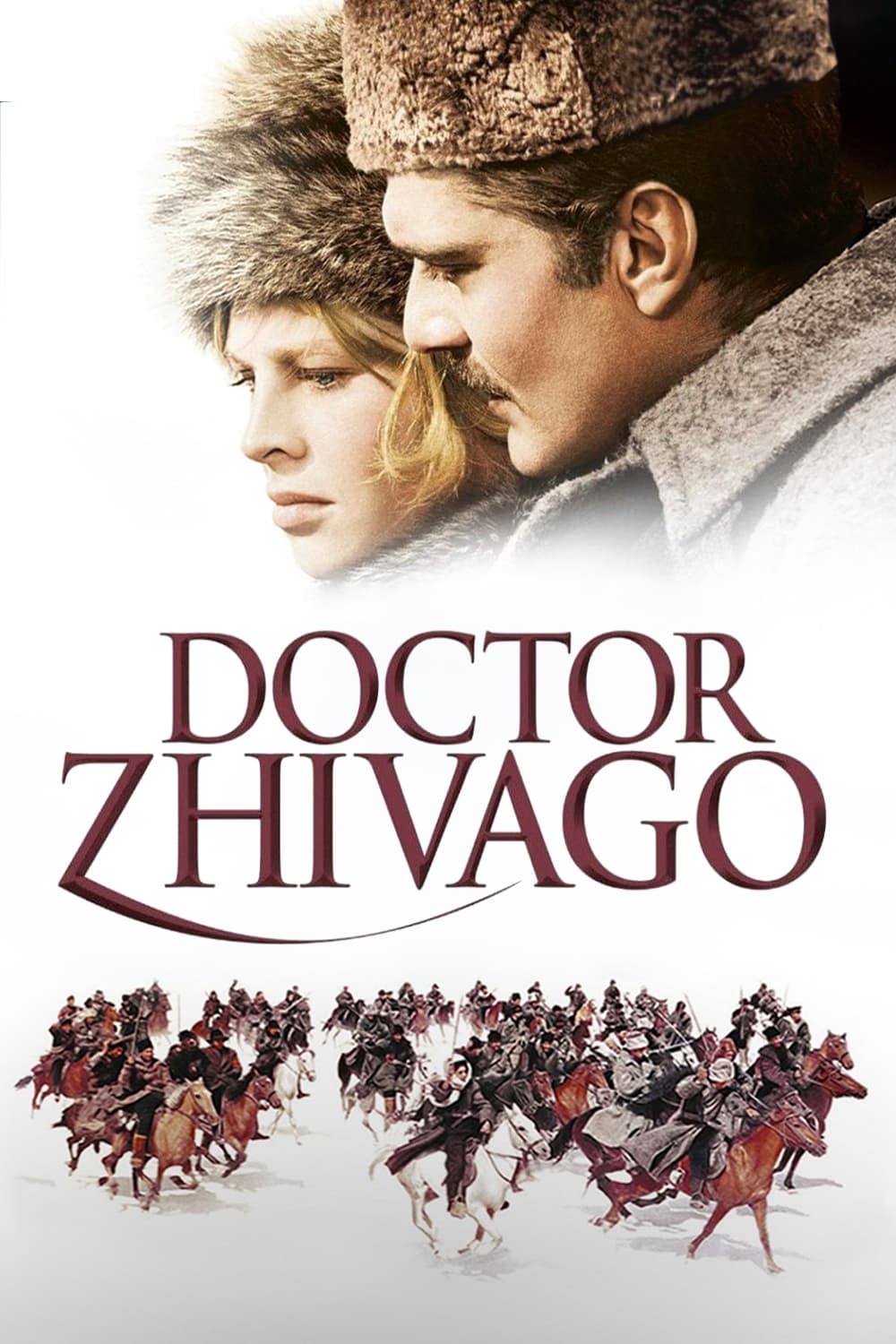
Plot Summary
The first time I watched “Doctor Zhivago,” directed by David Lean, I was swept up not just by the scale of its storytelling, but by the palpable intimacy woven through such an epic canvas. Sometimes, I get lost in stories that try to do too much—with this film, I felt Lean’s hand guiding me gently, scene by scene, through a world upended by revolution and by love. The film, to me, is an elegy for a time lost and a portrait of souls caught up in the uncontrollable tides of history.
Set against the backdrop of the Russian Revolution and World War I, I followed Yuri Zhivago (Omar Sharif), a doctor and poet, whose personal journey continually intersected with sweeping historical events. The intertwining of his private passions and public turmoil gave me a sense of how history isn’t just about dates or battles, but about the way ordinary—and extraordinary—people try to hold onto their humanity when everything around them is changing. Zhivago finds himself torn between his devotion to his wife, Tonya, and his overwhelming connection with Lara, a woman marked by her own tragedies and resilience.
I always worry about giving away too much, and with “Doctor Zhivago,” the emotional resonance is especially visceral if you go in unspoiled. If you want to preserve all the twists and turns of the narrative, you may want to skip ahead. What I can say is that Lean’s adaptation of Boris Pasternak’s novel does justice to its spirit, intertwining romance and revolution so seamlessly that it never felt forced to me. Every encounter, every separation left me feeling the weight of decisions made in impossible circumstances. It’s an epic, yes—but it’s also startlingly personal.
Key Themes & Analysis
What struck me most about “Doctor Zhivago” wasn’t just the tragic beauty of the story, but how themes of love, loss, and the inexorable march of history unfolded through Lean’s quietly masterful direction. The contrast between intimate character moments and the vastness of historical upheaval forced me to confront how people try to maintain their identity when surrounded by chaos. The film’s core is its meditation on love as both a sanctuary and a source of agony. For me, every scene between Yuri and Lara is charged with a yearning that’s both deeply personal and colored by the impossibility imposed by the era’s violence.
Cinematography stands out in my mind as one of the film’s most memorable innovations. The relentless Russian winter is rendered in a way that’s almost tactile—crisp snow, wind-whipped landscapes, a palette of whites and blues that chills you to the bone. It isn’t just backdrop; the cold becomes a character, echoing the emptiness felt by those forcibly uprooted by revolution. Lean’s use of sweeping wide shots contrasted with close-ups gave me the sense that, in Russia’s vast expanse, personal stories risk being swallowed up, yet persist all the same.
Performance-wise, Omar Sharif’s portrayal of Yuri Zhivago is a master class in subtlety and quiet strength. I never felt him reaching for melodrama. Instead, his expressive eyes and understated delivery pull you in and make you believe every hesitation, every regret, every fleeting moment of joy. Julie Christie, as Lara, is magnetic; she carries the scars of her character’s life with such nuanced grace that I often found myself watching her reactions even in scenes where she wasn’t the focal point. The supporting cast—Geraldine Chaplin, Alec Guinness, Rod Steiger—each bring a unique texture, enhancing the film’s layered world.
What gives “Doctor Zhivago” its enduring power for me is Lean’s ability to tie deeply personal narratives to grand, almost mythic, events. He doesn’t simplify the reality of revolution; instead, he gives chaos a presence that threatens, but never entirely obliterates, the hope and poetry in human relationships. I found this juxtaposition—the fragility of the human heart against the iron certainty of historical change—heartbreaking and deeply relatable. I keep returning to the question: can love survive such upheaval, or does it inevitably become fractured and fleeting?
My Thoughts on the Cultural Impact & Legacy
Beyond the screen, “Doctor Zhivago” started to matter to me before I even understood the intricacies of film history. When I first delved into its behind-the-scenes stories, I realized how rare it is for a love story set against immense political turmoil to strike such a deep chord across generations. It’s not just the romance, but the way Lean uses romance to reflect broader questions about individuality, resilience, and hope that keeps pulling me back.
As a curator and critic, I see “Doctor Zhivago” as a watershed in cinematic storytelling—blending the personal and the political in ways that few films before or since have managed. It helped redefine what audiences expected from historical epics; I notice how its influence surfaces in later films that dare to entwine love and revolution, or that use sweeping landscapes to echo emotional turmoil. In my experience, filmmakers continually reference Lean’s visual storytelling, especially in their attempts to capture intimacy on an epic scale. The splintered moral certainties, the ambiguous endings, the refusal to make its protagonists into simple heroes or villains—these choices resonate with me as a viewer who yearns for complexity in film.
Even today, “Doctor Zhivago” holds up as a work that invites new interpretations. I find that each rewatch encourages different emotional responses. Sometimes I’m swept up by the romance, other times I’m more drawn to the motifs of memory and exile. The persistence of poetry—literal, through Zhivago’s verses, and figurative, in the way the film frames beauty amid devastation—makes its mark on both my heart and my approach to reviewing films. Few films have shaped my taste or challenged my sense of what cinema can achieve the way this one has.
Fascinating Behind-the-Scenes Facts
There’s a certain thrill in learning the stories behind a film’s production, and with “Doctor Zhivago,” a few details genuinely reshaped my understanding of the final product.
First, the film was not shot in Russia—almost all the winter scenes were recreated in Spain. Fascist Spain under Franco offered the right look and fewer political complications. To my amazement, the production team used tons of marble dust and crushed styrofoam to create convincing Russian snowscapes. Knowing this, I find myself looking extra closely at the wintry vistas, marveling at how they managed to evoke such powerful atmosphere with sheer ingenuity.
Then there’s the casting of Omar Sharif. He almost didn’t land the role—Lean initially wanted Peter O’Toole, who turned it down. Sharif was set to play a smaller part, but fate intervened. Sharif himself has described how Lean tested his look under different lighting, going so far as to tape back his eyes to appear more Slavic. I can’t help but think how close we came to a completely different Zhivago, and I’m grateful for the alchemy that led to Sharif’s captivating performance.
Finally, I’m fascinated by the technical innovation behind the film’s iconic ice palace. The set was constructed inside a studio and covered with paraffin wax to mimic the crystalline splendor of a house frozen over. Every time I watch those scenes, I shiver from the artistry as much as the intended chill—it’s a testament to the craftsmanship and commitment that went into every frame.
Why You Should Watch It
- The film achieves rare emotional depth and visual grandeur, making it a cornerstone for anyone passionate about cinematic storytelling.
- Omar Sharif and Julie Christie embody characters with nuance and vulnerability, grounding the sweeping narrative in real, relatable emotion.
- David Lean’s directorial vision creates a world where historical spectacle and personal longing collide, inviting viewers to lose themselves in both the beauty and the heartbreak.
Review Conclusion
Looking back on “Doctor Zhivago,” I feel as if I’ve journeyed not just through a story, but through a meditation on love, memory, and the forces that shape our lives. This film captures why I cherish cinema: its power to distill the universal through the lens of the intimately personal, and to linger with you long after the credits roll. For all its length and scope, it remains—with every viewing—an experience both epic and achingly human. I find “Doctor Zhivago” nearly as moving now as I did years ago, and as a film critic and admirer, I can only give it my highest recommendation: 5/5 stars.
Related Reviews
- “Lawrence of Arabia” (1962) – Also directed by David Lean, this sweeping desert epic similarly blends personal quests with the ravages of historical change. I recommend it for the way it explores the contradictions of heroes shaped by circumstances beyond their control, mirroring the intimate epic scale I love in “Doctor Zhivago.”
- “The English Patient” (1996) – If what captivated you was the tapestry of forbidden love played out on a grand historical stage, Anthony Minghella’s adaptation comes equally close to perfection. Its haunting style and deeply romantic, tragic undertones speak to the same sense of longing and memory.
- “The Painted Veil” (2006) – For me, this Edward Norton and Naomi Watts period drama channels similar themes: love, regret, and the struggle for redemption set amidst political turbulence. The settings are equally lush, the emotional stakes just as high, offering another lens on love and resilience.
For readers looking to go deeper, these perspectives may help place the film in a broader context.
🎬 Check out today's best-selling movies on Amazon!
View Deals on Amazon