
Plot Summary
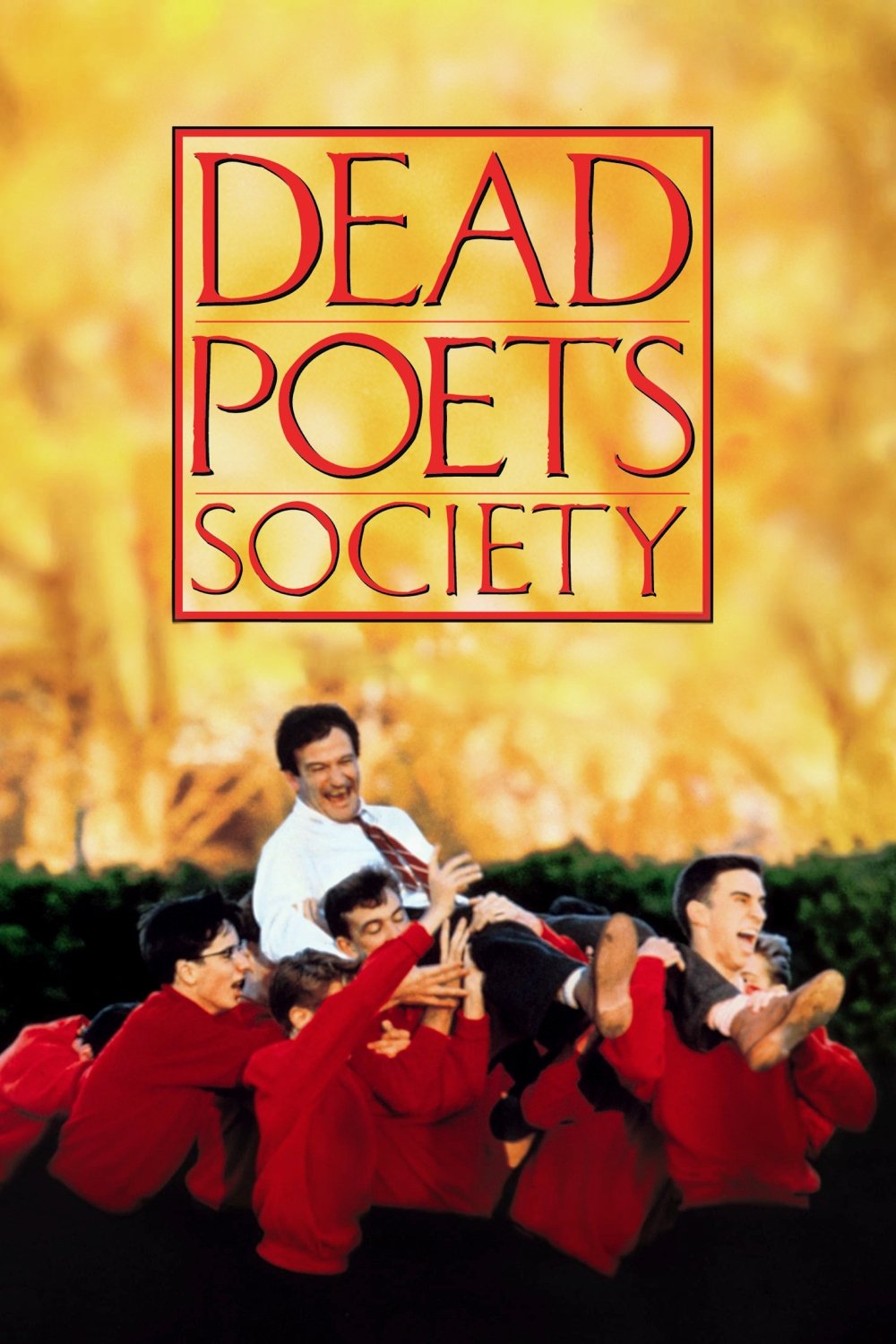
Every time I revisit Dead Poets Society, I’m immediately transported to a place that feels as restricting as it is beautiful—a world of tradition, order, and quiet rebellion. Rather than unravel the entire narrative thread by thread, I want to focus on the living energy and emotional landscape that director Peter Weir so carefully crafts. Set in the late 1950s at the fictional Welton Academy, I watched a group of young men navigate the pressures of their elite, stiff-collared boarding school environment. Their lives are turned upside down with the arrival of John Keating, a new English teacher whose methods are anything but conventional. The film’s essence lies in the way Keating—played with unfiltered magnetism by Robin Williams—urges his students to “seize the day” and embrace their authentic selves.
The heart of the story, for me, pulses in the moments when Keating challenges the boys to rip out the stodgy introductions from their poetry textbooks or stand boldly atop their desks—both literal and symbolic gestures of seeing the world from a different angle. Over the course of the film, I became invested in how these private acts of self-expression collide with the institution’s disciplined rigidity. Alliances form, boundaries are tested, dreams are articulated, and, inevitably, consequences loom. Without delving into major spoilers (though, fair warning, emotional shocks do come), I found that the richest tension comes from watching each boy reconcile his private yearnings with the suffocating expectations that define his world.
Key Themes & Analysis
What struck me in Dead Poets Society is the persistent, almost haunting question of what it means to truly live. The phrase “Carpe diem”—seize the day—functions not just as Keating’s mantra, but as an existential provocation. I found myself pondering how far I’d be willing to push against my own inherited restrictions when faced with the fierce pull of authentic living. Through the distinct characters of Neil Perry, Todd Anderson, and their friends, the movie crafts personal transformations that are both subtle and seismic. Neil’s struggle to assert his own desires against parental control, and Todd’s torturous journey from timidity to voice, are brought to life through performances that feel achingly real. Robin Williams, especially, injects every classroom scene with improv-like spontaneity; his vulnerability and passion don’t just instruct, they ignite.
From a visual standpoint, what I felt most powerfully was the way the cinematography frames both the claustrophobic grandeur of Welton and the untamed beauty of the Vermont landscape. The frequent use of low tracking shots through hallowed halls and the golden-hour glow of the outdoors mirrored the emotional dichotomy the characters experience. Cinematographer John Seale composes the world with both austerity and warmth—every carefully lit classroom and mist-shrouded forest feels like a separate character vying for the boys’ souls. The music, restrained yet persistent, weaves itself into the background, never overwhelming the intimacy of the most personal moments but lending them an undeniable gravity.
I responded viscerally to how Peter Weir uses silence and stillness as much as dialogue to communicate tension. There are scenes where the camera lingers on a face, on the blank page before a poem, or on the expectant hush before a risky confession, anchoring the audience in shared vulnerability. At the same time, Weir employs group dynamics brilliantly—never letting me forget the collective pressure but always allowing for flashes of singular, personal rebellion. Every decision, from shot composition to tempo, underlines the theme of individuality at risk in a culture of conformity.
As a film critic, I’m always searching for works that ask me to participate, not just observe. Dead Poets Society does so by refusing easy answers. By the end, I was left reflecting on my own teachers, my pivotal moments of risk, and the costs and rewards of “sucking the marrow out of life.” These aren’t just poetic aspirations—they’re calls to action, and I felt the weight of that as the credits rolled.
My Thoughts on the Cultural Impact & Legacy
If I had to pinpoint the precise reason Dead Poets Society still resonates so vividly, I’d say it’s because the film speaks to universal anxieties about freedom, belonging, and self-determination. This is a film that, in my view, never really ages. Since its release in 1989, it has inspired countless students, teachers, and creators to question authority—not for chaos’ sake, but in pursuit of meaning. I remember my first viewing as a teenager: I walked away with the sense that art, and by extension cinema, has the power to make us braver versions of ourselves. The ripple effect of Keating’s speeches is something I’ve felt echoed in classrooms, graduation speeches, and even in my own writing and curation of films that honor the outsider voice.
The cultural legacy, for me, lies in the way the film continues to be invoked in discussions about progressive education, youthful rebellion, and the cost of non-conformity. It shaped the coming-of-age drama in a way that feels both elegiac and urgent, influencing everything from TV series to nonfiction writing on mentorship and self-discovery. When I look at subsequent movies that center on the transformative power of teaching (think Good Will Hunting or Freedom Writers), I can’t help but trace their inspiration back to Keating’s lived example. The language, the iconography (standing on desks!), and the idea that literature is a living, breathing lifeline—it all began here for me.
I am continually moved by how viewers—myself included—return not just for nostalgia, but because we’re hungry for reminders that it’s possible to create ripples of change even in unyielding systems. As a critic and film curator, Dead Poets Society reinforced for me the conviction that cinema at its best is both a mirror and a lantern: reflecting our struggles while lighting the way forward.
Fascinating Behind-the-Scenes Facts
There’s a mythos around Dead Poets Society that I find just as fascinating as what appears onscreen. For one, I learned that Robin Williams wasn’t the initial first choice to play John Keating; Mel Gibson and Liam Neeson were considered, but Williams’ mixture of humor and heartfelt sincerity won over both the studio and director Peter Weir. This late-stage casting decision feels serendipitous to me—without Williams, the film’s signature blend of gravitas and levity might have been lost.
I was also struck by how Peter Weir encouraged improvisation and real bond-building among the young cast. Many of the classroom scenes, especially those where Keating recites poetry or leads unscripted discussions, emerged from Williams’ ad-libbing and Weir’s trust in organic energy. The director even arranged for the boys to room together in the dormitory prior to shooting, which avoided the superficial “instant friendship” so common in ensemble dramas. This decision gave the film’s camaraderie a depth I notice each time I rewatch it; there’s a lived-in quality to the friendships and rivalries that anchors every act of defiance or support.
Finally, I find it incredible that the film’s climactic scene (which I won’t spoil) was shot multiple times at the end of production. The emotional intensity required from the cast was so high that it’s said Weir scheduled the shoot to coincide with the end of filming, allowing the actors to draw upon both their characters’ and their own feelings of parting ways. This level of attention to psychological authenticity is, to me, emblematic of what makes the film linger in memory.
Why You Should Watch It
- For those who crave stories about the power of art and education, this film offers a deeply felt exploration of how a single teacher can awaken entire lives to the possibility of passion and purpose.
- Robin Williams’ transformative performance is nothing short of revelatory, marrying humor, melancholy, and wild-eyed inspiration in a way that reshaped my understanding of what a dramatic role can achieve.
- The film’s atmosphere invites viewers to wrestle with their own sense of conformity and courage, offering not just entertainment, but a genuine challenge to live more boldly and authentically.
Review Conclusion
If I had to distill my experience of Dead Poets Society into one word, it would be awakening. This isn’t a film that coddles its audience—it insists, with rare grace, that I engage fully with my own ideals. Peter Weir’s direction, Robin Williams’ indelible performance, and the work of a committed young cast all combine to create a coming-of-age drama that neither sentimentalizes rebellion nor shies away from its costs. I rate this film 4.5 out of 5 stars, with the only deduction owed to moments of melodrama that (for me) verge on the schematic. Yet those moments pale in comparison to the film’s spirit. For anyone seeking a narrative that challenges, moves, and ultimately transforms, Dead Poets Society remains essential viewing.
Related Reviews
- Good Will Hunting: For me, the echoes between these films are profound—both center on unconventional mentorship and the fierce desire to break free of societal expectations. The emotional candor and focus on the life-changing power of genuine encouragement make Good Will Hunting a natural companion to Dead Poets Society.
- Stand and Deliver: Watching this film always reminds me of the real-world stakes involved in education. Like Keating, Jaime Escalante (Edward James Olmos) inspires marginalized students to exceed what the world prescribes for them, lending weight to the argument that teaching can be an act of radical hope.
- Mona Lisa Smile: With its focus on a female teacher challenging tradition at a conservative college for women, I see this film as an essential counterpoint—another story of art, autonomy, and the risks of thinking differently within oppressive systems.
For readers looking to go deeper, these perspectives may help place the film in a broader context.
🎬 Check out today's best-selling movies on Amazon!
View Deals on Amazon