
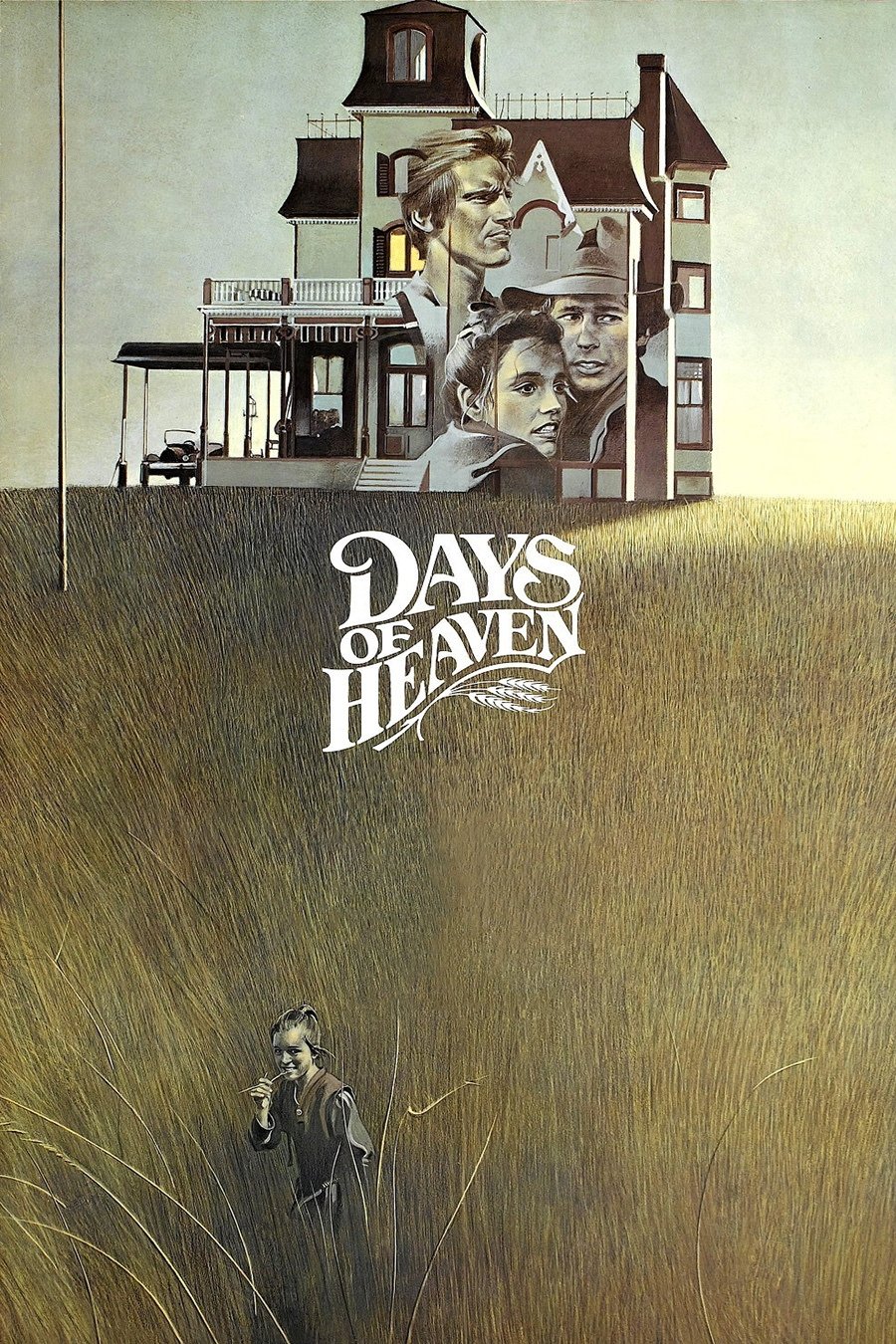
Plot Summary
There’s a kind of haunted intimacy in “Days of Heaven” that lingers with me long after the images have faded from the screen. The film unfolds in the early 20th-century, where a wandering laborer named Bill, his lover Abby, and his younger sister Linda seek work on the endless, wheat-colored prairies of Texas. As they drift from one job to the next, the trio’s fragile unity is tested when Abby becomes involved with a wealthy yet lonely farmer. The trio’s decision to weave a deceptive web—posing as siblings to hide Bill and Abby’s love—sets off a chain of events that feels as inevitable as a coming storm. The story, told through Linda’s ethereal narration, feels less like a rush through plot points and more like a vivid memory, soft and melancholy at the edges. If you haven’t seen the film before, know that what happens next both surprised and devastated me. If you wish to go in spoiler-free, consider this your gentle warning before the story’s tragic turns unfold.
Key Themes & Analysis
Where so many films hammer home their messages, I found “Days of Heaven” content to let its visuals and silences do most of the talking. The overwhelming sense of impermanence and longing feels embedded in every meticulously composed shot. Terrence Malick, the director, treats the landscape like a living participant— the wind-bent wheat and sky aflame at dusk do as much to convey emotional tone as any line of dialogue. I was struck by how the film immerses me in ideas of displacement, forbidden desire, and the struggle to carve meaning from transient happiness.
I’d be remiss not to focus on the film’s extraordinary cinematography. Cinematographer Néstor Almendros uses natural light in bold, poetic ways—there are moments where the golden-hour glow feels almost tangible, brushing every face and field with the sadness of a memory you can’t quite touch. This technique reinforces the film’s core meditation: how fleeting beauty is, and how quickly it can be unraveled by ambition and secrecy. I remember staring at scenes in awe, realizing that you could pause the film at any second and be left with a painting. It’s less a story in the traditional sense and more an experience in mood and tone. Even the spareness of the dialogue—the characters often communicate with glances or unspoken tension—heightens this effect.
The acting in “Days of Heaven” is as understated as the script. Richard Gere’s Bill simmers with restlessness, all gestures and flashes of charm laced with underlying desperation. Brooke Adams embodies Abby with a quiet, ambiguous strength that leaves her true feelings tantalizingly out of reach—sometimes I wasn’t even sure if she could interpret her own emotions amid the film’s moral fog. Young Linda Manz’s voiceover, though, provides the film’s spiritual anchor. Her narration is not so much a recap of the action as a haunting elegy—childlike but never naive, worldly yet completely untethered. It’s through her observations that Malick locates the innocence lost in the calculus of survival, love, and consequence.
To me, Malick’s directorial style is both a blessing and a challenge. He resists the norms of narrative cinema—the traditional buildup, catharsis, and resolution—and instead invites me to simply witness, to meditate on the agonies and joys of transient lives moving through a vast, uncaring natural world. He asks for patience, almost daring viewers to find meaning in small gestures and silent suffering. The risk is that, for some, the film’s slow pace can border on frustrating. But for those willing to sink into its rhythm, “Days of Heaven” reveals profound insights—about love, nature, and the fragility of dreams in a world ruled by happenstance and time.
My Thoughts on the Historical & Social Context
As I watched, I kept reflecting on how “Days of Heaven,” released in 1978, channels the disillusionment of the late 1970s as much as it evokes the American past. The film was born out of a period where U.S. cinema was marked by moral ambiguity, a skepticism of authority, and a sense of loss over vanished innocence. Malick’s style, deliberately nostalgic yet filled with unease, seemed to me a direct response to an era of post-Watergate doubt and the fading of the American Dream. The 1970s were obsessed with unraveling myths, whether of family, heroism, or national destiny—and this film achingly exposes those threads.
The industrial, turn-of-the-century setting wasn’t just about historical accuracy for me—it conjures an America on the brink of modernity, where prosperity rests on hidden exploitation and emotional compromise. I found the themes of class struggle in the film eerily prescient: itinerant laborers, harsh owners, and the illusion of escape through wealth. Watching now, I can’t help but draw a parallel to our own time—when instability, migration, and inequality remain at the forefront of social debate. To my mind, “Days of Heaven” shows that yearning for a better life often brings peril and heartbreak, especially for those positioned at society’s margins.
Even today, the film’s visual poetry about land and labor conjures up discussions about who owns the fruits of the earth, and at what cost. With its cyclical harvests and indifferent natural beauty, it seems to mourn not just an individual tragedy but a wider loss—the vanishing of entire ways of life beneath the blade of progress. Malick’s worldview may feel achingly specific to me, but it’s easily widened to speak to larger historical traumas and present-day anxieties.
Fact Check: Behind the Scenes & Real History
Diving into the production history of “Days of Heaven,” I unearthed some truly engrossing details that changed the way I saw the film.
For one, Terrence Malick’s pursuit of the perfect image led the production into infamously difficult territory. Almendros, the cinematographer, was going blind while filming—he could barely see through the lens, relying on assistants to describe what the camera saw. Yet, those “magic hour” shots, bathed in golden light, required the crew to scramble, working only a scant few minutes each day when the light was just right. The results speak for themselves: I see every frame as a testament to stubborn artistic vision.
The cast and crew dealt with other kinds of hardship as well. Shooting on the Alberta plains, not Texas, meant braving freezing conditions and logistical nightmares. It’s rumored that the relentless retakes, vague direction from Malick, and long production schedule nearly derailed the project—and nearly exhausted the actors. Richard Gere has spoken about not truly understanding what film he was making until he finally saw the finished project—an uncertainty that, in retrospect, seems perfectly fitting for a story about lost souls adrift on America’s prairies.
Comparing film to history, “Days of Heaven” doesn’t attempt strict realism—rather, it evokes the feeling and spiritual essence of the period. The machinery, clothes, and social structure are drawn from real sources—turn-of-the-century farm labor, migration, and class divisions—but Malick intentionally mythologizes the setting, turning the prairie into an almost alien world, both alluring and hostile. The result is a movie less interested in factual precision and more dedicated to emotional truth, a choice that, to me, grants the story a timeless, otherworldly quality.
Why You Should Watch It
- You’ll experience some of the most breathtaking cinematography ever captured on film, making every scene visually unforgettable.
- The film offers a deeply personal, meditative exploration of love, deception, and loss that resonates powerfully in any era.
- If you’re interested in films that challenge narrative convention and reward patient, thoughtful viewing, you’ll find “Days of Heaven” to be a masterclass in atmospheric storytelling.
Review Conclusion
If I had to capture my experience with “Days of Heaven” in a single feeling, it would be a mix of awe and melancholy. No other film, in my view, so gracefully evokes the bittersweet ache of lost opportunities and fragile happiness. Malick’s bold choices—the languid pacing, the painterly lighting, the script’s silence—may not satisfy the need for easy answers. But for me, the very absence of certainty is what gives “Days of Heaven” its extraordinary weight and staying power. I’m continually captivated by how every aspect of the film, from performance to sound design, builds towards a singular, unforgettable vision of yearning and regret. For all these reasons, it remains not only one of the defining works of 1970s American cinema, but one of the rare films to make me truly feel the beauty and tragedy of living. I’d rate “Days of Heaven” at 5/5 stars—an unmissable masterpiece for anyone who cherishes the power of cinema to evoke memory, emotion, and the passage of time.
Related Reviews
- Badlands (1973) – Terrence Malick’s earlier film is, to me, a natural companion to “Days of Heaven.” It explores dislocation and violence on the American landscape through impressionistic visuals and poetic voiceovers that similarly upend narrative expectations.
- The Assassination of Jesse James by the Coward Robert Ford (2007) – Andrew Dominik’s film strikes a similar elegiac tone and visual magnificence. Like “Days of Heaven,” it finds melancholy beauty in the vastness of the American frontier and the isolation of its characters.
- The Tree of Life (2011) – Another Malick entry, this film’s meditative pacing, and blending of personal and cosmic themes remind me of “Days of Heaven’s” willingness to contemplate the mysteries of time, memory, and meaning through a singular visual language.
- Days of Heaven would also appeal to fans of Phillip Kaufman’s The Unbearable Lightness of Being (1988), which, though set in a different era, shares a focus on fleeting love, moral ambiguity, and how individuals navigate sweeping historical change.
If you want to explore this film beyond basic facts, you may also be interested in how modern audiences respond to it today or whether its story was inspired by real events.
🎬 Check out today's best-selling movies on Amazon!
View Deals on Amazon