
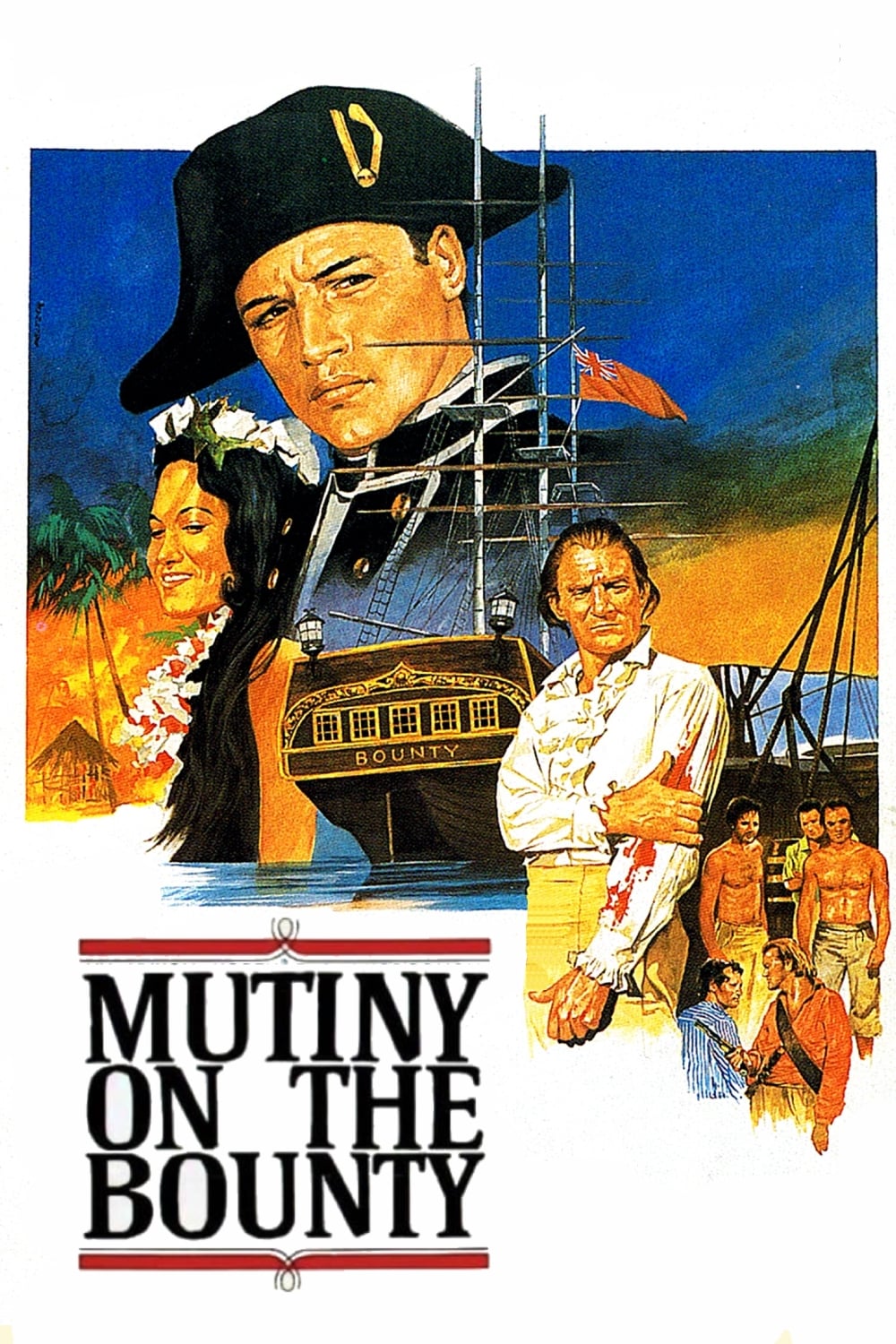
Plot Summary
Every time I sit down to revisit Frank Lloyd’s 1935 adventure epic, I’m struck by how viscerally it throws me into the brine-soaked paranoia of life aboard the HMS Bounty. The film unfolds in the windswept South Pacific of the late 18th century and weaves its narrative almost claustrophobically around power, desperation, and the longing for justice. I’m always careful not to reveal too much for those who wish to experience the narrative twists firsthand, but here’s how the story grips me without spilling its greatest secrets.
At its heart, Mutiny on the Bounty traces the journey of the Bounty’s crew, pressed into service under the infamously iron-fisted Captain William Bligh. His tyrannical rule casts a shadow over the voyage, creating a world where survival often means sacrificing dignity, and obedience becomes indistinguishable from complicity. Fletcher Christian, the ship’s first mate, emerges to me as a symbol of righteous rebellion—torn between loyalty and conscience, bearing the impossible weight of his shipmates’ hopes.
It’s this slow-burn tension between Bligh and Christian that sustains the film’s momentum for me. The stakes climb with every passing day at sea, slowly coaxing out the fracturing morale of the men, until the titular mutiny finally ignites. For those wary of spoilers, I’ll merely say: the aftermath is as complicated as the event itself, and the shadow of what it means to challenge authority lingers far beyond any single act of insubordination.
Key Themes & Analysis
For me, the enduring fascination of Mutiny on the Bounty lies in its multifaceted examination of power—both its exercise and its abuse. On every viewing, I’m drawn in by the film’s restless philosophical current: What happens when duty devolves into cruelty? When does rebellion become a moral imperative, rather than an act of treachery? These are questions I find uncomfortably relevant even outside the historical setting, giving the story a modern resonance that doesn’t fade with time.
Frank Lloyd’s direction impresses me not just with its logistical ambition (wrangling a ship, storms, and a sprawling cast) but with the intimate way he captures the claustrophobia of naval hierarchy. I feel that every scene on the Bounty is charged with emotional static—extreme close-ups juxtaposed against wide shots of the endless sea heighten both the men’s isolation and their entrapment. There’s little respite: Lloyd rarely lets us forget that for these men, escape is impossible, and every encounter with Bligh feels like a test of spirit.
The cinematography is a personal highlight. I love the rich, shadow-drenched black-and-white photography by Arthur Edeson. He gives the ship’s interiors a sense of being at once expansive and oppressive, with beams of light slicing through the gloom like judgment itself. The churning seas and sudden tempests are rendered so viscerally that I can almost feel the salt spray, no matter where or when I’m watching. These visuals don’t just provide spectacle; to me, they reinforce the crew’s emotional state—uncertain, adrift, battered by forces larger than themselves.
I find myself continuously drawn to the performances, especially Charles Laughton’s interpretation of Captain Bligh. Laughton builds Bligh into a near-mythic figure—his stern jaw and cold, precise diction transform the captain into a living, breathing emblem of unchecked authority. There’s a bracing complexity to his villainy; I never perceive him as a one-note sadist, but rather as a product (and a warning) of institutional hubris. In contrast, Clark Gable’s Fletcher Christian exudes a rebellious empathy. I’m intrigued by how Gable balances charm and world-weariness, never allowing Christian’s mutiny to feel like an act of vengeance, but more a bitter concession to his own battered ideals. Their rivalry doesn’t need melodrama; it’s electrifying because it is painfully, achingly human.
I also find the supporting cast, particularly Franchot Tone as the idealistic Midshipman Byam, lend the story extra texture. Through Byam, I see the film’s meditation on complicity and innocence—he’s the observer thrust unwillingly between the blunt edges of authority and rebellion, embodying the fate of those who must choose sides when neutrality becomes impossible.
On a thematic level, I interpret the film as not merely a battle between oppressor and oppressed, but as a meditation on the fragile hope that decent men can reshape broken systems. The cruelty of one man threatens to undo the dignity of many, but the refusal to yield—even in darkness—remains the film’s most powerful, lasting statement.
My Thoughts on the Historical & Social Context
As I reflect on the context in which Mutiny on the Bounty was made, its release during the mid-1930s seems decidedly significant. America was emerging slowly from the Great Depression, and audiences were wrestling with their faith in leadership—whether in government or in the workplace. To me, the resonance of a story that pits collective suffering against an unyielding, dictatorial leader could not have been accidental. I believe the filmmakers understood that viewers were hungry for stories that confronted the risks of obedience and the pain of oppression.
What also strikes me is how the film subtly channels interwar anxieties. With memories of the First World War lingering and new threats on the rise, questions about military authority, loyalty, and moral responsibility were omnipresent in the public psyche. Watching the crew’s desperate pushback against Bligh, I’m reminded how tyranny thrives not just in palaces but in every structure where power is left unchecked. The story seemed to call out to a generation wary of blind obedience and hungry for the courage to resist.
Even now, I see relevance in these themes—especially in eras when institutions appear indifferent to suffering or actively perpetuate injustice. For me, the Bounty becomes a microcosm of any society where ordinary people are forced to decide whether to submit or to risk everything for the chance at fairness. The lines between duty and complicity, or between righteous defiance and dangerous insubordination, remain blurry but inescapable. That’s why I continue to find the film’s social commentary both provocative and enduring.
Fact Check: Behind the Scenes & Real History
Delving behind the curtain, I’ve always been captivated by the fusion—and sometimes friction—between historical truth and cinematic storytelling in Mutiny on the Bounty. There are several production details and factual discrepancies that have fascinated me on repeated viewings and research.
Firstly, the casting process was famously fraught. I’ve learned that Clark Gable famously disliked wearing a British naval officer’s wig and shaved his signature mustache for the role—a move that sparked national headlines at the time. Laughton, meanwhile, fully immersed himself in Bligh’s mannerisms, reportedly maintaining his intimidating persona off-camera to keep his co-stars unsettled. That commitment to character authenticity is something I respect; it certainly registers in the palpable tension onscreen.
The film’s location shooting was another Herculean undertaking. The MGM crew constructed a full-sized replica of the Bounty and filmed significant portions in the South Pacific, a logistical feat that added realism to the shipboard scenes I so appreciate. Many crew members struggled with seasickness for weeks, and adverse weather sometimes halted production entirely. Knowing that technical teams weathered actual storms makes every chaotic squall depicted on film even more thrilling for me.
When it comes to historical accuracy, I’m intrigued by how the movie chooses drama over strict adherence to fact. The real Captain Bligh, for instance, was both more complex and arguably less sadistic than his cinematic counterpart. Scholars have shown that Bligh’s navigational skills and efforts to keep his crew alive after the mutiny were far more impressive and humane than the villainous legend that endures in popular culture. Still, from a dramatic standpoint, the film’s choice to paint Bligh as the archetypal tyrant boils the narrative down to its most urgent moral conflict—a decision I may not wholly endorse as a historian, but one I understand as a film lover.
Why You Should Watch It
- Riveting, high-stakes performances—especially by Charles Laughton and Clark Gable—inject the classic Captain versus First Mate conflict with unpredictable energy.
- Unflinching exploration of power, justice, and duty that still resonates in an age where the morality of authority is as debated as ever.
- Technical ambition and visual grandeur—from practical ship sets to immersive storm scenes—make the film a feast for fans of old-Hollywood spectacle and historical adventure.
Review Conclusion
I never leave a screening of Mutiny on the Bounty unchanged. The film’s monumental clash of personalities, its urgent questions about conscience, and its grand yet intimate production all combine to create an experience that continues to haunt me. While some dramatic liberties may skew history, the truths the story unveils about humanity feel undiminished by time. On its own terms—whether you seek classic performances, philosophical depth, or simply want to be swept away by towering adventure—I believe this film delivers abundantly.
My rating: 4.5/5 stars.
Related Reviews
- Captain Blood (1935) – I recommend this adventurous epic for its swashbuckling action and its morally complex protagonist, paralleling the ethos of resistance and justice seen in Mutiny on the Bounty. Errol Flynn’s performance gives that same blend of charm and rebellious fervor I relished in Clark Gable.
- The Caine Mutiny (1954) – This film resonates with me because of its incisive analysis of psychological stress within a rigid military system, echoing the unstable chain of command dynamics and moral ambiguity that kept me riveted aboard the Bounty.
- Paths of Glory (1957) – For those who are gripped by stories of challenging authority and grappling with ethical dilemmas in hostile environments, I find Kubrick’s take on institutional failure and moral courage a natural next step after Mutiny’s storm-tossed voyage.
- Moby Dick (1956) – The battle between a charismatic leader and his underlings (here, Gregory Peck’s Ahab versus his crew) captures a similar push and pull between duty, obsession, and rebellion, making it a perfect companion for those intrigued by the psychological undercurrents of Mutiny on the Bounty.
If you want to explore this film beyond basic facts, you may also be interested in how modern audiences respond to it today or whether its story was inspired by real events.
🎬 Check out today's best-selling movies on Amazon!
View Deals on Amazon