
Plot Summary
Few films have ever set off the peculiar fireworks in my mind that Monsieur Verdoux did the first time I watched it. Directed by Charlie Chaplin, known globally for his comedic genius, this 1947 release pivoted from Chaplin’s usual slapstick routine into the much darker territory of black comedy crime. Set in France between the wars, the film follows Henri Verdoux, a former bank clerk who, out of desperation, takes to marrying and murdering wealthy women for their money. The story, told through Chaplin’s deft, surprising navigation of tone, is at once bleakly hilarious and chilling, a blend that repeatedly left me unmoored and riveted by its candor.
I want to avoid giving away the plot’s sharpest turns, as the unveiling of Verdoux’s schemes forms much of the film’s unsettling delight. However, it’s worth knowing that Chaplin’s protagonist is no mustache-twirling villain; instead, I found myself disarmed by his wit, charm, and philosophical justifications for his actions. The movie walks a fine line, weaving in moments of genuine levity before plunging back into its somber undercurrent. One of the wildest shifts for me came when the consequences of Verdoux’s choices catch up to him. Spoiler warning: the ending, when it arrives, refuses easy moral reckoning and instead left me pondering the nature of justice, society, and personal responsibility long after the credits rolled.
Key Themes & Analysis
What struck me most throughout Monsieur Verdoux was Chaplin’s willingness to subvert the expectations his audience brought to the table. Having spent most of his career as the emblematic Tramp—a role defined by resilience and innocence—here he inhabits a character who preys on vulnerability. This audacious switch serves as a sly commentary on morality in times of desperation and the slipperiness of good and evil, especially when viewed through the lens of society’s shifting values.
As I watched Verdoux rationalize his crimes, often with disarming eloquence, I began to see the film as an extended meditation on the absurdity and cruelty of the world post-World War I. Chaplin seems to ask outright: How does one maintain civility and ethics in a society ravaged by upheaval? His protagonist, much like our society at large, oscillates between decency and depravity—a pattern I saw mirrored in the supporting cast and their willingness to overlook or rationalize Verdoux’s increasingly suspicious behavior. This tension is amplified by Chaplin’s directorial choices: static wide shots that place the characters in context; close-ups that force intimacy; and the sparing, almost clinical pacing that makes each of Verdoux’s deeds feel both methodical and horrifyingly mundane.
The acting deserves special attention. I was floored by Chaplin’s portrayal of Verdoux—every gesture and line reading calculated to evoke both empathy and revulsion. The supporting cast, particularly Martha Raye’s uproariously memorable turn as one of Verdoux’s would-be victims, added both comic levity and pathos. Despite the film’s grim subject matter, Raye’s comedic timing provided essential release valves for tension. I found the ensemble’s chemistry crucial to underscoring one of the film’s strongest themes: the performative nature of “normalcy,” and how easily morality can be masked by polite society.
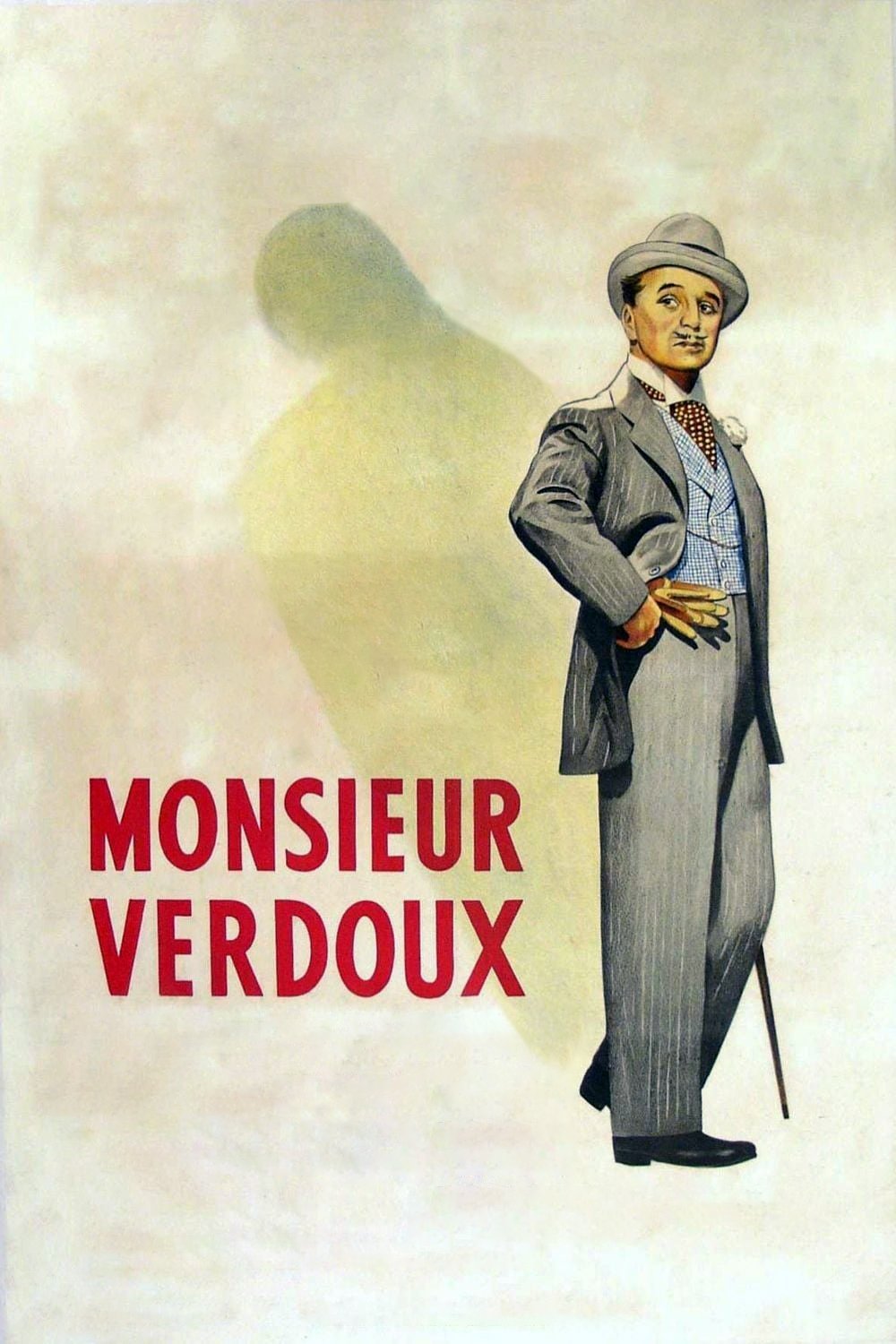
Cinematically, what stood out to me was Chaplin’s almost clinical presentation of murder, which reminded me of the cold detachment of later crime cinema. There’s an elegance and precision in his approach—a stark contrast to the frenzied slapstick of his earlier career. The lighting, camera angles, and even the costuming all serve the central conceit: that evil can wear a respectable face, and that comedy and tragedy are often two sides of the same coin. I kept noticing how each frame was composed to simultaneously invite laughter and discomfort—a contradiction that lies at the heart of why this film continues to fascinate me.
Beyond the technicalities, I felt the film aiming its sharpest satirical barbs at the very concept of justice and the economic systems that underpin society. Through Verdoux’s monologues, Chaplin draws a provocative moral equivalence between institutional violence—think of the wars that ravage nations—and interpersonal crime. I found it both bracing and unsettling to watch a film from 1947 so boldly question the status quo.
My Thoughts on the Cultural Impact & Legacy
I can’t shake the feeling that Monsieur Verdoux is, at its core, Chaplin’s response to a world that had lost faith in guarantees of happy endings. For me, the film’s cultural weight lies in its refusal to comfort. Chaplin uses black comedy to reflect, even indict, the hypocrisy of the times, offering viewers no easy exit from the film’s moral labyrinth. This, to my mind, makes it a blueprint for future filmmakers interested in subverting genre expectations—where the antihero is as likely to be celebrated as condemned.
Personally, I trace so much of my own fascination with dark comedy and the malleability of film genres back to my first screening of this film. The way Chaplin weaponizes humor as a means to expose, rather than soothe, the wounds of society inspired me to look for similar strategies in later directors. I’ve since spotted Monsieur Verdoux’s DNA in works by Kubrick, the Coen Brothers, and even contemporaries like Bong Joon-ho. They, too, use irony and black humor to hold a mirror to systems of cruelty and indifference.
As a caretaker of cinema history, I return to this film not just for its narrative risks but because it remains an exemplary text on cinematic evolution. Monsieur Verdoux’s blending of tone—by turns chilling and hilarious—upended audience expectations and laid the groundwork for genre hybridity that prevails today. It still floods me with admiration to watch how seamlessly Chaplin bridges the gap between old-world theatricality and New Hollywood cynicism.
But more than anything, it’s the film’s continued relevance that stays with me. In an era of political upheaval and economic uncertainty, the questions Chaplin asks about complicity, moral compromise, and societal injustice remain resoundingly fresh. Each time I revisit Verdoux, I find these themes echoing through the headlines of our own times, making the film less a period piece and more a conversation that refuses to end.
Fascinating Behind-the-Scenes Facts
Digging into the film’s backstory has always deepened my appreciation for its daring. One fact I find endlessly compelling is that Chaplin originally based the project on a suggestion from Orson Welles. Welles had approached him with the idea for a film about the infamous French “Bluebeard” murderer, but Chaplin—always fiercely protective of his scripts—insisted on directing and writing the adaptation himself. It’s fascinating to consider how two titans of cinema briefly crossed creative paths in birthing this project.
Another tidbit that never fails to surprise me: the production was beset by controversy even before filming began. Chaplin’s open political views, coupled with his choice to play a serial killer who rationalizes murder, led to heated condemnation from both critics and the public. The studio struggled to market the film in a climate of postwar conservatism, and Chaplin’s reputation in America would eventually suffer. This willingness to risk personal standing for the sake of unflinching art is, in my eyes, part of what makes the film so courageously ahead of its time.
On a more technical level, what most impressed me during my reading was Chaplin’s meticulousness during filming. He demanded endless rehearsals and controlled every creative aspect on set, from set design to the timing of gags and dialogue. This pursuit of perfection is visible on screen—I often find myself awed by the eerily seamless blend of comedy and threat that can only come from such obsessive attention to detail.
Why You Should Watch It
- It showcases Chaplin as you’ve never seen him. This is not the Little Tramp; instead, you get an audacious, sophisticated, and unsettling antihero who challenges every expectation.
- The film’s daring blend of comedy and tragedy feels as provocative today as it did in 1947. If you’re interested in movies that unsettle and provoke thought, few films are as bracing.
- The social commentary—on greed, justice, and the façade of civility—remains piercingly relevant. I find myself referring back to its insights on morality in the face of societal breakdown again and again.
Review Conclusion
No matter when I return to Monsieur Verdoux, I’m left marveling at Chaplin’s willingness to reinvent himself and to challenge viewers far beyond mere entertainment. With its sinister humor, complex protagonist, and bold departure from formula, this film remains, for me, an essential artifact for anyone interested in the history and future of the genre. For all its darkness, it serves as a beacon for filmmakers daring enough to confront the world’s contradictions—and a fascinating touchstone for audiences willing to face them as well. I happily give it 4.5 out of 5 stars.
Related Reviews
- Dr. Strangelove or: How I Learned to Stop Worrying and Love the Bomb (1964) – Stanley Kubrick’s razor-sharp black comedy explores institutional madness and personal culpability in a way that deeply echoes the satire of Monsieur Verdoux. I’m always reminded of Chaplin’s influence whenever Kubrick’s film exposes the absurdity beneath the veneer of officialdom.
- The Ladykillers (1955) – With its blend of criminal farce and British wit, this Ealing comedy delves into morality and mischief within a framework strikingly similar to Verdoux’s. I love how both films contrast the ordinariness of evil with the absurdities of daily life.
- Parasite (2019) – Bong Joon-ho’s Oscar-winning masterpiece layers dark humor over biting social commentary, much like Chaplin does here. The film’s exploration of deception, class, and the unpredictability of consequences is, to me, a modern echo of Verdoux’s anxieties.
For readers looking to go deeper, these perspectives may help place the film in a broader context.
🎬 Check out today's best-selling movies on Amazon!
View Deals on Amazon