
Plot Summary
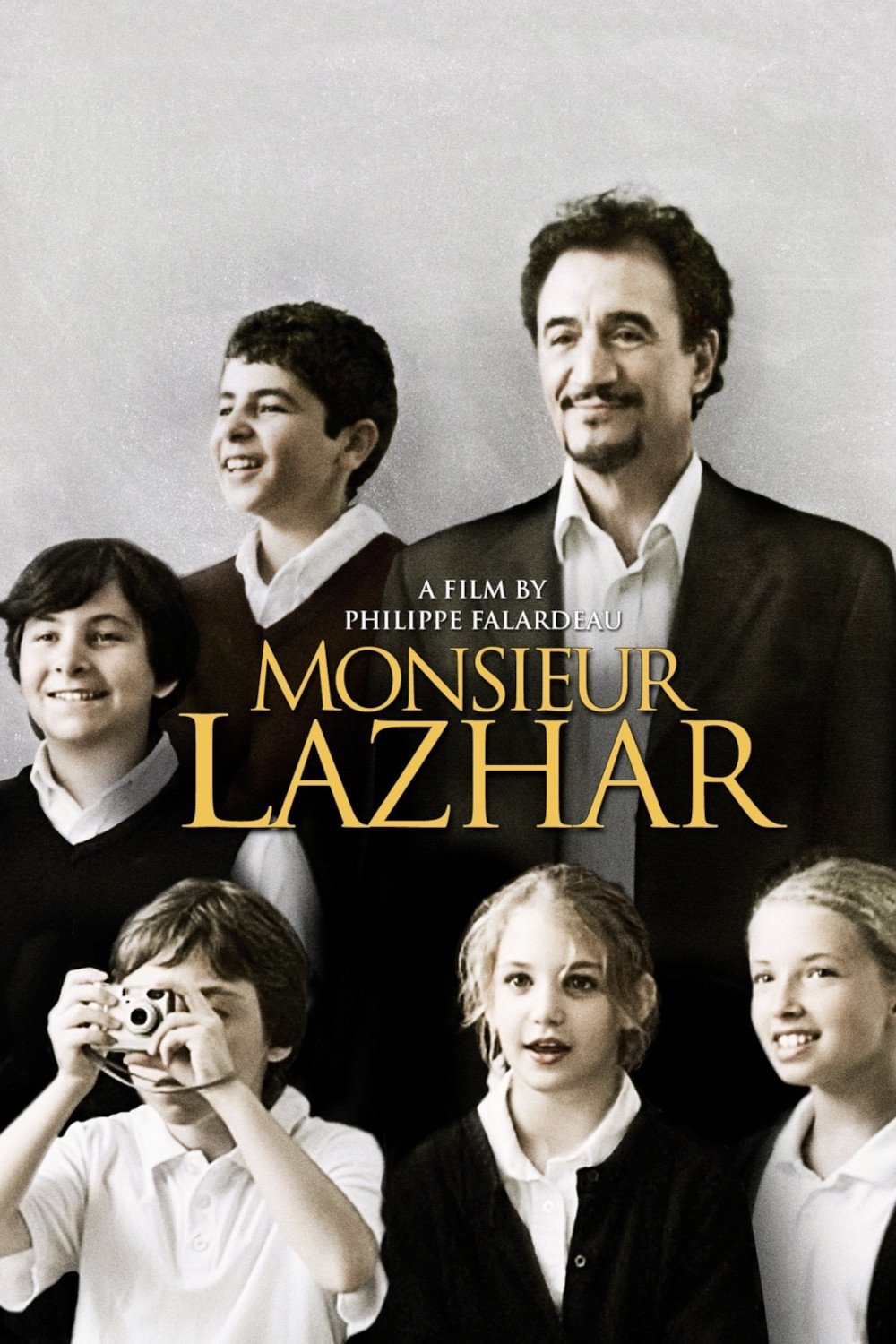
From the very first scene of Monsieur Lazhar, I felt immediately drawn into a world brimming with both unspeakable sadness and the quiet resilience of childhood. The film, directed by Philippe Falardeau, is labeled as a drama, but for me, it operates with a sensitivity more akin to a deeply personal memoir than a conventional drama film. The story centers around Bachir Lazhar, an Algerian immigrant who takes over as a substitute teacher in a Montreal elementary school classroom left reeling from a traumatic loss. As Lazhar integrates into this space heavy with grief and confusion, I found myself compelled not only by the children’s struggles but, even more so, by the teacher’s own hidden vulnerabilities. The brilliance of Falardeau’s approach is that he doesn’t shy away from showing the awkward silences, the unspoken pain, and the slow-building trust that defines Lazhar’s relationship with his students.
For those avoiding spoilers, rest assured: I won’t divulge the film’s most critical reveals. What I can say is that the story’s arc follows the messy, nonlinear nature of grief. There are moments when the children lash out, when the rules of comfort are redefined, and when Lazhar’s distinctive teaching style—marked by both cultural difference and deep empathy—brings new energy and complications to the classroom. I was struck by how the script gives weight not just to what is said but to all the things left unsaid; conversations trail off, glances are exchanged, and pain is often communicated in silence rather than in speech.
It’s important to note that the school’s administrators, the students’ parents, and the broader community struggle with their own ideas about trauma, discipline, and the boundaries between personal pain and public responsibility. While the film plays out in the halls of a Montreal school, it’s the complex emotional journeys of its characters that made it impossible for me to look away. Whether it’s the subtle gestures of warmth that Lazhar extends to the children, or the moments when he tries, and occasionally fails, to bridge the gap with them, I felt the classroom was being transformed into a microcosm of both healing and unspoken sorrow.
Key Themes & Analysis
As I watched, the theme of loss felt omnipresent, not just as a plot device but as a living presence that shapes every interaction. The children oscillate between avoiding the topic and inadvertently confronting it, and Lazhar’s own history—revealed slowly and with restraint—adds yet another layer. What struck me most deeply was how Monsieur Lazhar examines immigration, assimilation, and the precarious dance between compassion and protocol within an institutional setting. Bachir himself is grieving a personal tragedy, seeking political asylum, and wrestling with cultural alienation. The film’s dual focus on both the children’s and Lazhar’s trauma adds depth that felt unusually honest for a drama of this type.
The cinematography is understated yet impactful. I noticed the way the camera lingers on the children’s faces during quiet moments of confusion or pain—a visual choice that brings intimacy to their emotions. There’s a particular sequence where shadows on the classroom wall mirror the emotional darkness the children feel—a moment that, for me, encapsulated the director’s gift for subtle visual storytelling. Falardeau’s direction feels patient and compassionate, never tipping into melodrama or sentimentality. The visual language is often simple, but each shot feels charged with meaning, urging me as a viewer to fill in the blanks with my own empathy.
The acting, especially by Mohamed Fellag in the lead role, is a revelation. Fellag’s performance is laced with quiet dignity and understated sorrow; he embodies the paradoxes of a man forced to play the role of a calm authority figure while quietly battling his own demons. The ensemble of child actors delivers performances that are naturalistic without ever feeling forced or precocious. In their shyness, anger, and occasional outbursts, I recognized the real rhythms of children processing emotional upheaval—a testament both to excellent direction and attentive casting.
What lingers with me is the film’s exploration of how authority figures, especially teachers, grapple with the limits of their influence. Monsieur Lazhar questions whether schools are truly prepared to handle the complex grief of their students and challenges the boundaries between educator and caregiver. I found myself reflecting on my own experiences with loss, realizing how rarely adults provide children space to process trauma on their own terms. Here, the classroom becomes more than a pedagogical space; it’s a crucible for healing and misunderstanding alike. The film refuses resolution in neat, tidy packages—it embraces ambiguity, allowing both hope and pain to coexist.
My Thoughts on the Historical & Social Context
For me, Monsieur Lazhar is emblematic of a very particular moment in the early 2010s—a time when Canada was reckoning more openly with multiculturalism and the challenges facing immigrants. In 2011, many Western societies were struggling to strike a balance between compassion and bureaucratic caution regarding refugees and asylum seekers. The classroom in this film becomes a symbol of both opportunity and constraint, reflecting ongoing debates in Quebec about French language, cultural integration, and the rights of newcomers. Watching it again now, I can’t help but connect Lazhar’s struggle with belonging to present-day conversations about inclusivity and the immigrant experience.
The film’s educational setting is crucial. I believe the depiction of school bureaucracy grappling with psychological well-being mirrors a broader societal shift toward acknowledging children’s mental health needs. In the aftermath of very real tragedies—school violence, the death of teachers or students—society in the last two decades has started to move away from mere crisis management toward a more nuanced, trauma-informed approach. Yet, as seen in the film, entrenched systems often lack the flexibility or insight to address human suffering meaningfully. The awkwardness of staff meetings, the discomfort of parents, the formulaic “protocols”—these all rang true for me, raising questions about the adequacy of institutional responses to grief.
Even beyond its geographic and cultural context, the film’s themes remain painfully relevant. I see this story as a timeless meditation on empathy, cross-cultural understanding, and the ways institutions can both support and fail those in pain. In a globalized world where migration is a defining force, Lazhar’s struggles evoke empathy for anyone who’s ever felt like an outsider—whether due to nationality, religion, or trauma. I am convinced that Monsieur Lazhar resonates precisely because it interrogates how we treat one another in moments of crisis, and whether we’re willing to see the humanity beneath the “official” story.
Fact Check: Behind the Scenes & Real History
One of the facts I find most compelling is that Monsieur Lazhar was adapted from a one-man stage play by Evelyne de la Chenelière. The leap from a monologue-driven play to an atmospheric ensemble film is impressive, and I’ve read that the filmmakers made a conscious decision to flesh out the children’s perspectives for a more balanced portrayal. This change not only prevents the film from feeling static but also injects it with emotional immediacy, as it allows us to see how multiple lives are affected by trauma rather than filtering everything through Lazhar’s lens alone.
There’s also the real-life context of Mohamed Fellag’s casting. I discovered that hiring Fellag, a renowned Algerian comedian and actor, wasn’t an obvious or easy choice. Fellag left Algeria under difficult circumstances, facing real threats because of his political satire. His own journey as an immigrant, and someone who experienced the trauma of displacement, parallels the fictional journey of Lazhar in ways that feel almost serendipitous. Knowing this backstory added a weight of authenticity to every scene he played; it’s as though the depths of his own story imbued the character with even more gravitas.
On the technical side, I was fascinated to learn that child psychology consultants were involved in the writing and staging of several key scenes. The filmmakers believed that the children’s portrayal of grief had to feel grounded in authentic behavior, not just written from an adult’s perspective. There were workshops ahead of filming, not just for acting but also to build trust among the child cast. This level of care shows in the final product, especially in moments of silence or awkwardness. These touches aren’t just trivia; in my opinion, they are what set Monsieur Lazhar apart from more formulaic classroom dramas.
Why You Should Watch It
- The film offers a deeply human, nuanced depiction of grief and the immigrant experience, steering clear of sensationalism.
- Monsieur Lazhar features outstanding performances—especially from Mohamed Fellag and the child cast—that elevate the story beyond its premise.
- Its direction, writing, and visual storytelling show remarkable restraint and empathy, making it essential viewing for anyone who values intelligent, emotionally honest cinema.
Review Conclusion
Every once in a while, a film stays with me long after the credits roll—not because of flashy twists, but because it prompts me to rethink my own assumptions about loss, resilience, and the quiet labor of healing. Monsieur Lazhar is such a film. Its power lies not in cathartic outbursts but in the courage to ask uncomfortable questions and offer no easy answers. I would rate it a 4.5 out of 5; it’s close to flawless in its emotional honesty, although those seeking closure or traditional narratives may find its ambiguity disquieting. To me, that very discomfort is the point. If you’re willing to sit with pain, uncertainty, and hope in equal measure, this film is a rare gift.
Related Reviews
- The Class (Entre les murs, 2008): I recommend this French drama because, like Monsieur Lazhar, it immerses viewers in the daily realities of a multicultural classroom. Both films thoughtfully interrogate the dynamics between educator and students, showcasing raw, unscripted performances that deepen our understanding of contemporary education’s complexities.
- Still Life (2013): If you were moved by Monsieur Lazhar’s exploration of solitude and silent suffering, you’ll find Still Life’s quiet compassion and unflinching look at loneliness resonate in a similar register. Its understated style and focus on the dignity of those overlooked by society make it a powerful thematic companion.
- After the Storm (2016): This Japanese family drama by Hirokazu Kore-eda shares Monsieur Lazhar’s fascination with grief and the subtle ways people try to mend fractured relationships. I found its gentle, honest portrayal of disappointment and acceptance strikingly similar in tone and depth.
If you want to explore this film beyond basic facts, you may also be interested in how modern audiences respond to it today or whether its story was inspired by real events.
🎬 Check out today's best-selling movies on Amazon!
View Deals on Amazon