
Plot Summary
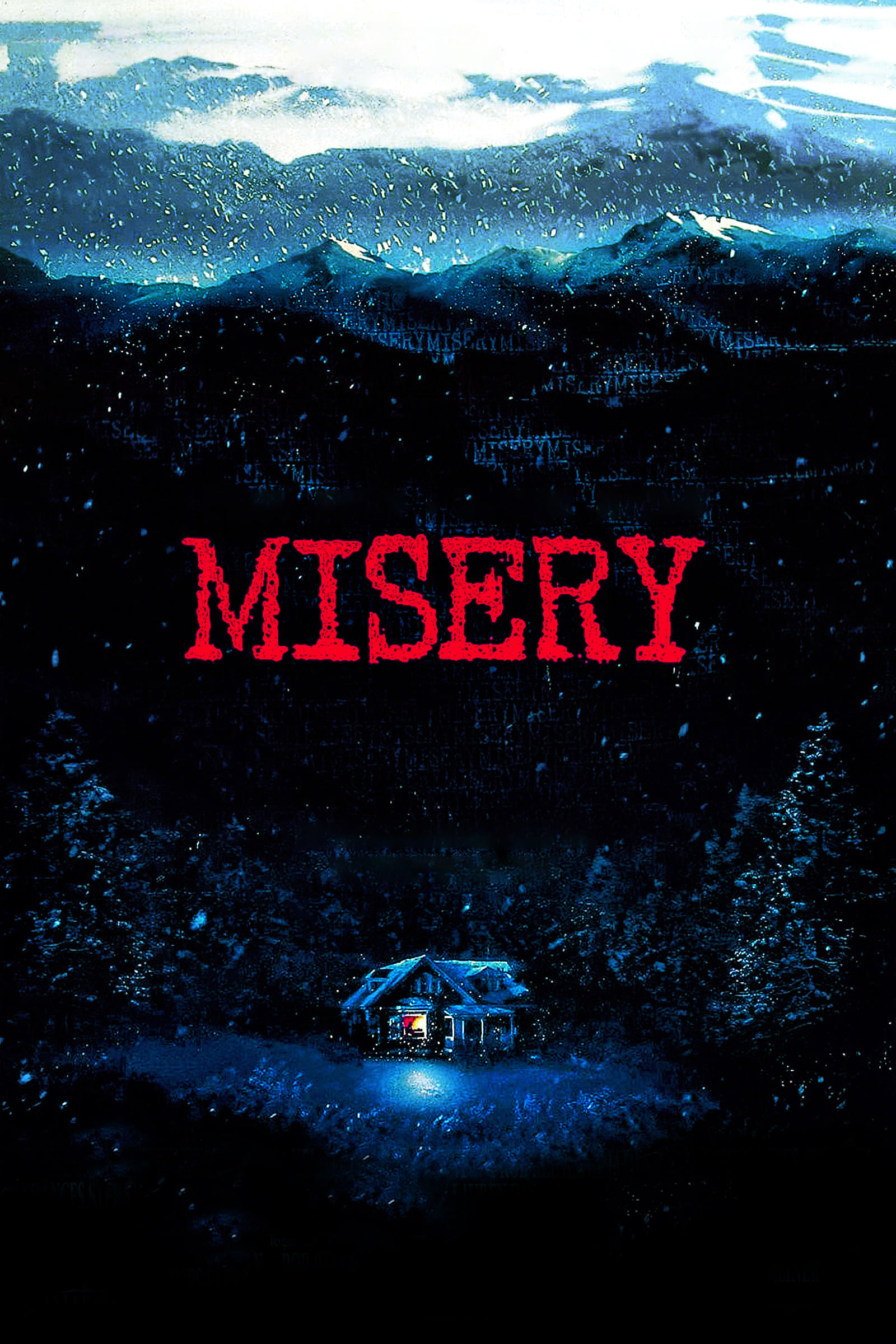
Watching “Misery,” directed by Rob Reiner, felt to me less like consuming a straightforward thriller and more like being slowly submerged in a psychological labyrinth. The film, adapted from Stephen King’s bestseller, initially deceived me with a seemingly bright promise: celebrated novelist Paul Sheldon survives a harrowing car crash in a snowy Colorado landscape, only to awaken in the home of Annie Wilkes, his self-proclaimed “number one fan.” Although I’ll carefully avoid revealing the film’s most jarring twists and its notoriously shocking moments, I will say that the gradual tightening of the narrative’s grip had me second-guessing every character motivation and plot development. Even early on, I sensed that Annie’s nurturing care hid much darker layers, and as she became increasingly unpredictable, my own sense of safety as a viewer was expertly eroded.
As Paul attempts to recover from his injuries, the film’s careful pacing and masterful direction place me right there in the suffocating tension of Annie’s isolated cabin. Every attempt at escape, every small defiance Paul musters, feels monumental—because the stakes are not just life and death, but sanity versus madness. This is a story about entrapment, obsession, and survival, dressed up as a domestic drama gone terribly wrong. The film’s tightly-focused storytelling kept me deeply invested, making even the most mundane scenes drip with a sense of foreboding. If you’re sensitive to spoilers, rest assured that the film holds back its most traumatic revelations until the very end—ensuring that the ride is as perilous for you as it is for Paul Sheldon.
Key Themes & Analysis
What drew me into “Misery” far more than its basic plot was the film’s chilling portrait of obsession and creative ownership. Having spent countless hours analyzing thrillers, I can admit that I have rarely seen a movie use claustrophobia both physically and psychologically to this degree. Reiner’s direction squeezes every ounce of tension from cramped rooms, flickering lamps, and the howling weather outside. To me, the cabin itself becomes a secondary antagonist, amplifying the intensity of every interaction between Annie and Paul.
Another aspect I found striking is how the film interrogates the relationship between artist and audience. Annie’s demand that Paul resurrect her beloved fictional heroine unfurls into a terrifying meditation on creative control and entitlement. As someone who studies art and audience interplay, I found “Misery” disturbingly prescient, especially as modern fandom’s dark corners get frequent headlines. There’s an undeniable thrill in watching Paul, a figure of literary authority, reduced to the unwilling performer of Annie’s narrative fantasies. The dynamic between the captive creator and the controlling fan taps into anxieties that extend far beyond the confines of genre storytelling.
The acting, simply put, kept me riveted. Kathy Bates’s performance as Annie Wilkes remains one of the most electrifying I’ve ever seen. She embodies a mixture of maternal warmth and sudden violence that is as unpredictable as it is unforgettable. Rather than seeing Annie as a one-note villain, I felt palpable pity and even horror at her vulnerability and loneliness. James Caan, as Paul Sheldon, complements Bates by grounding his performance in a subtle spiral from smug celebrity to desperate survivor. I appreciate that the film sidelines the usual trappings of the thriller—guns, car chases, spectacle—opting instead to draw suspense from the slow, nauseating build-up of dread and the psychological tennis match between its leads.
Visually, I was struck by how Barry Sonnenfeld’s cinematography weaponizes close-ups and narrow fields of view. The camera rarely lets me breathe, trapping me alongside Paul, and rendering the most ordinary objects—typewriter, sledgehammer, medicine bottle—into symbols of hope or anguish. The deliberate pacing, the orchestral score by Marc Shaiman, and the minimal use of external locations all added to my feeling of being inescapably drawn into Annie’s private hell.
Ultimately, “Misery” compels me to examine the boundary between fan adoration and destructive need, and the ethical risk when audiences believe they are owed ownership over art. I found myself considering not just the terror of physical captivity, but the peril when creators lose agency over their own stories. It remains, to me, a master class in the slow reveal of character and the disciplined application of genre technique.
My Thoughts on the Cultural Impact & Legacy
As someone who spends a great deal of time connecting films to their cultural aftershocks, I see “Misery” as a rare thriller that continues to shape perceptions of psychological horror. For me, some horror movies fade quickly from memory; “Misery” is not one of them. It not only launched Kathy Bates into the cinematic spotlight—earning her the Academy Award for Best Actress—but it also redefined the expectations I have for adaptations of Stephen King’s work. Before “Misery,” film adaptations of King novels often wallowed in camp or leaned too heavily on supernatural elements. Here, the threat is all too terrifyingly human. The film’s tight, character-driven focus reoriented the genre, anchoring suspense in complex psychological terrain rather than shock value or gore.
“Misery” has echoed throughout popular culture. I notice echoes of Annie Wilkes in countless later thrillers, and the film’s influence is unmistakable in stories about stalkers, toxic fandom, and the blurry lines between admiration and abuse. I am particularly fascinated by how the term “Annie Wilkes” has entered cultural shorthand, used to describe fans whose adoration turns intrusive or menacing. This cinematic shorthand, to me, is a testament to how deeply the movie has etched itself into the public psyche. Its resonance only grows stronger as conversations about creator boundaries and the impact of toxic fandom circle more prominently in today’s media landscape.
On a more personal note, “Misery” resonates with me because it’s a thriller that doesn’t just manipulate my nerves—it challenges my empathy and asks me to consider the costs of intimacy and isolation. The film’s legacy is still shaping the thriller genre for modern audiences who demand psychological complexity and moral ambiguity from their villainy. I often reference “Misery” when curating or recommending suspense films; it remains my touchstone for stories that are intimate in scope but huge in implication, proving that you don’t need supernatural monsters to summon real, lasting fear.
Fascinating Behind-the-Scenes Facts
Peering into the production history of “Misery,” I discovered several facts that only deepen my appreciation for the craft that went into the film. First, Kathy Bates was not the obvious choice for the role of Annie Wilkes. Studio executives actually wanted a more established Hollywood star, but director Rob Reiner fought passionately for Bates, who at the time was primarily known as a stage actor. I find it remarkable that this risky casting decision didn’t just work—it paid off beyond anyone’s imagination, giving us a performance that instantly became iconic.
Another behind-the-scenes tidbit I find compelling is the way the infamous “hobbling” scene was adapted. The original novel featured a far more grisly act (Paul’s foot is actually amputated), but Reiner and screenwriter William Goldman decided to tone it down, believing that implied violence and emotional devastation would be more effective on screen. Having watched that sequence multiple times, I undoubtedly agree: the sheer dread it evokes is due less to explicit gore and more to Bates’s chilling conviction and Caan’s agonized disbelief.
Lastly, I was fascinated to learn that James Caan prepared for his role by remaining passive and immobilized for much of the filming. He would reportedly stay in bed even during breaks, to truly inhabit Paul’s sense of helplessness. In the finished film, that internalized suffering is palpable—I could feel through the screen how Caan transformed immobility into genuine, escalating fear and frustration. Such immersive techniques, while grueling for the actor, contribute enormously to the oppressive atmosphere that remains with me long after the credits roll.
Why You Should Watch It
- An unmatched performance from Kathy Bates—her portrayal of Annie Wilkes is both nuanced and terrifying, redefining what a cinematic villain can be.
- Psychological suspense at its finest—the film forgoes cheap scares, cultivating dread through mood, pacing, and character conflict that’s rarely matched in the genre.
- A meditation on art, fandom, and the dangers of obsession—for viewers with any interest in the power struggles around creativity, “Misery” offers uniquely sharp, sometimes unsettling, insights.
Review Conclusion
Reflecting deeply on my experience with “Misery,” I am continually impressed by its sophistication and emotional impact. Few thrillers, even today, operate with such masterful restraint and intelligence. It’s a textbook example of how meticulous direction, inventive adaptation, and fearless acting can elevate a simple premise into an enduring classic. My recommendation is wholehearted for both suspense aficionados and newcomers to psychological drama. After many viewings, I still find myself haunted by Annie’s smile, the stagnant air of the cabin, and the primal terror of losing one’s agency. I rate “Misery” an enthusiastic 4.5 out of 5 stars.
Related Reviews
- “The Silence of the Lambs” (1991): I find this film compelling to recommend because, like “Misery,” it pairs a masterful performance (Jodie Foster and Anthony Hopkins) with a claustrophobic game of psychological chess. Both films elevate the thriller genre by focusing on dialogue, unease, and the complex interplay between captor and captive.
- “Black Swan” (2010): I draw a vivid parallel between Nina’s spiral and Annie Wilkes’s obsessive tendencies. Darren Aronofsky’s psychological thriller similarly blurs reality with delusion and keeps me locked in a character’s fevered perspective—themes deeply resonant with “Misery”.
- “Room” (2015): I include this heart-wrenching drama because it, too, explores captivity and resilience, albeit from a different angle. Brie Larson’s performance, much like Bates’s, roots the film in raw, emotional truth, turning physical imprisonment into a meditation on trauma and survival.
For readers looking to go deeper, these perspectives may help place the film in a broader context.
🎬 Check out today's best-selling movies on Amazon!
View Deals on Amazon