
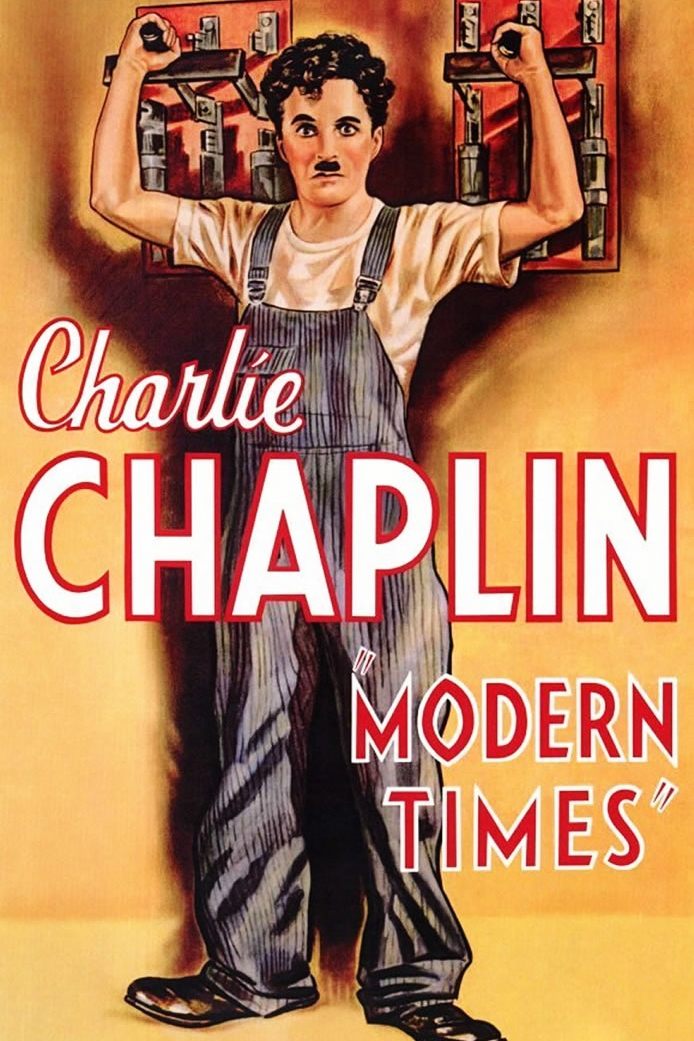
Plot Summary
The moment I first encountered “Modern Times,” I was captivated by its blend of comedy and silent-era sensibilities, despite being released in 1936—a period when talkies had become the Hollywood norm. Director Charlie Chaplin returns in this film as his iconic Tramp character, navigating a rapidly industrializing world that constantly threatens to overwhelm the individual. The story follows the Tramp as he ricochets from one workplace mishap to another, always just behind modernity’s relentless march. Chaplin’s characteristic slapstick humor remains present throughout, but what really struck me was how this film draws humor out of struggle. Every sequence, from the breakneck pace of the assembly line to the Tramp’s accidental entanglements with the law, is laced with both laughter and a sobering sense of alienation. Without revealing specifics, I can say that the Tramp’s journey is simultaneously absurd and deeply humane—the comic misadventures serve as a vehicle for genuine empathy. The plot, at its core, is a series of vignettes that dramatize the Tramp’s efforts to find stability, dignity, and companionship in a world that seems determined to thwart him at every turn.
Key Themes & Analysis
From my perspective, the central message of “Modern Times” is a deeply relevant exploration of the individual’s place amid overwhelming social and technological changes. What stands out is the way Chaplin translates abstract anxiety about modernization into physical comedy. His flailing limbs on the factory line, the mania of being force-fed by an automated feeding machine, and the humiliations of bureaucratic red tape—all feel startlingly direct. The film’s greatest strength is its ability to evoke laughter while critiquing a system that reduces people to mere cogs in a machine.
Examining the cinematography, I notice how Chaplin uses tightly composed industrial settings to underline the Tramp’s impotence against impersonal forces. The machinery dwarfs him, clattering and whirring with an almost malicious indifference. It’s not just the grim factories; the entire city is a playground of chaos, emphasizing the loss of autonomy and the coldness of urban life. The camera lingers on mechanical details—conveyor belts, gears, levers—underscoring just how inescapable this new order has become.
Chaplin’s directorial choices reflect both nostalgia and critique. Although silent narrative film had largely disappeared by the mid-1930s, Chaplin’s insistence on retaining visual storytelling (with only bursts of sound) lends the film a timeless, everyman quality. This absence of spoken dialogue amplifies the universality of the Tramp’s struggle; he could be anyone, anywhere, facing the same alienation. It also allows Chaplin’s unmatched physicality to shine. His body becomes the expressive core of the story—every stumble, grimace, and hopeful bounce is loaded with intent. In terms of pure performance, Chaplin’s Tramp is both agent and victim, a symbol of resilience in the face of dehumanizing transformation.
The supporting performances, especially by Paulette Goddard as the resourceful Gamin, add needed heart and grit. Her character, like the Tramp, is a survivor—resourceful, hopeful, and determined to find joy in adversity. Together, their chemistry is affecting and sincere, forging a sense of solidarity that cuts through the bleakness. The moments of genuine connection between Chaplin and Goddard provide an emotional anchor that balances the satire.
My Thoughts on the Historical & Social Context
I can’t watch “Modern Times” without weighing it against the immense upheavals of its era. Born from the depths of the Great Depression, the film dramatizes anxieties that feel immediate and personal, even today. I see the film as a sly rebellion against a culture obsessed with efficiency, profit, and conformity. Chaplin’s Tramp, battered by assembly lines and ruthless authority, becomes an everyman avatar for the millions squeezed by economic despair and technological change.
What amazes me is how Chaplin, through satire and slapstick, foregrounds issues like unemployment, hunger, and the fragility of human dignity. The Gamin character, too, is emblematic of the desperation faced by women and children during economic crisis. The film’s critique isn’t subtle, but it’s personal and urgent. For a 1936 audience, this would have felt immediate—a reflection of lived experience. For me, the resonance remains powerful. As automation and technological advances continue to shape the world of work, the anxieties depicted in “Modern Times” are far from obsolete.
Watching the film now, I’m struck by its continuing relevance. In an age of artificial intelligence and gig economy labor, the questions Chaplin raises—about meaning, security, and resistance—find their echoes in contemporary debates. While the style is vintage, the substance feels entirely modern. This enduring relatability speaks to Chaplin’s insight into the cyclical pressures faced by ordinary people as technology reshapes society. I find the Tramp’s not-quite-defeated optimism to be both moving and instructive: it offers a vision of perseverance without naïveté, and solidarity in the face of unequally distributed progress.
Fact Check: Behind the Scenes & Real History
Delving into the production of “Modern Times,” I’m constantly impressed by Chaplin’s creative innovations. One fascinating fact is that this was Chaplin’s last appearance as the Tramp, and nearly his last silent film, despite the industry’s shift to sound. Chaplin had been skeptical that synchronized dialogue would serve his character, fearing it would destroy the universal appeal of visual humor. Instead, he cleverly includes sound only in moments of satire—like the boss barking orders over the loudspeaker or the garbled jabber of an automated song—in an act of both resistance and adaptation.
Another detail that grabs my attention is the legendary feeding machine scene. This elaborate contraption, staged with painstaking practical effects, lampoons early 20th century obsessions with workplace productivity and “scientific management” popularized by figures like Frederick Winslow Taylor. While it’s a comic exaggeration, it’s rooted in real attempts by factories to mechanize and optimize every facet of labor, often to the point of human absurdity.
On a technical note, Chaplin invested incredible resources to design the intricate assembly line gags. He required custom machinery, meticulously timed choreography, and rehearsals that sometimes lasted days for a single segment. Unlike standard comedies of the era, which often relied on pre-built sets, everything here was built to serve Chaplin’s vision of mechanical monstrosity. That level of control and perfectionism is palpable throughout the film, contributing to its lasting impact both as a comedy and a cultural critique.
Why You Should Watch It
- A masterclass in visual storytelling and physical comedy
- A poignant social critique of technology’s impact on everyday people—still timely today
- A remarkable blend of humor and heart anchored by Chaplin’s unforgettable performance
Review Conclusion
Whenever I return to “Modern Times,” I find myself recharged by its blend of laughter, social commentary, and formal innovation. It’s a testament to Chaplin’s genius that he crafted a film both hilarious and profoundly critical—one that continues to speak to the perennial strains placed on humanity by unchecked progress. The movie’s refusal to surrender entirely to either despair or false optimism is, for me, its greatest triumph. The Tramp endures, battered yet buoyant, and in doing so, so do we. I can’t recommend this film strongly enough; it’s not only a pillar of film history, but a personal touchstone for understanding resilience in the face of overwhelming odds.
Star Rating: 5/5
Related Reviews
- The Gold Rush (1925, dir. Charlie Chaplin): I often think of “The Gold Rush” as Chaplin’s other great showcase for the Tramp’s resilience amidst adversity. Both films use physical comedy to navigate social desperation, though “The Gold Rush” is more overtly about survival than technology.
- Metropolis (1927, dir. Fritz Lang): If you are fascinated by the way “Modern Times” interrogates industrialization and its costs, Lang’s silent science fiction epic amplifies those themes into a haunting dystopian allegory. The films differ in tone, but both probe the price of progress and the human yearning for connection.
- The Kid (1921, dir. Charlie Chaplin): Returning to early Chaplin, “The Kid” shares the mixture of hardship and hope, blending slapstick gags with urgent social commentary—a precursor to the tone Chaplin perfected by “Modern Times.”
- Sullivan’s Travels (1941, dir. Preston Sturges): This later comedy explores a filmmaker’s desire to depict “real suffering” and contains sharp observations about poverty, entertainment, and empathy that remind me of “Modern Times.” The clever wit and blend of satire with pathos make it an essential companion piece.
If you want to explore this film beyond basic facts, you may also be interested in how modern audiences respond to it today or whether its story was inspired by real events.
🎬 Check out today's best-selling movies on Amazon!
View Deals on Amazon